
Reviewed · BATTAMBANG TOURS
Morning village tour Livelihood tour with Local Product discover
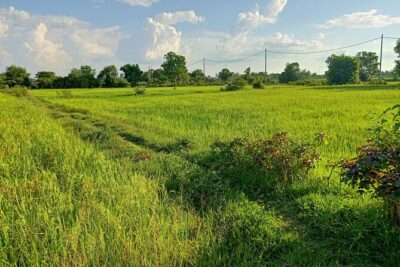
Battambang’s countryside is the real draw here. Instead of ticking off monuments, you’ll visit homes, small workshops, and food producers where people make rice paper, bamboo sticky rice, banana chips, fermented fish paste, and rice wine. I like the hands-on local food focus and the chance to taste what you see being made. I also like the small-group limit of 10, which should make questions and short stops easier.
The main consideration is that this is a working countryside tour, not a polished museum visit. Conditions may be basic, smells can be strong around fermented fish production, and the optional Wat Samrong Knong and killing fields visit may leave little time for lingering at every food stop.
Key points to know before booking
- Food is the main attraction: See traditional Khmer products made by hand, then taste several of them.
- You visit real rural workplaces: The tour takes you into homes, village workshops, and small production sites rather than standard city sights.
- The morning timing matters: Pickup is scheduled between 8:00 and 8:30 a.m., with the full experience lasting about 4 to 5 hours.
- The group stays small: No more than 10 people can join, a useful limit for a tour built around demonstrations and questions.
- Wat Samrong Knong is optional: You can add the temple complex and killing fields, but the food-making visits are the central part of the outing.
- The price is modest: At $15 per person, pickup, guiding, transport, tastings, and several stops make this a strong-value half-day experience.
Why Battambang’s countryside is worth your morning
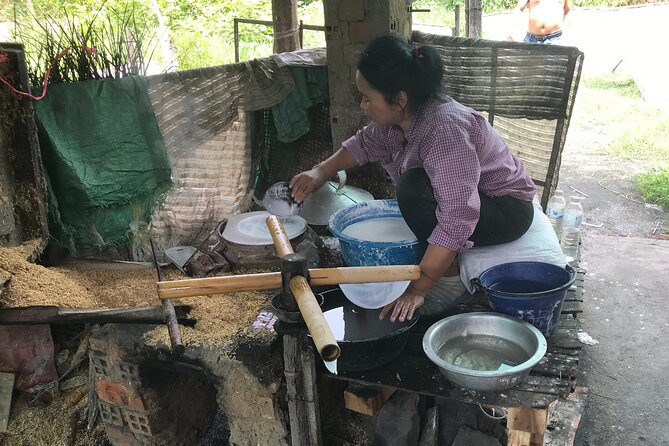
Battambang is known for its old colonial center, temples, and nearby attractions, but the surrounding villages show a different side of the province. Here, everyday work is the sight. Rice is turned into paper, bananas are preserved, fish becomes a pungent paste, and sticky rice is cooked inside bamboo.
That focus gives the tour a useful sense of place. You are not simply looking at a finished Cambodian snack in a market stall. You can see the steps behind it and understand how local food connects farming, family work, fuel, storage, and trade.
The experience is also a good fit if you have already seen enough temples for one trip. The countryside stops are informal and practical. You may stand near a cooking fire, walk around a small production area, or watch a craftsperson work. The appeal is in the ordinary details.
Kim Tours Battambang keeps the group to a maximum of 10 people. That is small enough to avoid the feel of a large coach outing, though the exact atmosphere will still depend on the number of people who book that morning.
More early starts in Battambang:
- Morning Tour,Ak Phnom temple,Rice wine,Rice Paper, killing Field
★ 5.0 · 22 reviews - half day morning tour by Tuk-Tuk
★ 5.0 · 20 reviews - Morning Tuk tuk: City, Handicrafts, Killing field, Temples
★ 4.9 · 13 reviews
The 8:00 to 8:30 a.m. pickup
The morning starts with pickup between 8:00 and 8:30 a.m. Pickup is offered, which is helpful if your accommodation is outside the immediate center. One piece of practical feedback about the operator is especially useful: the driver-guide has also been used for extra trips and transfers, provides water, and drives carefully.
You should allow some flexibility at the start. A pickup window is not the same as a precise departure time, particularly when several people are being collected. Have breakfast before leaving or bring something small, since the tour centers on tastings rather than a formal morning meal.
The countryside is usually at its most comfortable early in the day, before the heat builds. The 4 to 5 hour length also leaves you with part of the afternoon for Battambang’s other sights, a meal, or a rest.
A short introduction to Battambang
Before heading into the villages, the guide gives a quick introduction to Battambang and its history. This is not presented as a long classroom lecture. Its purpose is to give you some context before you see how rural households work and how food products are made.
That short introduction matters because the tour moves across several types of production. Without any background, the stops could feel like a string of unrelated demonstrations. With a little context, you can better connect rice farming, village work, local markets, and household income.
Do not expect a detailed historical tour of the city. If your priority is architecture, colonial buildings, or a long explanation of Battambang’s past, you will need a separate city tour. Here, the introduction is a brief starting point before the countryside becomes the main subject.
Rice paper made in front of you
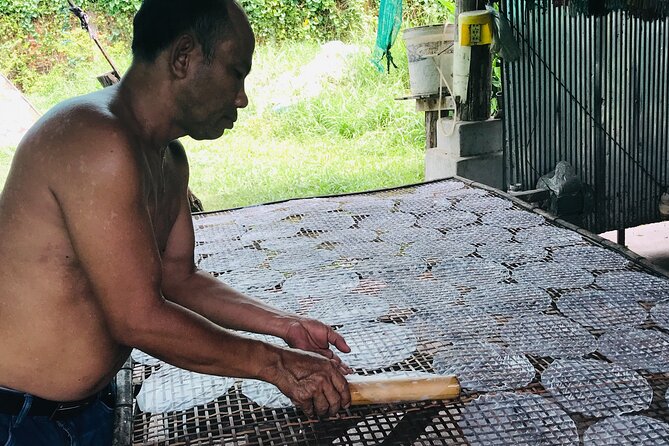
One of the most interesting stops shows how rice paper is made. Rice paper is used in many Southeast Asian dishes, but seeing it produced by hand makes the familiar ingredient more memorable.
You can expect to watch the basic process rather than simply hear about it. The value is in seeing a staple product move from a local workshop to the thin sheets used in cooking. Small production sites also help explain the amount of repetitive skill hidden inside an everyday food.
This stop should suit anyone interested in food traditions, cooking, or small-scale village work. It may be less rewarding if you want a long activity where you make the product yourself, since the description promises observation and tasting rather than a hands-on class.
A few more Battambang half-days to weigh up
- Battambang: Tuk-Tuk, Bamboo Train, Killing/Bat Caves, Sunset
★ 4.9 · 1,436 reviews - Battambang Tuk Tuk tour: Bambootrain, Killing & Bat Caves,Sunset
★ 5.0 · 799 reviews - Afternoon tour by tuk tuk to bamboo train,bat cave,killing cave,countryside.
★ 5.0 · 344 reviews - Local Livelihood Half Day Bike Tour in Battambang
★ 5.0 · 287 reviews
Sticky rice cooked inside bamboo
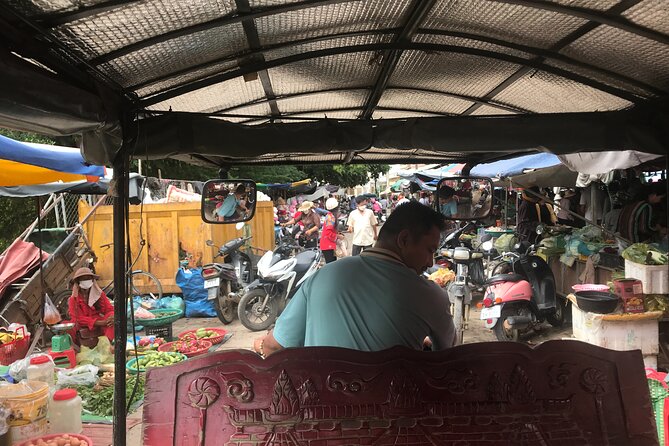
The bamboo sticky rice stop adds a little drama because the cooking takes place over an open fire. Sticky rice is placed inside bamboo tubes and heated until ready.
You get a clear look at an old cooking method that is both practical and distinctive. Bamboo serves as the container, and the open fire supplies the heat. The process also shows how local food traditions often use materials close at hand.
Expect smoke, heat, and a working setup rather than a spotless demonstration kitchen. That is part of the point, but it can matter if you are sensitive to smoke or prefer highly arranged food presentations. The finished sticky rice is available to taste, giving you a direct link between the method and the food.
Fermented fish paste and the stronger smells of village production
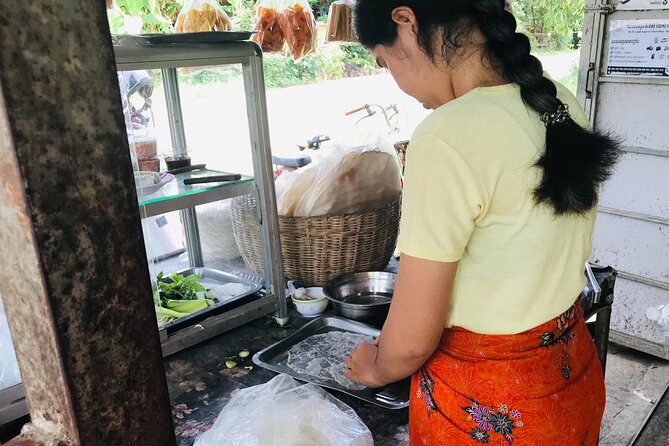
The old factory producing fermented fish paste may be the most memorable stop, especially for your nose. Fermented fish is an important ingredient in Cambodian cooking, but its strong smell can be a surprise if you have not encountered it before.
The visit gives you a better understanding of a flavor that appears in many local dishes. Rather than treating the product as an unfamiliar condiment in a market, you see the kind of place where it is made and stored.
This is also the stop where personal comfort matters most. If strong food odors bother you, keep the visit brief and tell the guide if needed. For anyone curious about Cambodian cooking, though, it is a valuable stop because it explains a basic part of the local food system that is easy to overlook.
Dried bananas and banana chips
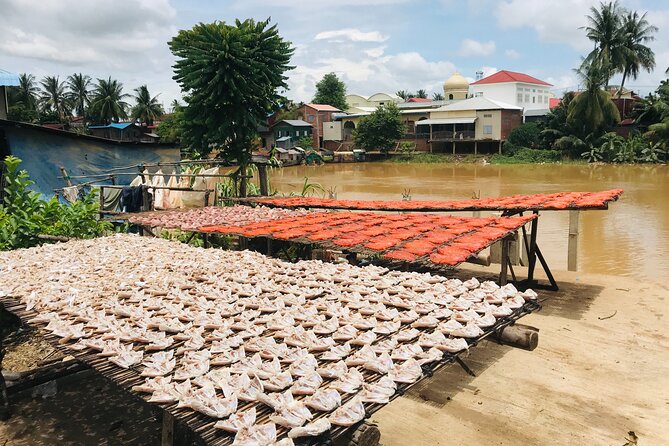
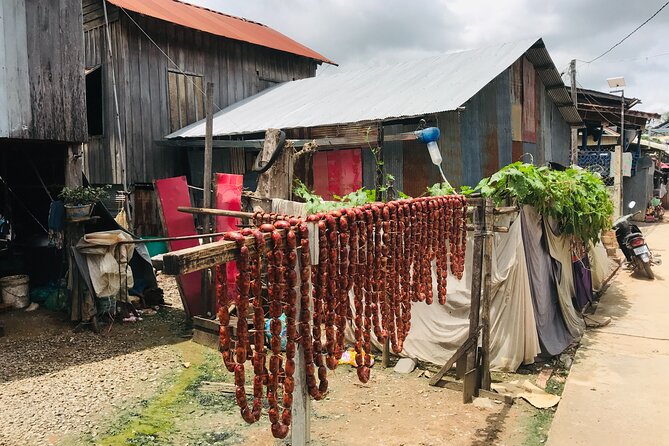
The dried banana and banana chip production stop offers a sweeter and more approachable contrast to fermented fish paste. You’ll see how bananas are preserved and turned into snacks that can last longer than fresh fruit.
This is a practical lesson in reducing waste and extending the value of a harvest. It also gives you a chance to compare two forms of the same ingredient: dried banana and crisp banana chips.
The tastings are one of the pleasures of this tour. You are not left only with a photograph and a quick explanation. You get to try the products and decide which ones you like. If you want to take some home, ask about buying directly at the stop, but the supplied details do not promise that every producer sells packaged goods.
Inside a traditional rice wine distillery
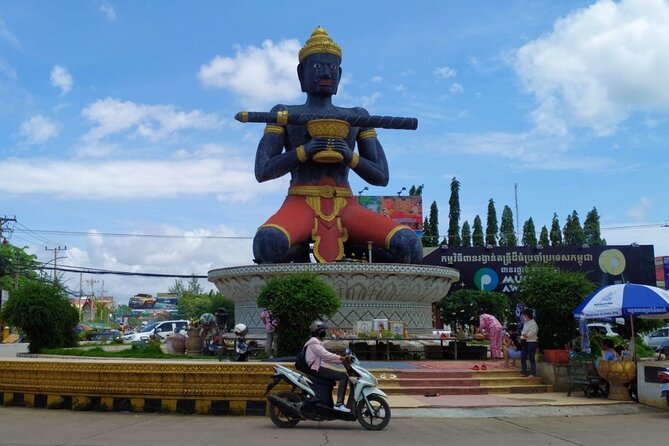
The old rice wine distillery brings drinks into the picture. Rice wine production shows another way rice supports rural livelihoods, beyond being served as a staple food.
The stop is useful because it connects agriculture with local drink-making. You can see that village production is not limited to one crop or one type of workshop. Different households and small businesses turn available ingredients into food and drink for local use and sale.
As with the fermented fish paste site, this may be a working place rather than a visitor center. Expect a simple setting and a focus on how the product is made. Tastings are part of the wider tour, but the provided information does not specify the amount or strength of the rice wine. If you drink, use restraint, especially if you have further plans that afternoon.
The optional Wat Samrong Knong visit
You also have the option to visit the Wat Samrong Knong temple complex and killing fields. This changes the mood of the morning. The food stops show daily work and local resourcefulness, while the killing fields address Cambodia’s painful modern past.
That contrast can make the tour more meaningful, but it also makes the day less lighthearted. You may want the optional visit if you are looking for historical context beyond food and village production. If your main goal is a relaxed morning of tastings, confirm how the addition affects the timing before setting off.
The supplied information does not give a detailed schedule for the temple and killing fields option. For that reason, I would treat it as an add-on rather than assume it receives the same amount of time as the food stops.
What $15 buys you
At $15 per person, this is priced as an accessible half-day outing. The value comes from the number of different experiences packed into 4 to 5 hours: countryside transport, a guide, visits to several producers, explanations of local work, and tastings.
Pickup adds more value, especially if you are staying farther from central Battambang. You avoid arranging separate transport to scattered rural sites, and you have a driver who knows the route. Water is also provided.
The low price does come with a reasonable expectation. This is not a private luxury tour with elaborate meals, air-conditioned facilities at every stop, or a carefully staged performance. You are paying for access and local explanation, not polish.
Group discounts are available, which may make the tour even better for families or small groups. A mobile ticket also makes booking simple. Confirmation is received at the time of booking, so you should have the essential details before the morning begins.
Who will enjoy this experience most
I would choose this tour if you want to understand Battambang through its food and rural work. It suits curious eaters, photographers interested in daily life, families with older children, and anyone who prefers small production sites to formal attractions.
It is also a good choice for a first morning in Battambang. The tour gives you an introduction to the area, takes you beyond the city, and leaves the afternoon open.
You may want something else if you dislike food smells, open-fire cooking, or informal workspaces. It is also not the best match if your main interest is temple architecture or a detailed account of Cambodian history. In that case, make sure the optional Wat Samrong Knong visit is available and ask how much time it will receive.
Most people can participate, and service animals are allowed. The tour is near public transportation, though pickup is offered. No special fitness requirement is stated, but you should be comfortable moving between rural stops and standing or walking during demonstrations.
Weather, cancellation, and useful planning details
The experience requires good weather. If poor weather causes cancellation, you are offered a different date or a full refund.
You can cancel for a full refund up to 24 hours before the start time. Within 24 hours, cancellations and changes are not accepted and the payment is not refunded. Cutoff times use Battambang’s local time.
Since the tour begins in the morning, wear practical clothing and shoes suitable for village stops. The available information does not specify a dress code, but modest clothing is sensible if you choose to visit the temple complex. Carry a little water beyond the supplied bottle if you dislike waiting between stops, and keep your camera protected around cooking smoke and food production areas.
Should you book the Battambang livelihood tour?
Book it if you want a low-cost, small-group look at rural Khmer food production rather than another standard sightseeing circuit. The variety is the strongest feature: rice paper, bamboo sticky rice, fermented fish paste, dried bananas, banana chips, and rice wine give you a broad picture of village livelihoods in one morning.
The tour is especially good value for a short stay because it combines transport, guiding, local access, and tastings for $15. I would book it in advance, since it is commonly reserved about 14 days ahead and the group limit is only 10 people.
Skip it if you want luxury, a precise museum-style schedule, or a full historical tour. But if you are happy with simple working environments, strong local smells, and food made close to where people live, this is one of the more useful ways to spend a morning around Battambang.
FAQ
Where does the tour take place?
The tour takes place in Battambang and the surrounding countryside, with visits to rural homes, workplaces, and local food and drink production sites.
How long does the tour last?
The experience lasts approximately 4 to 5 hours.
What time does pickup take place?
The listed meeting and pickup window is from 8:00 to 8:30 a.m., Monday through Sunday.
How much does the tour cost?
The listed price is $15 per person. Group discounts are available.
What products can I see being made?
You can see rice paper, sticky rice cooked in bamboo tubes, fermented fish paste, dried bananas, banana chips, and traditional rice wine being produced.
Is the temple visit included?
You have the option to visit the Wat Samrong Knong temple complex and killing fields. The provided details do not state that this option is required or how much time it receives.
What happens if the weather is poor?
The tour requires good weather. If it is canceled because of poor weather, you can choose a different date or receive a full refund.
New around Battambang
- Half day morning bicycle tour to Explore local livelihood and test local snacks★ 5.0 · 9 reviews
- Handicraft tour/rice paper,/rice wine/bat cave Sun Set★ 4.6 · 10 reviews
- Private Full Day Tuk Tuk Tour in Battambang★ 5.0 · 12 reviews
- Bamboo train. Phnom Sampove cave. Bat cave and Banan Temple★ 4.9 · 12 reviews
- Morning Tuk tuk: City, Handicrafts, Killing field, Temples★ 4.9 · 13 reviews
- Explore the Village &Countryside By Bicycle-Half Day Morning★ 4.8 · 13 reviews
- Full-day: Wat Banan. Old bamboo train. Bat Cave. Killing cave★ 5.0 · 13 reviews
- Full/Half Day Tuk TuK: Handicrafts Bambootrain Killing&Bat Caves★ 5.0 · 14 reviews
Battambang Tours, compared.
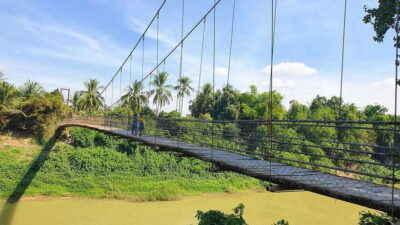
Tuk-Tuk, Bamboo Train, Killing/Bat Caves, Sunset
Read our review →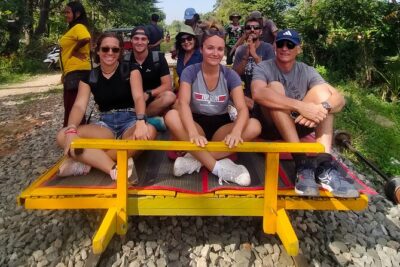
Battambang Tuk Tuk tour: Bambootrain, Killing & Bat Caves,Sunset
Read our review →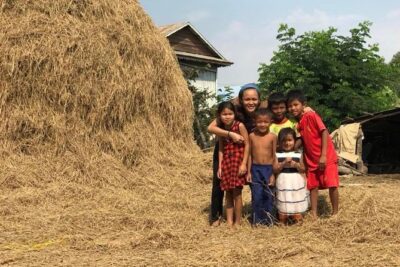
Afternoon tour by tuk tuk to bamboo train,bat cave,killing cave,countryside.
Read our review →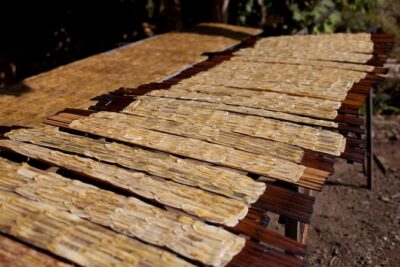
Local Livelihood Half Day Bike Tour in Battambang
Read our review →
Explore Battambang full day tour by Tuk Tuk (start from 9am-6:30pm)
Read our review →
Full Day tour .City tour.Countryside.Bamboo Train.Secret Bat Cave
Read our review →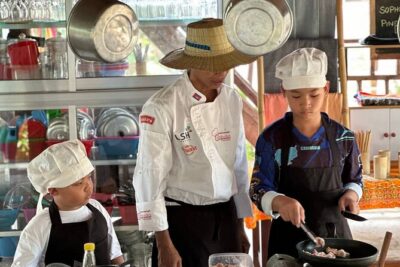
Browse the lists this tour appears in