
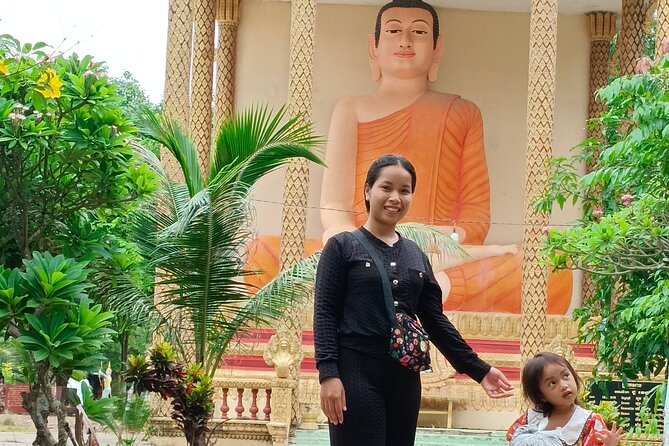
Reviewed · BATTAMBANG TOURS
Morning Tour,Ak Phnom temple,Rice wine,Rice Paper, killing Field
Battambang’s countryside gives you far more than another temple photo. This tuk-tuk outing links Ek Phnom, an 11th-century temple ruin, with village workshops, rice fields, local food production, and the sobering Wat Samrong Khong killing field.
I like the mix of ordinary rural life and major Cambodian history. I also like the chance to meet guides such as Pao, Pov, or Yi Yong, whose English explanations and easy humor can turn a simple drive into a useful cultural lesson.
The main drawback is the unclear timing. It is presented as a morning or half-day tour, yet the details also describe a two-day schedule and some bookings have run for a full day. Confirm the exact route, duration, and extra entrance fees before you set off.
Key points at a glance

- Ek Phnom temple: See an 11th-century Angkor-style ruin about 15 kilometers northwest of Battambang.
- Village production: Watch local makers produce rice paper, dried bananas, banana chips, bamboo sticky rice, and rice wine.
- Wat Samrong Khong: Visit a serious memorial site connected with Cambodia’s killing fields.
- Tuk-tuk transport: Travel by open-air tuk-tuk through rice-growing country, with hotel pickup offered.
- Small group size: The shared tour accepts a maximum of 10 people, keeping the outing fairly manageable.
- Low headline price: The $20 price includes the tuk-tuk, guide, and water, but not tickets, fees, or breakfast.
Ek Phnom and the countryside beyond Battambang
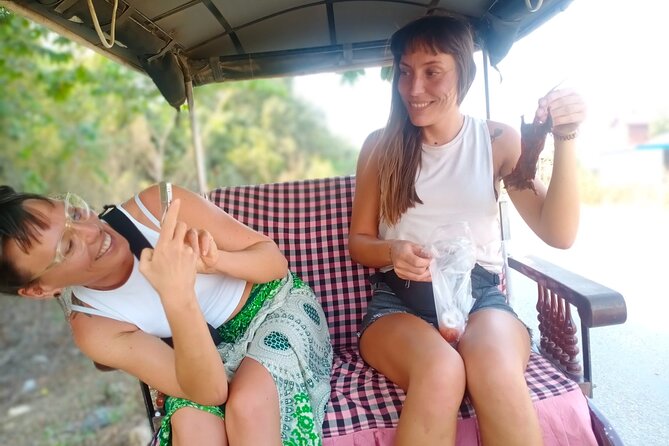
The appeal here is not one grand sight. It is the way several modest stops fit together. You leave Battambang by tuk-tuk and head toward rice fields, temples, workshops, food producers, and a memorial site that gives the day emotional weight.
The road itself is part of the experience. You are not moving from one sealed attraction to another. You are seeing the rural edge of Battambang and stopping where local work and history make the place worth your time.
The route is especially useful if you have already seen the city center and want to understand the province around it. You will see how rice connects to food, drink, paper, and daily business. You will also encounter two very different sides of Cambodia: its old religious architecture and the painful memory of the Khmer Rouge period.
The tour is sold at about $20, which is a strong price for a shared tuk-tuk outing if your route includes the full set of stops. The value comes from having transport and a guide arranged for you. You are paying for access to a collection of places that would be awkward to connect on foot.
Still, do not treat $20 as the final cost without asking questions. Tickets and other fees are not included, and breakfast is not part of the package. The exact duration also needs checking, since the information describes a morning outing, a half-day tour, and an itinerary spread over two days.
A few more Battambang half-days to weigh up
- Handicraft tour/rice paper,/rice wine/bat cave Sun Set
★ 4.6 · 10 reviews
Ek Phnom temple: an Angkor-era stop with a quieter feel
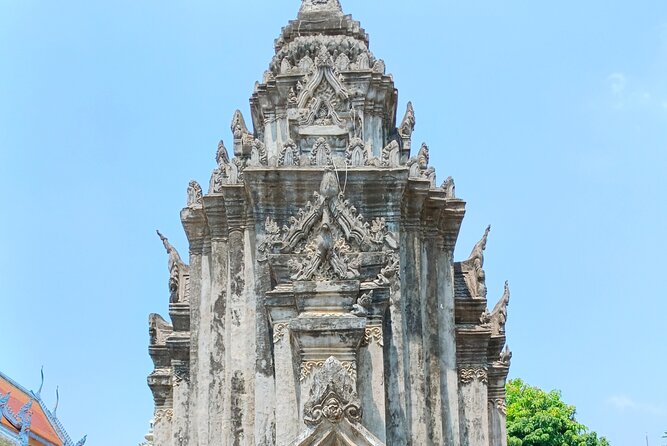
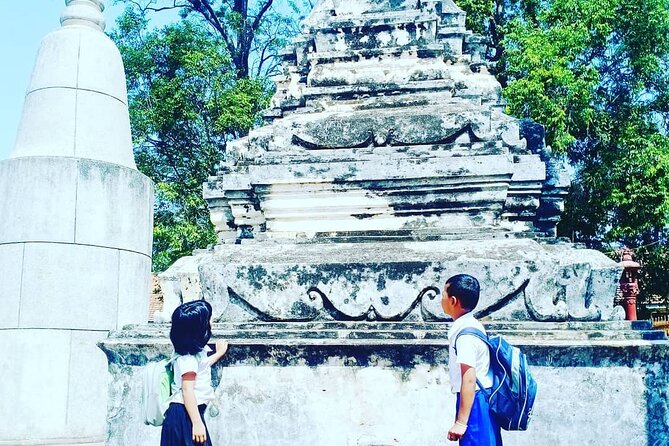
Ek Phnom is the main historical sight on the route. It is an 11th-century Buddhist temple ruin in the Battambang area, about 15 kilometers northwest of town. The design is described as Angkor-type, so you can expect the familiar Cambodian mix of stone architecture, religious symbolism, and weathered remains.
This is not presented as an Angkor Wat substitute. That is part of its appeal. You get an older temple setting without making the experience about scale or crowds. The guide can explain the links between Buddhism and Hinduism, two traditions that are closely connected in Cambodian art and religious history.
That context matters. Without an explanation, old stones can blur together. With a guide such as Yi Yong, Pao, or Pov, you may get help reading the religious details and understanding how beliefs changed and overlapped in Cambodia.
Allow time to look carefully rather than rushing through for a photograph. Temple ruins reward attention to carvings, layout, and the way the structure sits in the countryside. The available information does not give a separate admission price, so ask your guide which entrance costs apply on your date.
A visit here suits anyone who wants more than the most famous temple circuit. It is also a good fit for first-time visitors to Battambang who need a clear introduction to the area’s older monuments.
The giant Buddha and the working villages
The route also includes a giant Buddha statue. It gives the temple portion a more recent and immediately recognizable landmark, while the village stops show how people make a living today.
You may see bamboo sticky rice being prepared, a useful stop because it connects a familiar Cambodian food to the material used in its production. The activity is not just a tasting opportunity. It gives you a look at a local method that is easy to miss if you only visit formal attractions.
The tour also includes rice wine. You may be offered a small taste, but the information does not promise a particular amount or style, so do not assume this is a long tasting session. If you do not drink alcohol, tell the guide. The stop remains useful as a look at local production even without taking a shot.
Rice paper is another practical stop. Seeing it made in a village setting helps explain the work behind a product that can seem simple when it reaches a restaurant or market. The same goes for dried bananas and banana chips. These stops may be brief, but they add a strong sense of place because you are seeing food production rather than just buying a finished souvenir.
I like this part of the route because it keeps the day grounded. Cambodia is not only temples and memorials. It is also rice, bananas, paper, small factories, roadside work, and family businesses.
The trade-off is that these are working stops, not polished museum displays. The pace and presentation may vary. You should go with curiosity, not the expectation of a formal demonstration with fixed show times.
Rice fields, a fish market, and the rhythm of rural Battambang
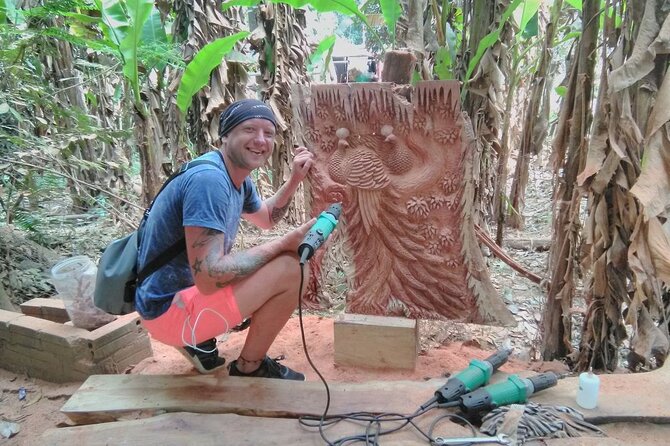
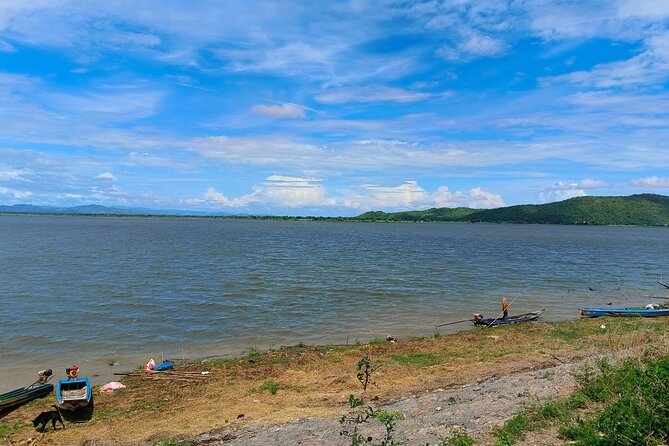
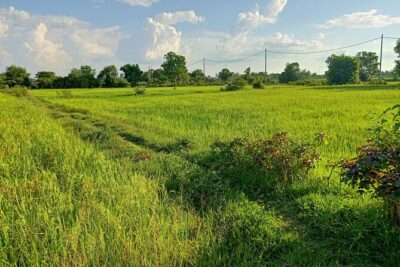
The tour description places rice fields at the heart of the northern Battambang route. That setting helps tie the stops together. Rice is not just scenery here. It appears again in sticky rice and rice wine, making the countryside and the food demonstrations part of one story.
The fish market adds another layer. It is a more direct look at local commerce, with the smells, activity, and practical business of food distribution. This can be more revealing than a scenic stop because it shows what people buy and sell in ordinary life.
Market visits are not for everyone. If you prefer quiet roads and temple ruins, the fish market may feel rough around the edges. If you want a view of daily life, it is one of the more useful parts of the route.
Your tuk-tuk is well suited to this outing. It keeps you close to the road, offers open views, and makes short countryside stops simple. Pickup is offered, and water is included. The group limit is 10 people, so you are not signing up for a large coach experience, though the shared format means the pace is not fully yours.
Ask about the start time. The supplied information specifically recommends going in the morning because the heat can make the route harder later in the day. That is sound practical advice for a tuk-tuk outing around rural roads.
More early starts in Battambang:
- Morning village tour Livelihood tour with Local Product discover
★ 5.0 · 36 reviews - half day morning tour by Tuk-Tuk
★ 5.0 · 20 reviews - Morning Tuk tuk: City, Handicrafts, Killing field, Temples
★ 4.9 · 13 reviews - Explore the Village &Countryside By Bicycle-Half Day Morning
★ 4.8 · 13 reviews
Wat Samrong Khong and the difficult side of the day
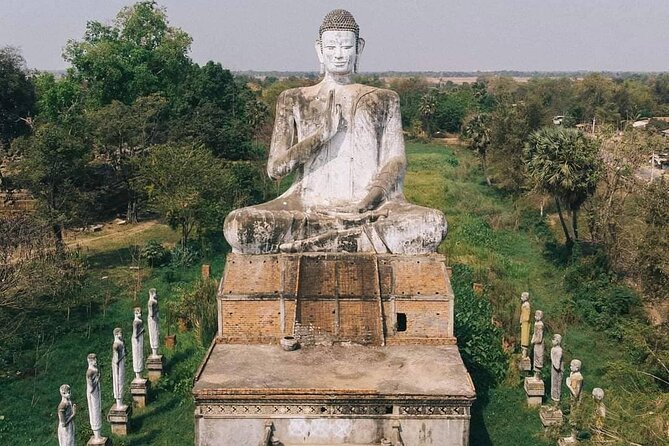
Wat Samrong Khong is listed as a killing field site. This is the most serious stop and changes the tone of the tour. After temples, food, and village production, you are asked to confront Cambodia’s recent past and the violence carried out during the Khmer Rouge period.
Do not treat this as a quick photo stop. The site deserves quiet attention and respectful behavior. The exact interpretation provided on the day may depend on your guide, but guides such as Pao and Pov are noted for explaining Cambodian history in clear English and with genuine feeling.
This stop can be one of the most valuable parts of the route because it places modern Cambodia in context. You see that the country’s story is not only ancient architecture and religious art. It also includes loss, survival, and the work of remembering.
The emotional shift may not suit every outing. Families with young children, or anyone wanting a light morning of food and sightseeing, should know that the memorial visit is sobering. The tour’s mixture of fun, beauty, and difficult history is precisely what gives it range, but it also means you should be ready for a change in mood.
What the guides add to the experience
The guide can make or break a route like this. The strongest descriptions of the experience point to good English, clear explanations, humor, and a strong grasp of local history and culture.
Pao is associated with the most enthusiastic feedback. He is described as funny, engaging, and able to fill a long day with information without making it feel like a lecture. He is also linked with the full-day version, which can run for around 10 hours.
Mr. Pov is the named provider, and he is also described as an enthusiastic guide with good English. Yi Yong is associated with a hotel pickup by tuk-tuk and explanations of Buddhism, Hinduism, and their connection in Cambodia.
You may not receive the same guide on every booking, so ask who will lead your tour. The names matter because this route depends on explanation. A driver who only points out each stop will give you transport, but a guide who explains the meaning behind the temple, products, and memorial site gives you much more.
The guide’s local knowledge can also help with practical choices. That includes food suggestions, timing, and deciding how much attention to give each stop. Several accounts describe guides recommending places to eat, which is useful if your Battambang stay is short.
Half-day or full-day: clarify the plan before booking

The experience is marketed around a morning tour and a half-day itinerary, but the supplied schedule is inconsistent. It lists Day 1 and Day 2, while the route itself reads like one extended day. Some bookings have been described as full-day outings lasting about 10 hours.
That difference matters. A half-day tour can fit neatly into a morning before lunch and leave you free for Battambang’s other sights. A full-day version is more useful if it adds extra stops, but it needs more energy, especially in the heat.
Before booking, ask these specific questions:
- Is the booking for a morning half-day tour or a full-day tour?
- Which stops are included in your chosen version?
- Is Ek Phnom included, along with the giant Buddha?
- Will you visit the rice wine, rice paper, dried banana, and fish market stops?
- Is Wat Samrong Khong part of the same route?
- Which entrance fees or local charges must you pay separately?
This is not needless fussing. The route has enough separate stops that a vague schedule could leave you expecting more than the time allows.
Who will get the most from this $20 tour
I would choose this experience if you want a broad introduction to Battambang beyond the town center. It suits you especially well if you enjoy local food production, religious sites, rural roads, and serious historical places in the same outing.
It is also a practical choice for a short stay. Rather than arranging separate tuk-tuks to Ek Phnom, the market, villages, and Wat Samrong Khong, you have one guide and one vehicle connecting them.
The tour is a good match for:
- First-time visitors to Battambang
- People interested in Cambodian food and small-scale production
- Anyone who wants an Angkor-style temple without making the whole day about ruins
- Visitors who value English-language historical explanation
- Small groups and solo visitors comfortable with shared transport
- People willing to include a memorial site in a sightseeing day
It may be less suitable if you want a tightly timed luxury excursion, a quiet temple-only visit, or a fully private route with no extra fees. The open tuk-tuk format is simple and local, not climate-controlled touring.
The activity allows service animals, and most people can take part. No special physical requirement is stated, but temple and village visits can involve standing and moving around uneven historic areas, so ask the provider if you have mobility concerns.
Booking value, extra costs, and cancellation
At $20, the package includes the shared tour, guide, tuk-tuk, and water. That is fair value for a route with several stops, particularly if hotel pickup works for your location and the schedule includes the full collection of sites.
The price does not include tickets and fees. Breakfast is also excluded. Bring money for those extras, and ask for a rough estimate before departure. One useful improvement would be a clearer price breakdown, since the low headline cost can make the final total harder to predict.
The group maximum is 10 people. That is small enough for questions and conversation, but it is not the same as a private tour. If you want a slower stop at Ek Phnom or extra time at the memorial site, ask if a private option is available.
Free cancellation applies when you cancel at least 24 hours before the start time. Changes made within 24 hours are not accepted, and the amount paid is not refunded for a late cancellation. The tour also depends on good weather. If poor weather causes cancellation, you are offered another date or a full refund.
Should you book the Battambang countryside tour?
I would book it if you want one affordable outing that shows several sides of Battambang. Ek Phnom gives you ancient Cambodia, the village stops show work and food production, and Wat Samrong Khong brings the country’s recent past into the picture.
The deciding factor is clarity. Confirm whether you are booking the morning half-day route or the longer full-day version, and ask about every additional fee. Go early, carry water beyond the included bottle if you need it, and expect the day to shift from cheerful village visits to quiet remembrance.
If you want a guide-led look at the area rather than a simple tuk-tuk ride, this is a strong choice. The guide you receive matters, so request Pao, Pov, or Yi Yong if possible, then let the road outside Battambang fill in the details.
FAQ
Where does the tour take place?
The tour operates around Battambang, Cambodia, with hotel pickup offered.
How much does the tour cost?
The listed price is $20.
How long does the tour last?
The information describes it as a morning or half-day tour, but it also includes a two-day schedule and full-day outings of about 10 hours. Confirm the exact duration before booking.
What is included in the price?
Water, shared transportation by tuk-tuk, and a guide are included.
Are entrance tickets and other fees included?
No. Tickets and fees are not included in the listed price.
Is breakfast included?
No. Breakfast is not included.
What temple will I visit?
The route includes Ek Phnom, also written as Ak Phnom in some tour details. It is described as an 11th-century Buddhist temple ruin about 15 kilometers northwest of Battambang.
What local products are included?
The route includes rice wine, rice paper, dried bananas, banana chips, and bamboo sticky rice. It also includes a fish market.
Does the tour visit a killing field?
Yes. The route includes Wat Samrong Khong killing field.
How many people can join the shared tour?
The tour has a maximum group size of 10 people.
Can I cancel for a full refund?
Yes, if you cancel at least 24 hours before the experience start time. Late cancellations are not refunded, and bad-weather cancellations offer a different date or a full refund.
New around Battambang
- Half day morning bicycle tour to Explore local livelihood and test local snacks★ 5.0 · 9 reviews
- Handicraft tour/rice paper,/rice wine/bat cave Sun Set★ 4.6 · 10 reviews
- Private Full Day Tuk Tuk Tour in Battambang★ 5.0 · 12 reviews
- Bamboo train. Phnom Sampove cave. Bat cave and Banan Temple★ 4.9 · 12 reviews
- Morning Tuk tuk: City, Handicrafts, Killing field, Temples★ 4.9 · 13 reviews
- Explore the Village &Countryside By Bicycle-Half Day Morning★ 4.8 · 13 reviews
- Full-day: Wat Banan. Old bamboo train. Bat Cave. Killing cave★ 5.0 · 13 reviews
- Full/Half Day Tuk TuK: Handicrafts Bambootrain Killing&Bat Caves★ 5.0 · 14 reviews
Battambang Tours, compared.
Tuk-Tuk, Bamboo Train, Killing/Bat Caves, Sunset
Read our review →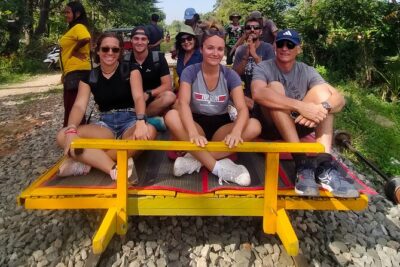
Battambang Tuk Tuk tour: Bambootrain, Killing & Bat Caves,Sunset
Read our review →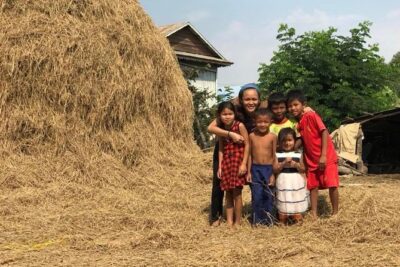
Afternoon tour by tuk tuk to bamboo train,bat cave,killing cave,countryside.
Read our review →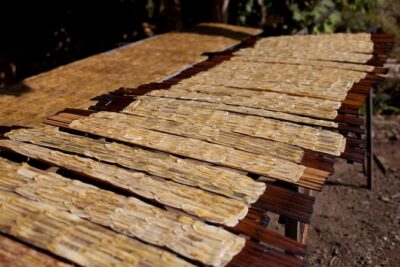
Local Livelihood Half Day Bike Tour in Battambang
Read our review →
Explore Battambang full day tour by Tuk Tuk (start from 9am-6:30pm)
Read our review →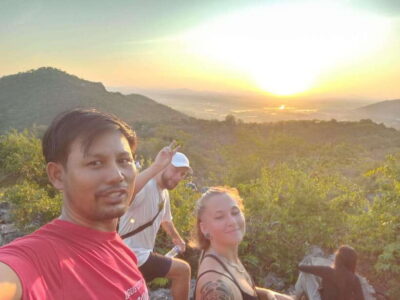
Full Day tour .City tour.Countryside.Bamboo Train.Secret Bat Cave
Read our review →
Browse the lists this tour appears in