Reviewed · SIEM REAP TOURS
Full Day Pass Angkor Wildlife and Aquarium – Siem Reap
Angkor Wildlife & Aquarium gives you two different Cambodian worlds in one visit: the fish-filled waters of the Mekong and Tonle Sap, followed by land animals such as Bengal tigers, otters, and sun bears. I like the clear conservation purpose and the chance to see local freshwater species that rarely get attention beside Angkor Wat.
I also like the touch pool and the well-kept setting, which make this more than a row of glass tanks. The main drawback is its distance from central Siem Reap, and the land-animal collection can feel modest if you expect a full-scale zoo.
Key points to know before you go
- Mekong and Tonle Sap displays: The freshwater section focuses on Cambodia’s major waterways and their unusual fish.
- Ocean aquarium and touch pool: Marine tanks add variety, while hands-on contact gives children a reason to slow down and look closely.
- Tigers, otters, crocodiles, and reptiles: You may see several headline species, but the number of land-animal exhibits is limited.
- $15 admission: The price is reasonable if you value the aquarium and conservation work, though less compelling if you want a large zoo.
- Pickup can solve the distance: An air-conditioned vehicle is included, and a free shuttle from Siem Reap center may be available when you book ahead.
- Allow two to five hours: The official duration varies widely, depending on transport, your pace, and how long you spend at each exhibit.
What Angkor Wildlife & Aquarium adds to a Siem Reap trip
Most Siem Reap itineraries revolve around temples. That makes AWA a useful change of pace, especially if you are traveling with children or need a break from carved stone and hot courtyards.
The attraction brings together freshwater, saltwater, reptiles, and mammals. Its strongest theme is Cambodia’s connection to water. The Freshwater Tank points toward the Mekong River and Tonle Sap Lake, while the Ocean Aquarium shows how aquatic life changes as you move from inland waterways toward the sea.
I find that focus more useful than a generic collection of animals. Tonle Sap is one of Southeast Asia’s largest freshwater lakes, and it plays a major role in Cambodia’s food supply and daily life. An exhibit that helps you see what lives below its surface gives the lake a little more meaning than a quick boat ride alone.
The conservation purpose also matters. Your admission helps maintain care for the animals and supports the work of keeping threatened species in a safe setting. You should not treat the ticket as a donation alone, though. The experience needs to be worth your time, and that depends heavily on what you want from a wildlife attraction.
More wildlife trips around Siem Reap:
- Wildlife Expedition: Elephant Sanctuary, Kbal Spean Banteay Srei
★ 5.0 · 32 reviews - Cambodia Wildlife Sanctuary and Countryside Tour
★ 5.0 · 11 reviews - Phnom Tamao Wildlife Center & Buddha Kiri Cambodia Day Tour
★ 4.7 · 10 reviews
The Freshwater Tank and Cambodia’s underwater world
Start with the freshwater section. This is where AWA makes its clearest connection to Cambodia, presenting fish from the Mekong and Tonle Sap rather than relying only on familiar aquarium stars.
The displays are built around the Monsters of the Mekong, an appealing name for some of the river’s larger and stranger inhabitants. You can expect the section to show how much life exists below the surface of waterways that often look calm from shore.
This part is especially useful if you have spent time around Tonle Sap or plan to visit it. You get another way to understand the lake, not just as a scenic body of water or a source of floating villages, but as a living freshwater system.
Do not rush through the fish tanks. The large species may catch your eye first, but smaller fish and unusual shapes reward a slower look. If you are bringing children, this is a good place to turn the visit into a simple search game: look for the biggest fish, the strangest body shape, and the animal that blends into its surroundings.
The freshwater displays are also one reason I think the $15 ticket can be fair. You are not only looking at colorful fish imported from somewhere else. You are being introduced to an important part of Cambodia’s own natural world.
The Ocean Aquarium and the Touch Pool
The Ocean Aquarium changes the mood. After the freshwater displays, you move into marine habitats, with tanks showing the shift from river and lake environments to saltwater life.
This gives the attraction a natural sequence. You start with Cambodia’s inland waterways, then see a broader selection of marine creatures. The saltwater side appears to be one of the stronger parts of the visit, particularly if your main interest is aquarium life rather than mammals.
The Touch Pool is a useful feature for families. Hands-on displays give children a reason to observe carefully instead of racing from tank to tank. It is also a good shared activity for adults and children, since you can talk about texture, movement, and the difference between creatures you see in a tank and those you can gently encounter at close range.
The attraction does not give a detailed schedule for touch-pool access, so you should not build your entire visit around a guaranteed session at a particular hour. Treat it as an important feature of the aquarium visit, not as a timed performance.
If your priority is fish and aquatic life, you may find enough here to justify the trip on its own. One published assessment called the aquarium side quite substantial while finding the land-animal selection thinner. That is a useful distinction when deciding if this is the right stop for you.
Tigers, otters, crocodiles, and more than 30 reptiles
The land-animal portion includes several species that most people will want to see. Bengal tigers provide the main dramatic moment, while otters offer a lighter and more playful contrast. Sun bears, Siamese crocodiles, alligators, and tortoises add further variety.
The reptile collection is another solid part of the attraction. More than 30 reptile species are represented, including the Asian water monitor. That makes the reptile area more than a token display, and it fits well with the freshwater theme.
You should set your expectations carefully. AWA is not presented as a huge open-range zoo with dozens of mammal species. The collection can feel small on a quiet day, particularly if only a few headline animals are visible. One assessment found the land section underwhelming, with only a couple of tigers and limited other wildlife on view.
Animal visibility is never fully predictable, but the practical point is simple: book this for the aquarium, reptiles, and conservation setting first. Consider the tigers, otters, crocodiles, and sun bears an important bonus rather than the entire reason to go.
The habitats are described as naturalistic and well maintained. That matters more than a long species list. A smaller collection can still be worthwhile if the animals have suitable surroundings and the visit helps support proper care.
A completely different sort of day from the same base:
- Angkor Wat Sunrise or Sunset Tour with Guide from Siem Reap
★ 5.0 · 12,109 reviews - Siem Reap: Angkor Wat: Small-Group Sunrise or Sunset Tour
★ 5.0 · 9,444 reviews - From Siem Reap: Kampong Phluk Floating Village Tour by Boat
★ 4.9 · 6,979 reviews - Sunset tour of Kampong Phluk stilts home village on the Tonle Sap
★ 5.0 · 4,865 reviews
How much time should you allow?
The stated duration ranges from about two hours to five hours and 20 minutes. That is a wide range, but it makes sense when pickup and return transport are part of the package.
If you arrive independently and move at a steady pace, two hours may be enough for the main aquarium sections, reptiles, and the most notable mammals. Add time if you stop at the touch pool, read the educational material, or wait for a better view of the animals.
The longer estimate likely reflects transportation and a relaxed visit rather than five hours of nonstop exhibits. You should use the attraction as a half-day plan, especially if it is paired with lunch or another stop in the Siem Reap area.
The listed opening hours are 8 a.m. to 5 p.m., Monday through Friday, for the stated operating period. The supplied schedule does not list weekend hours, so confirm availability before planning a Saturday or Sunday visit.
Morning is the safer choice if you want a full visit within the opening window. It also leaves the afternoon available for Siem Reap’s other sights. Since no animal-feeding timetable is provided, you should not assume that an early arrival guarantees a special show.
Getting there from Siem Reap
The main practical complaint is distance. AWA is a bit far from central Siem Reap, so the ticket price is not the whole cost of the outing if you arrange your own transport.
Pickup is offered, and the package includes an air-conditioned vehicle. That is valuable in Cambodia’s heat, particularly after several days of temple touring. One useful transport detail is that a free shuttle from Siem Reap center may be available when you book your tickets in advance.
Do not assume the shuttle will appear automatically at any time. Arrange the pickup details while booking and check where you need to meet it. The attraction is also near public transportation, but the information provided does not give route numbers, fares, or exact travel times.
For most people staying in central Siem Reap, included transport makes the experience easier and improves the value of the $15 ticket. Without it, the distance becomes a larger consideration, especially for a short visit.
The vehicle is listed as air-conditioned, and entry fees and taxes are included. Snacks, lunch, and alcoholic drinks are not included, so plan food separately if you intend to spend several hours there.
Is $15 a good value?
At $15 per person, AWA sits in a reasonable middle ground. The price covers admission, fees, and an air-conditioned vehicle, which gives it more value than a bare entry ticket if pickup works for your location.
I would call it good value for three groups. Aquarium fans get freshwater and ocean sections, families get the touch pool and a mix of animals, and conservation-minded visitors support a facility focused on animal care and education.
The value is less certain if you are paying mainly to see many large mammals. The land collection is not described as extensive, and the attraction may feel limited after you have seen the tigers, crocodiles, otters, and reptiles.
You also need to account for your pace. A two-hour visit makes the ticket easier to justify than a long stay built around a small number of mammal exhibits. If you can combine the attraction with convenient included transport and a flexible half-day, the price works better.
The conservation angle should not be treated as decoration. Maintaining safe habitats, caring for animals, and teaching visitors about Cambodian ecosystems all cost money. Your ticket supports that work while giving you a concrete visit rather than a donation without a personal connection.
Who will enjoy this visit most?
I would recommend AWA most strongly to families, aquarium fans, and anyone who wants a different kind of Siem Reap outing.
Children have several entry points: large fish, reptiles, tigers, otters, and the touch pool. The range helps if one child loves animals while another prefers hands-on activities. Adults can also appreciate the Cambodian freshwater focus and the chance to discuss conservation without turning the visit into a formal lesson.
It suits you if you have already spent plenty of time at temples and want a cooler, slower attraction. The air-conditioned vehicle helps with the journey, and the exhibits give you a change from outdoor sightseeing.
It is a weaker choice if you expect a major zoo with a long list of mammals. You may also be disappointed if you are staying in Siem Reap for only one day and have no interest in aquariums or reptiles.
For a first visit to Cambodia, I would not place it ahead of Angkor Wat, the Bayon, or other major historical sites. But once the core temple visits are covered, AWA makes a sensible extra stop.
Booking, cancellation, and small practical points
You receive confirmation at the time of booking, and the ticket is mobile, so you can keep it on your phone. Most people can participate, and the attraction is near public transportation.
Free cancellation is available if you cancel at least 24 hours before the experience begins. Cancellations made less than 24 hours ahead are not refunded, and changes within that period are not accepted. The cut-off uses local Siem Reap time.
The schedule supplied for this experience runs Monday through Friday, 8 a.m. to 5 p.m. Because the duration can include transport, leave enough room in your day rather than trying to squeeze the visit between tightly timed temple tours.
Bring your own plan for food. Lunch and snacks are not included, and no meal arrangement is described. Alcoholic drinks are also excluded, though they are hardly the reason to visit an aquarium.
Should you book Angkor Wildlife & Aquarium?
Book it if you want a family-friendly half-day with fish, reptiles, a touch pool, and a small selection of well-known mammals. The freshwater displays tied to the Mekong and Tonle Sap give the visit a Cambodian focus, while the conservation purpose adds meaning to the admission fee.
Think twice if your main goal is a large zoo or a long list of land animals. The attraction is outside central Siem Reap, and the mammal collection may feel limited.
My practical call: choose AWA after your main Angkor visits, arrange the offered pickup in advance, and allow at least two hours, with extra time if you want to read the exhibits and spend time at the touch pool. At $15, it is a sensible choice when the aquarium matters to you and transport is included.
FAQ
How much does the Angkor Wildlife and Aquarium ticket cost?
The ticket costs $15 per person.
Where is Angkor Wildlife and Aquarium located?
The attraction is in Siem Reap, Cambodia. It is described as a little far from the town center and near public transportation.
How long does the experience last?
The stated duration ranges from approximately two hours to five hours and 20 minutes. The total time can depend on transport and how long you spend inside.
Is hotel pickup available?
Pickup is offered, and the experience includes an air-conditioned vehicle. A free shuttle from Siem Reap center may be available when you book in advance.
What are the opening hours?
The supplied operating schedule lists opening hours from 8 a.m. to 5 p.m., Monday through Friday, for the period from August 29, 2024, to February 16, 2027.
Are entry fees and taxes included?
Yes. The entry ticket, all fees and taxes, and an air-conditioned vehicle are included.
Are food and drinks included?
No. Lunch, snacks, and alcoholic beverages are not included.
What animals can you see?
The attraction includes Bengal tigers, Siamese crocodiles, otters, sun bears, alligators, tortoises, and more than 30 reptile species, including the Asian water monitor.
Does the aquarium include freshwater and marine exhibits?
Yes. The Freshwater Tank focuses on the Mekong River and Tonle Sap Lake, while the Ocean Aquarium presents marine habitats.
Can you cancel for a full refund?
Yes, if you cancel at least 24 hours before the experience start time. Cancellations made less than 24 hours before the start time are not refunded, and late changes are not accepted.
More Full-Day in Siem Reap
- Siem Reap: Full-Day Angkor Wat Guided Tour with Sunset
★ 4.9 · 3,803 reviews - Full-Day Angkor Wat Sunrise Private Tour with Guide from Siem Reap
★ 5.0 · 2,920 reviews - Siem Reap: Angkor Wat Sunrise and Full-Day Sightseeing Tour
★ 4.9 · 2,828 reviews - Full-Day Guided Sunset Tour of Angkor Wat
★ 5.0 · 1,507 reviews
New around Siem Reap
- Kulen Mountain With Ticket included Plus Banteay Srei Temple Tour★ 5.0 · 7 reviews
- 2 Days Angkor temples with Sunrise & Sunset★ 5.0 · 7 reviews
- Private Siem Reap Airport Transfer to hotel in town★ 5.0 · 7 reviews
- 1-Day private Angkor Temple Tour with Sun Rise by Tuk Tuk from Siem Reap★ 4.5 · 7 reviews
- Siem Reap: Morning Cooking Class & Market Tour★ 5.0 · 7 reviews
- Kulen Mountain, Killing Fields and War Museum Tour★ 5.0 · 7 reviews
- War Museum, Killing Field, and APOPO Hero RATs Tour★ 5.0 · 7 reviews
- Half-Day: Silk Farm, Senteur Angkor, and Satcha Workshop★ 4.6 · 7 reviews
Siem Reap Tours, compared.
Angkor Wat Sunrise or Sunset Tour with Guide from Siem Reap
Read our review →
Angkor Wat: Small-Group Sunrise or Sunset Tour
Read our review →
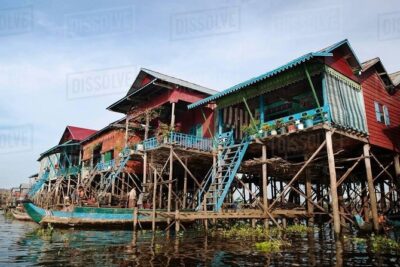
Sunset tour of Kampong Phluk stilts home village on the Tonle Sap
Read our review →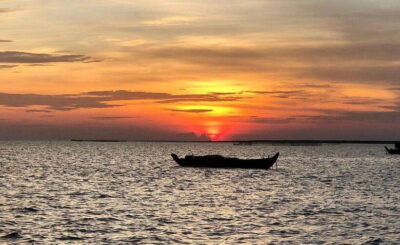
Kampong Phluk Floating Village Tour with Boat
Read our review →
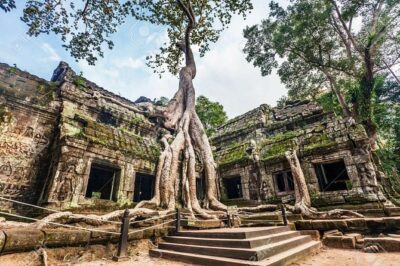
Angkor Wat Sunrise tour with Small – Group and Guide tours
Read our review →