
Reviewed · BAMBOO TRAIN TOURS
Full-day: Handicraft, Bamboo train, Killing cave, Bat Cave
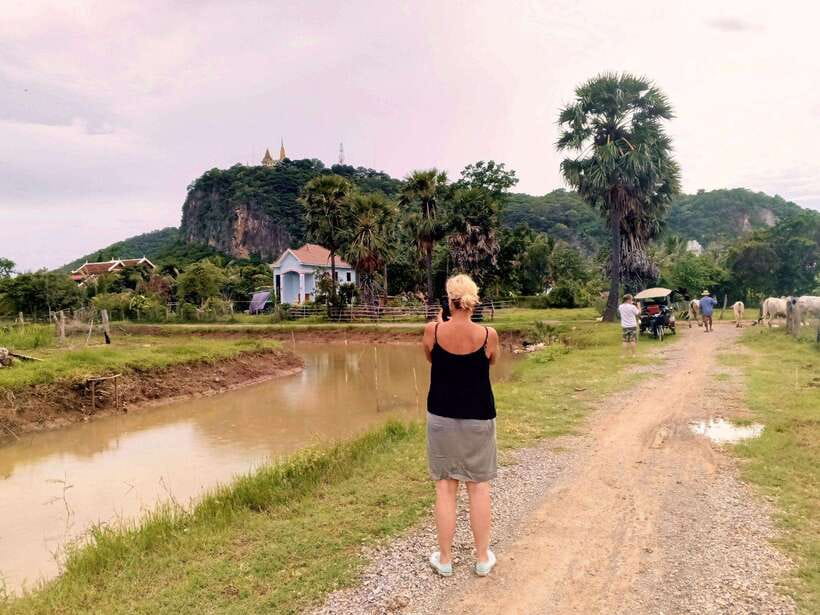
Battambang’s best day out is less about ticking off monuments than seeing how the province works. You move from rice paper and rice wine workshops to a prahok market, village farms, Buddhist temples, and the famous original bamboo train, then finish at Phnom Sampau with its Killing Cave and Bat Cave.
I like the generous mix of food, rural life, and difficult history. I also like the personal guiding: Kim and David are named guides who explain things clearly, stop when something catches your eye, and adjust the day around your requests. The main caution is the pace. Ten hours in a tuk-tuk, with walking and steps at the caves, can feel long in heat.
Key points at a glance
- Local food made in front of you: See rice paper, spring rolls, rice wine, dried bananas, bamboo sticky rice, and other village specialties.
- A private day with a human touch: English-speaking guides including Kim and David can answer questions and make occasional stops along the road.
- Hard history in real places: Wat Samrong Knong and Phnom Sampau explain the Khmer Rouge period through the Well of Shadows and Killing Cave.
- The original bamboo train: Pay an extra $5 fee to ride the simple rail platform through the countryside.
- Villages beyond the city: Cross a suspension bridge, meet farmers, see a Cham village, and visit pagodas and plantations.
- A memorable final hour: At dusk, thousands of bats stream from the Bat Cave before sunset.
A food trail through Battambang Province
The day begins with pickup in Krong Battambang. Your transport is a private tuk-tuk, and the provider includes hotel or guesthouse pickup and drop-off, unlimited mineral water, cold towels, snacks, and an English-speaking guide.
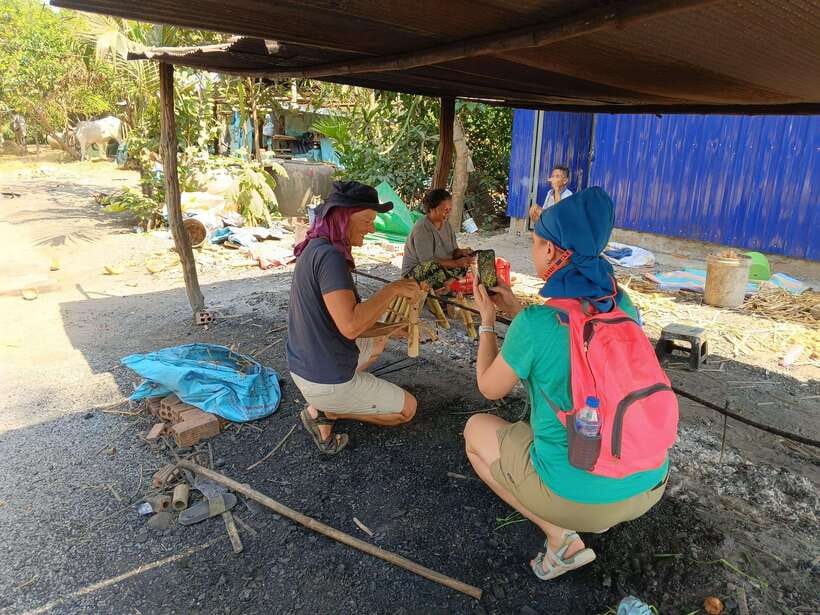
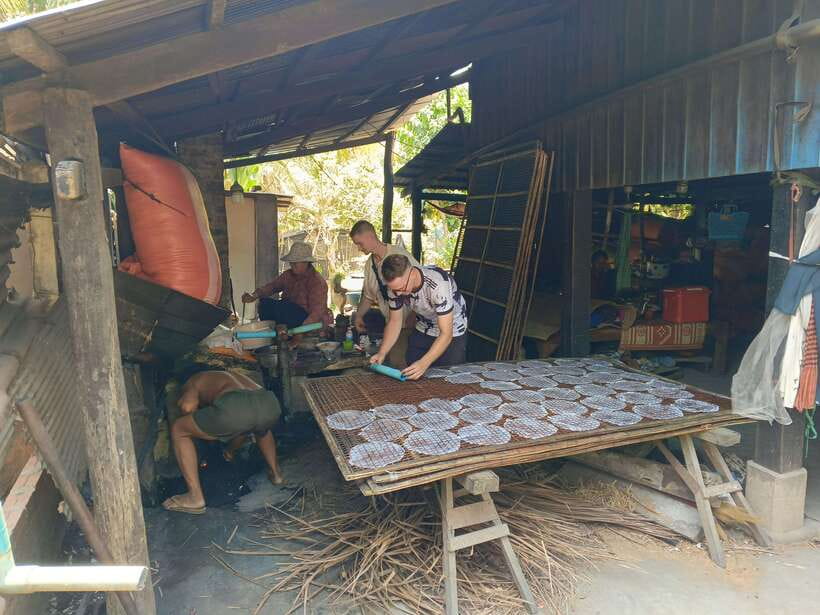
The first section is a tour of local production. You may see rice paper being made, learn about spring rolls, sample dried bananas, watch bamboo sticky rice preparation, and visit a rice wine producer. This is the kind of sightseeing I find useful because the products are not simply presented as souvenirs. You get a look at how everyday food is prepared and sold.
The rice paper and spring roll stop gives the food side of the day a clear focus. Rice paper is a small product, but seeing it made helps explain the work behind a familiar Cambodian dish. The rice wine stop adds another local flavor, while the tasting snacks keep the morning from becoming a parade of empty demonstrations.
The Khmer Prahok Market offers a different view. Prahok, fermented fish paste, is a major part of Cambodian cooking, but its strong smell can surprise you. If you are sensitive to pungent food markets, prepare yourself. If you enjoy seeing the less polished side of local commerce, this is one of the more revealing stops.
You may also see a fish market, rice noodles, bananas, and other local goods as the route changes. The guides have room to make spontaneous stops, which matters here. A fixed schedule would miss much of what makes the countryside interesting.
More Bamboo Train Tours in Battambang
- Battambang: Tuk-Tuk, Bamboo Train, Killing/Bat Caves, Sunset
★ 4.9 · 1,436 reviews - Afternoon tour by tuk tuk to bamboo train,bat cave,killing cave,countryside.
★ 5.0 · 344 reviews - Battambang: Bamboo Train, Bat Cave, Killing Cave by Tuk Tuk
★ 5.0 · 182 reviews
Wat Samrong Knong and the Well of Shadows
Wat Samrong Knong is both a Buddhist temple and a place of painful memory. The Well of Shadows recalls people killed during the Khmer Rouge period, and your guide explains more about what happened in the area.
This stop needs a respectful mood. It is not a quick photo stop, and it should not be treated like one. The temple setting can make the visit feel quiet and personal, but the subject is difficult. You will hear about a period that caused enormous suffering in Cambodia, including in villages around Battambang.
The tour information describes a visit of about an hour and a half at Wat Samrong Knong, with the route also listed as a bike tour in places. The included transport is tuk-tuk, so confirm the exact cycling arrangement when you book if that detail matters to you. Either way, wear shoes that are comfortable for walking and bring water, even though more water is supplied.
Markets, workshops, and the road north
The morning route links several stops before reaching Ek Phnom Temple. That means you get variety, but it also means the day is not a slow, single-site excursion. You may spend around 80 minutes at the prahok market, about an hour at a rice wine production place, and another hour at a separate village or craft stop.
This is where the private format earns its keep. Kim is described as enthusiastic and clear in his explanations, while David is noted for being friendly and open to requests. You can ask why a product is made in a certain way, stop for an unexpected sight, or spend more time talking with farmers when the moment feels worthwhile.
Ek Phnom Temple is the final major stop on the north side before returning toward Battambang for lunch. It gives the morning an architectural finish after the markets and food workshops. The visit is listed at about an hour and a half, so you should have time to look around rather than simply arrive, photograph, and leave.
The route combines colonial-era Battambang buildings with rural Cambodia. You will later see the provincial hall and the Ta Dambong Kro Aung statue, a city landmark tied to the local founding story. The contrast is useful: the city shows Battambang’s civic and colonial face, while the villages show how people live and work beyond the center.
Villages, the Sangke River, and Buddhist life
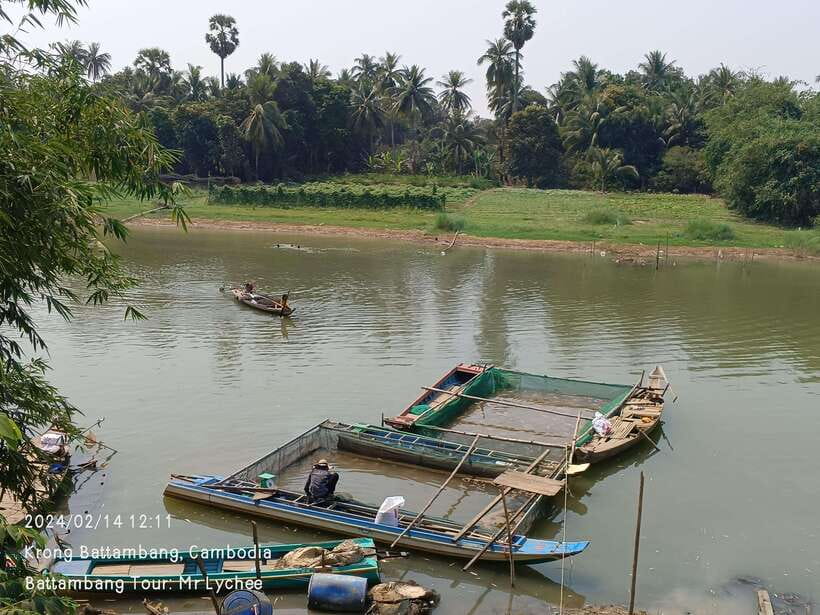
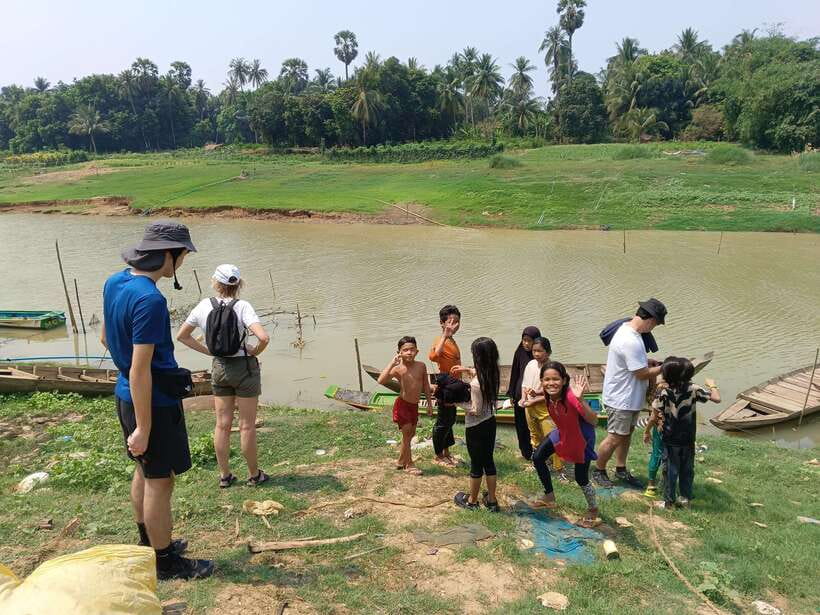
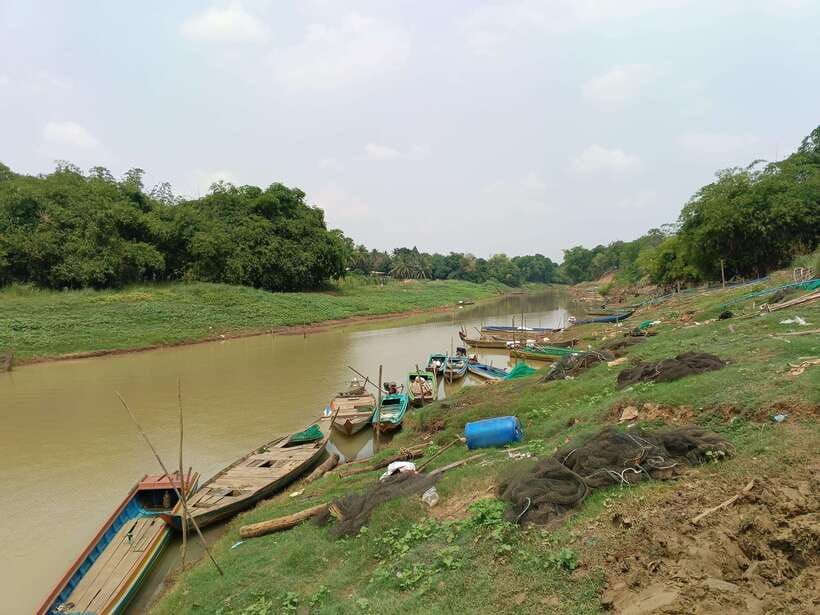
After returning toward the city, the tour heads into villages along the Sangke River. The route includes a suspension bridge, plantations, farms, a Cham village, and pagodas. These details give you more than a standard temple circuit.
You can talk with farmers and spend time around working village areas. The experience is not presented as a staged cultural performance. Instead, the guide helps explain what you are seeing and gives you a chance to ask questions.
A pagoda visit adds a religious side to the day. Your guide can explain Buddhist practice and the role of the temple in local life. Since the tour is private, you can ask for more explanation instead of relying on a short scripted talk.
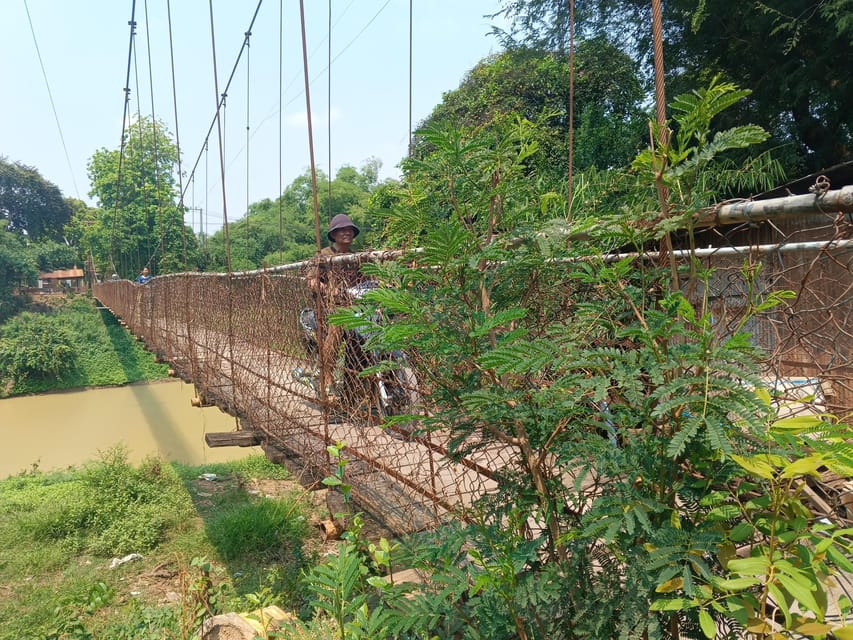
The suspension bridge may be a small stop, but it helps break up the tuk-tuk ride. Bring your camera, as the river and village views are among the scenic moments of the day. Sunscreen is important too. Much of the appeal comes from being outside, and Cambodian heat can turn a pleasant walk into a tiring one.
More Cave Tours in Battambang
- Battambang Tuk Tuk tour: Bambootrain, Killing & Bat Caves,Sunset
★ 5.0 · 799 reviews - Full Day tour .City tour.Countryside.Bamboo Train.Secret Bat Cave
★ 5.0 · 178 reviews - Afternoon Tour: Bamboo Train, Killing Cave &Bat Cave
★ 5.0 · 73 reviews - Battambang: Bamboo Train, Bat Cave and Killing Cave Tour
★ 4.9 · 58 reviews
The original bamboo train and its extra fee
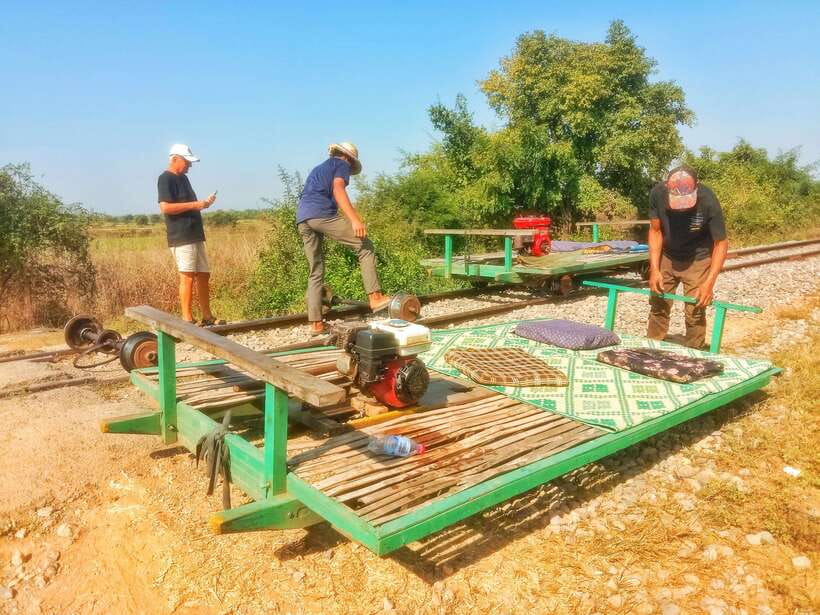
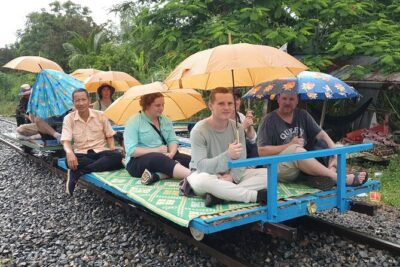
The bamboo train is the tour’s most playful stop. The original version is a simple bamboo platform on a rail line, and the ride gives you an unusual way to see the countryside. It is not a polished theme-park attraction. That is precisely why many people find it memorable.
The bamboo train fee is not included. The supplied price is $5 per perron, a wording you should clarify with the provider before departure so you know whether the charge is per person or per ride. The tour price itself is $15 per person, so this extra cost is small in absolute terms but important when comparing the final total.
Do not expect the bamboo train to carry the whole day. The ride is one part of a much wider program, and the real value comes from the combination of transport, guide, local stops, and the mountain visit. If you want a long, dedicated railway excursion, this is not that. If you want to try a distinctly Battambang experience without giving up the rest of the province, it fits well.
A late lunch is planned at a village restaurant after the bamboo train. Meals are not included, so carry cash. The guide can recommend places for lunch and dinner, but you pay for your own food and drinks.
Phnom Sampau, from monkeys to the Killing Cave
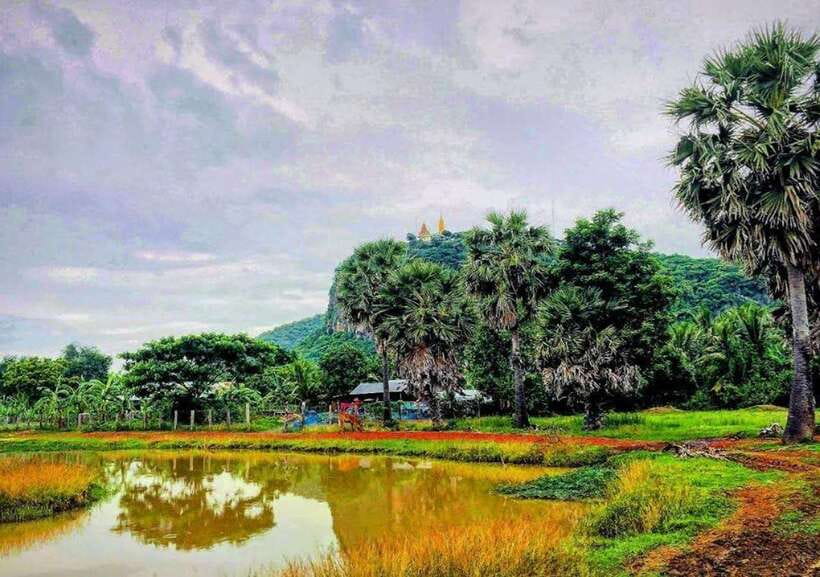
The afternoon continues by tuk-tuk to Phnom Sampau, a mountain area with shrines, temples, the Monkey Forest, the Golden Temple, and the Killing Cave. The route changes mood again, moving from food and farming to religion, scenery, and Cambodia’s recent past.
The Killing Cave is reached either by walking or by paying for a ride up. Walking is free, according to the tour details. The mountain section includes steps and uneven ground, so hiking shoes are a sensible choice. You should also be realistic about your fitness, since the tour is not suitable for people with mobility impairments, high blood pressure, or people over 95.
The cave and surrounding shrines are connected to Khmer Rouge atrocities. Your guide’s explanation matters here because the site can otherwise seem like another scenic stop. Take time to listen, and keep your camera away when the mood calls for respect.
The Golden Temple provides a different experience, with religious buildings and views from the mountain. The Monkey Forest adds wildlife to the route, though the information does not promise a scheduled animal encounter. Think of it as part of the Phnom Sampau setting, not a zoo visit.
The Bat Cave at sunset
The final stop is timed for dusk, when thousands of bats fly out of the cave in a long stream. This is the day’s most dramatic natural sight, and ending here makes sense. You watch the mountain change from a daytime religious and memorial site into the starting point for the evening flight.
Timing depends on the day’s progress and sunset, so keep some patience if earlier food stops take longer. The tour aims to finish before sunset after seeing the Bat Army. Bring your camera, but do not let photography distract you from the sight itself.
The Bat Cave is included in the entrance fees, as is the Killing Cave. That helps keep the afternoon costs under control, though you still need cash for personal spending, meals, and the bamboo train.
What the $15 price really covers
At $15 per person, this is unusually inexpensive for a private, full-day excursion. The price includes tuk-tuk transport, pickup and drop-off, an English-speaking guide, water, cold towels, snacks, and entrance fees for the Bat Cave and Killing Cave.
It does not include meals, personal expenses, or the bamboo train. That distinction matters. The advertised price is not your complete spending total, but the required extras are limited. Bring cash for food and the train, and ask about the exact bamboo train charge before setting out.
The value comes from how much ground the tour covers. You get city sights, food production, village life, temples, a railway ride, Khmer Rouge sites, and Phnom Sampau in one day. The tradeoff is comfort. A private tuk-tuk is flexible and practical, but it is not a spacious air-conditioned vehicle for a ten-hour road trip.
Practical advice for making the day work
Start with a firm pickup point. The provider asks for the name of a hotel, restaurant, or guesthouse in Battambang, and the tour operates from Krong Battambang. Give a clear location and be ready when the day starts.
Wear hiking shoes or sturdy walking shoes. The mountain section can involve climbing, and the tour also includes village walks and temple grounds. Sunscreen, a camera, cash, and water are basic needs, though the tour supplies mineral water and cold towels.
The day lasts about ten hours. That is a long stretch, but the changing program helps. Food stops, markets, temples, city sights, river villages, the bamboo train, and Phnom Sampau each provide a new focus.
The tour is private, which is a major advantage for couples, families, and small groups who want to ask questions or adjust the pace. The guides are also open to requests. David is described as especially friendly and flexible, while Kim is praised for enthusiastic explanations. David’s brother may join the afternoon portion, but this should not be treated as guaranteed for every departure.
Free cancellation is available up to 24 hours before the start, and you can reserve now and pay later. Those terms make the booking flexible, but the important practical issue remains the physical demand of the day. This is not a good match if you need step-free access or have a condition affected by heat and exertion.
Should you book this Battambang day tour?
Book it if you want one affordable private day that shows several sides of Battambang rather than focusing on one temple. The strongest parts are the local food production, the chance to talk with village people, the personal guiding, and the Bat Cave finale.
Think twice if you dislike long tuk-tuk rides, strong food-market smells, difficult Khmer Rouge history, or walking on a mountain. You should also budget separately for lunch and the bamboo train.
For most visitors with a full day in Battambang, I would choose this tour for its range and human contact. It gives you far more than a quick ride on the bamboo train, and it places the famous caves in a wider picture of local food, religion, farming, and daily life.
FAQ
How long does the tour last?
The tour lasts 10 hours, with pickup and drop-off in Krong Battambang.
What transport is included?
Private tuk-tuk transportation is included, along with hotel or guesthouse pickup and drop-off.
Is the bamboo train fee included?
No. The bamboo train fee is listed separately as $5 per perron. Confirm the exact charging method with the provider before the ride.
Are meals included?
No. Meals are not included. A village restaurant is planned for a late lunch, and you pay for your own food and drinks.
Which entrance fees are included?
Entrance fees for the Bat Cave and Killing Cave are included. The bamboo train fee is separate.
What language does the guide speak?
The live tour guide speaks English. Guides named in the supplied tour information include Kim and David.
What should I bring?
Bring a camera, hiking shoes, sunscreen, and cash. Pets are not allowed, except for assistance dogs, and alcohol and drugs are prohibited.
More Full-Day in Battambang
- Explore Battambang full day tour by Tuk Tuk (start from 9am-6:30pm)
★ 5.0 · 240 reviews - Full-day: Wat Banan. Old bamboo train. Bat Cave. Killing cave
★ 5.0 · 13 reviews - Private Full Day Tuk Tuk Tour in Battambang
★ 5.0 · 12 reviews - Tuk Tuk Tour (Full-Day)
★ 5.0 · 7 reviews
More train rides around Battambang
- AfternoonTour.Bamboo train.killing cave with Secret bat cave
★ 5.0 · 41 reviews - Full Day-Tour: Handicraft, Bamboo train, Killing cave. Bat cave
★ 5.0 · 29 reviews - Full day tour by bicycle & tuk tuk,bamboo train,bat cave,villages
★ 5.0 · 27 reviews - Afternoon tour to Original Bamboo train. Bat cave. Killing cave
★ 5.0 · 25 reviews
New around Battambang
- Morning Tour Bamboo Train, Ancient House, Local, Countryside★ 5.0 · 3 reviews
- Battambang Private Full-Day Tour★ 5.0 · 3 reviews
- Bamboo Train, Banann Temple, Fruit Bat, Bat Cave, Sunset★ 4.2 · 3 reviews
- Private Boat from Battambang to Siem Reap via Tonle Sap Lake★ 4.5 · 3 reviews
- Battambang Private afternoon tour bamboo train bat cave & village★ 5.0 · 3 reviews
- Battambang City and Country side Full day Tour★ 5.0 · 4 reviews
- Private Taxi Transfer From Battambang – Siem Reap City★ 5.0 · 4 reviews
- From Siem Reap: Battambang Day Trip Bamboo Train & Bat Cave★ 5.0 · 4 reviews
Bamboo Train Tours, compared.
Tuk-Tuk, Bamboo Train, Killing/Bat Caves, Sunset
Read our review →
Afternoon tour by tuk tuk to bamboo train,bat cave,killing cave,countryside.
Read our review →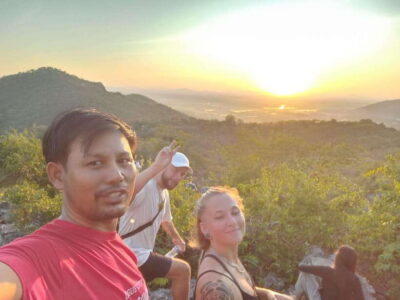
Full Day tour .City tour.Countryside.Bamboo Train.Secret Bat Cave
Read our review →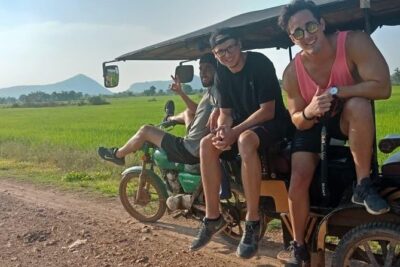
Battambang Full Day Tour from Siem Reap – Bamboo Train, Killing Cave & Sunset
Read our review →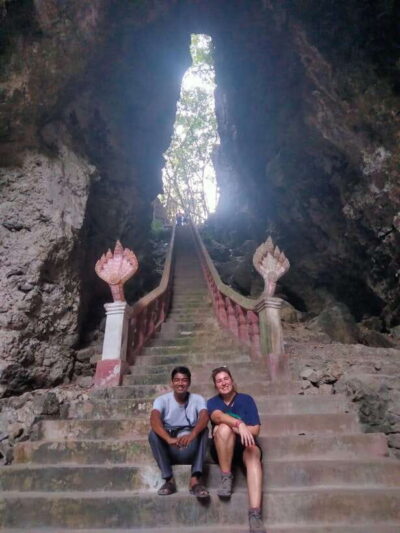
Afternoon Tour: Bamboo Train, Killing Cave &Bat Cave
Read our review →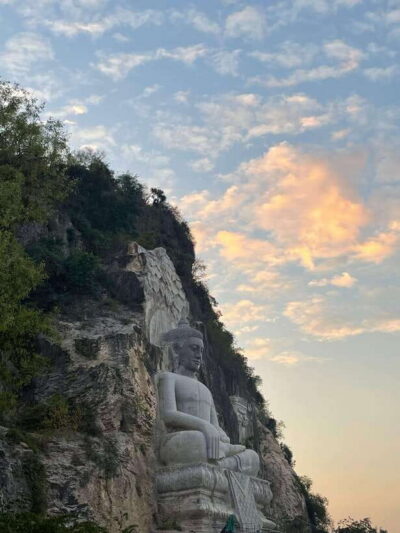
Full Day From Siem Reap – Bamboo Train, Killing Cave & Sunset
Read our review →Browse the lists this tour appears in