
Reviewed · BATTAMBANG TOURS
Tuk Tuk Tour (Full-Day)
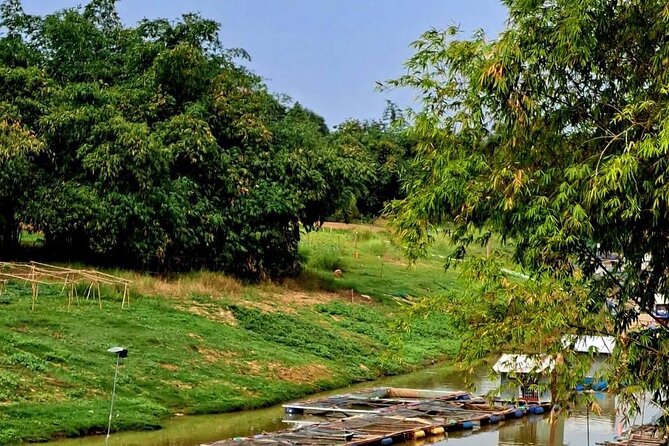
Battambang is at its most interesting when you leave the center and follow the dusty country roads by tuk tuk. This full-day outing links a Khmer Rouge memorial, family-run food workshops, old temples, the Bamboo Train, and Phnom Sampov’s evening bat flight in one long, varied day.
I like the close look at local work, especially sticky rice, fish paste, rice paper, and rice wine. I also like the small group limit of four people, which gives guides such as Sothea or Lim room to explain things and adjust the pace. The trade-off is simple: it is a long, warm day, lunch and entry fees are extra, and the schedule can feel packed.
Key points at a glance
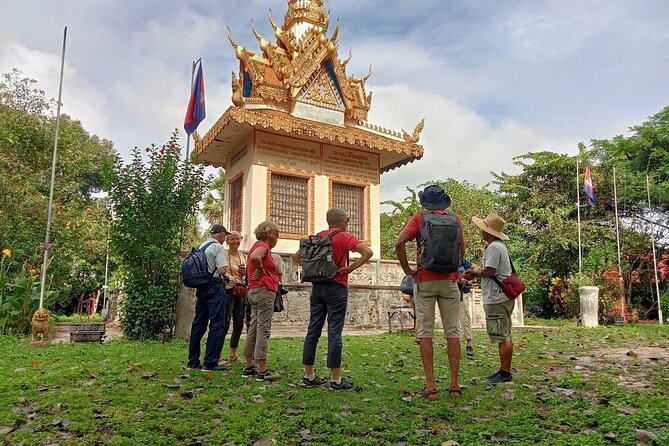
- Samrong Knong Killing Field: Begin with a serious look at Battambang’s Khmer Rouge past.
- Local food production: See bamboo sticky rice, fish paste, handmade rice paper, and rice wine being made.
- Eight-hour countryside route: The tuk tuk connects widely scattered sights without requiring you to arrange several rides.
- Small group size: A maximum of four people makes it easier to ask questions and stay close to the guide.
- Evening at Phnom Sampov: Finish with sunset and the bat cave, a dramatic end to a full day.
- Straightforward value: The $35 price includes the tuk tuk, English-speaking guide, water, fruit, snacks, and donations to local businesses, but not lunch or admission fees.
Why this Battambang tuk tuk route works

This is not a short city ride with a temple added on. It is a full sweep through Battambang’s nearby countryside, with stops that show how people work, eat, remember, and worship.
You spend roughly seven to nine hours on the road, with about eight hours given as the expected duration. That matters because the route covers several separate places. A tuk tuk is a practical choice here: you can sit back between stops, watch village life pass by, and avoid arranging separate transport to Ek Phnom, the Bamboo Train, Banan, and Phnom Sampov.
The tour is led by an English-speaking local guide. Sothea is named by several customers, while Lim is also praised for being attentive and careful about comfort. The description also identifies the driver as an experienced guide, so you may have one person handling both the road and the explanations.
At $35 per person, the price is reasonable for a private-feeling small group day, especially if four people share the outing. You still need to budget for lunch and entrance tickets, so the final cost will be higher. Even so, the included transport, guide, drinks, fruit, snacks, and local-business donations give the fee useful substance.
More Tuk Tuk Tours in Battambang
- Battambang: Tuk-Tuk, Bamboo Train, Killing/Bat Caves, Sunset
★ 4.9 · 1,436 reviews - Battambang Tuk Tuk tour: Bambootrain, Killing & Bat Caves,Sunset
★ 5.0 · 799 reviews - Afternoon tour by tuk tuk to bamboo train,bat cave,killing cave,countryside.
★ 5.0 · 344 reviews
Samrong Knong and the difficult first stop
The morning begins with a Killing Field connected with Khmer Rouge history. The supplied tour details identify this as Samrong Knong, a stop that gives the day moral weight before the lighter food and craft visits begin.
I appreciate this order. Cambodia’s past should not be treated as a quick footnote between photo stops. Starting here gives you a chance to understand part of the country’s recent history before seeing the daily life that followed it.
Expect this portion to be solemn rather than entertaining. The tour description does not specify how long you spend at the memorial or exactly which displays are included, so ask your guide to explain what you are seeing. Sothea is specifically praised for explaining the country’s history clearly, which could make a real difference at a place where context matters.
This is also the point where you should judge the day honestly. If you want only temples and countryside, the Killing Field may feel heavy. If you want a fuller picture of Cambodia, it is an important part of the route.
Bamboo sticky rice and village food work
The next stops turn toward food production. You see bamboo sticky rice being prepared as a traditional local business, followed by a fish market where fish paste is made.
These are useful visits because they show finished food in its working setting. Bamboo sticky rice is not just a snack to buy at a roadside stall. The stop lets you see the traditional business behind it. At the fish market, the focus is on production, including the making of fish paste, a strong and familiar part of Cambodian cooking.
The experience may be more practical than polished. Markets and food workshops can bring strong smells, busy activity, and a less controlled setting. That is part of the point, but you should be ready for a real working environment rather than a staged demonstration.
The tour includes donations to local businesses where the group stops. This does not replace buying something for yourself, but it means part of the tour price is intended to support the people showing their work. Personal purchases remain your responsibility.
Handmade rice paper and rice wine
The morning continues with two traditional crafts: handmade rice paper and handmade rice wine. These stops add variety to the food visits and make the route feel connected to ordinary village production.
Rice paper is easy to take for granted when you see it on a plate. Watching it being made helps you understand the labor behind a familiar ingredient. The rice wine stop offers another window into local practice, though the provided details do not say whether tasting is included. Do not assume it is.
I like this part of the route because it gives you something to ask about. A good guide can explain ingredients, methods, and how these products fit into local life. Reviews repeatedly praise the English-speaking guides for explaining what you see, and that is especially useful at small production stops where there may be no written information.
Keep your schedule flexible. The tour covers many stops, and the exact time at each one is not listed. If you want to linger over every process, you may need to accept a shorter visit later in the day.
A completely different sort of day from the same base:
- Local Livelihood Half Day Bike Tour in Battambang
★ 5.0 · 287 reviews - Explore Battambang full day tour by Tuk Tuk (start from 9am-6:30pm)
★ 5.0 · 240 reviews - Battambang: Bamboo Train, Bat Cave, Killing Cave by Tuk Tuk
★ 5.0 · 182 reviews - Full Day tour .City tour.Countryside.Bamboo Train.Secret Bat Cave
★ 5.0 · 178 reviews
Ek Phnom, an old temple stop
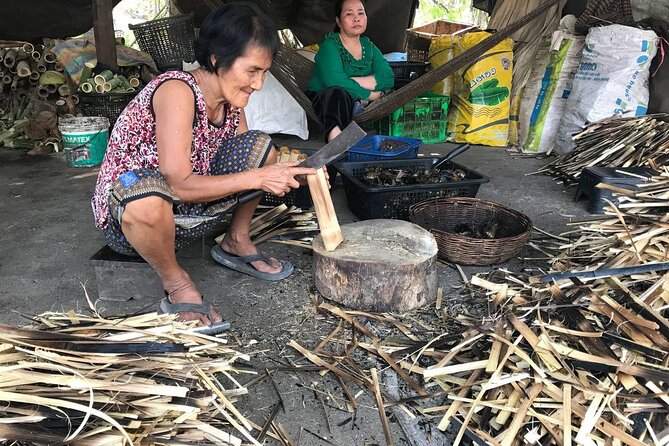
Ek Phnom is the main temple visit in the morning. It gives the day a change of pace after the memorial and village businesses.
The tour information names Ek Phnom but does not provide details about the temple’s construction, condition, or admission fee. Your guide is the right person to ask for that context. Since entrance fees are not included, confirm the current cost before or during the visit.
Ek Phnom works best as part of the wider route rather than as a stand-alone temple tour. You have already seen local work, and now you can connect the countryside setting with Cambodia’s religious and architectural past. The stop also breaks up the food-focused morning before lunch.
Lunch is not included. The schedule places it between the morning and afternoon sections, but no restaurant or set menu is specified. Bring enough cash for the meal and any drinks or purchases. Water, fruit, and snacks are included, which helps, but they are not a substitute for lunch on an eight-hour outing.
The new Bamboo Train stop
The afternoon opens with the Bamboo Train, identified here as the new spot. This is one of the route’s most distinctive activities, but the available information does not state the ride length, the current operating arrangement, or the admission price.
That lack of detail is worth noting. Ask your guide what is included once you arrive and whether the fee is paid directly at the site. The general rule is clear: tourist-place admission is not part of the $35.
The Bamboo Train gives the afternoon a more playful turn after the serious morning. It also helps keep the tour from becoming a string of temple visits. Still, the attraction may be less appealing if you dislike bumpy rides or want a slow, quiet cultural day. The tour description does not promise a private train or a particular route, so keep expectations practical.
Banan Temple and the final climb toward evening
Banan Temple is the next major stop. As with Ek Phnom, the tour listing does not provide enough detail to describe the current access route or the number of steps. You should ask your guide about the physical demands before you begin, particularly if stairs are difficult for you.
The temple adds another religious site after the Bamboo Train, but its place in the afternoon is important. You are moving toward Phnom Sampov and the evening finale, so Banan is part of a larger route rather than the sole focus.
Most people can participate according to the supplied information, but that broad statement does not remove the need to judge your own stamina. You will be out for much of the day, in an open tuk tuk, with several stops and possible walking. Comfortable clothing, sensible footwear, and sun protection are practical choices, though these are general preparations rather than listed tour inclusions.
Phnom Sampov sunset and the bat cave
The day ends at Phnom Sampov with sunset and the bat cave. This is the strongest closing image in the schedule: after food production, memorials, temples, and transport by tuk tuk, you finish with a high viewpoint and the movement of bats leaving the cave.
The timing is the key. Phnom Sampov is not just another stop squeezed into the afternoon. It is scheduled for sunset, so delays earlier in the day could affect how much time you have there. The tour lasts about eight hours, but the precise departure time is not supplied. Confirm the start time so you know how the evening is expected to work.
The bat cave is also weather and timing dependent. The tour promises the sunset and bat cave visit, but it does not guarantee a particular sunset view or state how long you stay. Your guide can help position the stop within the day’s schedule.
This final visit may be the most memorable part for you, but it is not the only reason to book. The morning visits are what make the outing more than a standard sunset transfer. They give the evening a stronger sense of place.
What the $35 actually covers
The $35 per-person rate includes several things that matter in Battambang:
- Pickup is offered.
- Transport is by tuk tuk.
- An experienced tuk tuk driver is included.
- You receive a local English-speaking guide.
- Water, fruit, and snacks are provided.
- Donations are made to local businesses visited during the route.
- The group is limited to a maximum of four people.
- A mobile ticket is available.
The exclusions are just as important. Admission fees at tourist sites are not included. Lunch, personal expenses, and insurance are also excluded.
For one or two people, the price buys convenience and a full day of transport. For a family or small group of four, the value improves because you get a long route without having to negotiate several separate tuk tuk rides. The small maximum also helps the guide stay engaged with the group.
The tour is not the cheapest way to see one or two Battambang sights. It becomes good value when you want the entire mix: history, village industries, temples, the Bamboo Train, and Phnom Sampov in one day.
Who should book this full-day outing
I would choose this tour if you have limited time in Battambang and want to see several different sides of the area. It suits first-time visitors who want a local guide to explain the history and countryside rather than simply receive a ride between attractions.
It also suits people who enjoy variety. The day shifts from a memorial to food production, from handmade goods to temples, then from the Bamboo Train to sunset and bats. That variety is the tour’s main strength.
Families may appreciate the comfortable tuk tuk and small group size, though parents should remember that the day is long and admission fees are extra. The tour states that most people can participate and that service animals are allowed. It is near public transportation, but pickup is offered, so you do not need to make your own way to every stop.
I would hesitate if you prefer a slow schedule with plenty of time at each temple. I would also think twice if you dislike strong food-market smells, open-air transport, or a day that includes a serious Khmer Rouge memorial. The route is broad, not leisurely.
Booking confirmation is provided at the time of booking. Free cancellation is available if you cancel at least 24 hours before the local start time. Cancellations or changes made later are not accepted for a refund.
Should you book the Battambang Tuk Tuk Tour?
Book it if you want an efficient, locally guided overview of Battambang beyond the city center. The mix of Samrong Knong, village food businesses, handmade crafts, Ek Phnom, the Bamboo Train, Banan, and Phnom Sampov gives you a fuller day than a simple temple transfer.
The main reason to choose it is the balance of culture, history, and food, supported by guides such as Sothea and Lim who are described as attentive English speakers. The main reason to skip it is the packed schedule and extra costs for lunch and entry tickets.
If you book, confirm the pickup time, ask which admission fees you should carry money for, and tell the guide early if you need more time at a particular stop. For a small group that wants one practical day covering Battambang’s major sights and local life, this is a sensible choice.
FAQ
How long does the Tuk Tuk Tour last?
The tour lasts about seven to nine hours, with the planned duration listed as approximately eight hours.
What places are included in the route?
The route includes the Samrong Knong Killing Field, bamboo sticky rice production, a fish market and fish-paste making, handmade rice paper, handmade rice wine, Ek Phnom, the Bamboo Train, Banan Temple, and Phnom Sampov for sunset and the bat cave.
Is hotel or location pickup available?
Pickup is offered as part of the experience.
Is a guide included?
Yes. A local English-speaking guide is included, along with an experienced tuk tuk driver. Sothea and Lim are names associated with the guiding service.
Are entrance fees included?
No. Entrance fees for tourist places are not included in the tour price.
Is lunch included?
No. Lunch is not included. Water, fruit, and snacks are provided.
How many people can join the tour?
The tour has a maximum of four participants.
Can I cancel for a full refund?
Yes, if you cancel at least 24 hours before the experience start time. Cancellations or changes made less than 24 hours in advance are not accepted for a refund.
More Full-Day in Battambang
- Full Day-Tour: Handicraft, Bamboo train, Killing cave. Bat cave
★ 5.0 · 29 reviews - Full day tour by bicycle & tuk tuk,bamboo train,bat cave,villages
★ 5.0 · 27 reviews - Full-day: Wat Banan. Old bamboo train. Bat Cave. Killing cave
★ 5.0 · 13 reviews - Private Full Day Tuk Tuk Tour in Battambang
★ 5.0 · 12 reviews
New around Battambang
- Morning Tour Bamboo Train, Ancient House, Local, Countryside★ 5.0 · 3 reviews
- Battambang Private Full-Day Tour★ 5.0 · 3 reviews
- Bamboo Train, Banann Temple, Fruit Bat, Bat Cave, Sunset★ 4.2 · 3 reviews
- Private Boat from Battambang to Siem Reap via Tonle Sap Lake★ 4.5 · 3 reviews
- Battambang Private afternoon tour bamboo train bat cave & village★ 5.0 · 3 reviews
- Battambang City and Country side Full day Tour★ 5.0 · 4 reviews
- Private Taxi Transfer From Battambang – Siem Reap City★ 5.0 · 4 reviews
- From Siem Reap: Battambang Day Trip Bamboo Train & Bat Cave★ 5.0 · 4 reviews
Battambang Tours, compared.
Tuk-Tuk, Bamboo Train, Killing/Bat Caves, Sunset
Read our review →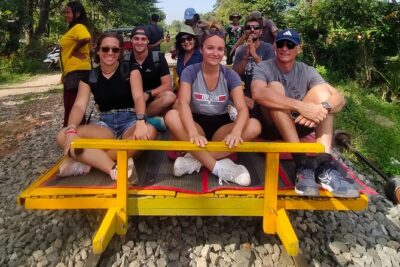
Battambang Tuk Tuk tour: Bambootrain, Killing & Bat Caves,Sunset
Read our review →
Afternoon tour by tuk tuk to bamboo train,bat cave,killing cave,countryside.
Read our review →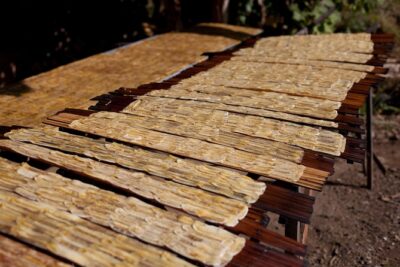
Local Livelihood Half Day Bike Tour in Battambang
Read our review →
Explore Battambang full day tour by Tuk Tuk (start from 9am-6:30pm)
Read our review →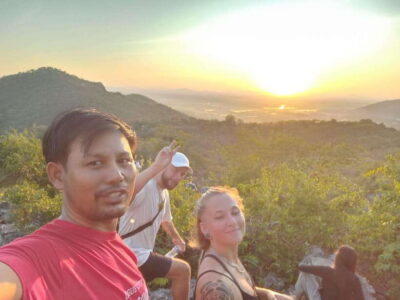
Full Day tour .City tour.Countryside.Bamboo Train.Secret Bat Cave
Read our review →
Browse the lists this tour appears in