
Reviewed · FLOATING VILLAGE TOURS
Bakong Temples & Floating Village Tour
Bakong gives this outing its historical punch. Built in 881 AD, it was the Khmer Empire’s first temple-mountain, a five-level stone pyramid that helped set the pattern for later monuments such as Angkor Wat. You then shift from sacred stone to daily life at Kampong Phluk, a community of homes, schools, and shops built to cope with Tonle Sap’s changing water levels. I like that contrast between royal ambition and ordinary life on the water.
I also like the private format, since your group can move at its own pace with an English-speaking guide rather than follow a large crowd. The air-conditioned vehicle, hotel pickup, drop-off, and cold drinking water make a long temple day easier, especially in Siem Reap’s heat. Guides named Mr Oun Kosorl and Mr K receive especially warm praise for their charm and temple explanations.
The main catch is cost. The $45 tour price does not include the $37 Angkor Pass, and the floating village admission is also excluded. Add those charges before booking, and remember that the village visit can feel sobering as well as fascinating. You are seeing a real community dealing with difficult conditions, not a polished theme park.
Key points at a glance
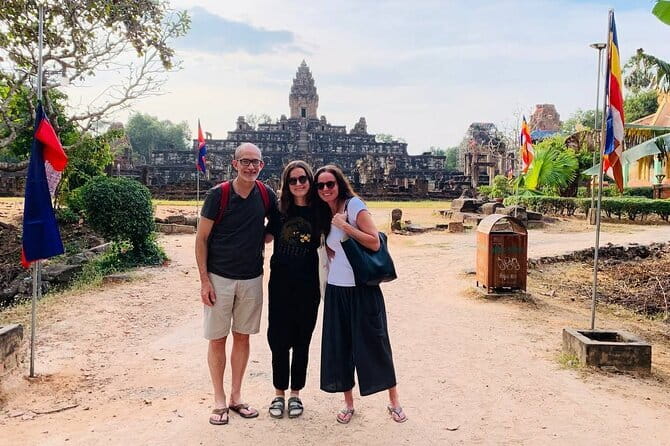
- Bakong is the star temple: Its five-tiered sandstone pyramid, moats, walls, Naga causeway, and stone elephant and lion guardians make it the most memorable temple stop.
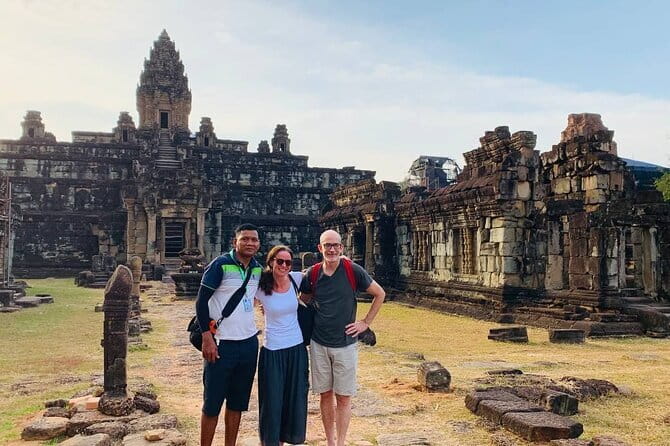
- The Roluos Group fills out the morning: Lolei and Preah Ko show earlier Khmer design before you reach Bakong.
- Kampong Phluk changes the subject completely: Homes, schools, and shops operate around the seasonal rise and fall of Tonle Sap.
- You travel privately: Only your own group participates, with pickup and drop-off in an air-conditioned vehicle.
- The guide matters: Mr Oun Kosorl and Mr K are praised for warm, clear explanations of Siem Reap and its temples.
- Budget beyond the headline price: The Angkor Pass costs $37 per person, while the floating village admission is not included and has no price listed here.
Why Bakong makes this more than a standard temple day
Many Siem Reap temple outings focus on the most famous monuments around Angkor. This one goes farther back, to the Roluos area southeast of the main temple group, where the Khmer building tradition was still taking shape.
Bakong was built by King Indravarman I in 881 AD. Its central pyramid represents Mount Meru, the sacred mountain at the center of the Hindu and Buddhist cosmos. The design uses height, steps, walls, and moats to create a symbolic universe in stone.
That idea is easier to understand when you can see the structure in person. Bakong is not simply a large pile of carved blocks. Its five levels guide your eye upward toward the central sanctuary, while the surrounding water and enclosing walls help mark the temple as a sacred realm.
I especially like the details that distinguish Bakong from later Angkor monuments. It has the earliest known Naga causeway in Khmer architecture, along with large stone guardian elephants and lions on its lower levels. Those animals give the lower terraces a strong sense of protection and ceremony.
The two-hour visit is useful here. A rushed stop would let you take a few photographs and leave without grasping why Bakong matters. With more time, your guide can point out the structure’s layout, explain its role in Khmer history, and help you compare it with the monuments you may see elsewhere in Cambodia.
More Floating Village Tours in Siem Reap:
- From Siem Reap: Kampong Phluk Floating Village Tour by Boat
★ 4.9 · 6,979 reviews - Siem Reap: Kampong Phluk Floating Village Tour with Boat
★ 4.9 · 3,843 reviews - Siem Reap Floating Village Kampong Phluk Sunset with Boat
★ 5.0 · 1,962 reviews
Lolei begins the Roluos story
The first stop is Lolei, the northernmost of the three Roluos temples. It dates from the late ninth century and is part of the same early temple group as Preah Ko and Bakong.
Lolei is scheduled for about an hour. The supplied details do not specify the condition of every structure or the exact form of the visit, so you should think of this as a historical introduction rather than the main event of the day.
Its value comes from the sequence. You begin with an early Hindu temple, then continue to Preah Ko, and finally reach the larger temple-mountain at Bakong. That order lets you see a progression in Khmer religious architecture instead of treating each site as an isolated ruin.
Admission to Lolei is not included. Since the tour also excludes the Angkor Pass, check the total entrance cost before departure. The $37 pass is listed as an additional charge per person, and it may affect the value calculation for anyone who has already visited other Angkor sites or already holds a valid pass.
Preah Ko shows an earlier royal center
Preah Ko was the first temple built in Hariharalaya, an ancient city located about 15 kilometers southeast of the main Angkor temple group. It was built before the great central monuments most people associate with Siem Reap.
The planned visit lasts about an hour, which gives you enough time to look at the temple’s arrangement and hear why this early royal center mattered. Preah Ko helps place Bakong in a wider story. The Khmer court was not always based around the monuments you see on the usual Angkor circuit.
Admission to Preah Ko is listed as free, though the tour’s general Angkor Pass charge remains excluded. That distinction is worth keeping clear when you plan your budget.
I would pay attention here to the guide’s explanation rather than chase a checklist of carvings. The guide names connected with this experience, Mr Oun Kosorl and Mr K, are praised for making Siem Reap’s history understandable and personal. A good explanation can turn an early temple that looks modest into an important step in the growth of Khmer architecture.
Two hours at Prasat Bakong
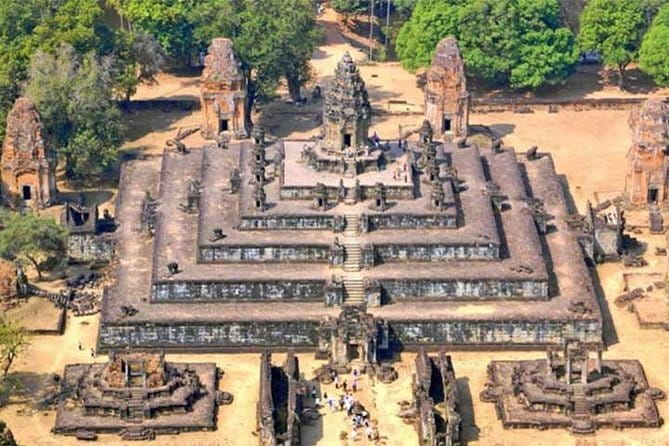
Bakong receives the longest temple visit, and that is the right choice. Built in sandstone in 881 AD, it was the first Khmer temple-mountain of its kind and a model for later monuments.
The central pyramid rises in five levels. Each level represents part of the symbolic climb toward Mount Meru. Around it, the moats and enclosing walls create a clear boundary between the temple and the outside world.
Look for the Naga causeway, one of the site’s most important architectural details. The serpent form is not just decoration. It adds a ceremonial path toward the temple and shows how Khmer builders used sculpture and movement together.
The stone elephants and lions on the lower levels are another reason to take your time. They are unusually large and well preserved, and they give the base of the monument a strong guardian presence.
You may find Bakong less instantly famous than Angkor Wat, but that is part of its appeal. It gives you a clearer sense of experimentation and development. The temple is important not because it is the biggest monument in the region, but because it helped establish a form that later rulers expanded on a much grander scale.
The tour allows two hours here. That should suit you if you like to pause, listen, and inspect architectural details. If you prefer a quick photograph at each stop, the schedule may feel generous, but the extra time is useful in the heat and gives the temple room to make an impression.
A few more Siem Reap half-days to weigh up
- Angkor Wat Sunrise or Sunset Tour with Guide from Siem Reap
★ 5.0 · 12,109 reviews - Siem Reap: Angkor Wat: Small-Group Sunrise or Sunset Tour
★ 5.0 · 9,444 reviews - Sunset tour of Kampong Phluk stilts home village on the Tonle Sap
★ 5.0 · 4,865 reviews - Siem Reap: Angkor Wat 2-Day Tour with Sunrise and Sunset
★ 4.9 · 4,429 reviews
From stone temples to Kampong Phluk
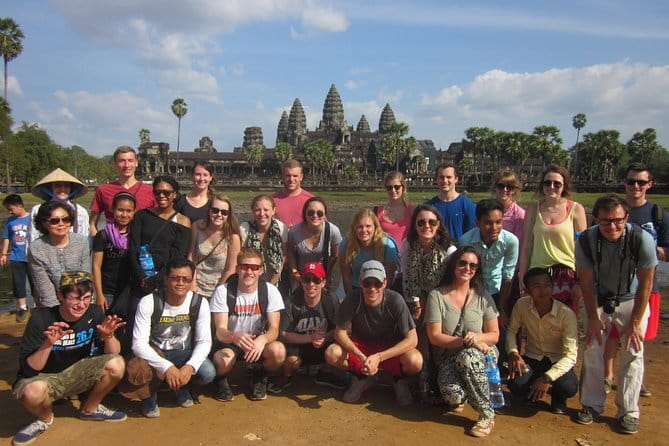
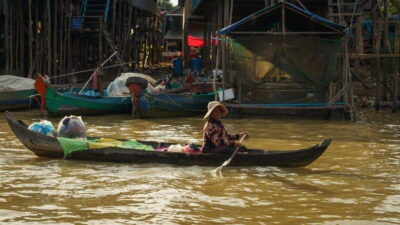
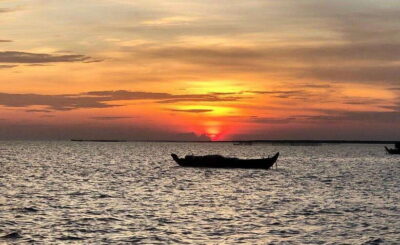
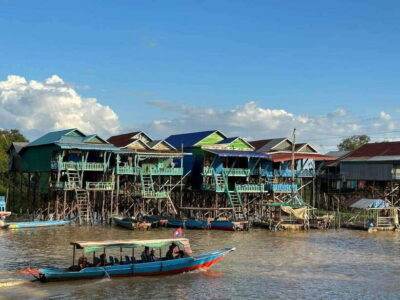
After the Roluos temples, the experience turns toward Tonle Sap Lake and Kampong Phluk Floating Village. This is not a small collection of boats set out for photographs. The community infrastructure includes homes, schools, and shops built around life on the water.
Some structures float directly on the water. Others stand on tall stilts, which rise high above the ground during the dry season. The village must adapt as water levels change through the year, and that seasonal movement is the central fact of the visit.
The planned village stop lasts about three hours, making it a major part of the day rather than a quick add-on. A boat ride along the river takes you toward the village, according to the experience details, and gives you a way to see how the community is arranged around its waterways.
This is where I would keep your expectations grounded. The visit offers a rare look at how people organize homes, education, and trade in a place shaped by water. It can also be hard to see the difficult conditions faced by the people who live there. The experience is most worthwhile if you approach it with respect and attention, not as a simple photo stop.
One detail worth knowing is that the village admission is not included. The exact charge is not provided, so ask for the current amount when booking or before the outing begins. The tour price also excludes the Angkor Pass, so the total cost is higher than $45 per person.
What the private format changes
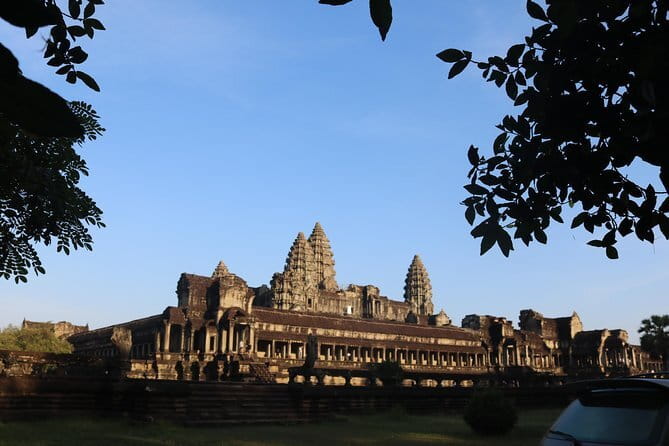
This is a private tour, meaning only your own group participates. That matters on a six-to-eight-hour outing. You can ask questions about the temple design, pause when you need a break, and discuss the village visit with your guide without trying to keep up with a large party.
Pickup and drop-off are included. The vehicle is air-conditioned, and cold drinking water is provided. Those are simple comforts, but they have real value in Cambodia, where a day moving between open temple grounds and a boat-based community can be tiring.
The English-speaking guide is central to the experience. The guide connected with the tour is identified in the feedback as Mr Oun Kosorl and also as Mr K. He is described as charming and insightful, with a strong ability to explain the history of Siem Reap and its temples.
Because a private guide can shape the whole day, use the time well. Ask why Bakong differs from Preah Ko, how the Roluos temples relate to the wider Angkor area, and how the floating village adjusts to seasonal water levels. The more specific your questions, the more useful the tour is likely to feel.
The tour is booked about 12 days ahead on average, so it is sensible to reserve before your preferred date fills. Confirmation is received at booking, and a mobile ticket is offered. Group discounts are also listed, which may improve the per-person value for larger parties.
Is $45 a fair price?
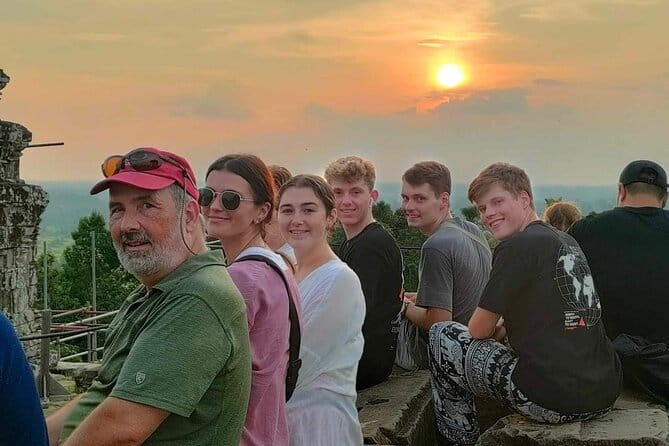
At first glance, $45 per person is a reasonable price for a private six-to-eight-hour outing with a guide, transport, hotel pickup, drop-off, air conditioning, and water. You are not paying only for entry to one monument. You are paying for a full day of transport and interpretation across two very different settings.
The calculation changes once excluded costs are added. The Angkor Pass is listed at $37 per person, and admission to the floating village is also not included. That means you should budget at least $82 per person before the village fee, assuming you need the pass.
For a solo visitor, that total may feel high compared with joining a larger group. For a couple, family, or group of friends, the private arrangement can make more sense, especially if a group discount applies. The value is strongest for people who care about explanations and prefer not to spend the day managing their own transport.
The tour is less attractive if you already have an Angkor Pass, want only the most famous temples, or are mainly interested in a short boat trip. Its appeal comes from the combination of early Khmer architecture and present-day water-based life.
Who will enjoy this day most
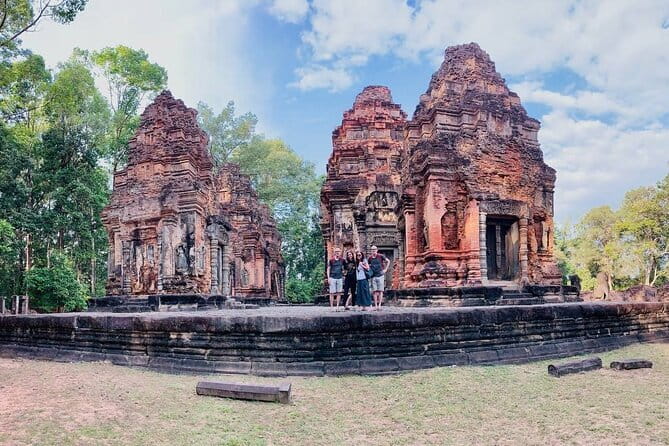
I would recommend this outing to you if you want context, not just a succession of famous names. Bakong rewards anyone curious about how Khmer temple design developed, while Kampong Phluk adds a human and environmental side to the day.
It also suits visitors who want a private experience and value direct access to a guide. Families and small groups may appreciate the pickup, vehicle, and flexible feel more than solo guests on a strict budget.
You may want to choose another outing if your main goal is a large concentration of major Angkor monuments. Lolei, Preah Ko, and Bakong are historically important, but they are not the same experience as spending a full day around Angkor Wat, Bayon, and Ta Prohm.
The village portion also requires a thoughtful approach. You are entering a working community whose homes and services depend on changing water levels. If that sounds meaningful to you, the visit adds real depth. If you want a purely scenic boat ride, the reality of the village may feel more difficult than expected.
Practical details before you reserve
The total duration is approximately six to eight hours, with one hour at Lolei, one hour at Preah Ko, two hours at Bakong, and three hours at Kampong Phluk. The timing leaves room for transport between stops, but the exact order or pace may vary.
Pickup and drop-off are included, and most people can participate. The activity is private, not a shared group departure.
Free cancellation is available if you cancel at least 24 hours before the local start time. Cancellations inside that window are not refunded, and changes made within 24 hours are not accepted.
The tour usually fills around 12 days ahead. If your schedule is fixed, I would not leave it until the last minute. Before paying, confirm the Angkor Pass requirement and the current floating village admission so the final cost does not surprise you.
Should you book the Bakong and Floating Village Tour?
Book it if you want a day with a clear arc: early Khmer temples first, then a close look at a community shaped by Tonle Sap. Bakong is the strongest reason to go, and the private guide format gives the architecture enough time and explanation to make sense.
The main caution is the added cost and the serious nature of the village visit. You will pay more than the advertised $45 once the Angkor Pass and village admission are counted, and Kampong Phluk may leave you thinking about difficult living conditions rather than simply admiring the scenery.
For couples, families, and small groups who want a private guide, air-conditioned transport, and a less predictable view of Siem Reap, this is a sound choice. For a low-cost temple sampler, it is less compelling. Check the extra fees, allow most of a day, and book this tour for the contrast, not just the photographs.
FAQ
How long does the Bakong Temples and Floating Village Tour last?
The tour lasts approximately 6 to 8 hours. The planned visits include one hour at Lolei, one hour at Preah Ko, two hours at Bakong, and three hours at Kampong Phluk Floating Village.
What is included in the tour price?
The tour includes an English-speaking guide, pickup and drop-off, cold drinking water, and an air-conditioned vehicle.
Is the Angkor Pass included?
No. An Angkor Pass costing $37 per person is listed as an additional charge.
Is floating village admission included?
No. Admission to Kampong Phluk Floating Village is not included. The current fee is not provided in the tour details.
Is this a private or shared tour?
It is a private activity. Only your own group participates.
Which temples are visited?
The temple stops are Lolei, Preah Ko, and Prasat Bakong.
Does the tour include pickup?
Yes. Pickup and drop-off are included.
What language does the guide speak?
The guide speaks English.
What is the cancellation policy?
You can receive a full refund if you cancel at least 24 hours before the experience’s start time. Cancellations or changes made less than 24 hours before the start time are not accepted, and the amount paid is not refunded.
New around Siem Reap
- Siem Reap Temple and Waterfall 3-Day Tour★ 4.5 · 3 reviews
- Siem Reap: Guided Day Trip to Local Village & Cooking Class★ 5.0 · 3 reviews
- Savor the Countryside: Tours with Authentic Cooking Classes”★ 5.0 · 3 reviews
- Siem Reap Private Tour: Angkor Wat Sunrise And Banteay Srei★ 5.0 · 3 reviews
- Angkor Wat Sunset In Private and Small-In-Group★ 4.3 · 3 reviews
- Angkor Wat Sunrise TukTuk Tour★ 5.0 · 3 reviews
- Exclusive Angkor temples and Small group temples tours★ 5.0 · 3 reviews
- Angkor Wat: Highlights and Sunrise with Spanish Guide★ 4.8 · 3 reviews
Floating Village Tours, compared.
Kampong Phluk Floating Village Tour with Boat
Read our review →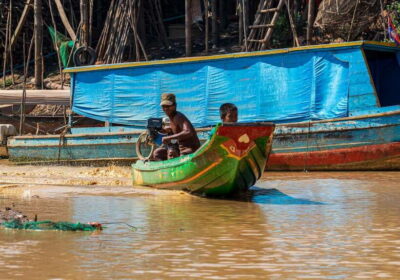
Siem Reap Floating Village Kampong Phluk Sunset with Boat
Read our review →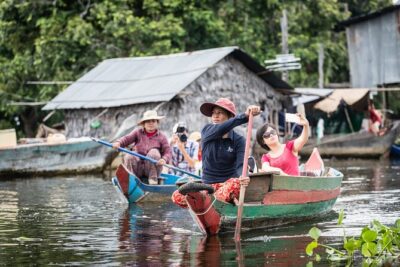
Kompong Phluk Floating Village Half-Day Tour ( Morning / Sunset )
Read our review →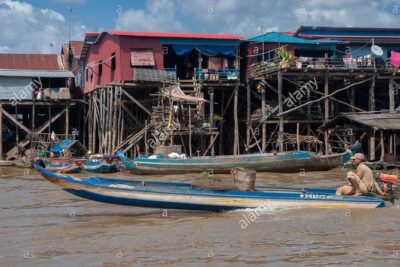

Tonle Sap, Kampong Phluk & Floating Village Tour
Read our review →
Sunset Dinner Tour: Tonle Sap Lake Floating Village
Read our review →Browse the lists this tour appears in