
Reviewed · ANGKOR WAT TOURS
Angkor Wat & Tonle Sap Lake Private Day Tour
Angkor Wat tells Cambodia’s ancient story in stone, while Tonlé Sap shows how people still live with the region’s great seasonal lake. I like that this private tour puts both scenes together in one long day, and I like the comfort of hotel pickup, an air-conditioned vehicle, and a private boat. The temple time is focused on Angkor Wat, Angkor Thom, and Bayon rather than trying to cram in every ruin.
The main caution is cost clarity. The $40 price does not cover the Angkor Pass, lunch, or the listed $20 government tax and community development fee, and the morning pickup window runs from 7:30 to 8:30. The lake stop also takes several hours, so this is a full day with little spare time.
Key points to know before booking
- Two very different Cambodia experiences: Ancient Khmer temples come first, followed by life on and around Tonlé Sap Lake.
- Private transportation: Your group receives hotel pickup and return in an air-conditioned vehicle.
- Three major temple stops: Angkor Wat, Angkor Thom’s South Gate, and Bayon receive the main temple focus.
- A private Tonlé Sap boat: The ride to Kompong Phluk includes floating homes and flooded forest areas.
- Extra costs matter: The $40 price excludes the Angkor Pass, lunch, and a listed $20 fee per person.
- A long but efficient day: The experience lasts about nine hours and suits people who want two major Siem Reap sights in one outing.
Why the temple and lake combination works
Many Siem Reap excursions focus only on Angkor’s temples. This one adds a very different view of the area, the Tonlé Sap floodplain, where water affects transport, homes, forests, and daily routines.
That contrast gives your day a useful shape. At Angkor Wat, you look backward to the early 12th century and the rule of Suryavarman II. At Angkor Thom and Bayon, you see the grand religious and political world associated with Jayavarman VII. At Kompong Phluk, the subject shifts from royal building projects to the practical ways communities live beside a lake that changes with the seasons.
I particularly like the private format for this pairing. You are not tied to a large shared group, and the vehicle returns your party to the hotel at the end. The English-speaking driver-guide is there to explain the route, though the supplied details do not give a guide’s name or identify a separate temple scholar.
There is a tradeoff. Nine hours sounds generous, but the temple visits and the long Tonlé Sap portion use most of it. You will get a broad introduction, not a slow, specialist study of every site.
More Angkor Wat Tours in Siem Reap:
- Angkor Wat Sunrise or Sunset Tour with Guide from Siem Reap
★ 5.0 · 12,109 reviews - Siem Reap: Angkor Wat: Small-Group Sunrise or Sunset Tour
★ 5.0 · 9,444 reviews - Siem Reap: Angkor Wat 2-Day Tour with Sunrise and Sunset
★ 4.9 · 4,429 reviews
Starting in Siem Reap between 7:30 and 8:30
The day begins with hotel pickup in Siem Reap. The stated pickup window is broad, from 7:30 to 8:30 in the morning, so you should be ready at the earlier end rather than assuming the vehicle will arrive at 8:30.
The first drive goes to the Angkor Wat Ticket Office. You must buy an Angkor Pass before entering the temple area. The tour price does not include that pass, and no pass price is supplied here, so check the current cost when planning your total budget.
This ticket stop is listed as taking about 15 minutes. It may feel like an administrative pause, but it prevents a common problem: reaching the temples without the required entry ticket. Keep your pass accessible for the rest of the temple portion.
The private vehicle is one of the practical strengths of the day. You receive hotel pickup and drop-off, and the air conditioning matters in Cambodia’s heat. Cool towels are also provided during the tour, a small detail that becomes welcome after walking around exposed stone courtyards.
Two hours at Angkor Wat
Angkor Wat is the centerpiece of the morning. Built for Suryavarman II in the early 12th century, it began as his state temple and capital. It is also the best-preserved temple in the Angkor complex, which helps explain why it has become Cambodia’s best-known sight.
You have about two hours here. That is enough time for a guided introduction and a serious look at the main architectural features, but it is not an unlimited visit. If you want to study every carved panel, pause at length, or move slowly through every area, you may find the schedule tight.
The value of a guide is clearest at Angkor Wat. The temple is large, and its meaning is not always obvious from the stone alone. A guide can connect the building’s layout with the ruler who commissioned it and help you read the scenes carved into the walls as more than decoration.
The supplied information does not specify exactly which galleries or courtyards you will visit, so avoid expecting a detailed route through every corner. Your experience will depend on the guide, the pace of your group, and the time needed for entry and movement between areas.
Wear practical clothing and shoes suitable for walking. The tour does not list special equipment, and the details do not promise a particular sunrise or sunset visit. This is a daytime temple stop within a larger itinerary, not a dedicated sunrise outing.
Angkor Thom’s South Gate and the Bayon faces
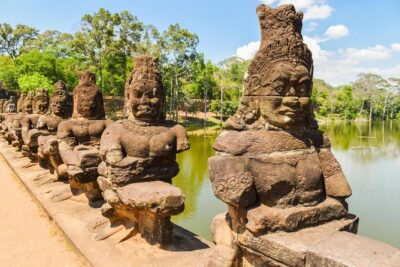
After Angkor Wat, the route continues to Angkor Thom, a fortified city covering about 6 square miles, or 10 square kilometers. You enter through the South Gate, crossing a causeway lined with monumental figures.
The South Gate stop lasts about 20 minutes. That is enough for a quick look and an explanation from your guide, but do not count on a long walk around the gate complex. It functions mainly as your introduction to the wider Angkor Thom area.
The next stop is Bayon Temple, with about an hour set aside. Built in the late 12th or early 13th century as the state temple of the Mahayana Buddhist King Jayavarman VII, Bayon occupies the center of Angkor Thom.
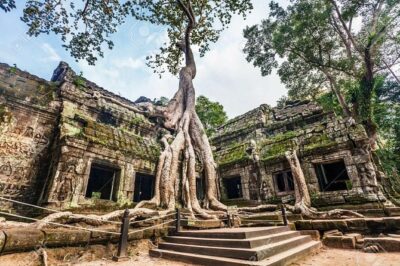
This is an especially useful pairing with Angkor Wat. Angkor Wat gives you a grand, ordered temple complex tied to Suryavarman II. Bayon feels more concentrated and visually distinctive, with its famous carved faces and dense decoration. The temple visit has been singled out as interesting, and the contrast between these two major sites is one of the strongest reasons to choose this tour.
The schedule still calls for discipline. One hour at Bayon lets you see the main character of the temple, but it is not enough for a leisurely examination of every carving. If Bayon is your main priority, you may prefer a temple-only tour that gives it more time.
Entry costs for the temple area are not included in the tour price. The required Angkor Pass covers this part of the day, while the supplied information also lists a separate $20 per-person government tax and community development charge. Ask for a clear breakdown of all required payments before departure.
More Tonle Sap Lake Tours in Siem Reap:
- Sunset tour of Kampong Phluk stilts home village on the Tonle Sap
★ 5.0 · 4,865 reviews - Siem Reap: Kulen Mountain, Beng Mealea and Tonle Sap Tour
★ 5.0 · 1,483 reviews - Tonle Sap Lake & Kampong Phluk Village Half-Day Tour
★ 5.0 · 1,045 reviews - Kulen Mountain with Beng Mealea and Tonle Sap Small Group Tour
★ 5.0 · 780 reviews
Lunch before the Tonlé Sap boat ride
The schedule places lunch before the drive to Kompong Phluk, and lunch is at your own expense. No restaurant, meal price, or menu is specified, so you should budget separately and ask your guide about the timing on the day.
The afternoon transfer to the quay takes about 45 minutes. This drive shifts the setting from the temple zone to the countryside. It also gives you a break from walking before the boat portion begins.
The lunch arrangement keeps the tour price lower than it might be with a meal included. It also gives you control over what you spend, but the lack of a stated restaurant means you should not treat lunch as part of the package. Keep cash available for food and any other charges not included.
Kompong Phluk and the 1.5-hour ride to Tonlé Sap
At the quay, you board a local boat for a ride of about 1.5 hours toward Tonlé Sap Lake. The full Kompong Phluk portion is listed as about five hours, which appears to include the countryside transfer, lunch break, boarding process, and time on or around the water.
The purpose of this section is not simply to look at water. It is meant to show how the lake and its floodplains support local life. The route includes floating villages and flooded forests, giving you a view of a setting shaped by seasonal water levels.
Expect a village environment that may not match the simple image suggested by the phrase floating village. One piece of available feedback describes scattered floating houses rather than a tightly grouped settlement, while also calling the stilt village beautiful. That distinction is useful: Kompong Phluk can include homes raised high on stilts and houses on the water, so the experience may feel more like a broad floodplain community than a single compact cluster of floating buildings.
This is important when deciding if the stop suits you. If you want dramatic temple architecture, the morning is the highlight. If you want to see how water shapes housing and transport, the lake section adds something the temple circuit cannot provide.
The private boat is included, along with the private vehicle and English-speaking driver-guide. The information does not identify the boat operator or specify whether all parts of the village are visited. Expect the exact route to depend on local conditions and the day’s timing.
The flooded forest is another reason to pay attention during the ride. It connects the village to the wider floodplain and shows that the lake is not just an open body of water. The supplied details do not promise a particular wildlife sighting, so treat the forest as a setting and local resource rather than a wildlife tour.
What the $40 price really covers
At $40 per person, this is priced as an accessible private day tour, but the headline price is not the full cost. You receive:
- Air-conditioned transportation
- Hotel pickup and return
- An English-speaking driver-guide
- A private boat tour
- Cool towels during the outing
You must pay for the Angkor Pass, lunch, and the listed $20 per-person government tax and community development fee. Tips and travel insurance are also excluded.
The value depends on your group size. For a private party, combining vehicle transport, a driver-guide, and a boat can make the price reasonable, especially if you want hotel-to-hotel service without arranging each part yourself. Group discounts are offered, though no discount amount is given.
For a solo visitor, the added costs deserve closer attention. The $40 base price may look low, but the required pass and other charges can change the final total. For two or more people, the private format becomes easier to justify because the transportation and guide cost is shared.
The tour also saves planning time. You do not need to arrange a separate ride to the ticket office, find transport to the quay, or organize the boat independently. That convenience is worth something, but you should still ask exactly how the $20 charge is collected and what it covers.
Who will get the most from this day
I would choose this tour if you want the essential Angkor introduction plus a direct look at contemporary life around Tonlé Sap. It suits first-time visitors who have only one full day and want more than temples.
It also works well for families or small groups who value private transport. Hotel pickup and drop-off remove some of the day’s friction, while the air-conditioned vehicle gives you a cool place between stops.
You may want a different plan if your priority is detailed temple study. Two hours at Angkor Wat, 20 minutes at the South Gate, and one hour at Bayon create a useful overview, but not a slow archaeological visit.
You should also think carefully about the lake portion. The feedback supplied with this experience includes a complaint that the floating homes were scattered and that the stilt village was the more impressive part. A separate response refers to Kompong Khleang and Beng Mealea, which do not match the Kompong Phluk and Angkor Wat route described here. That mismatch means you should confirm the exact village and temple route before paying if the floating-village label is your main reason for booking.
Practical details that can shape your day
The experience is private, meaning only your group participates. That gives you more control than a large shared excursion, but the schedule remains structured because the day includes several major stops and a long boat segment.
Confirmation is provided at booking. The activity begins and ends in Siem Reap, with private transport back to your hotel. Most people can participate according to the supplied information, though no detailed accessibility notes are provided.
Free cancellation is available if you cancel at least 24 hours before the start time. Changes or cancellations made later are not accepted for a refund, and the cut-off follows local time.
Bring enough money for the Angkor Pass, the $20 listed fee, lunch, and a tip if you wish to give one. The tour includes cool towels, but the details do not state that drinks, meals, insurance, or temple entry are included.
Should you book the Angkor Wat and Tonlé Sap day tour?
Book it if you want a private, broad introduction to Siem Reap and like the idea of pairing famous temples with a working lake community. The best parts are the clear contrast between Angkor Wat and Bayon, the private vehicle, and the included boat ride.
Think twice if you expect a dense floating village made entirely of houses on water, or if you want many hours at each temple. The village may include scattered floating homes and a larger stilt settlement, and the day’s wide scope limits the time at individual sites.
Before booking, confirm the exact Kompong Phluk route and request a full cost breakdown. If those details suit you, the tour offers a practical way to see two sides of Cambodia in one day: royal stone monuments in the morning and lake-based daily life in the afternoon.
FAQ
How long does the tour last?
The tour lasts approximately nine hours.
Where does pickup take place?
Pickup is offered from your hotel in Siem Reap. The stated pickup window is from 7:30 to 8:30 in the morning.
Is the Angkor Pass included?
No. You go to the Angkor Wat Ticket Office to purchase the required Angkor Pass, and the pass is not included in the tour price.
Is lunch included?
No. Lunch is on your own account and is not included.
Is the boat ride included?
Yes. A private boat tour to Tonlé Sap is included, with visits to the floating villages and flooded forests around Kompong Phluk.
Is this a private tour?
Yes. Only your group participates, and private transportation returns you to your hotel at the end.
New around Siem Reap
- Siem Reap Temple and Waterfall 3-Day Tour★ 4.5 · 3 reviews
- Siem Reap: Guided Day Trip to Local Village & Cooking Class★ 5.0 · 3 reviews
- Savor the Countryside: Tours with Authentic Cooking Classes”★ 5.0 · 3 reviews
- Siem Reap Private Tour: Angkor Wat Sunrise And Banteay Srei★ 5.0 · 3 reviews
- Angkor Wat Sunset In Private and Small-In-Group★ 4.3 · 3 reviews
- Angkor Wat Sunrise TukTuk Tour★ 5.0 · 3 reviews
- Exclusive Angkor temples and Small group temples tours★ 5.0 · 3 reviews
- Angkor Wat: Highlights and Sunrise with Spanish Guide★ 4.8 · 3 reviews
Angkor Wat Tours, compared.
Angkor Wat Sunrise or Sunset Tour with Guide from Siem Reap
Read our review →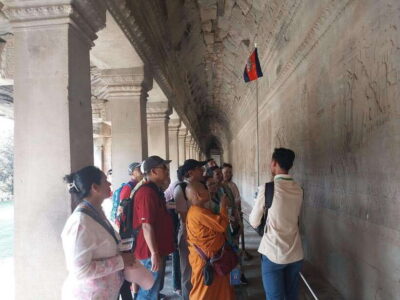
Angkor Wat: Small-Group Sunrise or Sunset Tour
Read our review →
Angkor Wat Sunrise tour with Small – Group and Guide tours
Read our review →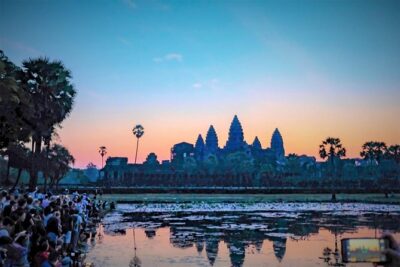
Angkor Wat Highlights and Sunrise Guided Tour from Siem Reap
Read our review →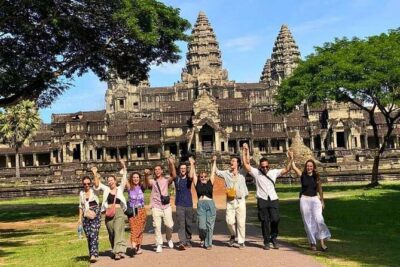
Angkor Wat Sunset Small Group Tour with Lunch Included
Read our review →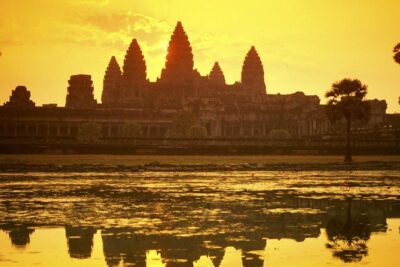
Full-Day Angkor Wat Sunrise Private Tour with Guide from Siem Reap
Read our review →
Angkor Wat Sunrise & 3 Main Temples with Breakfast – Small Group
Read our review →Browse the lists this tour appears in