
Reviewed · ANGKOR WAT TOURS
Angkor Wat: Sunrise 2.5 Days with Tonle Sap Lake Tour
Angkor Wat at sunrise is the headline, but the best part of this tour is the range. You get grand monuments, smaller and more finely carved temples, a sunset from Bakheng Mountain, and a boat trip through Kampong Phluk’s flooded forest villages. I especially like the two-hour visit inside Angkor Wat and the chance to see Tonle Sap beyond the temple circuit.
I also like the private pace, even when the booking is made as a small group. Guides including Sopheap Rath, Sokpee, Chhay, and Rom have been praised for clear explanations and excellent photo spots. The main drawback is cost: the $69 tour price excludes the $62 temple pass, meals, and possibly the Tonle Sap alternative during the dry season.
Key points to know before booking
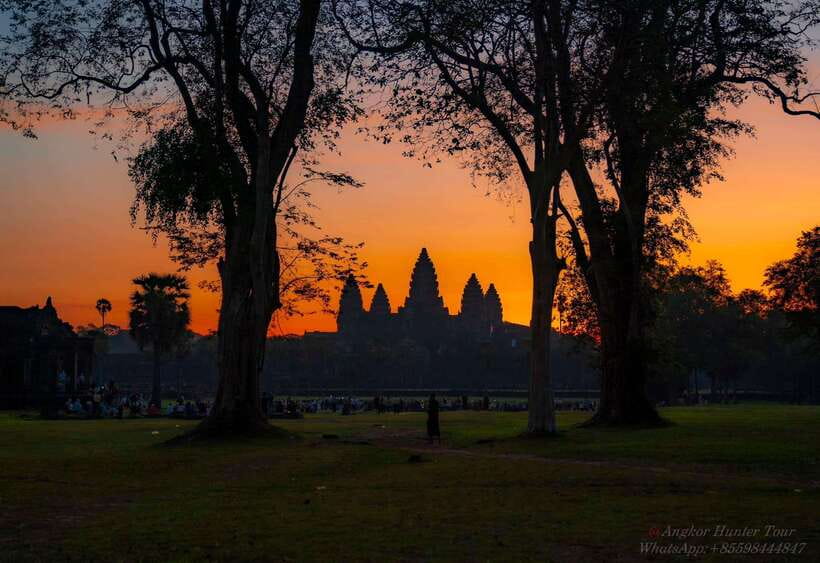
- Sunrise and sunset are built into the plan: You leave before dawn for Angkor Wat and finish the first temple day at Bakheng Mountain.
- Banteay Srei is the fine-carving highlight: This smaller sandstone temple rewards close attention more than a quick photograph.
- The tour goes beyond the usual Angkor circuit: Neak Pean, Preah Khan, Ta Nei, and Kampong Phluk add variety.
- Guiding is a major part of the value: Guides such as Chhay, Sopheap Rath, and Sokpee explain the kings, religions, and building periods in clear English.
- The ticket is extra: Add $62 per person for the 2 or 3-day temple pass, then budget separately for meals.
- March through July may change Day 3: Low water can replace Tonle Sap Lake with Cambodia Phare Circus, Seat C.
Three days that connect Angkor to daily Cambodia
This is not just a list of famous ruins. It gives you three different ways to understand Siem Reap: monumental architecture at Angkor Wat and Angkor Thom, quieter temple settings away from the busiest stops, and life around Tonle Sap Lake.
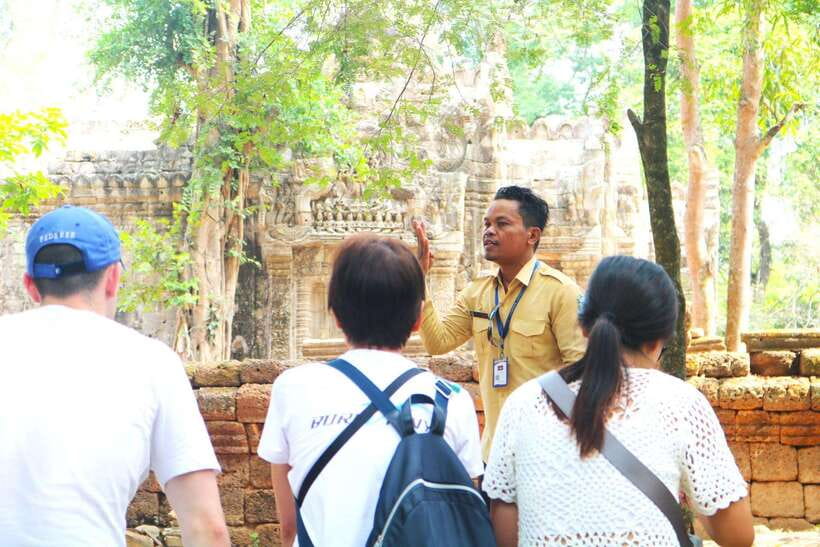
I would choose this tour if you want a guide to explain what you are seeing. Without context, the temples can become a blur of carved faces, stone galleries, and jungle roots. With a good guide, the buildings begin to make sense as royal centers, religious sites, and records of changing Khmer beliefs.
The English-speaking guides are a strong point. Sopheap Rath has a reputation for pairing historical explanations with well-chosen photography spots. Sokpee is described as giving enough information to make each site clear without burying you in facts. Chhay has also been praised for answering questions and adjusting the day to suit the group.
The schedule is active. You will walk over uneven temple surfaces, start before dawn, and spend long periods outside. Comfortable walking shoes, insect repellent, water, and respectful clothing are practical essentials. Shorts are not allowed, and your shoulders and knees should be covered.
More Angkor Wat Tours in Siem Reap:
- Angkor Wat Sunrise or Sunset Tour with Guide from Siem Reap
★ 5.0 · 12,109 reviews - Siem Reap: Angkor Wat: Small-Group Sunrise or Sunset Tour
★ 5.0 · 9,444 reviews - Siem Reap: Angkor Wat 2-Day Tour with Sunrise and Sunset
★ 4.9 · 4,429 reviews
Day 1: Banteay Srei and the quieter Grand Circuit
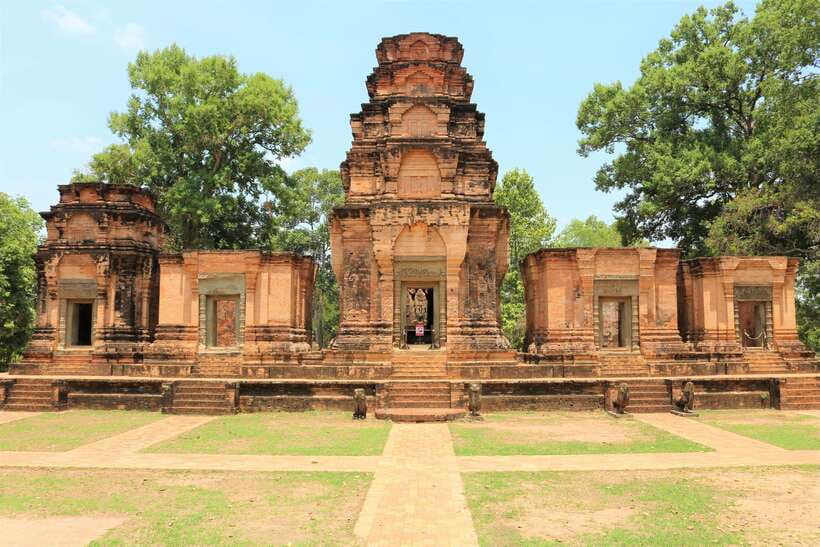
The first day begins with Pre Rub, a Hindu temple built as the state temple of King Rajendravarman in 961 or early 962. It is a temple mountain made from brick, laterite, and sandstone. That mix of materials gives it a different feel from the large sandstone monuments later in the itinerary.
Pre Rub is useful as an opening stop because it introduces the Khmer temple mountain form. I would pay attention to the layered construction and the way the temple rises above its base. It is an old, formal monument, so do not expect the jungle atmosphere of Ta Prohm later in the day.
Banteay Srei is the morning’s major reward. It is smaller than Angkor Wat, but its pinkish sandstone carvings are unusually fine and detailed. The reliefs are often regarded as the most skillfully crafted in Cambodia, and the compact scale lets you look closely rather than simply taking in a giant structure from a distance.
This is one place where a guide adds real value. Ask about the carved scenes and the small details around doors, lintels, and galleries. A guide who knows the best viewing points can also help you avoid rushing through the temple as if it were only a photo stop.
Neak Pean changes the mood again. The temple sits on a circular island in the middle of Jayatataka Baray, an artificial reservoir. The approach across the water gives the site a different visual rhythm from the temple mountains and long stone corridors elsewhere.
The setting is part of the appeal, though the experience depends on conditions and access around the reservoir. Neak Pean is not the place for a long interior exploration. Instead, I would treat it as a carefully planned water-and-stone composition, then listen as your guide explains its Buddhist purpose.
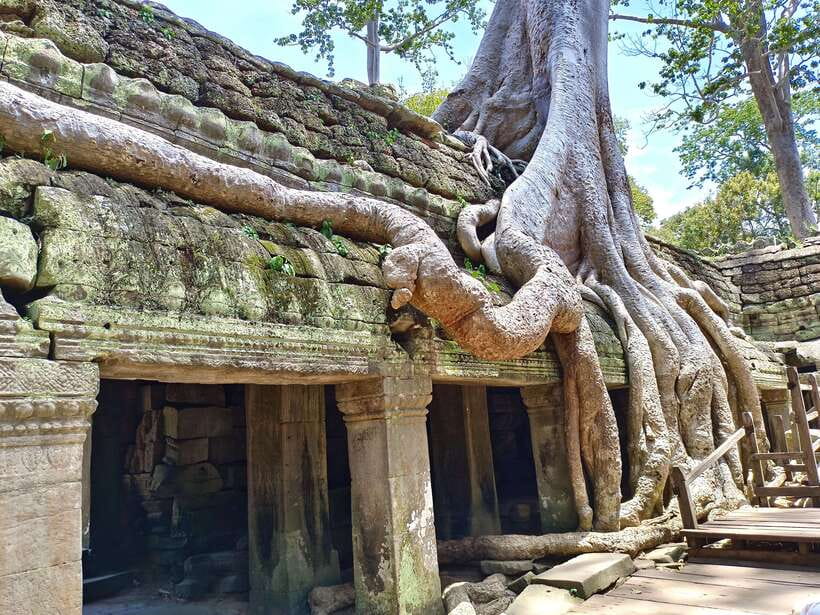
Preah Khan is one of Angkor’s most atmospheric ruins. Tree roots, crumbling stone, long passageways, and half-collapsed structures create a sense of a site still being reclaimed by nature. It is less polished than Angkor Wat, and that is exactly why it works so well late in the day.
You can expect a lot of walking at Preah Khan. The reward is not one single view, but the gradual discovery of courtyards, doorways, and carved remains. Take your time here if the schedule allows. This is one of the stops where a private pace makes a clear difference.
The day ends with sunset at Bakheng Mountain. Sunset access can be popular, so the atmosphere may be less quiet than at the smaller temples. Still, the high position gives you a fitting end to a day of temple visits, and the light can change the appearance of the surrounding ruins.
Day 2: Angkor Wat before dawn
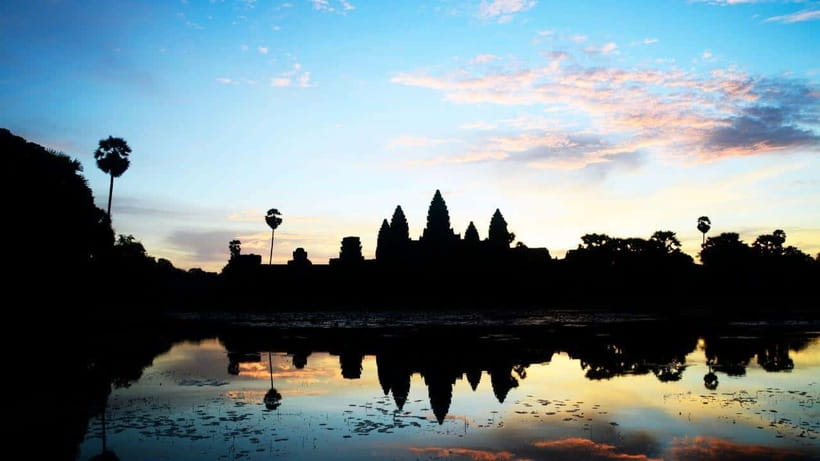
The second day begins before sunrise. You will head to Angkor Wat and wait outside the main temple area near one of the ancient library pools. The reflection of the towers in the water is the classic view, but the early start is about more than a photograph.
Before the heat and larger daytime crowds build, the temple has a cooler, quieter feel. Sunrise conditions are never guaranteed, so I would treat the image as a bonus and focus on the atmosphere of the site waking up.
After sunrise, the tour allows about two hours inside Angkor Wat. That is enough time to examine the corridors, central chambers, and upper terraces without reducing the visit to a quick walk through the entrance.
Angkor Wat is large and can feel confusing without a plan. A guide can direct your attention to the building’s layout, its religious purpose, and the carved galleries. You should also expect stairs and uneven surfaces, particularly around the upper areas.
Breakfast is taken at your own expense at a local restaurant near the temple area. This keeps the morning flexible, but it means you need to budget for the meal. The tour includes bottled water and a cool towel, which are welcome after walking in the heat.
The included temple program also lists Angkor Thom and the Bayon. Bayon is known for its carved stone faces, and Angkor Thom gives you a sense of the scale of the royal city rather than focusing on a single monument. Since the detailed schedule varies in how it presents these stops, confirm the exact order with your guide.
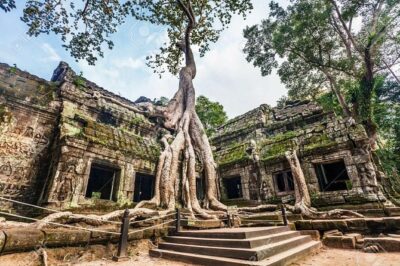
Ta Prohm brings you to the temple most closely associated with the Tomb Raider films. Its appeal is not only film fame. The combination of trees, roots, towers, and damaged galleries shows how the jungle setting became part of the monument’s modern identity.
Ta Prohm can be busy, especially around the best-known tree-covered sections. Your guide’s knowledge of photo stops matters here. A visit at the right point in the day can help, but you should still expect a popular site rather than a private ruin.
The final stop is Ta Nei, a late 12th-century stone temple dedicated to the Buddha. It is described as a long but rewarding visit, and it offers a quieter contrast to Ta Prohm and Angkor Wat. The stonework is less immediately grand, yet that makes it useful for seeing how varied the Angkor complex can be.
This is a demanding day. You will begin before dawn, visit several temples, and continue into the afternoon. I would not schedule another major activity that evening. The tour is best for someone who wants a full temple day, not for someone seeking a relaxed holiday pace.
Day 3: Kampong Phluk and Tonle Sap Lake
The third day starts with pickup around 8:00 AM at your Siem Reap accommodation. You travel through the countryside toward Tonle Sap Lake, one of the world’s largest freshwater lakes. Its size changes sharply by season, from about 2,500 square kilometers in the dry half of the year to roughly 12,000 square kilometers when swollen by seasonal water.
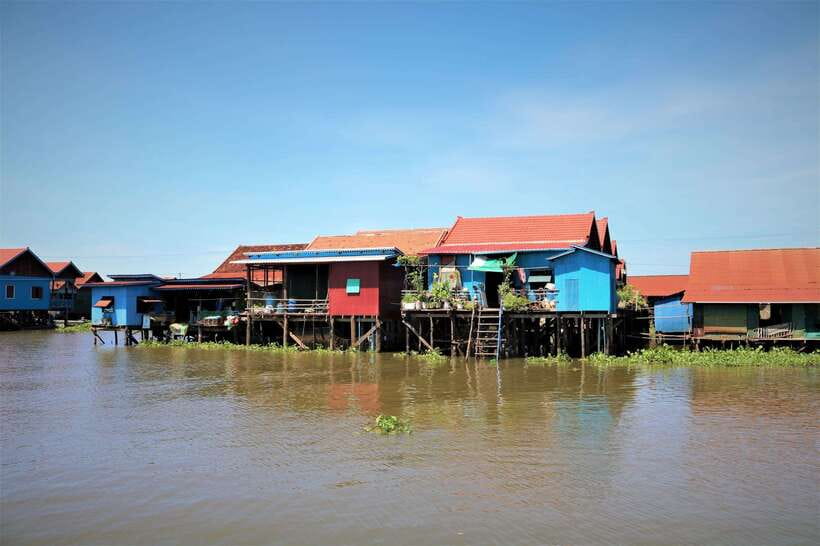
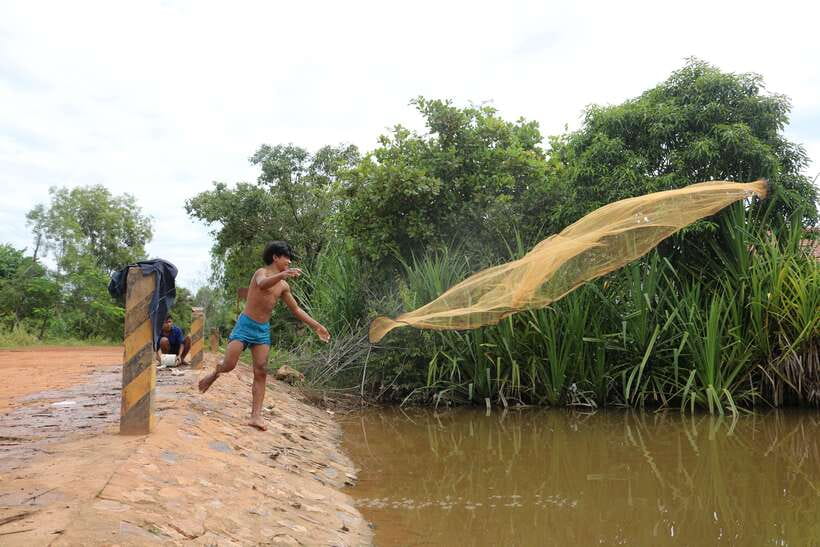
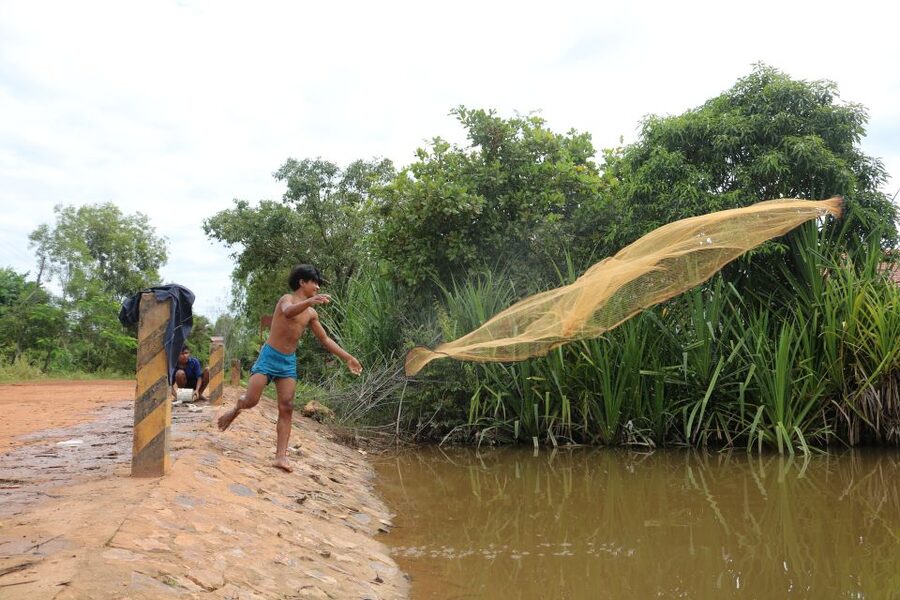
That seasonal change shapes life around the lake. The boat trip to Kampong Phluk takes you among three small fishing villages set beside a flooded forest. You are not simply looking at another monument. You are seeing a community built around water levels, fishing, boats, and changing access.
The flooded forest is the visual feature to watch for. Depending on the season and water level, the boat route can feel very different. The low-water period matters enough that the operator gives a specific alternative from March through July: Cambodia Phare Circus, Seat C, instead of Tonle Sap Lake.
That seasonal substitution is important when you compare tours. If the lake is your main reason for booking, ask about current water conditions before you commit. If you are happy with a cultural show as an alternative, the change may be perfectly workable, but it is not the same experience.
Lunch is not included, so plan to pay for it yourself. The itinerary allows a short rest after lunch, which is sensible after two demanding temple days and a morning on the lake.
I like the way this final day broadens the trip. Angkor shows royal and religious power in stone. Kampong Phluk shows how people organize daily life around a natural system that changes dramatically through the year. The two experiences belong together, even though they feel very different.
More Tonle Sap Lake Tours in Siem Reap:
- Sunset tour of Kampong Phluk stilts home village on the Tonle Sap
★ 5.0 · 4,865 reviews - Siem Reap: Kulen Mountain, Beng Mealea and Tonle Sap Tour
★ 5.0 · 1,483 reviews - Tonle Sap Lake & Kampong Phluk Village Half-Day Tour
★ 5.0 · 1,045 reviews - Kulen Mountain with Beng Mealea and Tonle Sap Small Group Tour
★ 5.0 · 780 reviews
What the $69 price really covers
At $69 per person, the tour price covers hotel pickup and drop-off within Siem Reap City, an English-speaking guide, an air-conditioned vehicle, bottled water, a cool towel, and the programmed temple and lake visits.
The important extra is the temple entrance pass. The stated price is $62 per person for a 2 or 3-day pass covering all the temples. Add that to the tour price and your known base cost becomes $131 per person, before meals and the Day 3 alternative, if applicable.
That is not a bargain in the narrow sense, but the value depends on how much guidance you want. Transport alone would not explain the price. The better reason to book is the long schedule, the early start, the route planning, and the chance to ask questions at each temple.
The tours appear to work for both small groups and private parties. One booking made as a group resulted in a private guide, with options adjusted to personal preferences. That flexibility is worth confirming in advance, since group arrangements can vary.
The drivers also matter over three long days. Cold water, cool towels, careful driving, and help getting in and out of the vehicle have all been part of the service described for drivers such as Ro, Kea, Vichhet, and Rom. You spend a lot of time moving between sites, so a safe and attentive driver improves the whole experience.
Free cancellation up to 24 hours before the start and reserve-now, pay-later terms make the booking less rigid. The activity is not wheelchair accessible, and the uneven temple surfaces make the mobility limitation especially important.
How to prepare for the temple days
Wear shoes that can handle long walks and uneven stone. Sandals may be comfortable in the heat, but sturdy walking shoes are the safer choice for a full temple schedule.
Dress with temple rules in mind. Cover your shoulders and knees, and do not rely on shorts being accepted. Lightweight, respectful clothing will help you manage the heat without creating problems at the entrances.
Bring insect repellent for the lake and wooded temple areas. Bottled water and a cool towel are supplied, but you should still carry what you need for the long morning and afternoon.
A small camera or phone is useful, particularly because guides such as Sopheap Rath and Sokpee are known for finding strong photo locations. Do not let photography take over the visit, though. Banteay Srei’s carvings and Preah Khan’s passageways reward close looking.
Finally, be honest about the pace. Two dawn-to-sunset temple days can be tiring. The private or small-group format helps, but it does not remove the walking, heat, or early alarms.
Who should book this Angkor and Tonle Sap tour?
I would choose this for a first visit to Siem Reap when you want the major temples explained properly and also want one day outside the Angkor complex. It suits couples, families with older children, and small groups who appreciate a guide and air-conditioned transport.
It is also a good choice if you have limited time but do not want to see only Angkor Wat. Banteay Srei, Neak Pean, Preah Khan, Ta Nei, Angkor Thom, Bayon, and Ta Prohm create a broad program over the temple days.
I would hesitate if you dislike pre-dawn starts, long walking days, or fixed sightseeing schedules. You should also think carefully about the March to July lake substitution. The trip remains useful, but you may prefer a different plan if Kampong Phluk is essential.
Should you book it?
Book this tour if you want a well-organized introduction to Angkor with a guide who can put the ruins into context, then finish with a look at life around Tonle Sap. The strongest features are the sunrise timing, the careful mix of famous and quieter temples, the private pace, and the high level of guide and driver care.
Before paying, add the $62 temple pass and meal costs to the advertised $69. Confirm whether your dates fall during the low-water period and whether Tonle Sap or Cambodia Phare Circus will be included. If those details work for you, this is a strong choice for seeing both Cambodia’s monumental past and its water-based present.
FAQ
How long does the tour last?
The activity is described as lasting 2.5 days, with temple visits on the first two days and a Tonle Sap Lake or alternative activity on the third day.
What is the price?
The tour costs $69 per person. The 2 or 3-day temple entrance pass costs an additional $62 per person.
Is the temple pass included?
No. The temple pass is not included in the tour price. The stated $62 pass covers all the temples visited during the 2 or 3-day period.
What time does the Tonle Sap day begin?
Pickup for the Tonle Sap day is around 8:00 AM from accommodation in Siem Reap City.
Is hotel pickup included?
Yes. Pickup and drop-off at accommodation in Siem Reap City are included.
Is an English-speaking guide provided?
Yes. The tour includes a live English-speaking guide.
Which temples are visited?
The program includes Pre Rub, Banteay Srei, Neak Pean, Preah Khan, Angkor Wat, Ta Prohm, Ta Nei, Angkor Thom, Bayon, and Bakheng Temple for sunset.
Is food included?
No. Meals are not included. Breakfast near the temple area and lunch on the Tonle Sap day are at your own expense.
What happens to the lake visit from March through July?
When water levels are low, the Tonle Sap Lake activity may be replaced by Cambodia Phare Circus, Seat C.
Is the tour wheelchair accessible?
No. The activity is not suitable for wheelchair users. Comfortable walking shoes are recommended because the temple visits involve walking over uneven surfaces.
More 5-Day Experiences in Siem Reap
- Angkor Wat Sunrise and Tonle Sap Lake 1.5 Days
★ 5.0 · 39 reviews - Private Cambodia 5 Days Tour from Siem Reap to Phnom Penh
★ 5.0 · 19 reviews - 5-Day All Major Temples & Kulen Mount Waterfall & Koh Ker & Beng Mealea
★ 5.0 · 13 reviews - 5-Day ‘All The Sights’ Tour
★ 5.0 · 11 reviews
More early starts in Siem Reap
- Angkor Wat Sunrise tour with Small – Group and Guide tours
★ 5.0 · 3,655 reviews - Angkor Wat Highlights and Sunrise Guided Tour from Siem Reap
★ 5.0 · 3,213 reviews - Full-Day Angkor Wat Sunrise Private Tour with Guide from Siem Reap
★ 5.0 · 2,920 reviews - Angkor Wat Sunrise & 3 Main Temples with Breakfast – Small Group
★ 5.0 · 2,857 reviews
New around Siem Reap
- Siem Reap Temple and Waterfall 3-Day Tour★ 4.5 · 3 reviews
- Siem Reap: Guided Day Trip to Local Village & Cooking Class★ 5.0 · 3 reviews
- Savor the Countryside: Tours with Authentic Cooking Classes”★ 5.0 · 3 reviews
- Siem Reap Private Tour: Angkor Wat Sunrise And Banteay Srei★ 5.0 · 3 reviews
- Angkor Wat Sunset In Private and Small-In-Group★ 4.3 · 3 reviews
- Angkor Wat Sunrise TukTuk Tour★ 5.0 · 3 reviews
- Angkor Wat: Highlights and Sunrise with Spanish Guide★ 4.8 · 3 reviews
- Full Day to Banteay Srei, Kulen National Park and Beng Mealea★ 5.0 · 3 reviews
Angkor Wat Tours, compared.
Angkor Wat Sunrise or Sunset Tour with Guide from Siem Reap
Read our review →
Angkor Wat: Small-Group Sunrise or Sunset Tour
Read our review →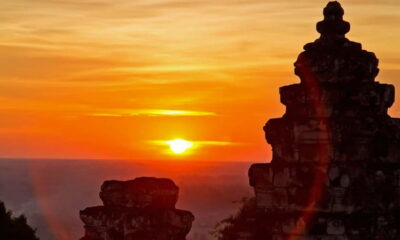
Angkor Wat Sunrise tour with Small – Group and Guide tours
Read our review →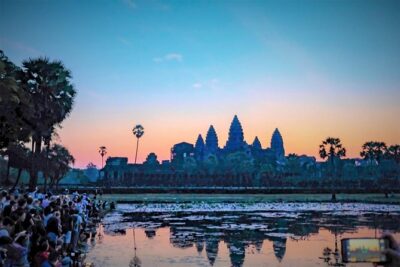
Angkor Wat Highlights and Sunrise Guided Tour from Siem Reap
Read our review →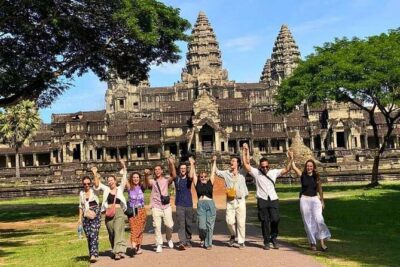
Angkor Wat Sunset Small Group Tour with Lunch Included
Read our review →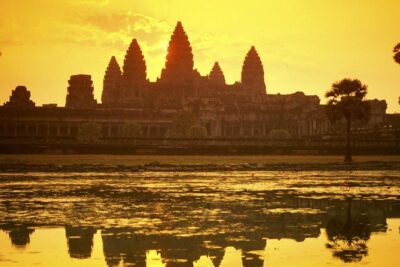
Full-Day Angkor Wat Sunrise Private Tour with Guide from Siem Reap
Read our review →
Angkor Wat Sunrise & 3 Main Temples with Breakfast – Small Group
Read our review →Browse the lists this tour appears in