
Reviewed · ANGKOR WAT TOURS
Angkor Wat & Banteay Srey Tour
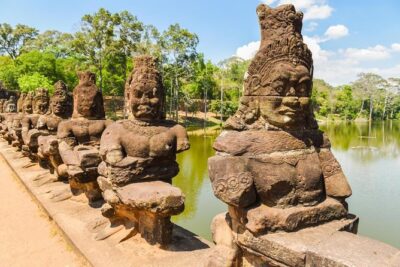
Angkor Wat is only the beginning here. This private day takes you from the grand galleries of Angkor Wat to the smiling stone faces of Bayon, the tree-covered ruins of Ta Prohm, and the fine pink carvings of Banteay Srei. It packs the major sights into one long, rewarding day.
I like the private format, since your group can move at its own pace, and I like the practical comforts: air-conditioning, drinking water, and cool towels. Guides including Kosorl Oun, Bros, and Sinann are praised for friendly storytelling, local insight, and help with photography. The catch is simple: temple admission and meals are not included, and five major stops can feel tiring.
Key points at a glance
- Five major temples in one day: Angkor Wat, Bayon, Ta Prohm, Banteay Srei, and Banteay Samre make this a broad introduction to the Angkor area.
- A private tour for your group: You do not share the activity with another booking, giving you more room to ask questions and adjust the pace.
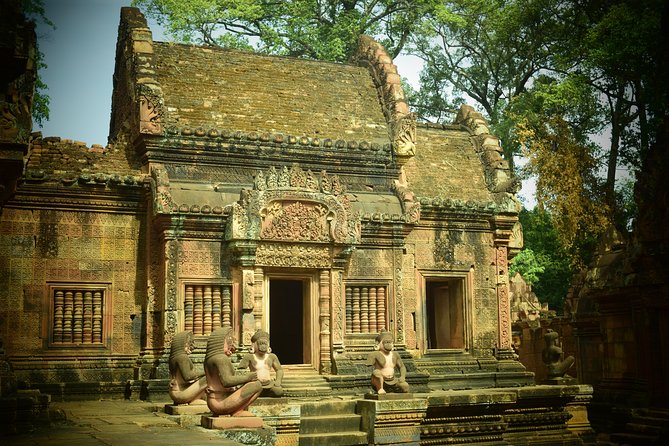
- Banteay Srei adds a different style: Its pink sandstone and delicate carvings contrast sharply with the larger, more monumental temples.
- A long day with useful comforts: Expect about 7 to 10 hours, air-conditioned transport, cool towels, and cool drinking water.
- Guiding is a major strength: Kosorl Oun is noted for history, photography, and care with individual needs. Bros and Sinann are also named as guides.
- Budget carefully: The $50 price covers transport, guide service, water, and towels, but not the temple pass, food, personal expenses, insurance, or a sunrise supplement.
Why this route works for a first day at Angkor
This tour gives you the broadest possible taste of the Angkor complex in a single outing. You see the best-known temple, the most recognizable face towers, the famous tree roots, and two quieter monuments farther from the central circuit.
That range matters. Angkor Wat is vast and formal. Bayon feels more mysterious and crowded with carved faces. Ta Prohm is atmospheric and partly overtaken by trees. Banteay Srei is smaller but unusually detailed, while Banteay Samre offers a more restrained finish.
The route is not a slow, scholarly examination of one temple. It is a highlights day, with roughly three hours at Angkor Wat, two hours at Bayon, two hours at Ta Prohm, two hours at Banteay Srei, and one hour at Banteay Samre. Add driving time, buying the temple pass, and breaks, and you can easily reach the upper end of the 7 to 10-hour estimate.
Your guide or driver collects you from your hotel at the time selected during booking. The meeting point is the hotel lobby, followed by a stop at the ticket office to buy the required temple pass. Since admission is not included in the tour price, plan for that extra cost before you set out.
More Angkor Wat Tours in Siem Reap:
- Angkor Wat Sunrise or Sunset Tour with Guide from Siem Reap
★ 5.0 · 12,109 reviews - Siem Reap: Angkor Wat: Small-Group Sunrise or Sunset Tour
★ 5.0 · 9,444 reviews - Siem Reap: Angkor Wat 2-Day Tour with Sunrise and Sunset
★ 4.9 · 4,429 reviews
Angkor Wat: start with the great Khmer monument
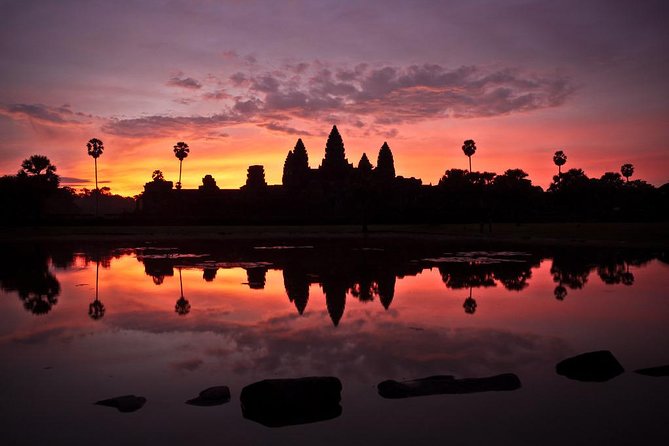
Angkor Wat deserves the longest stop. Built between 1113 and 1150 under Suryavarman II, it is the largest and most famous Khmer temple. Its towers rise to about 65 meters, and a broad moat surrounds the complex.
The scale takes time to absorb. You pass through layers of galleries, courtyards, walls, and carved scenes. The exterior and interior walls carry extensive bas-reliefs, so a guide can help you notice what you might otherwise walk past.
Allow yourself to look up and down. The towers dominate the skyline, but the carvings at eye level tell much of the story. The stonework changes as you move through the temple, and the long galleries make the building feel more like a city than a single shrine.
Three hours is a sensible allocation, though it can pass quickly. If you are interested in architecture, religion, sculpture, or photography, you may wish this stop had even more time. On a packed day, though, the schedule gives you a solid first look without using the entire day at one site.
A sunrise option is not part of the standard price. It carries an extra charge, so ask about that before booking if seeing the temple silhouette emerge from the morning darkness is important to you. The tour information specifically notes sunrise as an additional expense.
Bayon and the faces of Angkor Thom
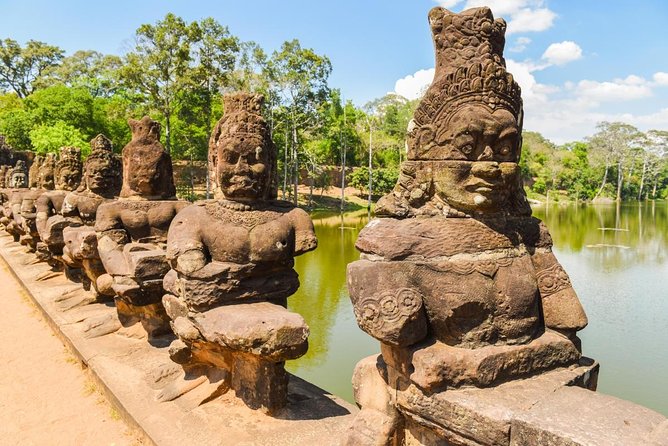
Bayon changes the mood completely. Built in the late 12th or early 13th century by Jayavarman VII, this Buddhist-style temple is known for its towers and large carved faces.
The description of 54 towers and more than 200 smiling faces gives you an idea of the visual effect. You are surrounded by stone expressions that appear from different angles as you walk through the temple. Some faces are easy to spot, while others reveal themselves only when you turn or pass between towers.
Bayon is associated with Angkor Thom, a major capital of the Khmer Empire. It was later damaged in 1811 by Cham invaders, and the surviving structure carries signs of a long and complicated past. A good guide can connect the monument to both royal power and Buddhist devotion without reducing the site to a string of dates.
Two hours allows time to walk through the central temple and examine the carved surfaces. The ground can be uneven, and the towers and passageways require attention as you move. This is not a quick photo stop. Give yourself time to look at the faces from several levels and angles.
Ta Prohm and the trees over the walls
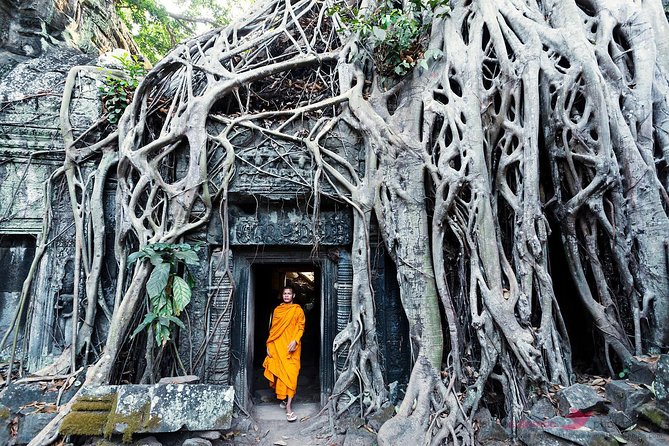
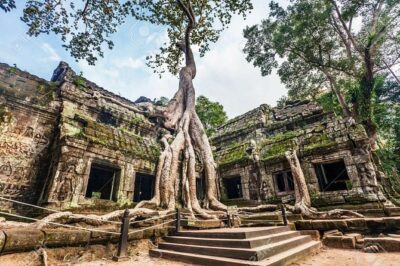
Ta Prohm is the temple most likely to produce an instant reaction. Built in the late 12th century by Jayavarman VII and dedicated in 1186 to his mother, it is famous for the Spung trees growing up, on, and over the sandstone walls.
The trees are not decoration added for effect. They are part of the reason the temple feels so different from Angkor Wat. Roots grip the masonry, trunks rise through the ruins, and shaded corridors create a strong sense of nature pressing into an old structure.
Ta Prohm began with a Buddhist character and was later converted to Hindu use. Some Buddhist galleries were destroyed and replaced with Hindu symbols, including yoni and lingam. These changes give your guide useful material to explain how religious and political life shifted over time.
The temple lies about 1.5 kilometers from Bayon through the Victory Gate. The two-hour visit is generous enough for a careful walk, but it also adds to the physical demands of the day. You will be walking on rough surfaces, stepping through narrow areas, and spending much of the visit outdoors.
If you have limited energy, tell your guide early. The private setup makes it easier to pause, shorten a walk, or spend more time at the places that matter most to you. One guide, Kosorl Oun, is specifically praised for helping a visitor with arthritic knees manage steep temple steps. That does not make the monuments easy to access, but it suggests that clear communication about your limits can improve the day.
A few more Siem Reap half-days to weigh up
- From Siem Reap: Kampong Phluk Floating Village Tour by Boat
★ 4.9 · 6,979 reviews - Sunset tour of Kampong Phluk stilts home village on the Tonle Sap
★ 5.0 · 4,865 reviews - Siem Reap: Kampong Phluk Floating Village Tour with Boat
★ 4.9 · 3,843 reviews - Siem Reap: Full-Day Angkor Wat Guided Tour with Sunset
★ 4.9 · 3,803 reviews
Banteay Srei: the small temple with fine detail
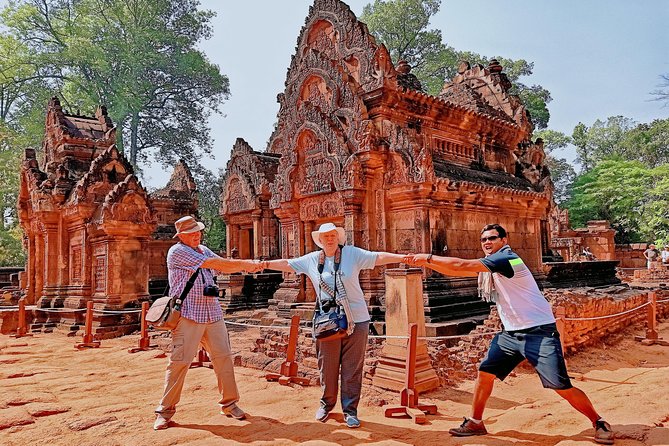
Banteay Srei is about 35 kilometers from the main Angkor area, so reaching it adds driving time. The trip is worthwhile if you want more than the central temple circuit.
This is the pink sandstone temple, famous for delicate and detailed carving. Its nickname, Lady Temple, reflects the refined quality of its decoration. Compared with the huge spaces of Angkor Wat, Banteay Srei feels compact and precise. The appeal is in the close-up work: carved figures, borders, and small details that reward patient viewing.
The two-hour stop gives you time to walk around without rushing. It also breaks up the day with a change of scale and color. After the gray and weathered stone of the larger sites, Banteay Srei’s warm pink sandstone can feel like a fresh chapter.
The journey also offers a chance to stop and see local residents making natural sugar products from sugar palms. This is an optional part of the route rather than a guaranteed extended visit, but it gives you a glimpse of an everyday Cambodian activity beyond the temple grounds.
Banteay Srei is especially useful for people who enjoy sculpture and craftsmanship. If your only goal is to see the most famous Angkor views, the extra distance may feel less important. If you have a full day and want a wider sense of the area, it adds real value.
Banteay Samre provides a quieter final stop
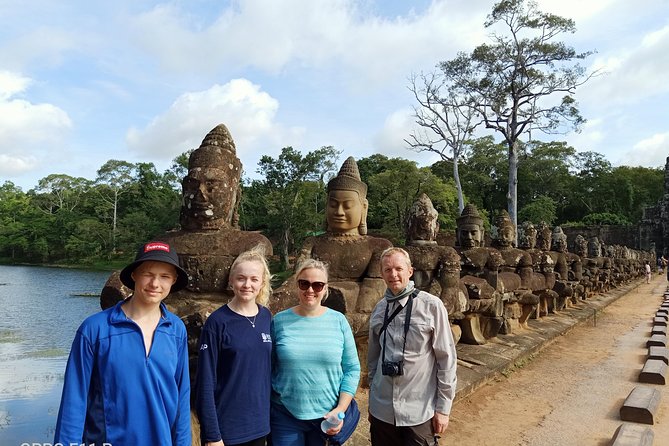
Banteay Samre is located about 400 meters east of the East Baray. Built during the reigns of Suryavarman II and Yasovarman II in the early 12th century, it is a Hindu temple built in the Angkor Wat style.
The one-hour stop is shorter than the visits at the other temples, which is sensible at the end of a long day. Banteay Samre gives you one more look at the architectural style connected with Angkor Wat, but in a different setting and on a smaller scale.
It may not have the instant fame of Angkor Wat or Ta Prohm. That is part of its appeal. After the biggest sights, a less celebrated monument can feel easier to appreciate. You can focus on form, stonework, and layout without trying to capture every famous angle.
By this point, fatigue is the main concern. If you are already worn out, ask your guide to keep the visit focused. If you still have energy, use the hour to compare Banteay Samre with the larger temples you saw earlier.
The guide can shape the whole day
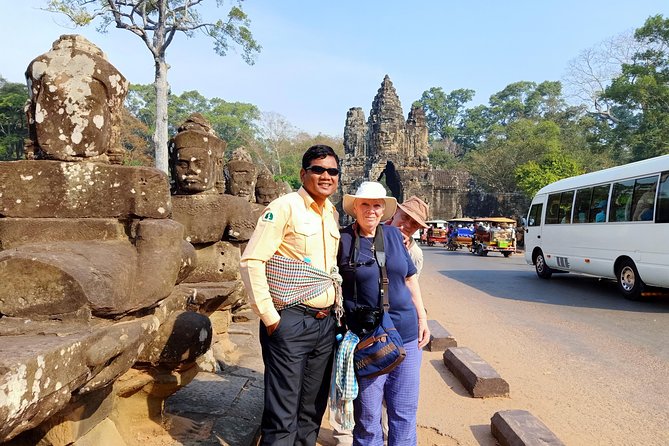
The named guides connected with this experience include Kosorl Oun, Bros, and Sinann. Their reported strengths are consistent: friendly service, clear explanations, enthusiasm for Cambodian history, and attention to individual needs.
Kosorl Oun receives particular praise for bringing temples to life, explaining both ancient Cambodia and more recent Cambodian history, and taking creative photographs. If you want good group pictures, ask about photography early in the day rather than waiting until the final stop.
Bros is noted for sharing information about the temples and the Khmer Rouge period. That wider context can help you understand Cambodia as a living country, not just a collection of ruins.
Sinann is described as polite, helpful, and able to step in when another guide was ill. The guide assigned to your booking may vary, so you should not assume a particular person is guaranteed unless the provider confirms it. Still, the experience has a strong record of personal service, and its published score is 5/5 from 13 ratings.
I would ask your guide three useful questions at the start:
- How much walking and climbing should I expect at each temple?
- Which carvings or areas should I not miss?
- Can we adjust the time if I prefer detail over visiting every stop?
Those questions help turn a fixed route into a day that fits your interests.
What the $50 price really covers
At $50 per person, the cost is reasonable for a private, full-day temple outing, provided you remember what is not included. You are paying for air-conditioned transportation, a speaking guide and driver, cool drinking water, and cool towels.
The private format is the key value. If you are traveling with family or friends, the cost buys a dedicated vehicle and guide rather than a seat on a larger shared bus. You also avoid spending time coordinating with unrelated people.
The temple entrance fee is extra. Meals are also extra, as are personal expenses, travel insurance, and any sunrise supplement. Add those items to your budget before comparing this tour with a cheaper shared option.
Group discounts are offered, but the exact discount is not specified. Ask for the current group price if several people are booking together. Confirmation is provided at the time of booking, and pickup is offered from your hotel.
Comfort, timing, and practical limits
The vehicle has air-conditioning, which matters in Cambodia’s heat. Cool water and towels are small additions, but they are useful after walking across open courtyards and through stone galleries.
Wear clothing that covers shoulders and knees if required at the temple sites, and choose shoes suited to uneven ground. The information provided does not give a formal accessibility rating, so anyone concerned about steep steps or long walks should discuss this with the provider before booking.
The itinerary is ambitious. Five stops, driving to the outer temples, and several hours on foot can make the day feel full. The private format helps, but it does not remove the distances between sites or the need to climb and walk.
You can select your pickup time during booking. If you want sunrise, note that it costs extra. If you prefer a less hurried visit, ask whether the route can be adjusted, though the advertised schedule is designed to include all five stops.
Cancellation is flexible up to 24 hours before the start time, with a full refund. Cancellations or changes made inside that 24-hour window are not accepted for a refund, and cut-off times use local time in Siem Reap.
Who should book this Angkor day
I would choose this tour if you have one full day in Siem Reap and want the major temples plus Banteay Srei. It suits couples, families, and small groups who value a private guide and air-conditioned transport.
It is also a good fit if you want historical explanations rather than simply a driver who drops you at each gate. The guides connected with the experience are praised for personal attention, photography, and discussion of Cambodia’s past and present.
I would think twice if you dislike long days or prefer to examine only one or two temples at a slow pace. The schedule gives you breadth, not complete solitude or unlimited time. The entrance fee and meals also need to be added to the advertised $50.
Should you book it?
Book this tour if you want a well-rounded first look at Angkor and like having a private guide to explain what you are seeing. The combination of Angkor Wat, Bayon, Ta Prohm, Banteay Srei, and Banteay Samre gives you more variety than a central temple circuit alone.
Before paying, confirm the total cost of the temple pass, the sunrise supplement if needed, the guide assigned to your group, and how much flexibility you have with timing. If you are ready for a long, hot day but want strong coverage and practical transport, this is a good-value choice. If you want a slower visit, consider asking for a shorter custom route.
FAQ
How much does the Angkor Wat and Banteay Srei tour cost?
The listed price is $50 per person. Group discounts are offered, but the exact discount is not specified.
How long does the tour last?
The tour lasts approximately 7 to 10 hours. The listed temple visits total about 10 hours before accounting for transport and the ticket-office stop, so the final timing can vary.
Does the tour pick me up from my hotel?
Yes. Your guide or driver picks you up from your hotel at the time selected during booking, with the hotel lobby used as the meeting point.
Is this a private tour?
Yes. Only your group participates in the activity. You do not share the tour with another booking.
Is the temple entrance fee included?
No. Entrance fees are not included. You stop at the ticket office before visiting the temples to buy the required temple pass.
What is included in the tour price?
The price includes air-conditioned transportation, cool towels, cool drinking water, and a speaking guide and driver.
Are meals included?
No. Breakfast, lunch, dinner, and other meals are not included.
Does the tour include sunrise at Angkor Wat?
Sunrise is not included in the standard tour price. A sunrise visit requires an additional charge.
Can I cancel for a full refund?
Yes, if you cancel at least 24 hours before the experience start time. Cancellations or changes made less than 24 hours before the start time are not accepted for a refund.
New around Siem Reap
- Kulen Mountain With Ticket included Plus Banteay Srei Temple Tour★ 5.0 · 7 reviews
- 2 Days Angkor temples with Sunrise & Sunset★ 5.0 · 7 reviews
- Private Siem Reap Airport Transfer to hotel in town★ 5.0 · 7 reviews
- 1-Day private Angkor Temple Tour with Sun Rise by Tuk Tuk from Siem Reap★ 4.5 · 7 reviews
- Siem Reap: Morning Cooking Class & Market Tour★ 5.0 · 7 reviews
- Kulen Mountain, Killing Fields and War Museum Tour★ 5.0 · 7 reviews
- War Museum, Killing Field, and APOPO Hero RATs Tour★ 5.0 · 7 reviews
- Half-Day: Silk Farm, Senteur Angkor, and Satcha Workshop★ 4.6 · 7 reviews
Angkor Wat Tours, compared.
Angkor Wat Sunrise or Sunset Tour with Guide from Siem Reap
Read our review →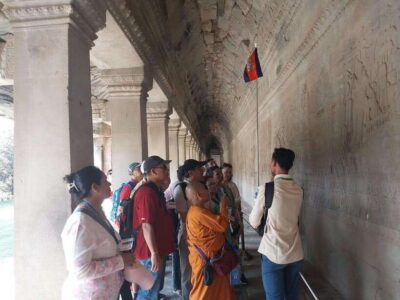
Angkor Wat: Small-Group Sunrise or Sunset Tour
Read our review →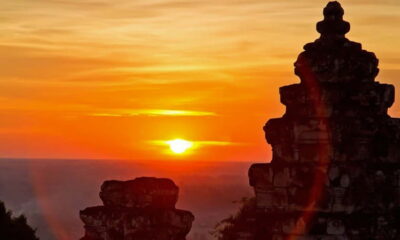
Angkor Wat Sunrise tour with Small – Group and Guide tours
Read our review →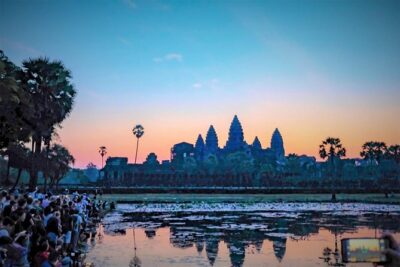
Angkor Wat Highlights and Sunrise Guided Tour from Siem Reap
Read our review →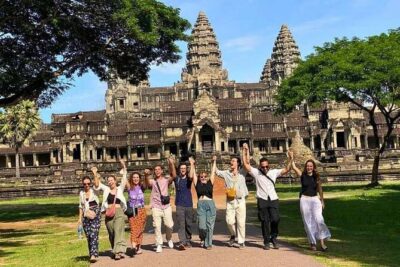
Angkor Wat Sunset Small Group Tour with Lunch Included
Read our review →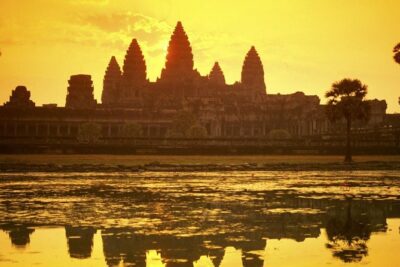
Full-Day Angkor Wat Sunrise Private Tour with Guide from Siem Reap
Read our review →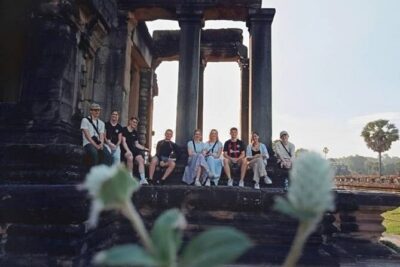
Angkor Wat Sunrise & 3 Main Temples with Breakfast – Small Group
Read our review →Browse the lists this tour appears in