
Reviewed · SIEM REAP TOURS
2-Days in temples and other areas
Angkor is best seen with enough time to slow down. This private two-day tour takes you from the smiling stone faces of Bayon to the tangled roots of Ta Prohm, then farther out to Banteay Srei and Tonle Sap’s floating villages. Guide Narin is known for adjusting the pace, starting early, and adding useful stops when time allows.
I like the private format, since you can spend longer at a favorite temple instead of following a large group. I also like the range: famous Angkor Wat shares the schedule with less-visited ruins such as Preah Khan and Neak Pean. The main drawback is that the $261 price does not include temple admission, meals, or the boat at Tonle Sap, so your final cost will be higher.
Key points to know
- Angkor’s essential temples in two days: Angkor Wat, Bayon, Ta Prohm, Preah Khan, Pre Rup, and Banteay Srei are all part of the plan.
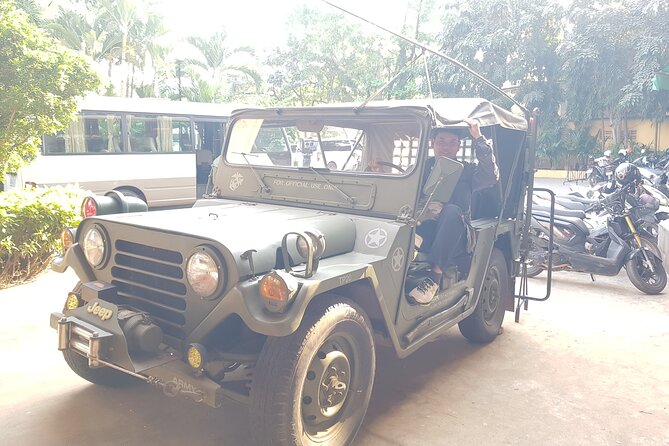
- Private guide and vehicle: Your group travels by car or van with hotel pickup, bottled water, and a guide.
- Flexible pacing: Narin can shift the start time and route to help you avoid the worst heat and match your interests.
- A good mix of famous and quieter sites: Day two moves beyond Angkor Thom to temples with fewer large tour groups.
- Tonle Sap costs extra: The floating village visit requires a separate boat payment, as do food and temple tickets.
- Dress for temple rules: Angkor Wat requires covered knees and shoulders, so shorts and sleeveless tops can create a problem.
Two days that make Angkor easier to understand
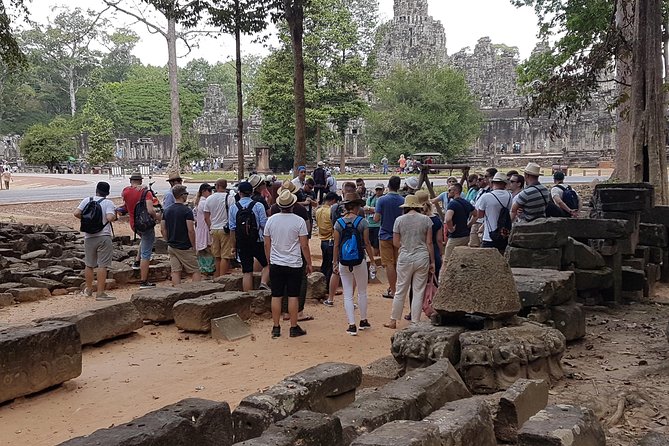
The strongest reason to choose this tour is its shape. You are not limited to a quick circuit of Angkor Wat and one or two nearby temples. Across two days, you see the major monuments around Siem Reap, then continue to more distant sites and Tonle Sap Lake.
That matters because Angkor is not one building. It is a large archaeological area with temples from different periods, different religious traditions, and different purposes. A private guide can help you connect the pieces instead of treating each stop as another pile of stones.
The tour is designed for a small private group. That gives you more control than a fixed coach outing. You can ask questions, pause for photographs, and tell your guide when your attention is fading. In Cambodia’s heat, that last point is no small luxury.
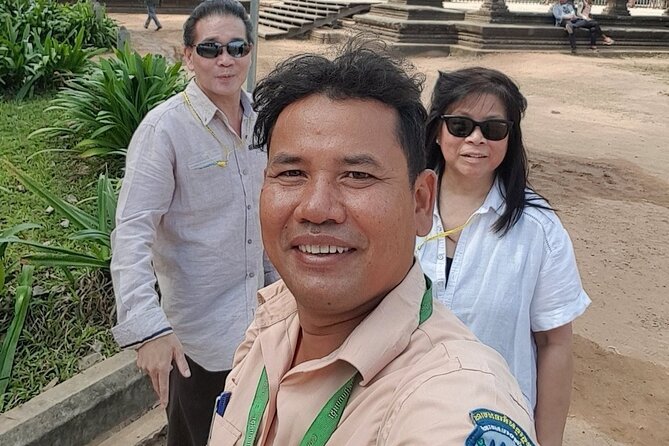
Narin is the guide most closely associated with this experience. He is described as friendly, flexible, and good at explaining the temples and the area around them. He has also helped with practical problems, including finding a borrowed cover-up when a visitor arrived at Angkor Wat in clothing that did not meet the temple rules.
A few more Angkor Wat half-days to weigh up
- Siem Reap: Angkor Wat 2-Day Tour with Sunrise and Sunset
★ 4.9 · 4,429 reviews - 2-Day Angkor Wat With Small, Big Circuit and Banteay Srei Tour
★ 5.0 · 545 reviews - Angkor Wat 2-Day complex Sun rise & Sun set with Guided Tour
★ 4.9 · 439 reviews
Day one: Angkor Thom, Bayon, Ta Prohm, and Angkor Wat
The first morning begins with hotel pickup in Siem Reap. The route heads toward Angkor Thom, the large walled city that contains several important monuments. This is a smart opening because it introduces the scale of the Angkor complex before you reach its most famous temple.
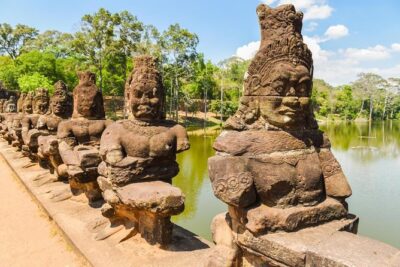
Bayon is the heart of the visit. Its towers carry the famous carved faces associated with King Jayavarman VII. From close range, you can study the expressions and the way the towers rise around the central sanctuary. The temple can feel confusing at first, with galleries, passageways, and stone blocks competing for your attention. A guide earns his keep here by pointing out what you would likely miss alone.
Angkor Thom also contains other old temples and structures. The exact time given to each stop can depend on your pace, weather, and interest. If you enjoy carved details and want to examine the bas-reliefs carefully, tell your guide early. If you are eager to reach Angkor Wat before the hottest part of the day, you may prefer a quicker look at secondary sites.
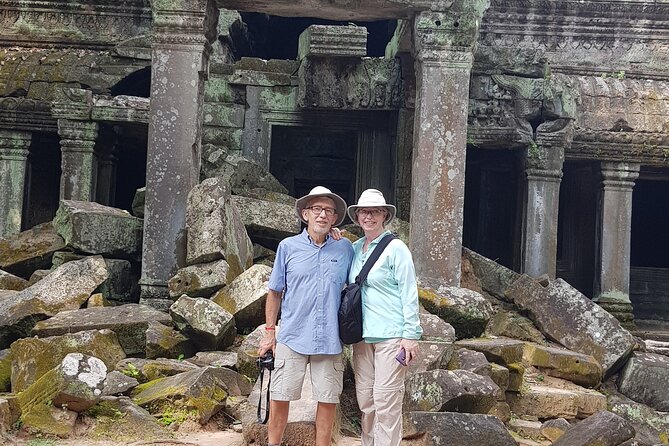
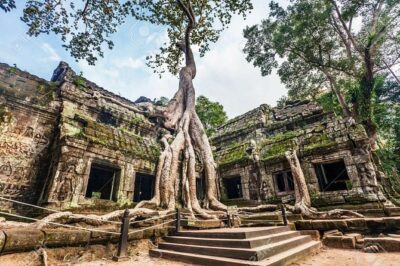
Ta Prohm brings a completely different mood. Trees and roots press against sections of the temple, creating the scene many people picture when they think of Angkor. It is not simply a photo stop, though. The stone corridors, fallen blocks, and surviving carvings show how difficult it is to preserve a large monument while leaving its atmosphere intact.
You should expect uneven ground, steps, and plenty of walking. The tour information calls for moderate physical fitness, and that is a fair description. You do not need to be an athlete, but sandals with poor footing and a packed schedule can make the day harder than it needs to be.
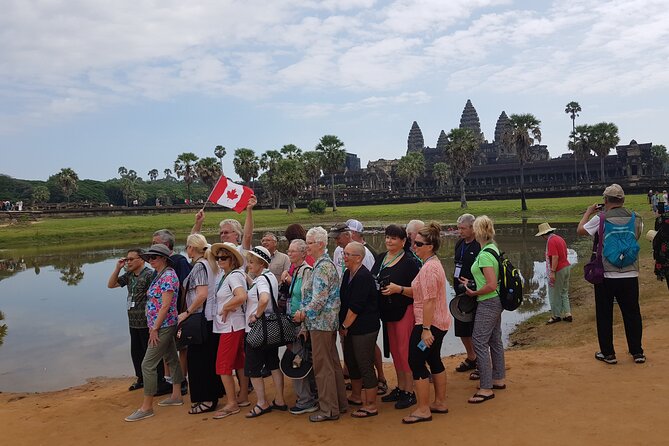
Angkor Wat is the day’s great centerpiece. The temple was built as a major religious monument and remains the best-known symbol of Cambodia. Give yourself time to take in the long approach, the towers, the galleries, and the carved scenes. The scale is easy to underestimate in photographs.
The first day includes a lunch stop inside the Angkor Archaeological Park, but the meal is your responsibility. That arrangement gives you some choice, though you should budget for it. Narin has guided groups to local restaurants for lunch, which may be useful if you prefer help choosing a place rather than making the decision yourself.
After the temple circuit, you return to your hotel. The evening is left open. You can rest, eat, or arrange a Khmer dancing show or Khmer circus. These evening activities are not included, but they can add a useful cultural counterpoint to a day spent among ruins.
What makes day two different
Day two leaves the busiest temple circuit behind and covers a wider area. The schedule includes Preah Khan, Neak Pean, Pre Rup, Banteay Srei, and Tonle Sap Lake. This is the more ambitious day, so expect a considerable amount of time in the vehicle as well as on foot.
Preah Khan was built by King Jayavarman VII and was probably used as a temporary residence while Angkor Thom was being developed. Its central sanctuary was dedicated in AD 1191 in honor of the king’s father. The site has a long, extended layout, and its corridors reward slow walking.
I like Preah Khan because it helps you see the working scale of an Angkor temple complex. It was not just a single shrine. It included a broad arrangement of chambers, courtyards, and religious spaces. The visit also tends to feel less rushed than Angkor Wat, especially when your guide can shape the stop around your interests.
Neak Pean is a small island temple in the center of the Jayatataka baray, an ancient reservoir. Reaching the temple involves following a raised path over water and wet ground. The setting is part of the appeal, and it offers a break from the enclosed corridors of the larger monuments.
Pre Rup is a Hindu temple built as the state temple of King Rajendravarman. It was dedicated in 961 or early 962. The brick and laterite structure has a strong, tiered form, and the climb gives you a clear sense of how these temples were built upward toward the central sanctuary.
The stairs can be steep, so take your time. Pre Rup is not the sort of stop where you should hurry just to tick it off a list. You will get more from it if you study the construction and listen as your guide explains its place in Angkor’s development.
Banteay Srei and the finest small carvings
Banteay Srei is one of the most distinctive stops on the second day. This 10th-century temple was dedicated to the Hindu gods Shiva and Parvati. It is smaller than Angkor Wat, but its carved ornament is unusually detailed.
The reddish stone and compact design make Banteay Srei feel different from the gray towers and broad galleries closer to Siem Reap. Look closely at the doorways, lintels, and decorative figures. This is a temple for detail rather than scale.
Its distance from the central Angkor area is both the benefit and the cost. You spend more time on the road, but you also get away from the most concentrated temple traffic. If your main goal is to see as many major sites as possible, the drive may feel long. If you want variety, Banteay Srei earns its place.
The day’s lunch is also paid by you. Ask your guide about timing so you are not trying to eat quickly between distant stops. Since meals are not included, the $261 tour price should be viewed as the cost of the private service, vehicle, guide, and water, not as an all-inclusive package.
A completely different sort of day from the same base:
- Angkor Wat Sunrise or Sunset Tour with Guide from Siem Reap
★ 5.0 · 12,109 reviews - Siem Reap: Angkor Wat: Small-Group Sunrise or Sunset Tour
★ 5.0 · 9,444 reviews - Siem Reap: Full-Day Angkor Wat Guided Tour with Sunset
★ 4.9 · 3,803 reviews - Angkor Wat Sunrise tour with Small – Group and Guide tours
★ 5.0 · 3,655 reviews
Tonle Sap floating villages add a different Cambodia
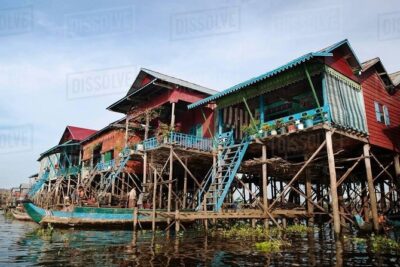
The final part of the plan takes you to Tonle Sap Lake and its famous floating villages. This changes the subject of the trip. After two days of temples, you see a living community shaped by the lake rather than an ancient royal center.
A boat visit is not included in the tour price. You pay separately for the boat, and the cost can affect the final value of the day. Confirm the arrangement with your guide before setting out so you know what is covered and what is not.
The visit is worthwhile if you want more than monumental architecture. Tonle Sap gives context to present-day life in the Siem Reap area, though the experience is different from walking through a temple. You are observing a community setting, so approach it with patience and respect rather than treating it as a quick photo backdrop.
Because the second day already contains several temples, you should discuss the timing with Narin. The itinerary is full, and the best version of the day may depend on whether your priority is Banteay Srei, the outlying ruins, or the lake.
Why a private guide matters here
A private Angkor tour is not automatically better than a group trip. It costs more, and you are responsible for meals, temple tickets, and the boat. But the difference becomes clear when the heat rises or your interests change.
Narin has adjusted start times so families could avoid the hottest hours. He has also changed the order of visits and tailored explanations to the group. That flexibility is valuable at Angkor, where one person may want to study carvings while another wants shade and a shorter stop.
A private guide also helps with small practical matters. You receive hotel pickup, transport by car or van, and water. If you are uncertain about temple etiquette, clothing, or where to stop for lunch, you have one person who can help throughout the day.
The experience is not a silent ride between monuments. Your guide is expected to explain the temples and the surrounding area. Ask questions. The more you show interest in a particular period, religion, or architectural detail, the more useful a private guide becomes.
One unusual addition has been a visit to a landmine museum focused on finding and disarming landmines. This is not listed as a standard stop in the main route, so you should ask Narin in advance if you want to include it. It could be a meaningful way to understand Cambodia’s more recent past, but adding it may require dropping or shortening another visit.
Price, inclusions, and the real cost
At $261, this is a serious purchase for a two-day private tour. The price is easier to justify for a small family or group because the service is private rather than priced per seat on a large coach. The more people in your party, the more reasonable the shared cost becomes.
Included are the guide, car or van, hotel pickup, and water. The price does not include temple tickets, food, or the Tonle Sap boat. You also pay separately for an evening Khmer dance show or circus if you choose one.
That list is important. Before booking, add the cost of admission for Angkor, two days of meals, and the boat trip to your budget. The paper ticket format is noted, so keep your ticket accessible during the temple visits.
The best value comes from the time saved and the flexibility gained. You are not paying for a luxury vehicle or an all-inclusive holiday. You are paying for a private route through a large and sometimes confusing temple area, with a local guide who can adjust the plan.
The tour has a full refund cancellation policy if you cancel at least 24 hours before the start time. Changes or cancellations inside that window are not accepted for a refund. Poor weather can lead to a different date or a full refund, which matters for the Tonle Sap portion as well as the temple visits.
Who should book this two-day route
I would choose this tour if you have two days in Siem Reap and want both the major temples and several less central sites. It suits families, couples, and small groups who value a flexible schedule over the lowest possible price.
It is also a good match if you have waited a long time to see Angkor and do not want to rush through it. The route reaches 12 ancient temples across two days when the full range of stops is included, along with Tonle Sap and possible cultural additions.
You should think twice if you dislike long sightseeing days or want every expense included upfront. Day two covers a lot of ground, and the combination of temples, lunch, driving, and Tonle Sap may feel tiring.
The moderate fitness requirement is worth taking seriously. You will walk on uneven surfaces and manage temple steps. Wear clothing that covers your knees and shoulders, bring practical footwear, and keep water close.
Should you book it?
Book this tour if you want a private, flexible introduction to Angkor and like the idea of adding Banteay Srei and Tonle Sap rather than stopping with Angkor Wat alone. Narin’s ability to adjust the pace is especially useful for families and anyone sensitive to heat.
The main caution is the extra spending. Temple admission, meals, and the Tonle Sap boat are all separate, and day two is busy. If you accept those limits, the route offers a strong two-day look at Cambodia’s ancient temples, living lake communities, and more recent past.
FAQ
Is hotel pickup included?
Yes. Pickup is offered from your hotel in Siem Reap, and the tour begins in Krong Siem Reap, Cambodia.
Is this a private tour?
Yes. This is a private activity, so only your group participates.
What is included in the $261 price?
The price includes a guide, car or van transportation, and water. Temple tickets, food, and the boat at Tonle Sap are not included.
Which temples are visited?
The route includes Angkor Thom, Bayon, Angkor Wat, Ta Prohm, Preah Khan, Neak Pean, Pre Rup, and Banteay Srei. It also includes a visit to Tonle Sap Lake and its floating villages.
How much walking is involved?
You should have a moderate level of physical fitness. The temple visits involve walking on uneven ground and managing temple steps.
Can I cancel for a full refund?
You can cancel at least 24 hours before the experience start time for a full refund. Cancellations or changes made less than 24 hours before the start time are not accepted for a refund. If poor weather causes the tour to be canceled, you are offered another date or a full refund.
New around Angkor Wat
- Angkor Wat at Sunrise★ 4.0 · 7 reviews
- Angkor Wat Small Tour Sunrise With Private Tuk Tuk★ 4.6 · 7 reviews
- Angkor Wat Sunrise, Banteay Srei, Bayon & Ta Prohm Temple★ 4.9 · 7 reviews
- Angkor Wat 3-Day Temple Tours★ 5.0 · 8 reviews
- 1 day special Tour: Angkor Wat,Bayon,Ta Prohm, Bantey srei and Beng Mealea★ 5.0 · 8 reviews
- Angkor Wat Sunrise & Small Circuit Tour★ 5.0 · 8 reviews
- Angkor Wat Sunrise Tour★ 5.0 · 8 reviews
- Angkor Wat Cycling Tour★ 5.0 · 8 reviews
Siem Reap Tours, compared.
Angkor Wat Sunrise or Sunset Tour with Guide from Siem Reap
Read our review →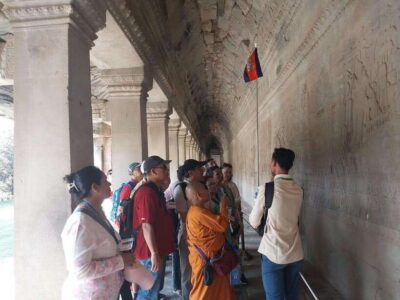
Angkor Wat: Small-Group Sunrise or Sunset Tour
Read our review →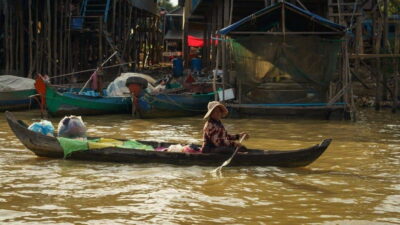
Sunset tour of Kampong Phluk stilts home village on the Tonle Sap
Read our review →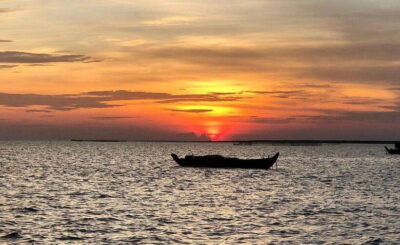
Kampong Phluk Floating Village Tour with Boat
Read our review →
Angkor Wat Sunrise tour with Small – Group and Guide tours
Read our review →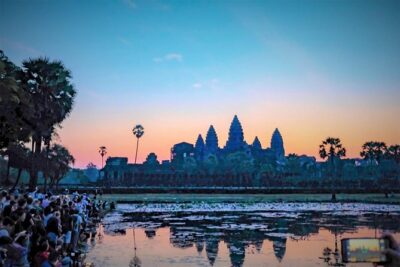
Angkor Wat Highlights and Sunrise Guided Tour from Siem Reap
Read our review →Browse the lists this tour appears in