
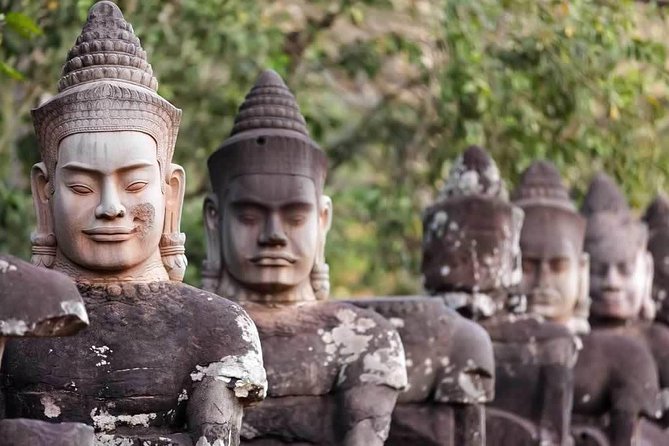
Reviewed · ANGKOR WAT TOURS
Angkor Wat Small-Group Exploration with Expert Guide
Angkor Wat is only the beginning. This 6 to 7-hour outing takes you from the grand symmetry of Angkor Wat to Bayon’s huge stone faces and Ta Prohm’s tree-covered ruins, giving first-time visitors a useful introduction to the main temple area. Guides such as Phy, Nak, Wat, and San are praised for clear English, careful pacing, and help with photographs.
I like the hotel pickup and the choice of a tuk-tuk for one or two people or an air-conditioned minivan for larger groups. I also like the small-group format, capped at 12 people, which gives you more room to ask about carvings, kings, and Buddhist symbolism. The catch is that the $18 price does not include the $37 one-day Angkor pass, lunch, or tips, and the heat and stairways make this a real physical outing.
Key points to know before booking
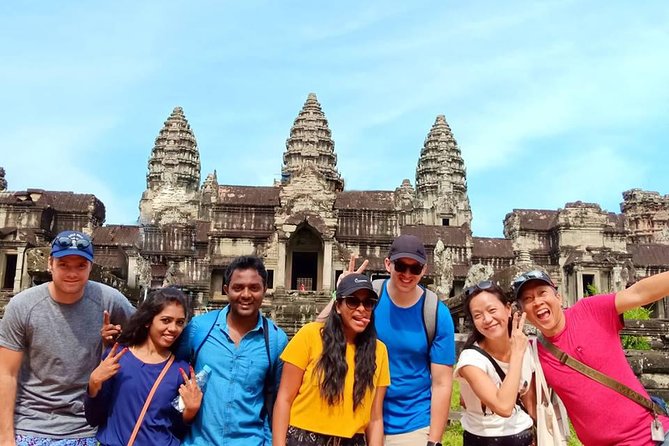
- Four major Angkor stops in one day: You visit Angkor Wat, Angkor Thom, Bayon, and Ta Prohm, with time at each site.
- Small group, maximum 12 people: The group size varies by bookings, and an empty departure can become a private tour.
- Tuk-tuk or minivan transport: One or two people normally ride by tuk-tuk, while groups of three or more use a minivan.
- Cold water is supplied: Some guide and driver teams also provide chilled towels, a useful comfort in Siem Reap’s heat.
- The park ticket is extra: Budget $37 per person for the one-day Angkor National Park pass.
- Expect steps and uneven ground: Long pants or knee-length clothing is required, and moderate fitness is advised.
Why this is a good first day at Angkor
The Angkor complex is too large to understand by simply wandering from one ruin to the next. A guide gives the stonework a human shape: which king built each temple, how Hindu and Buddhist beliefs appear in the carvings, and why the buildings were placed where they are.
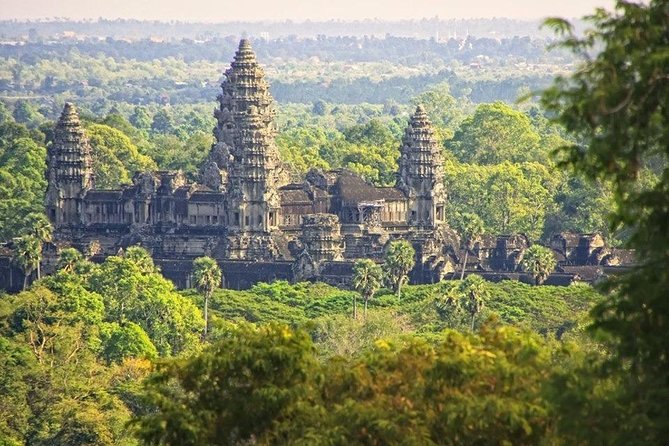
This tour covers the three names most people come to Siem Reap to see. Angkor Wat gives you the monumental centerpiece, Bayon supplies the unforgettable faces, and Ta Prohm offers the atmospheric ruins wrapped in trees. Angkor Thom ties the day together as the old royal capital around Bayon.
The plan is busy but sensible. About two hours at Angkor Wat allows time to cross the long approach, examine the galleries, and climb toward the upper level if it is open and you are able. Angkor Thom receives about an hour, followed by an hour at Bayon and another hour at Ta Prohm.
The schedule can stretch toward seven hours with transfers and a lunch stop. That is enough time to see the major sights without trying to cover every temple in the park. If you want a slow archaeological study of Angkor, this is not that tour. If you want a well-guided introduction, it makes good sense.
More Angkor Wat Tours in Siem Reap:
- Angkor Wat Sunrise or Sunset Tour with Guide from Siem Reap
★ 5.0 · 12,109 reviews - Siem Reap: Angkor Wat: Small-Group Sunrise or Sunset Tour
★ 5.0 · 9,444 reviews - Siem Reap: Angkor Wat 2-Day Tour with Sunrise and Sunset
★ 4.9 · 4,429 reviews
Angkor Wat: start with the architectural giant
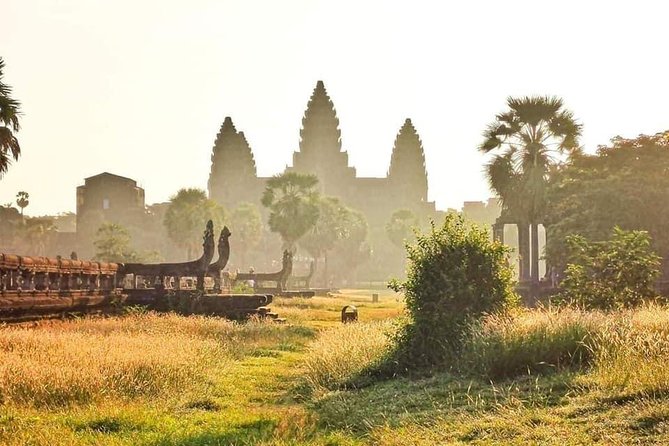
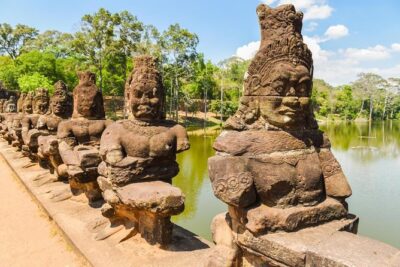
Angkor Wat was built in the early 12th century for King Suryavarman II as his state temple and capital. It is the best-preserved major temple in the complex, and its scale can be hard to grasp at first. The long causeway, broad moat, towers, galleries, and carved walls make this more than a quick photo stop.
The two-hour visit is the right length for a first look. You can take in the overall design, then focus on the bas-reliefs and the stories carved into the stone. A good guide will point out details that blend together when you are seeing hundreds of figures and panels at once.
This is also where the physical demands become clear. There are long walks, stairs, and uneven surfaces. One visitor in their late sixties described guide Wat helping them work within their limits, while other guide teams assisted people on steep sections. That care matters, but you should still judge your own ability before booking.
Angkor Wat is listed as having a two-hour stop, but the actual pace can vary with the group. Some people will want time for photographs, while others will prefer the guide’s explanation. Tell your guide early if you need more rest stops or cannot manage the upper stairs.
Angkor Thom and Bayon: faces at the center of power
Angkor Thom was the Khmer Empire’s capital city in the late 12th century under King Jayavarman VII. The city is much larger than the temple itself, so the one-hour stop works as an introduction rather than a complete tour of every structure inside the walls.
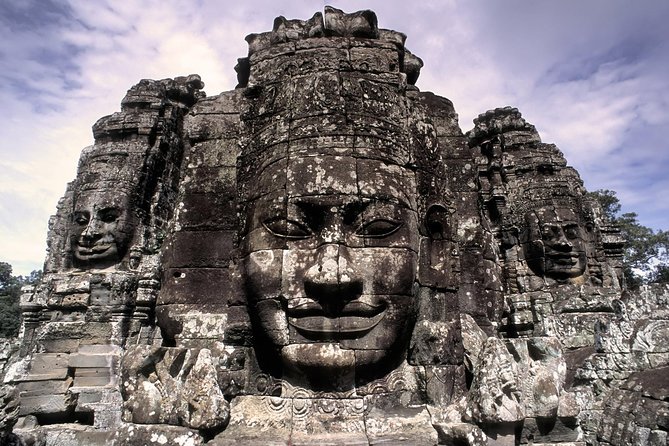
Bayon sits at the center of Angkor Thom and is the main reason this section matters. Its towers carry enormous carved faces, and the close-set galleries create a very different mood from Angkor Wat’s grand, ordered lines. The stonework can feel crowded and confusing until someone explains what you are looking at.
This is one of the places where an English-speaking guide earns the fee. Guides named in the tour’s regular operations, including Phy, Nak, Wat, Voath, and San, have been praised for explaining temple symbolism and Cambodian history without burying the day in lectures. The best approach is to ask questions as you go: what changed under a Buddhist king, how the carvings differ from Angkor Wat, and what the faces may represent.
Some tours also include a look at Baphuon within Angkor Thom, though the listed itinerary specifically promises Angkor Thom and Bayon. If that detail matters to you, ask the guide on the day how much time is available. The schedule is flexible enough to adapt, but the four main stops remain the core plan.
Ta Prohm: beautiful ruins with a practical downside
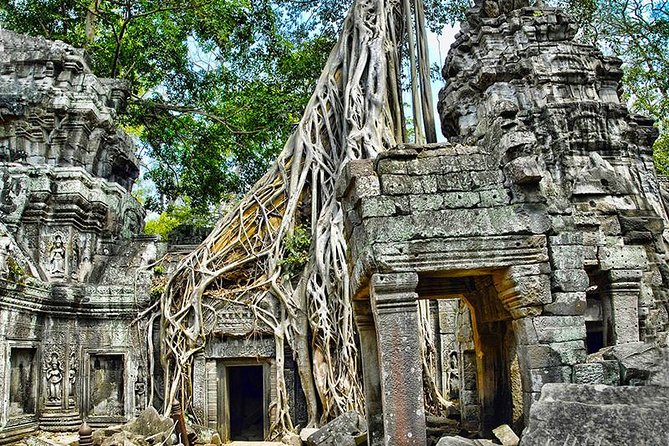
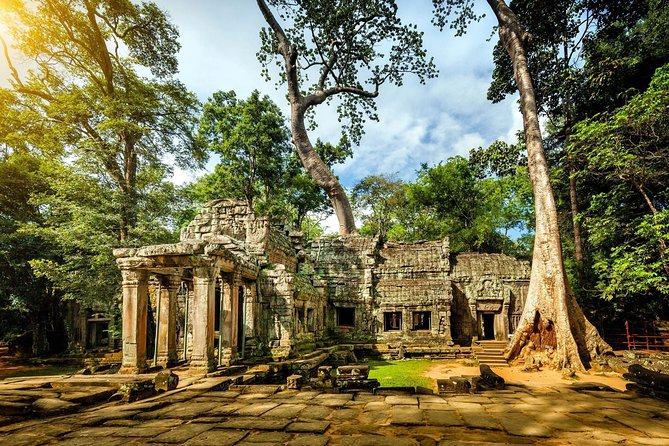
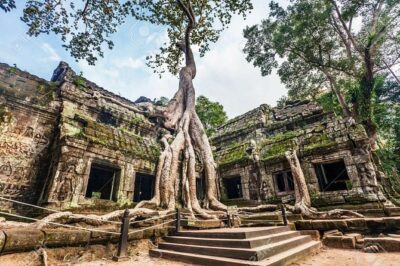
Ta Prohm is the temple most associated with trees growing over ancient stone. Its broken galleries, narrow passages, and exposed roots create a strong contrast with Angkor Wat’s formal grandeur. The sense of age is immediate, but the site is not simply a scenic backdrop. It is a religious complex with carved doorways, courtyards, and layers of construction to read.
The one-hour stop is enough to see the main sections and take photographs. You will likely encounter uneven ground, stairs, and tight walking areas. People who need frequent breaks should say so, since heat and humidity build over the course of the day.
Ta Prohm can also be one of the more crowded stops. The small group helps you stay organized, but it cannot make the temple empty. Your guide may know less congested corners and standard photo points, and several guides, including San and Phy, are praised for taking photos and finding good places to pause.
I would save a little energy for Ta Prohm rather than spending every ounce of it at Angkor Wat. It is the final major temple on the route, and arriving tired can make the last hour feel harder than it needs to.
More Small Group Tours in Siem Reap:
- Angkor Wat Sunset Small Group Tour with Lunch Included
★ 5.0 · 3,059 reviews - Angkor Wat Sunrise & 3 Main Temples with Breakfast – Small Group
★ 5.0 · 2,857 reviews - Angkor 2-Day Sunset & Sunrise Small-Group Tour
★ 5.0 · 2,567 reviews - Kulen Mountain: Small-Group Tour and Picnic lunch
★ 4.9 · 1,802 reviews
Tuk-tuk or minivan, with water that matters
For one or two people, transportation is normally by tuk-tuk. Three or more people are generally placed in a minivan. Both arrangements keep you moving between the temples without having to arrange separate transport inside the park.
The tuk-tuk is the more atmospheric choice. You get open sides and a better sense of the road between the ruins, though it offers less shelter from heat and dust than a minivan. The minivan is the practical choice for larger groups and includes air conditioning, which several experiences found useful on very hot days.
Cold bottled water is included throughout the tour. Some driver and guide teams also hand out cold towels, especially after temple visits. That may not be guaranteed as a formal inclusion, but it is a worthwhile comfort in Siem Reap’s heat.
Hotel pickup and drop-off are included within the city center. The return transfer is listed as about 30 minutes, though the exact timing depends on your hotel and the day’s traffic. Pickup removes one common nuisance: figuring out where to meet a tuk-tuk before sunrise or an early morning departure.
The guide makes the biggest difference
The temples are extraordinary, but a guide can determine how much you understand and how tiring the day feels. You are not just looking for facts. You want someone who can judge when to explain, when to let you look, and when to find shade or water.
The guide names most often associated with strong experiences include Phy, Sophy, Nak, Wat, Voath, San, Vireak, Seth, and Vantha. English ability varies by individual, but the strongest guides are described as clear, warm, and able to adjust the pace. San, for example, is noted for confirming pickup, adapting the day when his group was small, explaining the ticket process, and taking photographs at both familiar and less obvious viewpoints.
The guide and driver also work as a team. Driver care matters when roads are busy and passengers are tired. Drivers called Sim, Ken, Mom, Billy, and Heang have been singled out for punctuality, safe driving, and clean vehicles.
You cannot request a particular guide with certainty from the information provided, so book this for the format and operator rather than one named person. If a favorite guide is important to you, contact Green Era Travel before booking and ask if a request can be noted.
Lunch, clothing, and the real cost
The tour price is $18 per person, which is low for hotel transport, a guide, and a full day around Angkor. The major extra is the one-day Angkor National Park ticket at $37 per person. Add lunch, drinks beyond the supplied water, and a tip for your guide and driver.
Lunch is normally taken at a local restaurant in the national park. That is convenient, but it may cost more than eating in Siem Reap town. You should treat the stop as a practical break rather than a reason to book the tour for food. Bring snacks if you need something specific, since meals and snacks are not included.
Wear long pants or a skirt or dress that reaches at least the knees. Temple rules require this, and light clothing that covers the legs is the easiest solution. Shoes should be comfortable for uneven ground and stairs.
The tour calls for moderate physical fitness. That does not mean you need to be athletic, but you should be comfortable walking for several hours, handling steps, and managing hot weather. Guides can help with pacing and, in some cases, offer an arm on difficult sections. They cannot remove every stair or uneven path.
Who will get the most from this tour
I would choose this for a first visit to Siem Reap, especially if you want the major temples explained rather than simply photographed. It also suits solo visitors and couples who prefer a small group to a large coach.
It works well for families with older children, since children must be accompanied by an adult and the day includes plenty of visual variety. Older people can enjoy it too, provided they are realistic about stairs, walking, and heat. Tell the guide about limits early instead of trying to keep pace silently.
The tour is less suitable if you want sunrise photography as the main goal, a quiet private experience, or time at many lesser-known temples. The listed day focuses on the famous sites, and the group size can vary up to 12 people. It is also not ideal for anyone who struggles with prolonged walking or steep, uneven surfaces.
At $18 before the park ticket, the value is strongest when you consider the guide and transport. Visiting independently can give you more control, but you would need to arrange your own driver, route, and explanations. Here, you pay a modest operating price and then add the unavoidable park admission.
Should you book the Angkor Wat small-group tour?
Book it if you want the classic Angkor route in one manageable day, with hotel transport and an English-speaking guide. The strongest reasons are the sensible selection of temples, small-group size, flexible pacing, and the simple comforts of cold water and, with some teams, chilled towels.
Go in with clear expectations. The $18 headline price is not the full day’s cost, lunch is extra and may be pricier inside the park, and the tour is physically demanding. Wear the required clothing, budget for the $37 pass, and ask for rest stops when you need them.
For a first taste of Angkor, I think this is a sound choice. You will see the temples that matter most, learn how they fit into Khmer history, and avoid the stress of organizing the basic transport yourself.
FAQ
What temples does the tour visit?
The scheduled stops are Angkor Wat, Angkor Thom, Bayon Temple, and Ta Prohm. The tour may also include Baphuon depending on the guide and available time, but the four named stops form the main route.
How long does the tour last?
The experience lasts approximately 6 to 7 hours, including the return transfer to your hotel or another requested drop-off point within Siem Reap city center.
Is hotel pickup included?
Yes. Hotel pickup and drop-off are included. The return transfer is listed as taking about 30 minutes.
Is the Angkor park ticket included?
No. The one-day Angkor National Park ticket costs $37 per person and must be paid separately.
What type of transportation is used?
One or two people normally travel by tuk-tuk. Groups of three or more generally use a minivan.
Is bottled water provided?
Yes. Cold bottled water is included during the tour. Some guide and driver teams also provide cold towels after temple visits.
Are meals included?
No. Breakfast, lunch, dinner, snacks, and drinks other than the supplied bottled water are not included. The guide normally stops at a local restaurant in the national park around lunchtime.
What should I wear to the temples?
Long pants or knee-length skirts and dresses are required. Comfortable clothing and footwear are important because the tour includes walking, stairs, and uneven surfaces.
Can children join the tour?
Yes, but children must be accompanied by an adult. The tour recommends a moderate level of physical fitness, so consider the walking and stairs before booking.
New around Siem Reap
- Kulen Mountain With Ticket included Plus Banteay Srei Temple Tour★ 5.0 · 7 reviews
- 2 Days Angkor temples with Sunrise & Sunset★ 5.0 · 7 reviews
- Private Siem Reap Airport Transfer to hotel in town★ 5.0 · 7 reviews
- 1-Day private Angkor Temple Tour with Sun Rise by Tuk Tuk from Siem Reap★ 4.5 · 7 reviews
- Siem Reap: Morning Cooking Class & Market Tour★ 5.0 · 7 reviews
- Kulen Mountain, Killing Fields and War Museum Tour★ 5.0 · 7 reviews
- War Museum, Killing Field, and APOPO Hero RATs Tour★ 5.0 · 7 reviews
- Half-Day: Silk Farm, Senteur Angkor, and Satcha Workshop★ 4.6 · 7 reviews
Angkor Wat Tours, compared.
Angkor Wat Sunrise or Sunset Tour with Guide from Siem Reap
Read our review →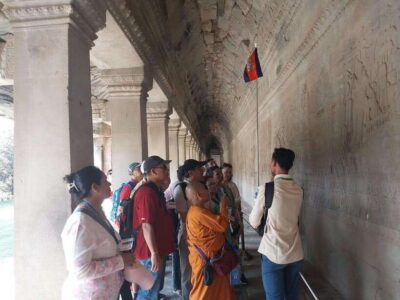
Angkor Wat: Small-Group Sunrise or Sunset Tour
Read our review →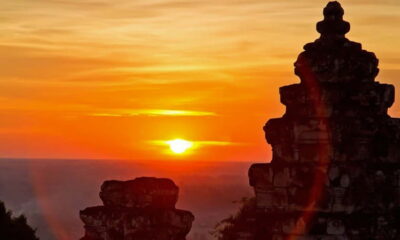
Angkor Wat Sunrise tour with Small – Group and Guide tours
Read our review →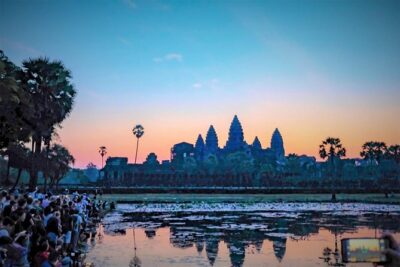
Angkor Wat Highlights and Sunrise Guided Tour from Siem Reap
Read our review →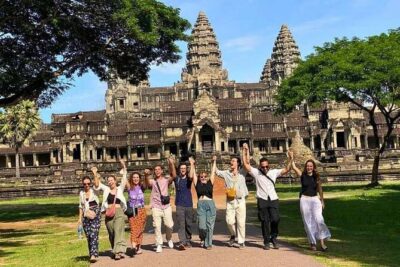
Angkor Wat Sunset Small Group Tour with Lunch Included
Read our review →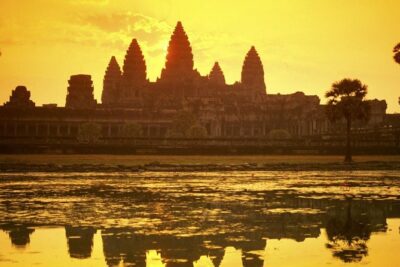
Full-Day Angkor Wat Sunrise Private Tour with Guide from Siem Reap
Read our review →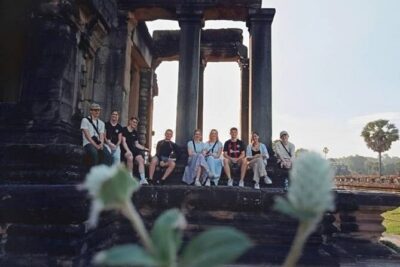
Angkor Wat Sunrise & 3 Main Temples with Breakfast – Small Group
Read our review →Browse the lists this tour appears in