
Reviewed · ANGKOR WAT TOURS
Four-day tour Angkor Wat, Banteay Srey, Beng Melea and Siem Reap discovery
Angkor Wat is only the beginning here. Over four days, you move from the famous face towers of Bayon and tree-covered Ta Prohm to remote Beng Mealea, a floating village, and the workshops of Artisans Angkor. It is a useful mix of temples, countryside, and present-day Cambodia, not just a quick run through the headline monument.
I like the private format, since your guide can shape the pace and work around the crowds. I also like the range: Banteay Srei gives you delicate carvings, Kbal Spean adds a countryside walk, and Kompong Phluk shows how daily life adapts to Tonle Sap’s changing water levels. The main drawback is that this is a full four-day program with several long drives and plenty of walking, while temple tickets and every meal cost extra.
The strongest part is the guiding. Sa is repeatedly praised for clear English, Hindu and Buddhist mythology, Khmer stories, and explanations of family life and local customs. If Sa leads your visit, ask questions freely. This tour works best when you treat it as a guided journey through Cambodian culture, rather than a string of photo stops.
What makes this four-day Angkor tour worth considering
- Beng Mealea and Banteay Srei add variety: You get a remote ruin with an explorer-like feel and a finely carved pink sandstone temple often regarded as one of Angkorian art’s finest achievements.
- A private group keeps the schedule flexible: Only your own party takes part, with an English-speaking guide and pickup offered.
- The program reaches beyond the main park: Kbal Spean, the Roluos temples, Kompong Phluk, the Angkor National Museum, and Artisans Angkor broaden the picture.
- Sa is a particularly praised guide: His explanations cover temple design, Hindu and Buddhist beliefs, Khmer legends, and Cambodian daily life.
- The price covers useful basics: At $202.57 per person, you receive an air-conditioned vehicle, guide, cold water, and cold towels, but not entrance fees or meals.
- The schedule is ambitious: Expect four substantial days, early starts if arranged by the guide, long temple visits, and drives of up to about 70 kilometers from Siem Reap.
Four days that connect temples with everyday Cambodia
This tour is designed for you if you want more than Angkor Wat’s central circuit. The first two days concentrate on major temples, while the third heads farther afield and the fourth shifts toward lake life, museums, and traditional craft.
The listed start time is 8:30 a.m., and pickup is offered. Your air-conditioned vehicle matters in Cambodia’s heat, especially on Day 2 and Day 3, when the road time is substantial. Cold water and a cold towel are included, small comforts that become useful after stone steps and open courtyards.
The tour is private, so only your group participates. That gives you room to ask for more explanation at a relief or to move on when a site feels less compelling. The guide also tries to arrange visits to limit crowds, though no schedule can remove the popularity of Angkor Wat entirely.
More Angkor Wat Tours in Siem Reap:
- Angkor Wat Sunrise or Sunset Tour with Guide from Siem Reap
★ 5.0 · 12,109 reviews - Siem Reap: Angkor Wat: Small-Group Sunrise or Sunset Tour
★ 5.0 · 9,444 reviews - Siem Reap: Angkor Wat 2-Day Tour with Sunrise and Sunset
★ 4.9 · 4,429 reviews
Day 1: Bayon faces, jungle roots, and Angkor Wat
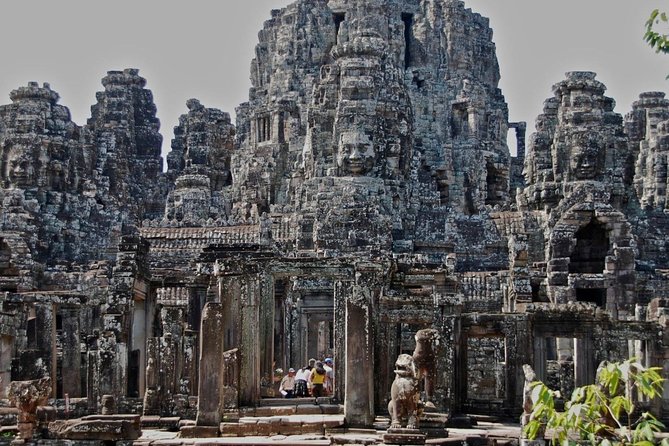
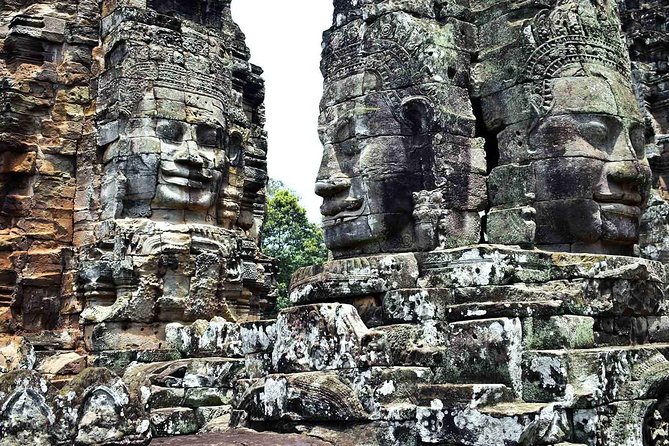
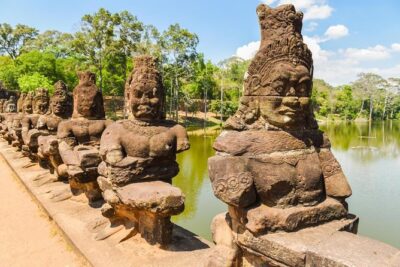
The first morning begins at the South Gate of Angkor Thom, followed by Bayon. Angkor Thom once included 54 towers and 216 carved faces associated with the Buddhist figure Avalokitesvara. The faces are the visual hook, but your guide can help you notice how the towers crowd together and how the temple’s narrow passages change the way you see the carvings.
Allow two hours at Bayon. That is enough time to look up, move through the galleries, and hear the story behind the monument without reducing the visit to a quick photograph. The South Gate also gives you an early introduction to the monumental scale of the Angkor complex.
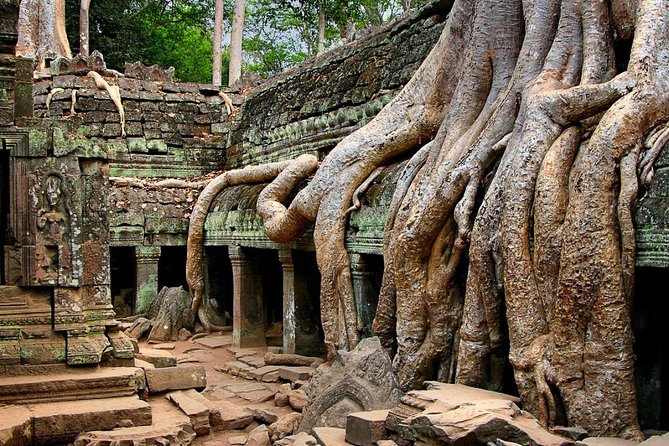
Ta Prohm follows, with another two-hour visit. It is famous for trees whose roots grip and surround the stonework. The appeal is immediate: you see architecture and forest occupying the same space. Yet the popularity of the site can make some areas crowded, so the guide’s effort to time the visit sensibly is useful.
Banteay Kdei is a quieter change of mood, with about an hour planned. King Jayavarman VII built the temple in the late 12th century. It does not carry the same fame as Ta Prohm, but that can be an advantage. You have time to pay attention to the layout and worn surfaces rather than simply following the largest crowd.
The day ends with three hours at Angkor Wat itself. King Suryavarman II built the temple in the early 12th century and dedicated it to Vishnu. The scale is immense, from the broad approach to the towers and galleries, and three hours gives you a sensible first visit.
The overview also describes sunset over Angkor Wat and the surrounding temples. Confirm the exact timing with your guide, since the detailed stop list does not give a separate sunset duration. Do not assume that a sunrise visit is part of this schedule simply because sunrise at Angkor Wat is a popular idea.
Day 2: A long northern loop to Kbal Spean and Banteay Srei
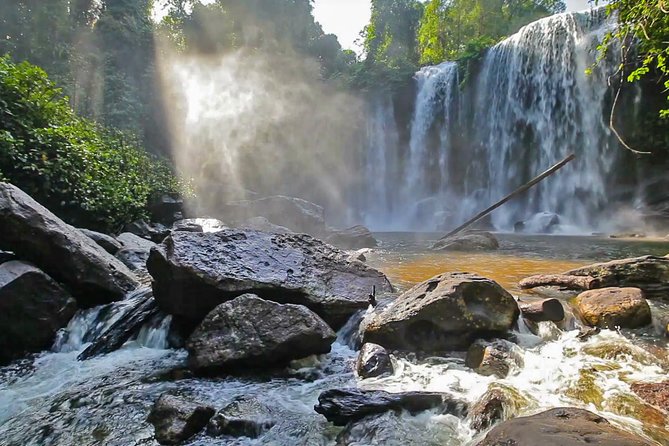
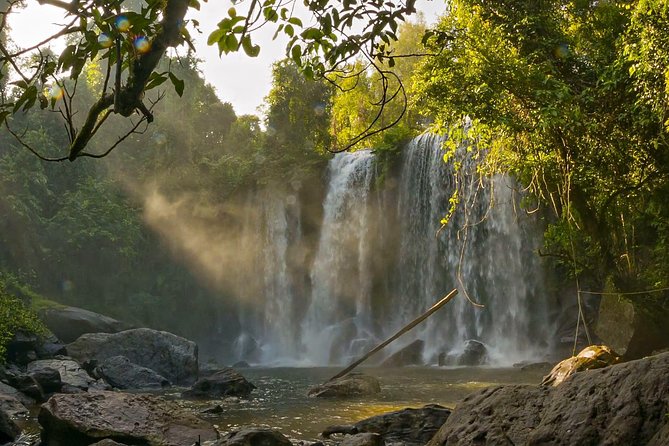
Day 2 is the most demanding day on paper. Kbal Spean receives four hours, and the site is about an hour and a half from Siem Reap when combined with the trip to Banteay Srei area. The attraction is a waterfall and a riverbed carved with representations connected to Vishnu and Brahma, including the famous 1,000 lingas.
This is not another grand temple courtyard. You are going into a natural setting, and the walk makes sensible footwear important. The program does not specify the walking distance or trail conditions, so ask your guide about the current route before setting out. The site may suit you if you want a break from enclosed temple walls, but it is less convenient than the monuments close to Siem Reap.
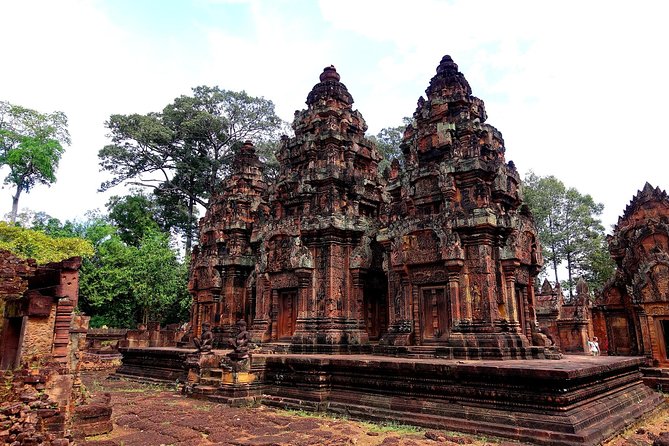
Banteay Srei follows, with two hours planned. The temple is about an hour’s drive from Siem Reap and is cut from pinkish stone. Its carvings are unusually fine and detailed, with small figures and carefully worked decoration that reward close attention.
Banteay Srei is not the biggest temple on this tour. Its value comes from precision rather than scale. I would use the time to listen to the guide’s explanation of the imagery, then slow down and inspect the stone yourself. The name is often linked with women, but the supplied information does not explain that tradition, so ask your guide rather than relying on a quick label.
After returning toward the main Angkor area, the route visits Eastern Mebon for about an hour. This large temple-mountain is a compact stop after the longer northern outing. Neak Pean takes another hour and sits on an artificial island in an ancient water reservoir, known as a baray.
Neak Pean changes the rhythm again. Instead of climbing through a large complex, you approach a temple surrounded by water-related design. The final stop is Preah Khan, a substantial monastic complex with an hour scheduled. It is described as highly explorable, so you may find that one hour feels short if you like examining side passages and worn carvings.
The practical point is that Day 2 packs five stops around a long excursion. I like the breadth, but you should expect a busy day. If you prefer slow, reflective visits, tell your guide which sites matter most to you.
Day 3: Beng Mealea’s broken stones and the older Roluos group
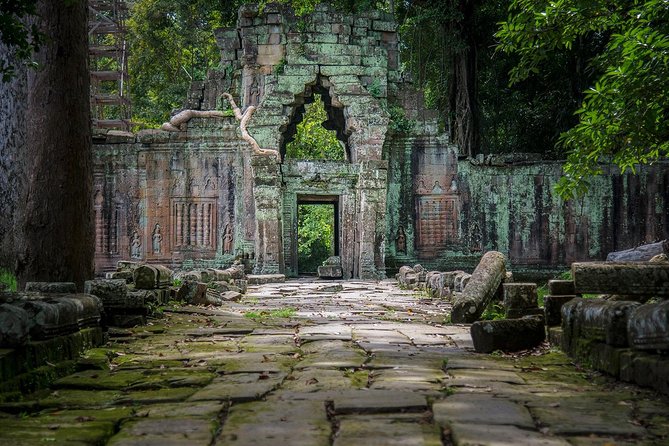
Beng Mealea is about 70 kilometers northeast of Siem Reap, making it the longest outward journey in the program. Four hours are allocated to the visit and transport component. The temple is often called the lost temple of Angkor, and its remote setting gives you a stronger sense of separation from the central monuments.
Expect a more ruined, less polished experience than Angkor Wat. The appeal is in the broken stones, obstructed corridors, and feeling of finding your way through an old complex. The supplied details do not promise special access, raised walkways, or particular trail conditions, so ask about the route and wear shoes suited to uneven ground.
The drive is a major part of the day. That can feel tiring, especially after two full days of temples, but Beng Mealea is precisely the kind of stop that justifies leaving Siem Reap’s usual circuit. You trade convenience for atmosphere.
The afternoon turns to the Roluos group, about 11 kilometers southeast of the Siem Reap Market. Bakong, Lolei, and Preah Ko are close together across an area of roughly three kilometers. Three hours are planned, giving you more time to compare the monuments without the long transfer between each one.
Roluos is valuable because it shows an earlier stage of Khmer temple building. The information supplied identifies the three monuments and their location but does not give detailed dates or individual histories. This is where a guide such as Sa can add real value by explaining how the temples fit into the wider development of Khmer architecture.
After Beng Mealea’s isolation, Roluos feels easier to read. You can focus on how the buildings are arranged and how the older group differs from the later Angkor monuments. Day 3 is still tiring, but it has a pleasing contrast between remote ruins and a compact archaeological group.
A few more Siem Reap half-days to weigh up
- From Siem Reap: Kampong Phluk Floating Village Tour by Boat
★ 4.9 · 6,979 reviews - Sunset tour of Kampong Phluk stilts home village on the Tonle Sap
★ 5.0 · 4,865 reviews - Siem Reap: Kampong Phluk Floating Village Tour with Boat
★ 4.9 · 3,843 reviews - Siem Reap: Full-Day Angkor Wat Guided Tour with Sunset
★ 4.9 · 3,803 reviews
Day 4: Tonle Sap, museum context, and living craft
The final day begins at Kompong Phluk, about a 45-minute drive from Siem Reap. The village sits within the Tonle Sap area, and the visit is meant to show Cambodian life around Southeast Asia’s largest freshwater lake.
The water level changes across the year, shaping how people live and move. The supplied information does not specify the exact boat arrangement or seasonal conditions, so confirm those details before departure. The visit is still useful because it shifts your attention from royal temples to homes, work, and community life connected to the lake.
Plan four hours for Kompong Phluk. That makes it more than a brief stop, but it also means you should keep some energy for the museum and workshop later. The village may be the most culturally revealing part of the tour, provided you approach it with respect and listen to the guide’s explanation rather than treating it as a backdrop for photographs.
The Angkor National Museum follows for one hour. Its collection includes Buddha statues and relics, giving you a chance to see objects removed from the open-air temple setting. One hour is enough for an introduction, but not for every display in detail. If the museum matters greatly to you, ask which galleries best explain the temples you have already visited.
The last stop is Artisans Angkor, a local nonprofit organization that aims to improve the lives of disadvantaged Cambodians from rural areas. You visit its workshop and are told you can be shown how stone carving is made. This is a fitting final stop because it connects ancient carving with a present-day effort to keep craft skills and employment alive.
The supplied description says you will be conveyed to craft your own stone carving, but it does not clarify whether this is a full hands-on class or a demonstration with some participation. Ask the operator for the exact arrangement before booking if making something yourself is important to you.
What $202.57 includes, and what it does not
At $202.57 per person, the price buys a private four-day touring service rather than admission to the monuments. You receive an air-conditioned vehicle, an English-speaking guide, cold water, and cold towels. Pickup is offered, group discounts are available, and a mobile ticket is provided.
All entrance tickets are extra. Meals are also extra, including breakfast, lunch, and dinner. This is the most important budgeting point. The low headline price does not represent the complete cost of four days in Siem Reap, so ask for the current ticket prices and build meals into your plan.
The value is strongest if you want one person to connect the sites for you. Sa, in particular, is praised for explaining Hindu and Buddhist beliefs, temple stories, folk tales, and Cambodian family life in clear English. That kind of context can turn a carved scene from a puzzle into something you can understand.
The value is less obvious if you only want transport. You are paying for a private vehicle and guide across several long days, not for luxury lodging, food, or admissions. A group discount may improve the per-person price if you are traveling with several people, but confirm how the discount is applied.
Who should book this private Angkor itinerary
I would choose this tour if you have four days in Siem Reap and want a broad introduction without arranging separate transport for every site. It suits people who enjoy temple architecture but also want a village, museum, craft workshop, and countryside excursion.
It is also a good fit for families and mixed-age groups because the activity is private and most travelers can participate, though children must be accompanied by an adult. The private setup lets your group discuss pace and priorities with the guide.
You should think twice if you dislike long drives, uneven temple areas, or tightly scheduled sightseeing. Kbal Spean and Beng Mealea add character, but they also make the program more tiring. You may prefer a shorter Angkor plan if your main goal is a slow study of Angkor Wat, Bayon, and Ta Prohm.
The tour starts at 8:30 a.m. and lasts approximately four days. The schedule does not give exact hotel pickup times, meal stops, walking distances, or ticket costs. Ask these questions before payment, especially if you have mobility concerns or a fixed flight schedule.
Free cancellation is available if you cancel at least 24 hours before the local start time. Changes or cancellations inside that window are not accepted for a refund.
Should you book the Four-day Angkor Wat tour?
Book it if you want the big temples, remote ruins, Tonle Sap culture, and modern Cambodian craft in one private program. The itinerary has real range, and a guide such as Sa can supply the historical and religious context that is hard to gain from signs alone.
Do not book it expecting a relaxed holiday or an all-inclusive price. Entrance tickets and meals are separate, and Day 2 and Day 3 are long. For an active visitor who values explanation and variety, $202.57 per person is a useful starting price for four days of private touring. Just confirm the ticket total, daily meal plan, walking demands, and whether your assigned guide is Sa before you commit.
FAQ
How long is the tour?
The tour lasts approximately four days and begins at 8:30 a.m.
Is this a private tour?
Yes. Only your own group participates in the activity.
Is hotel pickup offered?
Pickup is offered, but the supplied information does not specify the exact pickup area or time beyond the 8:30 a.m. start.
Are temple entrance tickets included?
No. All entrance ticket fees are excluded from the tour price.
Are meals included?
No. Breakfast, lunch, and dinner are not included.
What is included in the tour price?
The price includes an air-conditioned vehicle, an English-speaking tour guide, cold water, and a cold towel.
Can children take part?
Children can participate, but they must be accompanied by an adult.
New around Siem Reap
- Kulen Mountain With Ticket included Plus Banteay Srei Temple Tour★ 5.0 · 7 reviews
- 2 Days Angkor temples with Sunrise & Sunset★ 5.0 · 7 reviews
- Private Siem Reap Airport Transfer to hotel in town★ 5.0 · 7 reviews
- 1-Day private Angkor Temple Tour with Sun Rise by Tuk Tuk from Siem Reap★ 4.5 · 7 reviews
- War Museum, Killing Field, and APOPO Hero RATs Tour★ 5.0 · 7 reviews
- Siem Reap: Morning Cooking Class & Market Tour★ 5.0 · 7 reviews
- Kulen Mountain, Killing Fields and War Museum Tour★ 5.0 · 7 reviews
- Half-Day: Silk Farm, Senteur Angkor, and Satcha Workshop★ 4.6 · 7 reviews
Angkor Wat Tours, compared.
Angkor Wat Sunrise or Sunset Tour with Guide from Siem Reap
Read our review →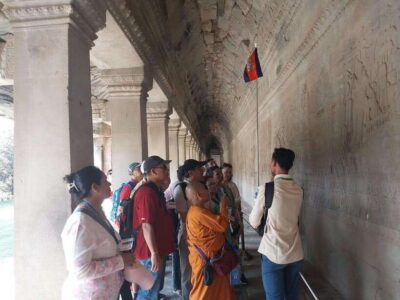
Angkor Wat: Small-Group Sunrise or Sunset Tour
Read our review →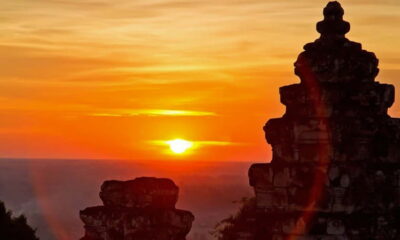
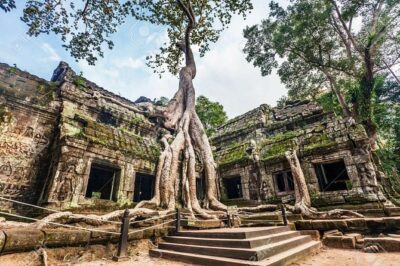
Angkor Wat Sunrise tour with Small – Group and Guide tours
Read our review →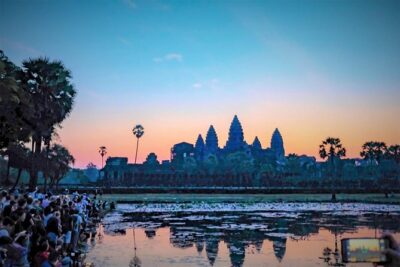
Angkor Wat Highlights and Sunrise Guided Tour from Siem Reap
Read our review →
Angkor Wat Sunset Small Group Tour with Lunch Included
Read our review →
Full-Day Angkor Wat Sunrise Private Tour with Guide from Siem Reap
Read our review →
Angkor Wat Sunrise & 3 Main Temples with Breakfast – Small Group
Read our review →Browse the lists this tour appears in