Reviewed · SIEM REAP TOURS
Siem Reap Angkor Private Tour Guide in English and Spanish
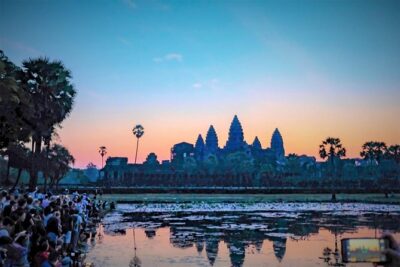
Angkor Wat is only the beginning here. This early private tour moves from the great moat and galleries of Angkor Wat to Bayon’s stone faces, an ancient city area, and tree-covered Ta Prohm. Guide Son’s excellent Spanish is a major plus if you want more than a quick photo stop.
I like the private transport, which keeps the morning flexible, and the guide’s background with the Greater Angkor Project and archaeological research on dams, canals, and lost jungle temples. The main drawback is cost planning: the $65 price excludes temple admission, food, tips, and several optional fees.
Key points to know before booking
- A 5:00 am start gives you the best chance of reaching Angkor Wat before the strongest daytime heat.
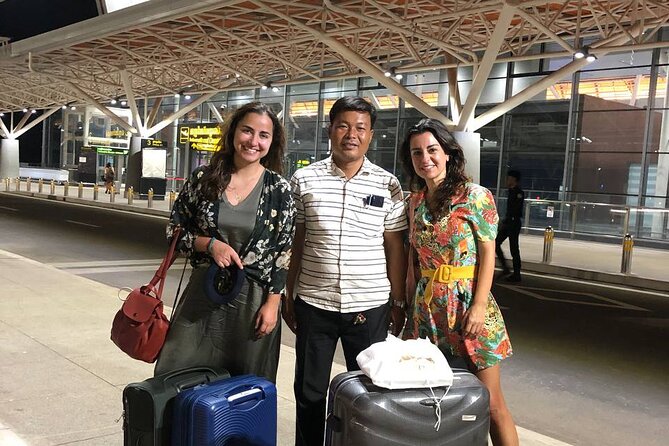
- Guide Son speaks excellent Spanish, as well as English, and can explain both temple details and Cambodian culture.
- The route covers four major sites, with about three hours at Angkor Wat and shorter visits at Bayon and Ta Prohm.
- Private transportation and cold water are included, making the long temple circuit easier.
- The $65 price does not include admission, with a one-day temple pass listed at $37 and a three-day pass at $50.
- This is a private outing, so only your own group participates and the tour returns to the meeting point.
Why the 5:00 am start matters at Angkor Wat
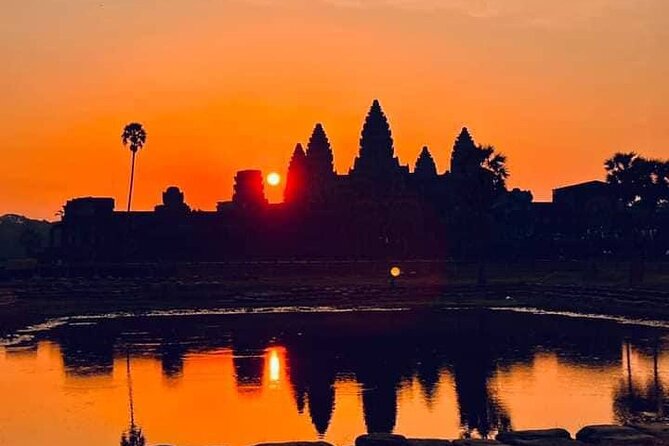
This is an early morning by any standard. The meeting time is 5:00 am at Hard Rock Cafe Angkor on King’s Road, near the Old Market Bridge, and the activity ends back at that meeting point.
The early departure makes sense. Angkor Wat is the largest and most visited stop, and the tour allows about three hours there. Starting before daylight gives you time to reach the temple, cross its long approach, and study the complex before the day becomes more tiring.
You will first encounter the huge moat and the long bridge leading toward the temple. The bridge is described as about 700 metres, so this is not a quick hop from vehicle to doorway. The approach is part of the experience, giving you time to see the temple’s scale from a distance rather than arriving directly beside the stonework.
Inside, plan on a serious visit rather than a short photo call. Angkor Wat is vast, and three hours gives your guide room to explain its layout, carvings, and purpose. The guide’s research background should be especially useful when you want to connect the visible stonework with the water systems and wider city that supported it.
There is one practical point to keep clear. Your temple admission is not included. The listed cost is $37 for one day or $50 for three days. Confirm the current ticket arrangements when booking, and budget this separately from the $65 tour fee.
A few more Siem Reap half-days to weigh up
- Angkor Wat Sunrise or Sunset Tour with Guide from Siem Reap
★ 5.0 · 12,109 reviews - Siem Reap: Angkor Wat: Small-Group Sunrise or Sunset Tour
★ 5.0 · 9,444 reviews - From Siem Reap: Kampong Phluk Floating Village Tour by Boat
★ 4.9 · 6,979 reviews
Bayon’s stone faces and the power of a close look
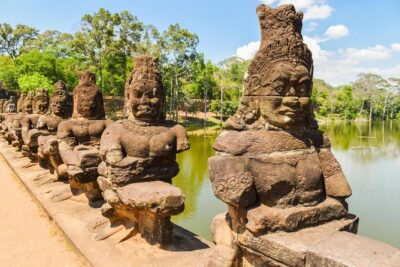
The second stop is Bayon Temple, with about one hour set aside. Bayon is widely known for its smiling stone faces, arranged on towers across a three-level structure.
This is a different experience from Angkor Wat. Angkor Wat impresses through its size, ordered approach, and broad architectural plan. Bayon works at closer range, where faces appear from different angles as you move around the towers. The plan gives you enough time to look carefully without turning the stop into a long, exhausting session.
The description notes 54 towers rising above the temple and views from the higher parts toward the king’s domain. Your guide can help you make sense of those repeated faces and the temple’s position within the ancient capital.
An hour is useful but not generous. If you are fascinated by sculpture, you may wish you had longer. On the other hand, the tour covers a lot of ground, and a focused hour keeps the whole morning within the stated five to seven-hour range.
The ancient city area and Angkor’s lost scale
A two-hour stop follows Bayon. It is described as an ancient city that once supported about one million people over many generations, with a period extending from the ninth to the fourteenth century. After the city declined, vegetation covered much of the area and many temples were absorbed by the jungle.
The itinerary labels this stop Angkor Wat, but the description clearly refers to the wider ancient city around the major temples rather than another visit to the main Angkor Wat monument. Ask your guide to clarify the exact portion being visited on your day. That small question can prevent confusion and help you understand how the temples fit into the larger urban system.
This is where the guide’s academic experience may matter most. Son participated in the Greater Angkor Project, a University of Sydney project that studied the decline of Angkor civilization. His work also included archaeological research on dams, canals, and temples lost in the jungle.
That background can change how you view the site. Without context, you might see separate monuments scattered among trees. With an explanation of reservoirs, canals, and settlement patterns, you can begin to picture a functioning city rather than a collection of isolated ruins.
Two hours gives this part of the tour real weight. It also makes the day more than a standard three-temple checklist. If you mainly want quick photographs, the time may feel long. If you want to understand how Angkor worked as a city, this is one of the most valuable portions of the route.
Ta Prohm and the famous tree roots
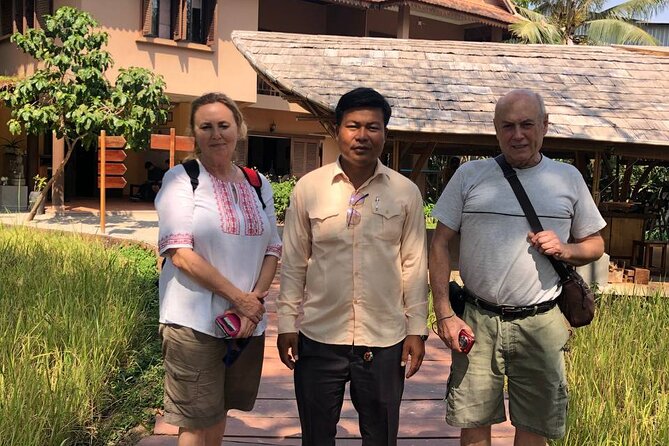
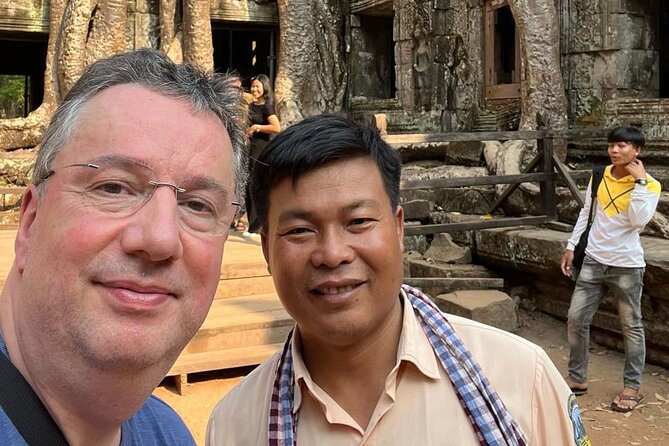
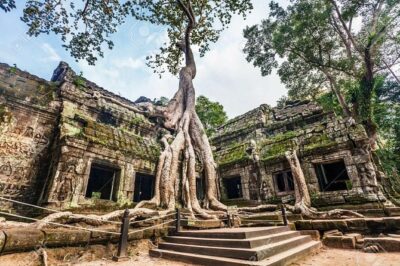
The final listed temple stop is Ta Prohm, with about one hour planned. Ta Prohm is known for the way vegetation remains tangled with the stone buildings. Large trees and thick roots continue to grow across parts of the temple, creating the scene many people picture when they imagine jungle-covered Angkor.
The appeal is immediate, but the site deserves more than a quick look at the roots. Ta Prohm shows how the monuments appeared after the city had declined and the surrounding vegetation had taken over. It provides a useful contrast with Angkor Wat’s formal entrance and Bayon’s towers covered in faces.
One hour is a sensible amount of time for a focused visit. You can see the main character of the temple without ending the day worn out from a much longer circuit. Still, the site’s popularity can make the pace feel less quiet, and your private guide cannot control how long other people remain in a particular area.
The guide’s archaeological interests add another layer here. Research into lost temples and the wider jungle setting can help you understand that Ta Prohm is not an isolated oddity. It is part of a much larger network of religious buildings and urban spaces.
A completely different sort of day from the same base:
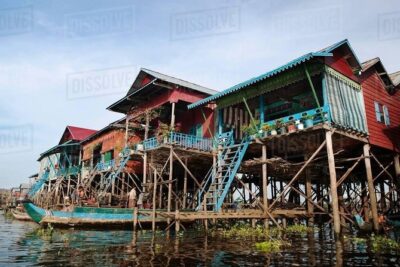
- Sunset tour of Kampong Phluk stilts home village on the Tonle Sap
★ 5.0 · 4,865 reviews - Siem Reap: Angkor Wat 2-Day Tour with Sunrise and Sunset
★ 4.9 · 4,429 reviews - Siem Reap: Kampong Phluk Floating Village Tour with Boat
★ 4.9 · 3,843 reviews - Siem Reap: Full-Day Angkor Wat Guided Tour with Sunset
★ 4.9 · 3,803 reviews
What the private format adds
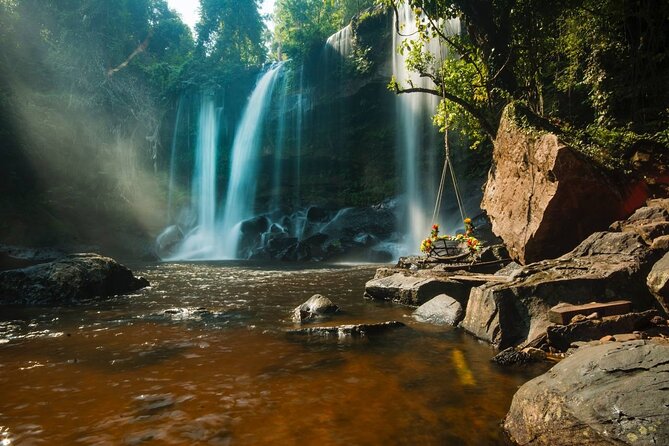
The tour is limited to your own group. That matters at a site as large as Angkor, where different people often want different amounts of time at each monument.
I like the practical freedom of a private format. You can ask Son to spend more time on carvings, Cambodian culture, water management, or the story of the city’s decline. If your group prefers to keep moving, you are not waiting for a bus full of strangers.
Private transportation is included, along with cold water. Those are simple details, but the morning includes several substantial walks and multiple temple stops. Having transport between sites is far more comfortable than trying to piece together each transfer yourself.
There is a small point to check before departure. The tour says pickup is offered, yet the stated start point is Hard Rock Cafe Angkor and the end point is the same meeting place. If you are staying elsewhere in Siem Reap, confirm exactly where the vehicle will collect you rather than assuming hotel pickup is automatic.
The tour is listed at five to seven hours, while the stated stop times add up to about seven hours. Allow room for the drive between sites and for normal changes in pace. A 5:00 am start also means you should arrange your morning meal on your own unless your hotel or group has already planned one.
Son’s language skills and research background
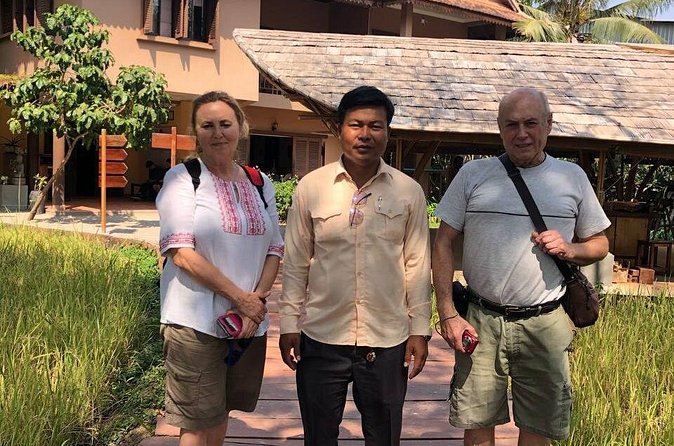
If you need Spanish, this tour has a clear advantage. Son is described as an excellent Spanish-speaking guide who can answer questions about the temples and Cambodian culture. That is useful at Angkor, where a guide who can explain ideas clearly in your preferred language may help you notice far more than you would alone.
His English service is also offered, so the tour works for English-speaking groups. The key strength is not only translation. Son’s participation in the Greater Angkor Project gives him a connection to research about the city’s decline, its dams and canals, and temples that disappeared into the jungle.
You should still tell him what interests you most. Some people want architectural details. Others care more about religion, daily life, kingship, engineering, or the reasons a major city lost its population. A private tour gives you a chance to steer the conversation.
The small amount of available feedback points strongly to two qualities: kindness and clear explanations. One Spanish-language account specifically highlights Son’s ability to answer questions about both the temples and Cambodian culture. Those are the qualities I would value most on a long morning among complex ruins.
The real cost of the $65 tour
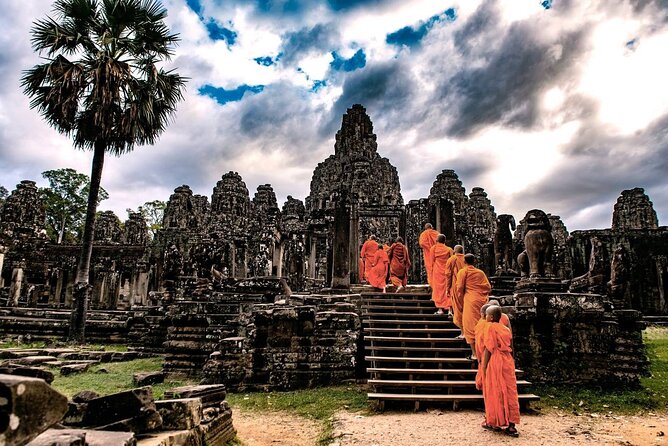
At $65 per person, this is not an all-in Angkor admission price. It pays for the private vehicle, cold water, and private guide, while several costs remain separate.
For a one-day visit, add the listed $37 temple entrance fee. That brings the basic combined cost to $102 per person before food and tips. The three-day admission is listed at $50, making the combined figure $115, though this tour itself is only a single outing.
The separate admission makes sense for visitors who plan to spend more than one day at Angkor, since the pass is not limited to this route. Still, you need to budget for it before comparing this tour with packages that advertise a lower headline price.
Food is not included, and neither are tips. A boat entrance ticket is listed at $20 per person, though the main temple route described here does not make the boat sound like a central part of the experience. An Angkor National Museum entrance fee of $15 per person is also separate.
I see the value mainly in the private service and the guide. If you want only transport to the gates, the price may feel high. If you want a Spanish-speaking guide with archaeological research experience and time to ask questions, the fee is easier to justify.
Who will get the most from this morning
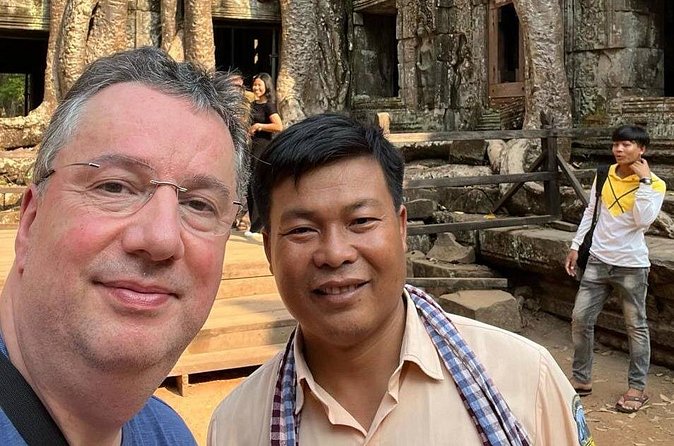
I would consider this tour a good fit for a first visit to Angkor, especially if you want the major monuments explained in Spanish. The route gives you the essential visual contrasts: the grand scale of Angkor Wat, Bayon’s faces, the wider ancient city, and Ta Prohm’s roots.
It also suits people who prefer a private setting over a large group. You can ask questions without worrying about holding up strangers, and you can discuss Cambodian culture as well as stonework.
The schedule is less suitable if you dislike early starts or want a slow, unstructured day at one temple. The first departure is fixed at 5:00 am, and the route covers a lot in one morning. Angkor is not a place where you can remain completely fresh while racing from one major site to another.
You should also be comfortable paying entrance fees separately and arranging your own meal. These are not serious problems, but the advertised tour price is only one part of the day’s cost.
Booking details and cancellation terms
Confirmation is provided at booking, and most people can participate. The activity is private, and public transport is nearby the stated meeting point.
Free cancellation is available if you cancel at least 24 hours before the scheduled start. Cancellations made less than 24 hours before the 5:00 am start are not refunded, and changes inside that period are not accepted. The cut-off follows local Siem Reap time.
Should you book this Angkor tour?
Book it if you want a private, guide-led introduction to the main Angkor sites, particularly if you need Spanish. Son’s reported language ability, cultural explanations, and research background are the strongest reasons to choose this experience over simple transport.
The route is well judged for a first day, though the schedule is full and the price requires careful budgeting. Add the temple pass, plan your food, and confirm the pickup point before you go.
I would skip it only if you want to explore at your own pace, avoid a 5:00 am start, or plan to spend most of the day at just one monument. For everyone else, this tour offers a focused way to see Angkor’s biggest sights while also gaining a better sense of the city, waterworks, and society behind the ruins.
FAQ
What time does the tour start?
The tour starts at 5:00 am local time.
Where does the tour begin and end?
The stated meeting point is Hard Rock Cafe Angkor, on King’s Road Angkor, Street 7 Makara, near the Old Market Bridge in Siem Reap. The activity ends back at the meeting point.
Is the tour private?
Yes. Only your own group participates in the activity.
Is transportation included?
Yes. Private transportation and cold water are included.
Are temple entrance tickets included in the $65 price?
No. Temple admission is separate. The listed prices are $37 for one day and $50 for three days.
Is a meal included?
No. Meals are not included.
Can I cancel for a full refund?
Yes, if you cancel at least 24 hours before the experience start time. Cancellations or changes made less than 24 hours before the start are not accepted for a refund.
New around Siem Reap
- Siem Reap Temple and Waterfall 3-Day Tour★ 4.5 · 3 reviews
- Siem Reap: Guided Day Trip to Local Village & Cooking Class★ 5.0 · 3 reviews
- Savor the Countryside: Tours with Authentic Cooking Classes”★ 5.0 · 3 reviews
- Siem Reap Private Tour: Angkor Wat Sunrise And Banteay Srei★ 5.0 · 3 reviews
- Angkor Wat Sunrise TukTuk Tour★ 5.0 · 3 reviews
- Angkor Wat Sunset In Private and Small-In-Group★ 4.3 · 3 reviews
- Exclusive Angkor temples and Small group temples tours★ 5.0 · 3 reviews
- Angkor Wat: Highlights and Sunrise with Spanish Guide★ 4.8 · 3 reviews
Siem Reap Tours, compared.
Angkor Wat Sunrise or Sunset Tour with Guide from Siem Reap
Read our review →
Angkor Wat: Small-Group Sunrise or Sunset Tour
Read our review →
Sunset tour of Kampong Phluk stilts home village on the Tonle Sap
Read our review →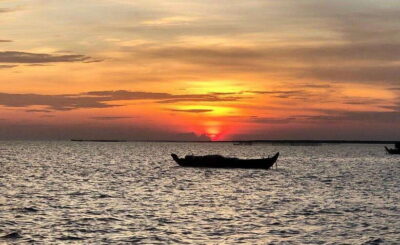
Kampong Phluk Floating Village Tour with Boat
Read our review →
Angkor Wat Sunrise tour with Small – Group and Guide tours
Read our review →