Reviewed · SIEM REAP TOURS
Private Siem Reap 4 Days: Full Exploration of the Angkor Complex
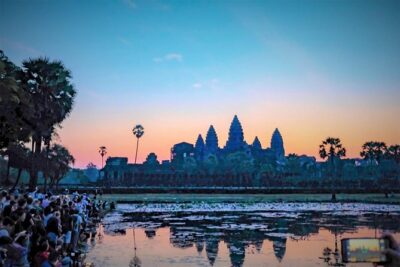
Angkor Wat at sunrise is the headline, but the real strength of this four-day trip is the range. You get the grand stone faces of Bayon, tree-covered Ta Prohm, delicate carvings at Banteay Srei, quieter jungle ruins, and a final outing on Tonle Sap Lake. Private transport also saves you from handling temple roads and early starts on your own.
I like two things in particular: the private guide and vehicle, which let you ask questions and adjust the pace, and the hotel choice, with 3-star, 4-star, or 5-star accommodation and breakfast each morning. Guides named in the supplied feedback include Sara, Sok, Dorn, Meng, and Leap, with repeated praise for clear explanations, good English, and helpful drivers.
The main drawback is the schedule. Day 2 begins at 4:30 AM and packs in a long list of temples, while Day 3 adds an early trip to Banteay Srei and a sunset stop. If you want slow mornings or long breaks, this is not that sort of tour.
Key points to know before booking
- Angkor Wat sunrise begins at 4:30 AM, followed by a full day of major temples.
- A private English-speaking guide travels with your group, rather than placing you in a large shared party.
- The temple mix is unusually broad, from Angkor Wat and Bayon to Ta Nei, Preah Khan, and Banteay Samre.
- Three hotel levels are offered, with Royal Crown Hotel & Spa, Kulen Central Mall Hotel, or Angkor Paradise Hotel, or similar properties.
- The final day combines Tonle Sap Lake and Kampong Phluk floating village before an airport transfer.
- Temple admissions, three breakfasts, transport, water, and fresh tissues are included, but tips and anything not listed are extra.
Four days that put Angkor in context
Siem Reap is easy to underestimate. Many people arrive thinking Angkor Wat is one sight to tick off, then discover a huge archaeological park spread across forests, reservoirs, roads, and temple compounds. This tour gives you four days to see the famous places without stopping there.
The private format matters most at Angkor. Your guide can explain why one temple was built for a king, why another reflects Buddhist ideas, and why a small, partly unrestored ruin can be more atmospheric than a famous monument. You also have a private air-conditioned vehicle between sites, a welcome relief in Cambodia’s heat.
The listed price is $375.06 per person. Since that price includes accommodation based on double or twin sharing, three breakfasts, a licensed English-speaking guide, all listed admission fees, airport transfers, transport, water, and fresh tissues, it is best judged as a four-day package rather than a temple ticket. The value improves for couples, families, or friends sharing a vehicle and room.
You should check the exact hotel assigned within your chosen category and confirm what is meant by similar. The three named options are Royal Crown Hotel & Spa for the 3-star level, Kulen Central Mall Hotel for the 4-star level, and Angkor Paradise Hotel for the 5-star level.
A few more Siem Reap half-days to weigh up
- 4-Day Excursion of Angkor, Koh Ker, Beng Mealea, Tonle Sap and Waterfalls
★ 5.0 · 87 reviews - 4-Day All Major Temples & Kulen mountain & Koh Ker & Beng Mealea
★ 5.0 · 28 reviews - 4-Day Tour from Siem Reap to Phnom Penh
★ 4.0 · 9 reviews
Day 1: An easy airport arrival in Siem Reap
The first day is mainly about getting settled. A driver meets you at Siem Reap Angkor International Airport with a sign showing your name and the About Cambodia Travel & Tours logo, then takes you into Siem Reap.
The airport transfer is listed at about two hours, including the arrival transfer and related time. No sightseeing is scheduled, which is sensible after a flight. You check into the selected hotel and have the rest of the day to rest before the very early start.
This arrangement is especially useful if you are unfamiliar with Siem Reap or arriving with luggage. It also removes the worry of arranging a separate airport ride. Since the tour starts at the airport, you need to provide arrival details accurately when booking.
Day 2: Sunrise at Angkor Wat, then the royal city
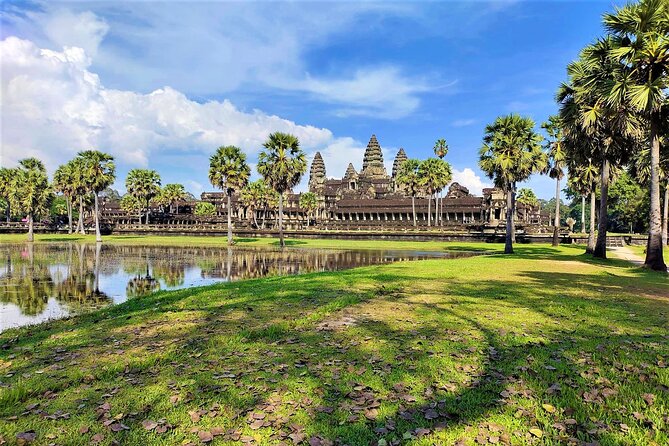
The alarm comes early. Pickup from the hotel lobby is scheduled for 4:30 AM, giving you time to reach Angkor Wat for sunrise. The temple is the largest and best-preserved monument in the Angkor group, and the changing light is the reason many people accept the brutal wake-up call.
Allow three hours here. That time is not just for a quick photograph. Your guide can help you read the monument as architecture, sacred space, and royal statement. The early timing also lets you experience Angkor Wat before the hottest part of the day, though the sunrise gathering itself can be busy.
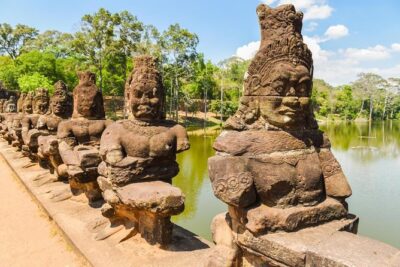
Next comes the South Gate of Angkor Thom, about 30 minutes. Its restored appearance and surviving heads make it one of the most recognizable entrances in the park. It also provides a quick visual introduction to Angkor Thom, a walled royal city rather than a single temple.
You then spend about an hour in Angkor Thom. The scale is the point here. Roads, walls, gates, and temple structures show how large the royal center once was. A guide is useful because the site can otherwise feel like a collection of stones spread across a large area.
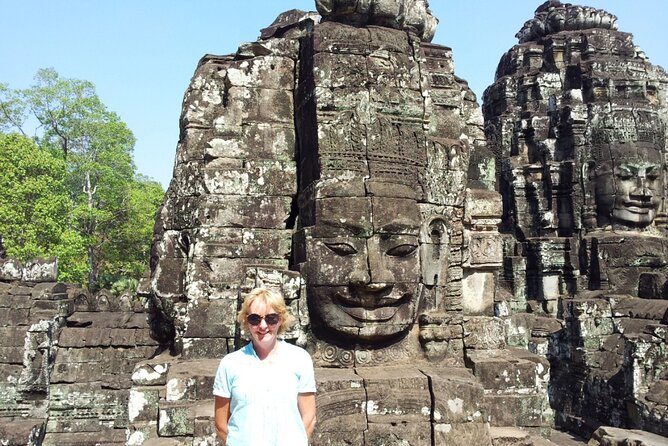
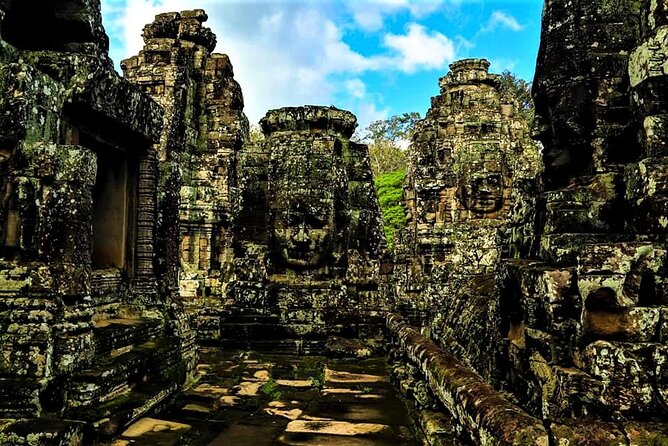
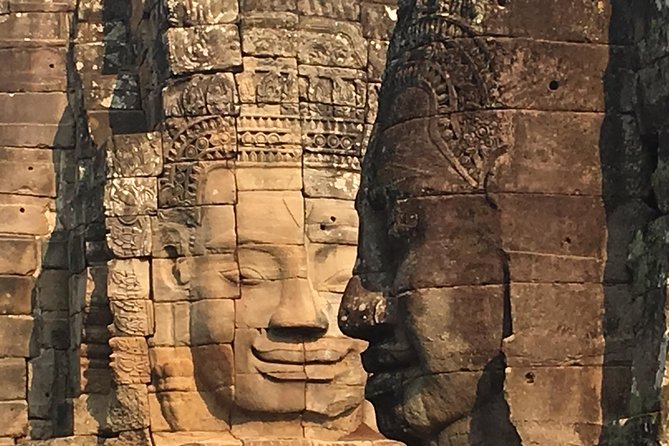
Bayon gets another hour. Its famous stone faces are the emotional center of Angkor Thom, but the temple is not simple to read. The original structure and earliest stages are not fully known, so a good guide should help you separate established facts from interpretation. The supplied feedback repeatedly praises guides such as Sara and Sok for answering questions and explaining each place in context.
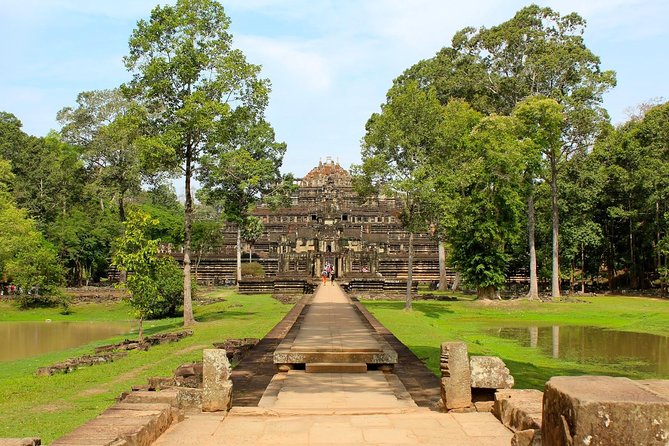
Baphuon follows for about 50 minutes. Built on a long sandstone base with five levels, it has a different shape from the more familiar tiered temples that narrow sharply as they rise. You will notice the change in scale and form after Bayon.
Phimeanakas takes about 30 minutes. Located near the center of the former Royal Palace area, it is tied to the old royal compound and to descriptions of a golden pinnacle. This is a shorter stop, but it helps connect the temples with the life of the court.
The Terrace of the Elephants and Terrace of the Leper King each receive about 30 minutes. The first is known for its elephant carvings and royal ceremonial associations. The second has dramatic bas-reliefs on both interior and exterior faces. These terraces are less about entering a temple and more about understanding how royal display worked along the city’s central spaces.
Ta Nei and Ta Prohm: two very different jungle stops
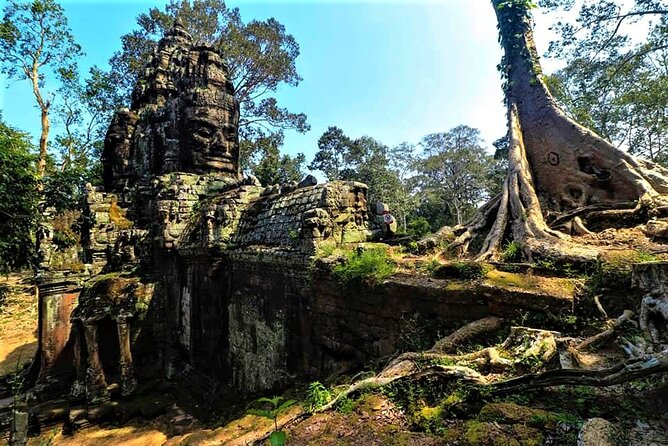
Ta Nei, with about 50 minutes scheduled, is a quieter late 12th-century stone temple associated with King Jayavarman VII and dedicated to the Buddha. Its setting near the East Baray gives the stop a more remote feel than the big monuments, although the tour data does not promise complete solitude.
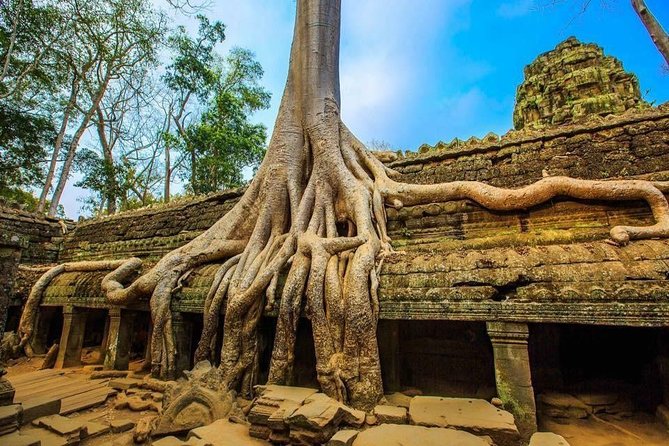
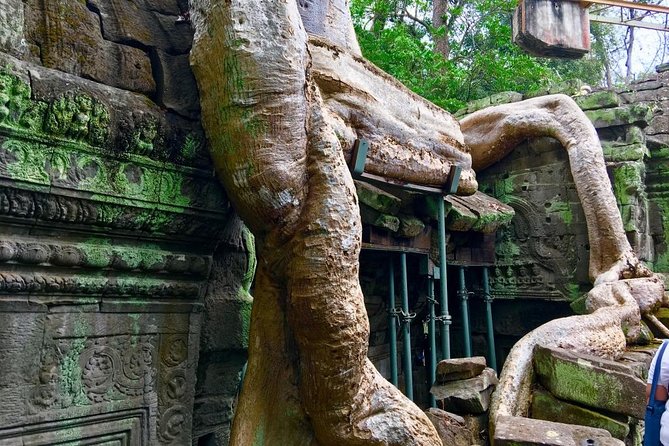
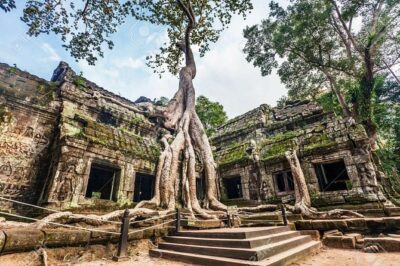
Then comes Ta Prohm, with two hours. This is the longest stop of the day for good reason. Ta Prohm is famous for its trees growing through and around the ruins, and it has been left largely untouched apart from clearing paths and strengthening unstable areas.
The trees are photogenic, but do not let the roots become the whole story. Look for the galleries, doorways, carvings, and the way the forest has become part of the temple’s appearance. Two hours gives your guide time to explain the site and gives you room to move at a less frantic pace.
Banteay Kdei follows for about 40 minutes. Its name refers to a citadel of chambers or a citadel of monks’ cells. Unlike the grander monuments, it is a ground-level Buddhist monastery, and its layout feels more intimate.
The final stop is Srah Srang, a reservoir south of the East Baray and east of Banteay Kdei. You spend about 25 minutes here before returning to the hotel. It is a fitting end to a packed day because Angkor’s water systems are as important to understanding the old capital as its towers are.
Day 2 is the tour’s hardest day physically. You begin before dawn, walk through several large compounds, and remain on the move for hours. Wear practical shoes, carry water, and treat the return to the air-conditioned vehicle as a chance to cool down rather than a signal that the day is over.
A completely different sort of day from the same base:
- Angkor Wat Sunrise or Sunset Tour with Guide from Siem Reap
★ 5.0 · 12,109 reviews - Siem Reap: Angkor Wat: Small-Group Sunrise or Sunset Tour
★ 5.0 · 9,444 reviews - From Siem Reap: Kampong Phluk Floating Village Tour by Boat
★ 4.9 · 6,979 reviews - Sunset tour of Kampong Phluk stilts home village on the Tonle Sap
★ 5.0 · 4,865 reviews
Day 3: Fine carvings and the Grand Circuit
Day 3 begins with Banteay Srei, about two hours from the schedule. This temple is often singled out for its fine carvings and careful detail. Its scale is smaller than Angkor Wat, but the decoration is a major reason it deserves the long outing.
The stop also gives your guide an opening to discuss Khmer art without repeating the same points used at the larger temples. Pay attention to the crisp relief work and the way the smaller structure rewards close looking.
Banteay Samre comes next for an hour. It is considered one of the more complete complexes at Angkor because of restoration using anastylosis, a method that rebuilds structures with their original architectural pieces where possible. At the same time, maintenance has been uneven, so you should expect a site that shows both restoration and wear.
Pre Rup takes about 50 minutes. This brick and laterite temple is praised for its bold architectural design, strong proportions, and balance. It is similar in style to East Mebon, though built several years later. After the intricate detail of Banteay Srei, Pre Rup gives you a chance to appreciate shape, height, and overall form.
Ta Som is a smaller, quiet temple with 50 minutes scheduled. It has not been restored, and that lack of polish is part of its appeal. Fig trees once grew around the entrance towers and faces, creating the sort of overgrown setting many people hope to find at Angkor, though the exact condition can change.
Neak Pean follows for about 50 minutes. This is a man-made pond complex, with a large square central body of water measuring about 70 meters on each side and smaller surrounding pools. The approach and water-centered design make it different from the hill temples and enclosed galleries elsewhere in the park.
Preah Khan receives an hour. Built in the second half of the 12th century by King Jayavarman VII and dedicated to his father, it is a large complex with corridors and layered spaces. You will want your guide here because the scale can make it easy to miss the relationships between the buildings.
The listed sunset stop is at Srah Srang in the Angkor temple area, for about an hour. The schedule repeats the reservoir from Day 2, so you should clarify the exact sunset viewpoint and timing before departure. That repetition may be intentional, since the reservoir looks different in evening light, but it is worth confirming if you expected a different temple.
Day 3 is less famous-site heavy than Day 2, yet I find that useful. The smaller temples give you time to notice details rather than simply collect names. It is also another full day, so the private vehicle and flexible pacing are valuable.
Day 4: Tonle Sap and Kampong Phluk
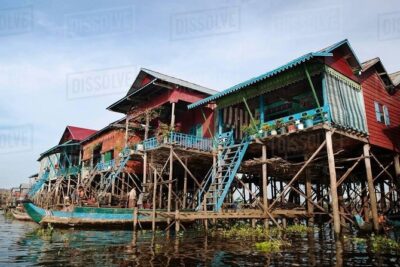
The final morning leaves the temple park for Tonle Sap Lake, the largest freshwater lake in Southeast Asia and part of the Mekong River system. The lake supports a highly productive ecosystem and is a major part of Cambodia’s life beyond the monuments.
The tour schedules two hours at Tonle Sap and another two hours at Kampong Phluk floating village. The village outing adds a human and environmental side to the trip, shifting your attention from sandstone towers to water-based communities and the lake system around them.
The itinerary does not specify every activity on the lake, boat arrangements, seasonal water levels, or the exact operating conditions at Kampong Phluk. Keep that in mind when comparing this package with other lake excursions. What is clear is that both the lake and floating village are included, with admission fees listed as included.
After the village, the driver takes you to Siem Reap Angkor International Airport for your next flight. Because the airport transfer follows a four-hour outing, do not choose a flight time that leaves an uncomfortably short margin. The exact transfer timing should be confirmed when you book.
What the guide and vehicle add
This is a private activity, so only your group participates. That gives you a better chance to ask about carvings, Cambodian religious traditions, royal succession, or everyday details that interest you. It also lets the guide respond to your energy level, although the long list of stops means flexibility is not unlimited.
The guide is an official licensed English-speaking professional. Names associated with the service include Leap, Sara, Sok, Dorn, and Meng. The strongest pattern in the supplied feedback is not one particular guide but the quality of explanation: Sara is described as giving detailed context inside Angkor Wat, Sok as explaining many sites clearly and speaking very good English, Dorn as making the temple complex interesting, and Leap as offering many stories about Cambodia.
Drivers also receive direct praise. Paul, La, Lym, and Deab are described as safe, punctual, welcoming, and helpful. Those qualities matter on a temple tour because you repeatedly leave the vehicle, walk in the heat, and return ready for water and shade.
The air-conditioned vehicle is not a luxury detail here. It gives you a cool place between sites, and water and fresh tissues are included. You should still bring your own essentials, but the basic comfort setup is covered.
Who will get the most from this four-day plan
I would recommend this tour to first-time visitors who want the major Angkor sights explained in a clear order. It also suits families, couples, and small groups who value a private vehicle over the lower price of a shared tour.
The hotel choice makes it workable for different budgets, though the package is based on double or twin sharing. Solo travelers should confirm the pricing arrangement before booking, since the published rate is stated per person with shared accommodation.
This plan is a good fit if you want one booking to cover the temples, hotel, airport transfers, and Tonle Sap. It is less suitable if your priority is sleeping late, spending half a day at one temple, or choosing every meal and activity independently.
Most travelers can participate, and the experience is near public transportation, but the information does not give detailed accessibility notes. The temple schedule includes extended walking and uneven archaeological settings, so anyone with mobility concerns should ask the operator for specific advice.
Practical value, timing, and small cautions
The strongest value comes from combining services that are often booked separately. You receive three nights of accommodation, three breakfasts, temple admissions, a licensed guide, private transport, airport pickup and drop-off, water, and fresh tissues.
Tips for the guide and driver are not included. Anything not specifically listed is also outside the package. Meals other than breakfast are not listed as included, so plan your food budget accordingly.
The cancellation terms are strict close to departure. You can receive a full refund if you cancel at least six full days before the start time. A cancellation two to six full days before the start time receives a 50 percent refund, while cancellation less than two full days before the start time is nonrefundable. Changes follow the same timing limits, and cut-off times use local Siem Reap time.
The tour has a 4.9 rating from 17 reviews and a 100 percent recommendation figure. More useful than the numbers is the repeated praise for guide quality, clear English, safety, organization, and willingness to answer questions. I would still confirm your guide, hotel category, sunset plan, and airport timing in writing before departure.
Should you book it?
Book this tour if you want a well-supported first visit to Angkor with the big temples, quieter ruins, sunrise, sunset, and Tonle Sap all handled in one private package. The guides and drivers appear to be its strongest feature, and the inclusion of hotel, admissions, transport, and breakfasts makes the price easier to assess.
Do not book it expecting a relaxed retreat. The 4:30 AM start, two very full temple days, and final airport transfer require stamina and careful flight planning. For most people with only a few days in Siem Reap, though, this is a practical way to see far more than Angkor Wat alone while keeping the experience personal.
FAQ
Where does the tour start?
The tour starts at Siem Reap Angkor International Airport in Siem Reap, Cambodia.
Is airport pickup included?
Yes. A driver meets you at the airport with a welcome sign showing your name and the About Cambodia Travel & Tours logo.
Is this a private tour?
Yes. Only your group participates in the activity.
What time does the Angkor Wat sunrise day begin?
Pickup from your hotel lobby is scheduled for 4:30 AM on Day 2.
Is a guide included?
Yes. An official licensed English-speaking tour guide is included.
Are temple admission fees included?
Yes. All admission fees for the listed tour sights are included.
What accommodation options are available?
The options listed are Royal Crown Hotel & Spa at the 3-star level, Kulen Central Mall Hotel at the 4-star level, and Angkor Paradise Hotel at the 5-star level, or similar hotels.
Are meals included?
Three breakfasts are included. Other meals are not listed as included.
Is Tonle Sap Lake part of the tour?
Yes. Day 4 includes Tonle Sap Lake and Kampong Phluk floating village before the airport transfer.
New around Siem Reap
- Kulen Mountain With Ticket included Plus Banteay Srei Temple Tour★ 5.0 · 7 reviews
- 2 Days Angkor temples with Sunrise & Sunset★ 5.0 · 7 reviews
- Private Siem Reap Airport Transfer to hotel in town★ 5.0 · 7 reviews
- 1-Day private Angkor Temple Tour with Sun Rise by Tuk Tuk from Siem Reap★ 4.5 · 7 reviews
- Siem Reap: Morning Cooking Class & Market Tour★ 5.0 · 7 reviews
- Kulen Mountain, Killing Fields and War Museum Tour★ 5.0 · 7 reviews
- War Museum, Killing Field, and APOPO Hero RATs Tour★ 5.0 · 7 reviews
- Half-Day: Silk Farm, Senteur Angkor, and Satcha Workshop★ 4.6 · 7 reviews
Siem Reap Tours, compared.
Angkor Wat Sunrise or Sunset Tour with Guide from Siem Reap
Read our review →
Angkor Wat: Small-Group Sunrise or Sunset Tour
Read our review →
Sunset tour of Kampong Phluk stilts home village on the Tonle Sap
Read our review →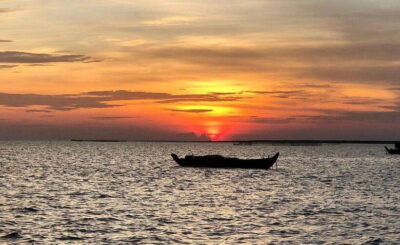
Kampong Phluk Floating Village Tour with Boat
Read our review →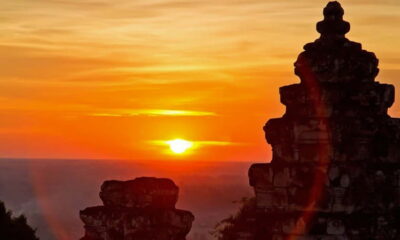
Angkor Wat Sunrise tour with Small – Group and Guide tours
Read our review →