Reviewed · ANGKOR WAT TOURS
Angkor Wat Tour, Explore The Main Temples With Tour Guide
Angkor Wat is only the beginning here. This eight-hour temple tour links the park’s essential sights, from the grand towers of Angkor Wat to the tree-wrapped ruins of Ta Prohm and the calm stone faces of Bayon. An English-speaking guide adds the stories and symbols that are easy to miss when you explore alone.
I like the low tour price, especially since transport, hotel pickup, drop-off, water, and a guide are included. I also like the mix of major monuments and a quieter stop at Banteay Kdei. The main catch is that the entrance ticket costs an extra $37, and a full day of temple steps, heat, and walking can feel demanding.
Key points to know
- Five major temple stops: Angkor Wat, Banteay Kdei, Ta Prohm, Bayon, and Angkor Thom’s Tonle Om Gate.
- Early start from Siem Reap: Hotel pickup helps you reach the park before the day becomes hottest.
- English-speaking guide included: Guides explain carvings, architecture, and Cambodian history instead of leaving you to guess.
- Good value at $12.50: Add the $37 entrance ticket, making the basic total $49.50 per person.
- Shared minibus transport: Air conditioning, water, pickup, and drop-off are included.
- Maximum group size of 30: The group may be smaller, but the experience is not guaranteed to be private.
Why this temple route works in one long day
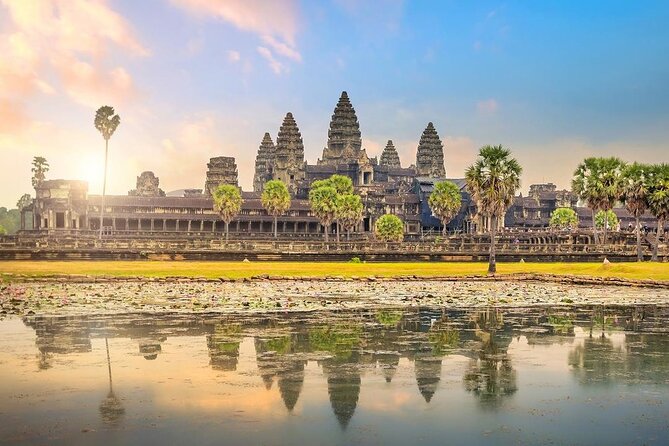
Angkor Archaeological Park covers far more ground than most first-time visitors expect. You can spend days moving from one ruin to the next, but if your time in Siem Reap is short, this route gives you the core sights in a sensible order.
The day begins with an early pickup at your hotel. From there, you ride in an air-conditioned minibus to the park, where you buy the required entrance ticket. The tour price itself is $12.50 per person, but the $37 admission fee is separate, so plan on a total of $49.50 before any other personal spending.
That combined price is still strong for a full day with transport and a guide. A private vehicle would give you more control over timing, but this shared option keeps costs down and removes the work of arranging a driver between widely spaced temples.
The group can include up to 30 people. That matters most at the temple gates and during explanations, where a larger group may take longer to gather. One account describes a small group, so the actual number may be lower, but you should book with the stated maximum in mind.
More Angkor Wat Tours in Siem Reap:
- Angkor Wat Sunrise or Sunset Tour with Guide from Siem Reap
★ 5.0 · 12,109 reviews - Siem Reap: Angkor Wat: Small-Group Sunrise or Sunset Tour
★ 5.0 · 9,444 reviews - Siem Reap: Angkor Wat 2-Day Tour with Sunrise and Sunset
★ 4.9 · 4,429 reviews
Angkor Wat: three hours with Cambodia’s great symbol
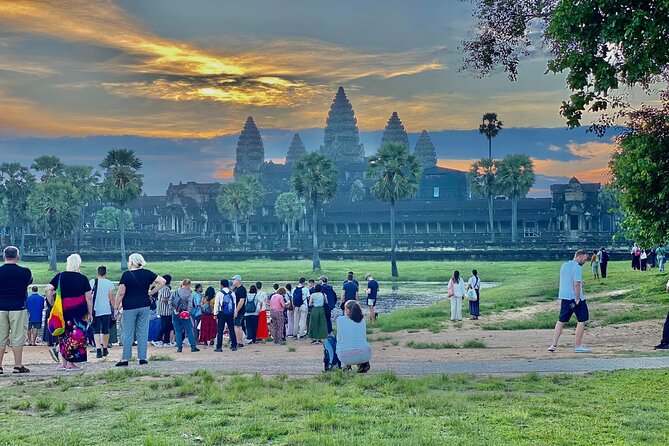
Angkor Wat receives the longest visit, and that makes sense. The temple is the headline sight of the park, with its vast galleries, towers, courtyards, and carefully planned religious architecture. Three hours gives you time to see more than the famous exterior view.
The early pickup is one of the tour’s practical strengths. One account specifically highlights a beautiful sunrise at Angkor Wat, though the exact pickup time is not stated. If sunrise viewing matters to you, confirm the morning schedule with the provider before booking.
Inside, a guide can help connect the stone carvings to the temple’s religious purpose and the wider Khmer building tradition. You will get more from the walls when someone points out scenes and explains how the spaces were meant to be understood.
The drawback is the scale. Angkor Wat can feel like a workout, especially after an early start and before the other four stops. Wear shoes suited to uneven ground and bring water, even though water is supplied as part of the tour. The tour includes water, but it is still wise to pace yourself.
Three hours is useful, but it is not unlimited. You may spend less time on quiet details because the day has several more temples ahead. For a first visit, that tradeoff is reasonable. You see the central monument without giving up Ta Prohm and Bayon.
Banteay Kdei: a quieter hour among stone chambers
Banteay Kdei means Citadel of Chambers, and its name fits the feel of the place. Built in the late 12th century as a Buddhist monastery, it is less famous than the park’s biggest monuments and usually feels like a gentler change of pace.
The one-hour stop gives you enough time to look at its carvings and layout without turning the visit into a rushed photo stop. This is also where a guide’s storytelling can help. The site may not have the instant visual impact of Ta Prohm, but its corridors and chambers reward attention.
I like this stop because it prevents the day from becoming a parade of only the most famous ruins. You get a more varied view of Angkor’s religious buildings and a chance to see a less-publicized temple within the same park visit.
The practical limit is the short schedule. One hour will not allow endless wandering, and the group needs to stay together. If you prefer to study every carving at your own pace, a private tour with fewer stops would suit you better.
Ta Prohm: two hours beneath the tree roots
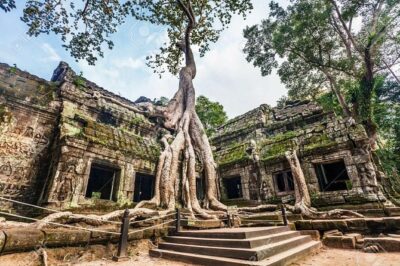
Ta Prohm is the stop that often stays in your memory. Massive tree roots spread across walls and doorways, creating the jungle-temple appearance that makes this site so popular in photographs.
Two hours is generous compared with the one-hour visit at Banteay Kdei and Bayon. You have time to look beyond the best-known root-covered corners and notice the broken galleries, carved stone, and way the forest has become part of the monument.
The partly unrestored appearance is central to Ta Prohm’s appeal. You see a place shaped by both human construction and the surrounding trees, rather than a fully cleared and orderly ruin. That raw character also means uneven surfaces and narrow passages can make the stop physically tiring.
A guide is particularly useful here because the roots can steal all your attention. You will want photographs, but the temple has more to offer than its most famous tree. The guide can also keep the group moving, which matters at a busy site with a two-hour window.
One useful point from the experience details is that the tour is physically challenging. Ta Prohm is a major reason why. Expect walking, standing, and uneven temple floors across the day, not a vehicle-based sightseeing loop.
A few more Siem Reap half-days to weigh up
- From Siem Reap: Kampong Phluk Floating Village Tour by Boat
★ 4.9 · 6,979 reviews - Sunset tour of Kampong Phluk stilts home village on the Tonle Sap
★ 5.0 · 4,865 reviews - Siem Reap: Kampong Phluk Floating Village Tour with Boat
★ 4.9 · 3,843 reviews - Siem Reap: Full-Day Angkor Wat Guided Tour with Sunset
★ 4.9 · 3,803 reviews
Bayon: stone faces at the heart of Angkor Thom
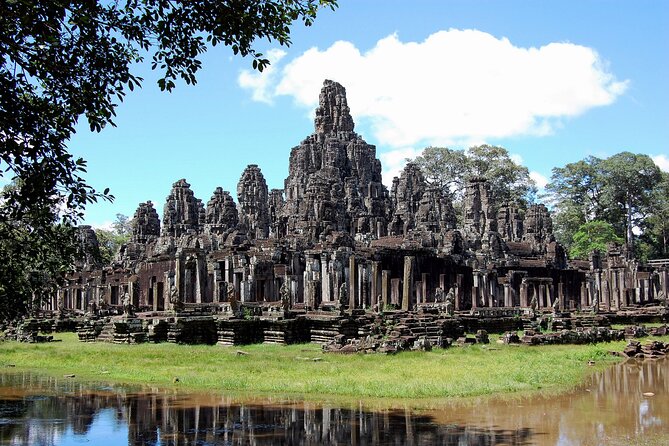
Bayon sits at the center of Angkor Thom and is known for its towers topped with four large, serene faces of Avalokiteshvara. The faces appear from different angles as you move through the temple, giving the site a distinctive character that is quite different from Angkor Wat.
The one-hour stop is enough for a guided introduction and a look at the main carvings. Bayon’s walls also show scenes of daily life and conflict, so listen closely when the guide explains what the reliefs depict. The details can blur together if you walk through without context.
This is one of the places where the quality of the guide matters most. The architecture is visually striking, but the meaning behind the faces and carvings is not always obvious. Guides named Mao have received particular praise for friendly, informative care, although the assigned guide may vary.
The time limit is again the main compromise. Bayon is compact compared with Angkor Wat, but its crowded towers and layered carvings deserve patience. You will see the main features, yet you may not have time to inspect every wall.
Tonle Om Gate: a brief look at Angkor Thom’s entrance
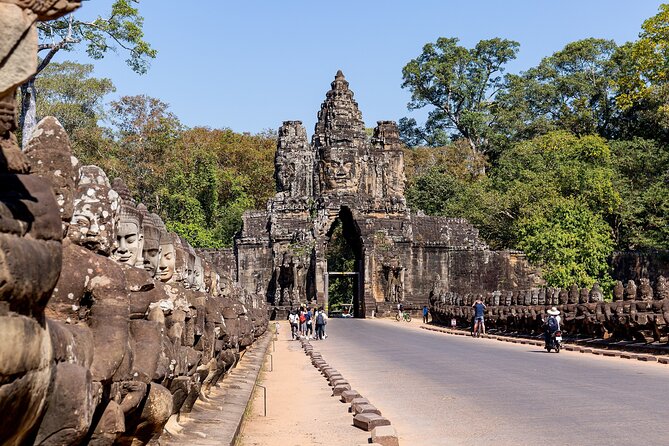
The final stop is Tonle Om Gate, also known as the South Gate of Angkor Thom. The schedule allows about 30 minutes, which is enough to pause at the entrance and take in the causeway.
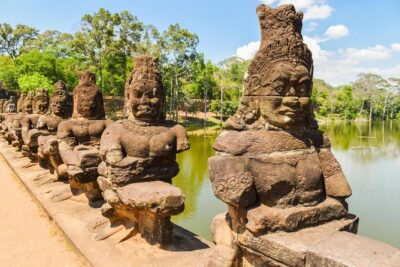
The bridge is lined with statues of gods and demons, creating a dramatic approach to the gate. The gate itself is crowned with four faces, echoing the visual language you saw at Bayon.
This is a short stop, but it helps place Angkor Thom’s temples within the larger plan of the ancient city. You are not simply seeing isolated ruins. You are looking at one part of a monumental entrance system.
The supplied details refer to this as a North Gate bridge in one place and then describe Tonle Om Gate, the South Gate, in the stop information. Because of that inconsistency, confirm which gate your guide will visit. Either way, the value is a quick architectural and photographic pause rather than a long temple exploration.
What the guide adds to the day
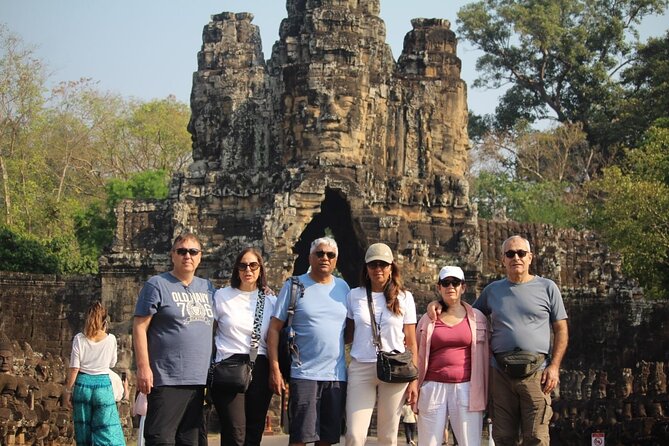
A guide changes the pace and meaning of an Angkor visit. Without one, you can admire the stones but miss the purpose behind the buildings, the stories in the carvings, and the links between Angkor Wat, Bayon, and the surrounding temples.
The guide speaks English and is expected to explain art, architecture, and Cambodian history. Several details from the experience point to strong storytelling, kindness, and careful attention to the group. One guide, Mao, is named specifically, and one guide took and shared photographs during the day.
Do not treat those details as a guarantee that Mao will lead your tour. Guides can vary. Still, the comments suggest that the human side of the experience is a major part of its appeal. A good guide can also help you manage a long day by keeping the route organized and pointing out places worth your attention.
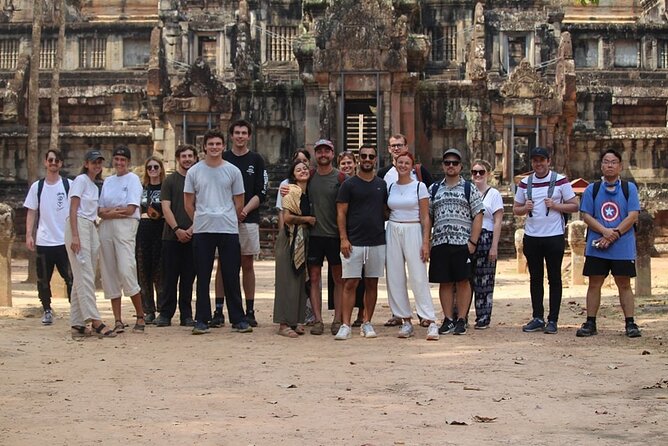
The group format has both strengths and limits. You get a lower price and a built-in schedule, but you may need to wait for other people and follow the guide’s timing. If your priority is learning the main story of Angkor rather than wandering alone, that is a fair exchange.
Transport, timing, and physical effort
Pickup and drop-off at your Siem Reap hotel are included, along with air-conditioned minibus transport. That is valuable in Cambodia’s heat, particularly after hours among exposed courtyards and stone walls.
The tour lasts about eight hours. You should expect most of that time to involve some combination of riding, walking, standing, sightseeing, and waiting for the group to gather. The supplied information says most people can participate, but it also describes the day as physically challenging.
The tour is near public transportation, though hotel pickup makes that less important for most people. Confirmation is provided at booking, and the tour accepts mobile tickets, which keeps the arrival process simple.
Dress and footwear are not specified in the details, so I would choose practical clothing and comfortable shoes for a full day outdoors. That is straightforward advice for a route with five temple stops and uneven historic sites, not a promise about any specific dress rule.
Is $49.50 a fair total price?
At first glance, $12.50 looks unusually cheap for an eight-hour excursion. The key is to add the separate $37 entrance fee. Your basic total becomes $49.50 per person.
For that amount, you receive transport, hotel pickup and drop-off, water, and an English-speaking guide. The price is especially useful if you are traveling alone or as a couple and do not want to cover the full cost of a private car and guide.
The value is less clear if you have a large group that could share a private vehicle. A private arrangement may offer more flexibility, longer stops, and a quieter pace. This shared tour is aimed at seeing the main temples efficiently, not at creating a custom schedule.
Group discounts are offered, though no discount amount is given. Ask for the current group price before booking if you are traveling with several people. The maximum group size is 30, so do not assume a small private-style outing.
Who should book this Angkor Wat tour?
I would choose this tour if you have one main temple day in Siem Reap and want the major sights explained by a guide. It suits first-time visitors, budget-conscious couples, solo visitors, and anyone who prefers not to arrange park transport independently.
It is also a good fit if you want a broad introduction rather than a slow study of one or two temples. You will see Angkor Wat, Ta Prohm, Bayon, Banteay Kdei, and an Angkor Thom gate in one day.
I would hesitate if you dislike early starts, shared groups, long walking days, or fixed schedules. The route is physically demanding, and the $37 entrance fee is not included in the advertised tour price.
Free cancellation is available if you cancel at least 24 hours before the local start time. Within 24 hours, the amount paid is not refunded, and last-minute changes are not accepted.
Should you book it?
Book this tour if your goal is a well-priced first look at Angkor’s main temples with transport and a guide included. The strongest features are the clear route, the unusually low tour cost, the early start, and the chance to hear stories instead of simply taking photographs.
Skip it in favor of a private option if you need complete control over the day or want much more time at each temple. For most people with limited time in Siem Reap, though, this is a practical way to cover the essentials, as long as you budget for the separate entrance ticket and prepare for a demanding day.
FAQ
How much does the tour cost?
The tour costs $12.50 per person. The Angkor Archaeological Park entrance fee is not included and costs $37 per person, making the stated combined cost $49.50 per person.
How long does the experience last?
The tour lasts approximately eight hours, including visits to five locations in and around the main Angkor temple area.
Is hotel pickup included?
Yes. Pickup and drop-off at your Siem Reap hotel are included, along with transportation in an air-conditioned minibus.
Is the Angkor entrance ticket included?
No. You must pay the $37 entrance fee separately.
What temples are visited?
The tour visits Angkor Wat, Banteay Kdei, Ta Prohm, Bayon, and Tonle Om Gate, also described as the South Gate of Angkor Thom.
How many people can join the tour?
The maximum group size is 30 people. The actual group may be smaller, but a private group is not guaranteed.
New around Siem Reap
- Siem Reap Temple and Waterfall 3-Day Tour★ 4.5 · 3 reviews
- Siem Reap: Guided Day Trip to Local Village & Cooking Class★ 5.0 · 3 reviews
- Savor the Countryside: Tours with Authentic Cooking Classes”★ 5.0 · 3 reviews
- Siem Reap Private Tour: Angkor Wat Sunrise And Banteay Srei★ 5.0 · 3 reviews
- Angkor Wat Sunrise TukTuk Tour★ 5.0 · 3 reviews
- Angkor Wat Sunset In Private and Small-In-Group★ 4.3 · 3 reviews
- Angkor Wat: Highlights and Sunrise with Spanish Guide★ 4.8 · 3 reviews
- Full Day to Banteay Srei, Kulen National Park and Beng Mealea★ 5.0 · 3 reviews
Angkor Wat Tours, compared.
Angkor Wat Sunrise or Sunset Tour with Guide from Siem Reap
Read our review →
Angkor Wat: Small-Group Sunrise or Sunset Tour
Read our review →
Angkor Wat Sunrise tour with Small – Group and Guide tours
Read our review →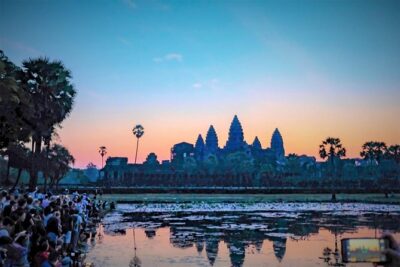
Angkor Wat Highlights and Sunrise Guided Tour from Siem Reap
Read our review →
Angkor Wat Sunset Small Group Tour with Lunch Included
Read our review →
Full-Day Angkor Wat Sunrise Private Tour with Guide from Siem Reap
Read our review →