Reviewed · SIEM REAP TOURS
4-Day Tour from Siem Reap to Phnom Penh
Angkor Wat is only the beginning here. This four-day route pairs Cambodia’s great temple complex with Tonlé Sap, a Mekong sunset cruise, and the sobering sites that explain the country’s Khmer Rouge past. Siem Reap supplies the ancient stones; Phnom Penh adds the hard modern truth.
I like the practical shape of the trip: airport pickup, hotels, breakfast, transport, and guides are bundled together, so you can move between two cities without arranging each piece yourself. I also like the small-group limit of nine, which should make temple visits and questions easier than on a large coach.
The main caution is pace. You cover a lot in four days, and the Angkor Temple Pass costs extra. Communication may also require patience, since one account describes confusion between the main company and local guides even though guides such as Samnang and Nhoek were praised for their work.
Key points at a glance
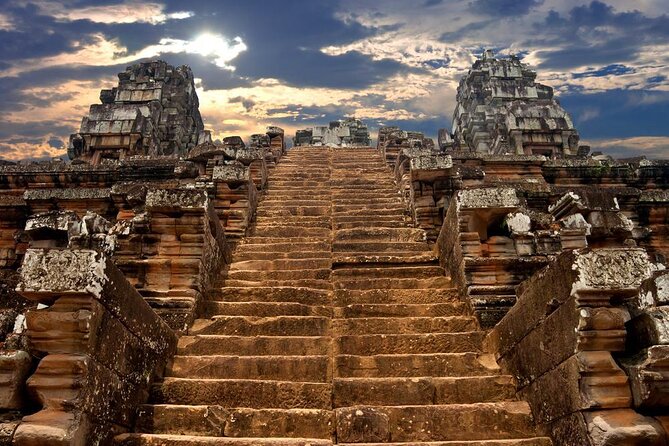
- Angkor in one long day: Angkor Thom, Bayon, Ta Prohm, Ta Keo, and Angkor Wat are grouped into an eight-hour temple program.
- Tonlé Sap on arrival day: A short lake visit gives you a look at Cambodia’s seasonal freshwater system before the temple schedule begins.
- A useful city-to-city route: You start at Siem Reap Airport and finish with a Phnom Penh airport transfer.
- The Mekong at sunset: A two-hour shared cruise follows the Mekong and Tonlé Sap near Phnom Penh.
- Cambodia’s difficult chapter: The Killing Fields and Tuol Sleng Genocide Museum provide essential context, handled with a guide.
- Small group, mixed hotel grades: Groups top out at nine, while accommodation ranges from three to five stars depending on the option selected.
Why this four-day route works
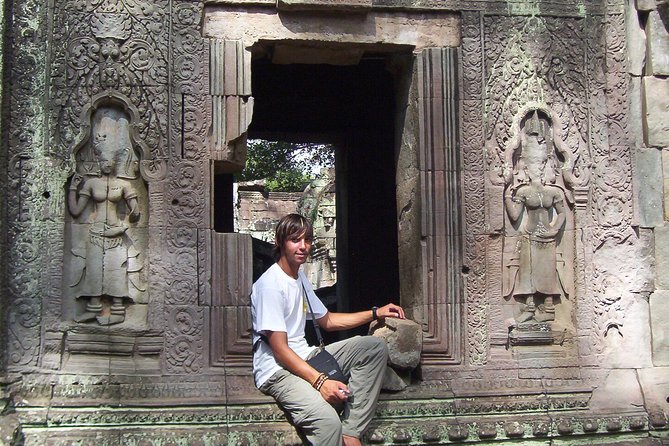
This is a good choice if you want Cambodia’s major sights in a tidy sequence rather than building a trip from separate hotel, transfer, and sightseeing bookings. You begin with Siem Reap’s temple world, travel overland to Phnom Penh, then finish with royal buildings and sites tied to the Khmer Rouge period.
The route also has a useful emotional rhythm. Day 1 is light and introductory. Day 2 is full of monuments and stone carvings. Day 3 changes the setting and mood with the transfer south and an evening on the river. Day 4 is the most serious, combining genocide sites with the Royal Palace and Silver Pagoda.
At $396.93 per person, the price makes sense mainly because it includes three nights of twin-share accommodation, breakfast each morning, local English-speaking guides, an air-conditioned minivan, airport pickup, sightseeing fees, lunch, and the transfer from Siem Reap to Phnom Penh. It is not an all-inclusive price: food and drinks outside the stated lunch and breakfasts are extra, as is the Angkor Temple Pass.
The hotel choice matters. Accommodation is described as three to five star, so you should confirm the exact property and room level before paying. A single supplement applies if you do not want to share a twin room. If you select a four or five-star option, at least two people are required for the booking.
A few more Siem Reap half-days to weigh up
- 4-Day Excursion of Angkor, Koh Ker, Beng Mealea, Tonle Sap and Waterfalls
★ 5.0 · 87 reviews - 4-Day All Major Temples & Kulen mountain & Koh Ker & Beng Mealea
★ 5.0 · 28 reviews - Private Siem Reap 4 Days: Full Exploration of the Angkor Complex
★ 5.0 · 17 reviews
Day 1: Tonlé Sap and Khmer craft in six hours
After arriving at Siem Reap Airport, you meet the guide and transfer to your hotel for check-in. That airport pickup is a useful first-day service, especially if you are arriving tired or have not arranged a local transfer.
The first outing goes to Tonlé Sap Lake, whose name refers to a great freshwater body that changes dramatically with the seasons. The lake is connected to the Tonlé Sap River, and the water system is a major part of Cambodian life. The scheduled stop is about 30 minutes, so treat it as a brief introduction rather than a full lake expedition.
That short timing is worth noting. You will not have hours for a long boat outing or extended village visit based on the information provided. Still, Tonlé Sap gives the trip an important setting beyond temples. Cambodia is not only Angkor stonework. Its rivers, lake, and seasonal water patterns help explain how communities have lived here.
You then visit Artisans D’Angkor for about 30 minutes. The organization supports traditional Cambodian handicrafts and demonstrates how Khmer artistic skills are being kept in use. This stop can be more rewarding than a standard souvenir shop because the focus is on craft production and cultural continuity.
Day 1 is fairly gentle at six hours, but the schedule may feel dependent on your arrival time. Ask for the exact pickup plan if your flight lands late. An optional Apsara dinner is available on arrival, but it is not included, so budget separately if you want that addition.
Day 2: Angkor Thom and the temple circuit
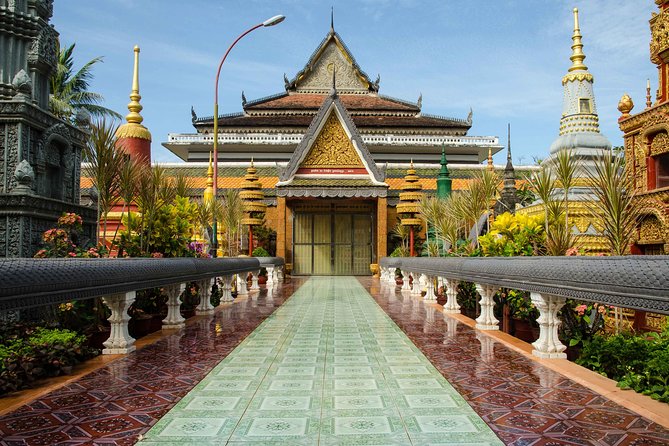
The main temple day begins at 8:00 a.m. and lasts about eight hours. You visit the south gate of Angkor Thom, Bayon, Baphuon, the Elephant Terrace, the Terrace of the Leper King, Phimeanakas, Ta Prohm, Ta Keo, and Angkor Wat.
That is a serious amount of ground. You should expect walking, uneven surfaces, stairs at some monuments, and a warm day outdoors. The benefit of a guide is not just getting from one temple to another. A guide can help connect the carvings, gates, royal spaces, and religious buildings into a story instead of leaving you with a pile of impressive ruins.
Angkor Thom was the last major capital of the Khmer Empire. Its south gate leads into a monumental complex, and the day continues to Bayon, known for its carved stone faces. Baphuon adds another large temple structure, while the Elephant Terrace and Terrace of the Leper King show how public and ceremonial spaces shaped the capital.
Phimeanakas is also included, though the stop is not given a separate duration. Ta Keo receives about 30 minutes and is described as a temple mountain, possibly the first Khmer temple built entirely from sandstone. It gives you another example of the scale and geometry used in Angkor construction.
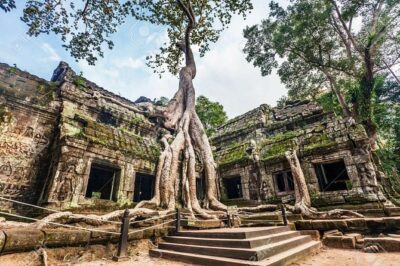
Ta Prohm is the atmospheric stop in this sequence. Its modern name refers to the late twelfth or early thirteenth-century temple originally called Rajavihara. The site is famous for trees growing through and around the stonework. The posted timing is unusual, showing one day and six hours, but the overall day is clearly described as an eight-hour program, so confirm the exact stop lengths with the operator.
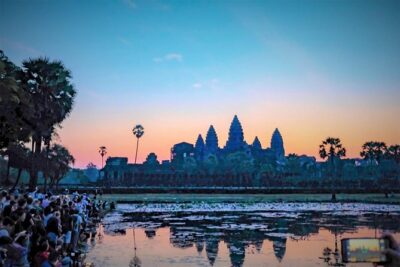
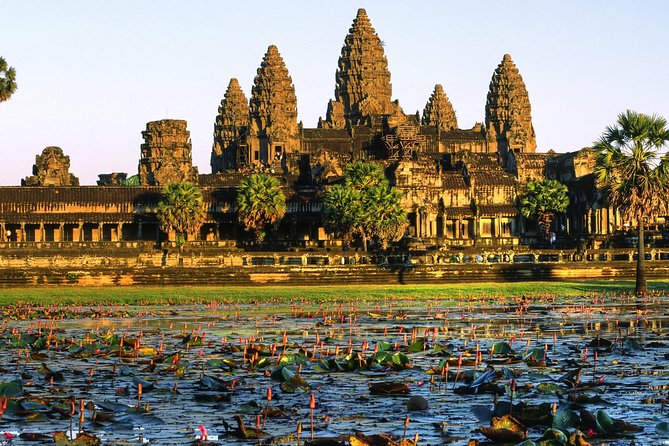
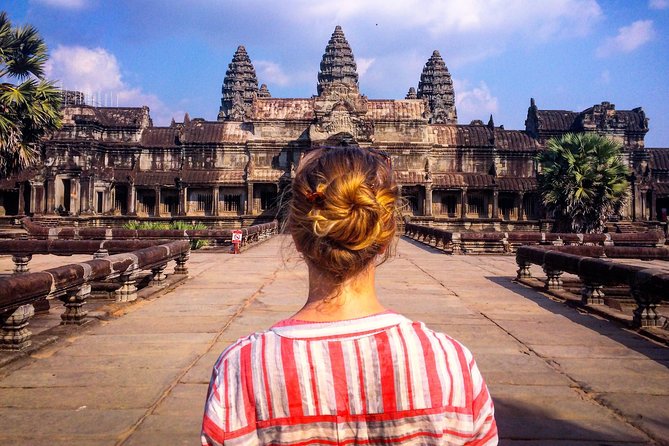
The day ends at Angkor Wat, the largest religious monument in the world. One hour is listed for the stop, which is enough for a guided introduction but not enough for every corner of the complex. If Angkor Wat is your main reason for booking, ask how the one-hour period is used and what access is planned.
The Angkor Temple Pass is not included. This is the most important extra cost to clarify before departure. Sightseeing fees are included for the other listed attractions, but the central temple admission is separate.
Day 3: Moving south, then watching the rivers meet
After breakfast, you transfer from Siem Reap to Phnom Penh. The transfer portion is listed at about four hours, followed by hotel check-in and an overnight stay in the capital.
This is not a day packed with major monuments. That is sensible. After the long temple program, the road transfer gives you a change of pace, though four days still leaves little spare time. You should not expect a leisurely exploration of Phnom Penh before the cruise unless the transfer and check-in run quickly.
In the afternoon, you are picked up at the hotel and taken to the boat pier for a two-hour shared sunset cruise. The boat travels on the Mekong and Tonlé Sap, giving you a water-level view of Phnom Penh and its surrounding river system.
I like this part because it changes the way you see the capital. Instead of only visiting buildings and museums, you spend time on the water at the end of the day. The shared format may feel less private, but it keeps the cruise within the group-tour structure and is already included in the price.
A completely different sort of day from the same base:
- Angkor Wat Sunrise or Sunset Tour with Guide from Siem Reap
★ 5.0 · 12,109 reviews - Siem Reap: Angkor Wat: Small-Group Sunrise or Sunset Tour
★ 5.0 · 9,444 reviews - From Siem Reap: Kampong Phluk Floating Village Tour by Boat
★ 4.9 · 6,979 reviews - Sunset tour of Kampong Phluk stilts home village on the Tonle Sap
★ 5.0 · 4,865 reviews
Day 4: From Tuol Sleng to the Royal Palace
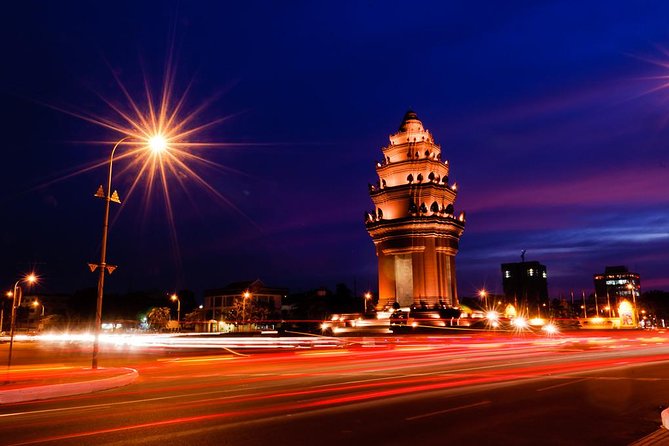
The last morning covers some of Phnom Penh’s most important and difficult places. You visit the Killing Fields, Tuol Sleng Genocide Museum, the Russian Market, the Royal Palace, and the Silver Pagoda before transfer to the airport.
The Killing Fields visit is listed at about 45 minutes. These sites are connected to the Khmer Rouge regime, during which more than a million people were killed and buried across Cambodia. This is not light sightseeing, and the short scheduled visit means you should listen carefully to the guide and allow yourself quiet time afterward if needed.
Tuol Sleng Genocide Museum is equally serious. The former secondary school was used as Security Prison 21, or S-21, during the Cambodian genocide. The museum gives the political tragedy a physical setting. Together, Tuol Sleng and the Killing Fields help you understand the scale and machinery of the violence, rather than treating Cambodia’s recent past as a footnote.
The schedule then shifts to the Royal Palace, listed at about one hour. This is the royal residence complex in Phnom Penh and offers a sharp contrast to the morning’s memorial sites. The Silver Pagoda, visited for about 30 minutes, sits within the palace grounds and is also known as Wat Preah Keo Morakot.
The Russian Market is included in the morning plan, but no separate duration is given. If you want time to browse, ask how the guide divides the morning. The full sequence is substantial, and the airport transfer follows it, so keep your departure time and luggage arrangements clear.
The supplied description highlights the National Museum in the overall tour summary, but the detailed day-by-day schedule lists the Royal Palace and Silver Pagoda instead. Confirm the final sightseeing plan before you go if the National Museum is important to you.
Guides, vehicles, and group size
Transportation is by air-conditioned minivan. That is a practical fit for a route with temple roads, city transfers, and a maximum group size of nine. The booking limit is seven people, while the activity itself allows up to nine, so the exact group makeup can vary.
Local English-speaking guides are included. Names connected with this tour include Samnang and Nhoek, who have been praised for guiding in Siem Reap and Phnom Penh. You should not assume those specific guides will be assigned to every departure, but their presence indicates that local guiding can be a strong part of the experience.
There is one operational concern to keep in mind. A past booking had trouble with the main company passing information clearly to regional guides, although the local guides themselves handled the sightseeing well. I would save the hotel names, pickup times, guide contact, and airport transfer details in writing before arrival.
The experience requires at least two people for the four or five-star hotel option. Most people can participate, but the schedule involves temple walking and visits to emotionally difficult sites, so consider your own comfort with both physical activity and serious historical material.
What the price really includes
The $396.93 cost is easiest to judge as a package price, not as a simple sightseeing ticket. You receive:
- Three nights of twin-share accommodation
- Three breakfasts
- Lunch
- Airport pickup and transfer
- Air-conditioned minivan transportation
- A local English-speaking guide
- Sightseeing fees other than the Angkor Temple Pass
- The Mekong and Tonlé Sap cruise
That can offer good value if you want convenience and a planned route. You avoid finding separate hotels in two cities, booking a road transfer, arranging airport transport, and hiring guides at each destination.
The price is less attractive if you already have hotels, prefer independent temple visits, or want more free time. You also need to add the Angkor pass, personal meals and drinks, any single-room supplement, and a language-guide surcharge for Spanish or German.
Who should book this tour?
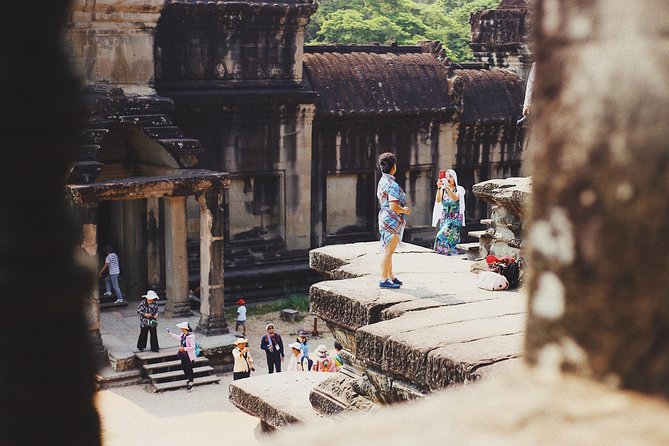
I would choose this tour if you have only four days, want both Siem Reap and Phnom Penh, and prefer having the main logistics handled for you. It suits a first visit, couples or friends comfortable with twin-sharing, and anyone who wants a guide to explain both ancient monuments and Cambodia’s twentieth-century history.
I would hesitate if Angkor Wat deserves several unhurried days, if you want a private vehicle, or if you dislike fixed schedules. The route is efficient, but it is not slow travel. Day 2 is packed, and Day 4 carries a heavy subject before an airport transfer.
The strongest parts are the route, the small group, the local guides, and the mix of temple, river, royal, craft, and memorial sites. The weak points are the extra Angkor admission, limited free time, possible communication gaps, and uncertainty over the exact hotel and final museum schedule.
FAQ
Is airport pickup included?
Yes. Airport pickup and transfer from Siem Reap Airport are included at the start, and an airport transfer is provided in Phnom Penh at the end.
How many nights of accommodation are included?
Three nights are included, based on twin-sharing. Accommodation is described as three to five star, depending on the selected option. A single supplement applies for solo room use.
Is the Angkor Temple Pass included?
No. The Angkor Temple Pass is specifically excluded, so you should budget for it separately.
What is the maximum group size?
The activity has a maximum of nine people. A maximum of seven people can be included in one booking.
What language is the guiding provided in?
A local English-speaking guide is included. Spanish and German-speaking guides require a surcharge.
Can I cancel for a full refund?
Yes, if you cancel at least 24 hours before the local start time. Cancellations or changes made within 24 hours are not refunded or accepted, and the operator may offer a new date or full refund if the minimum number of participants is not reached.
New around Siem Reap
- Kulen Mountain With Ticket included Plus Banteay Srei Temple Tour★ 5.0 · 7 reviews
- 2 Days Angkor temples with Sunrise & Sunset★ 5.0 · 7 reviews
- Private Siem Reap Airport Transfer to hotel in town★ 5.0 · 7 reviews
- 1-Day private Angkor Temple Tour with Sun Rise by Tuk Tuk from Siem Reap★ 4.5 · 7 reviews
- Kulen Mountain, Killing Fields and War Museum Tour★ 5.0 · 7 reviews
- War Museum, Killing Field, and APOPO Hero RATs Tour★ 5.0 · 7 reviews
- Siem Reap: Morning Cooking Class & Market Tour★ 5.0 · 7 reviews
- Half-Day: Silk Farm, Senteur Angkor, and Satcha Workshop★ 4.6 · 7 reviews
Siem Reap Tours, compared.
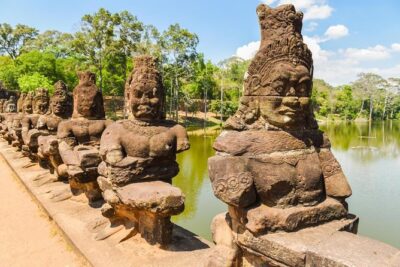
Angkor Wat Sunrise or Sunset Tour with Guide from Siem Reap
Read our review →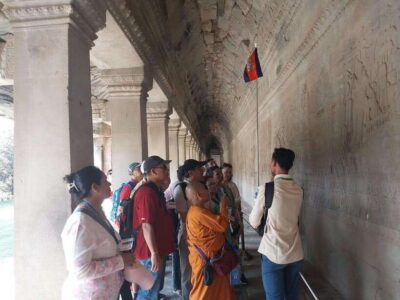
Angkor Wat: Small-Group Sunrise or Sunset Tour
Read our review →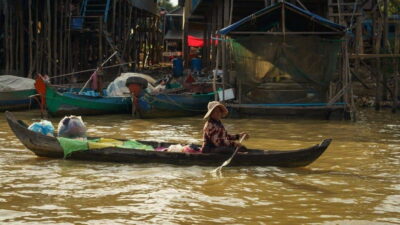
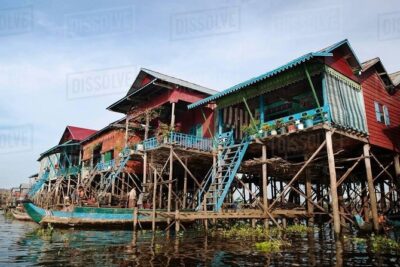
Sunset tour of Kampong Phluk stilts home village on the Tonle Sap
Read our review →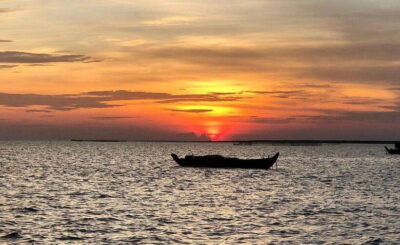
Kampong Phluk Floating Village Tour with Boat
Read our review →
Angkor Wat Sunrise tour with Small – Group and Guide tours
Read our review →