
Reviewed · BENG MEALEA TOURS
4-Day All Major Temples & Kulen mountain & Koh Ker & Beng Mealea
The real appeal here is the range. In four days, you move from the famous face towers of Bayon and tree-covered Ta Prohm to remote Koh Ker and the broken jungle ruins of Beng Mealea. You also get a waterfall day at Phnom Kulen, which gives your feet a welcome break from stone steps.
I like the private air-conditioned vehicle, since the itinerary covers long country roads as well as the Angkor complex. I also like the mix of headline sights and quieter stops such as Ta Nei, where fewer people and thick trees can make the ruins easier to appreciate. Guides including Sam and Vanna are praised for combining temple knowledge with humor and care.
The main drawback is the pace. This is not a gentle four-day introduction. Day 2 includes Kulen and several temples, while Day 4 reaches Koh Ker, more than 150 kilometers from Siem Reap, before continuing to Beng Mealea. Temple tickets and meals also cost extra, so the advertised price is not the final bill.
Key points to know before booking
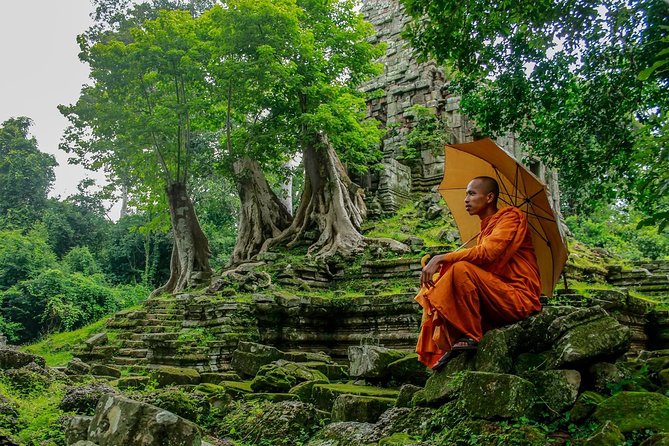
- Angkor Wat is covered twice: You visit the temple on Day 1 and return before dawn on Day 3 for sunrise.
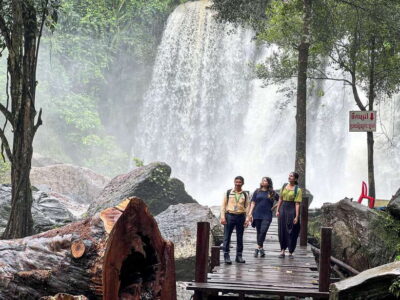
- Phnom Kulen adds variety: See the River of a Thousand Lingas and swim at a waterfall instead of spending every hour among temple walls.
- Koh Ker makes Day 4 a long outing: The former Khmer capital is remote, rewarding, and best suited to people comfortable with a full road day.
- The tour is private: Only your own group takes part, with hotel pickup and drop-off included.
- The guide matters: Sam, Vanna, and other licensed English-speaking guides provide the historical thread that links the sites.
- Budget for extras: The listed admission fees total $107 per person, before lunch and any other food or personal spending.
Four days that cover both famous and forgotten Cambodia
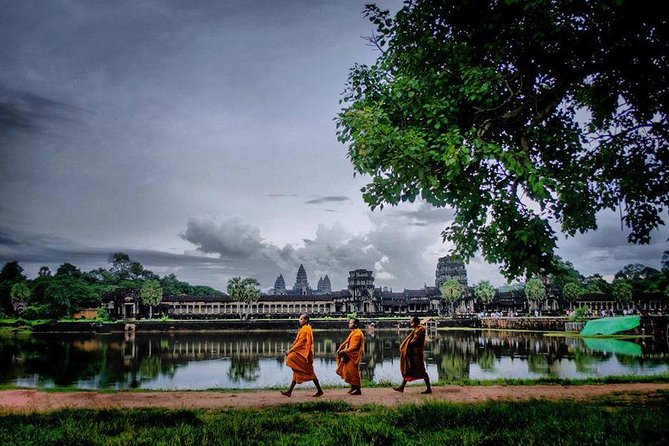
This tour is built for you if you want to see a lot in one visit and do not want to arrange separate rides for every temple group. The route links the central Angkor monuments with remote sites in the countryside, so you get a better sense of how wide the Khmer world was.
The private format is important. You can travel with your own group, rather than joining a large bus with a fixed rhythm. Your driver handles the roads, your guide explains the sites, and cool drinking water and wet towels are supplied during the outings.
The tradeoff is simple: the more ground you cover, the less time you have to linger at each monument. Several stops last only 10 to 30 minutes. That works well for seeing the broad picture, but visitors who want careful photography or long periods of quiet will need to tell the guide where they want extra time.
More Beng Mealea jungle-temple days:
- Siem Reap: Kulen Mountain, Beng Mealea and Tonle Sap Tour
★ 5.0 · 1,483 reviews - Kulen Mountain with Beng Mealea and Tonle Sap Small Group Tour
★ 5.0 · 780 reviews - Koh Ker Temple Group & Beng Mealea Full-Day Join-in Tour
★ 5.0 · 710 reviews
Day 1: Angkor Wat, Ta Prohm, and the royal city
The first morning starts at 8:00am with hotel pickup. You stop to buy temple passes along the way, then spend about two and a half hours at Angkor Wat. That is enough time for a substantial visit, though the temple is so large that you will not see every corner in detail.
Angkor Wat gives you the essential introduction to Khmer architecture and religious design. Your guide can help make sense of the galleries, towers, courtyards, and changing Hindu and Buddhist associations. Start with comfortable shoes and water, since the complex involves a good deal of walking.
Next comes Ta Prohm, visited for about two hours. Its giant tree roots winding across stone walls create the most immediately dramatic setting of the day. The temple is also linked with the film Tomb Raider, but its real interest is older and more substantial: you can see how vegetation, weather, and centuries of neglect altered the building.
Ta Nei is a smaller stop, lasting about 45 minutes. It has seen less restoration and is surrounded by large trees. I like this contrast after Ta Prohm. Instead of another grand monument, you get a quieter ruin with a rougher appearance.
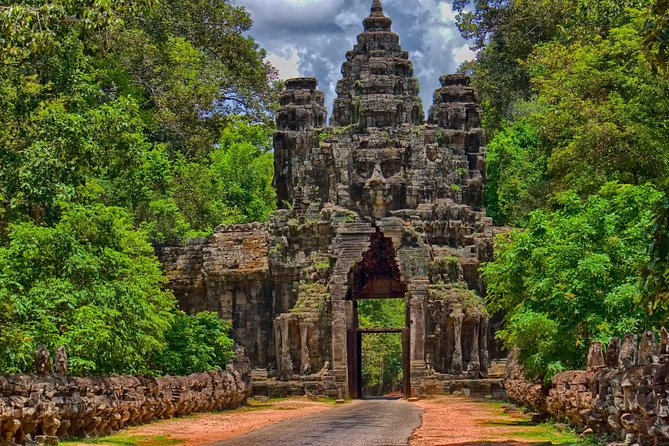
You then enter Angkor Thom through the Victory Gate and continue to Bayon. The gate is a quick photo stop, while Bayon receives about 45 minutes. Its towers carry the famous four-sided faces associated with the bodhisattva Avalokitesvara. The faces are the reason many people remember Bayon most clearly, but look also at the carved scenes and the way the towers crowd together.
Baphuon follows for roughly 30 minutes. This Hindu temple predates Angkor Wat, and a later reclining Buddha was built behind it in the 16th century. Phimeanakas, the pyramid temple in the former royal center, gets about 15 minutes, usually alongside the old Royal Enclosure Wall.
The final Angkor Thom stops are the Terrace of the Elephants and the Terrace of the Leper King. Each is scheduled for about 10 minutes, so think of them as brief orientation visits rather than full explorations. The elephant carvings and royal viewing platform are worth seeing, but you may want to ask for a little more time if carved details matter to you.
The day can end at Phnom Bakheng for sunset. The climb takes you up a hill, and the sunset visit lasts about two hours, including the wait. Capacity is limited, and the schedule notes that you can skip sunset if you do not want to wait. That flexibility is useful after a packed first day.
Day 2: Kulen waterfall and the pink stone of Banteay Srei
Day 2 changes the mood. Phnom Kulen National Park is more than 60 kilometers from Angkor Park, and the main visit takes about five hours. The River of a Thousand Lingas is a riverbed carved with linga sculptures, linked to the Hindu god Shiva. It is a different kind of historic site from the freestanding temples, since the watercourse itself carries the decoration.
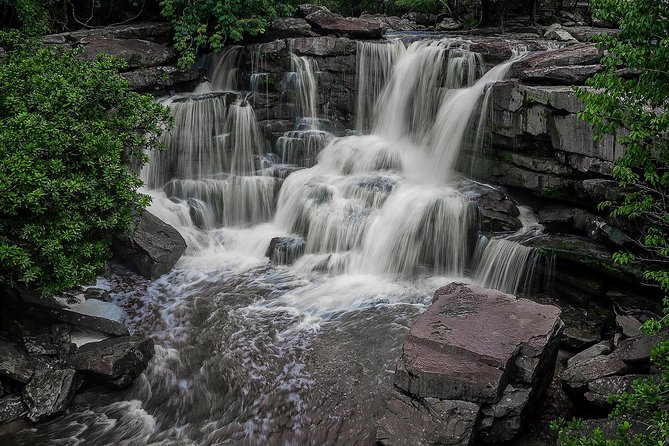
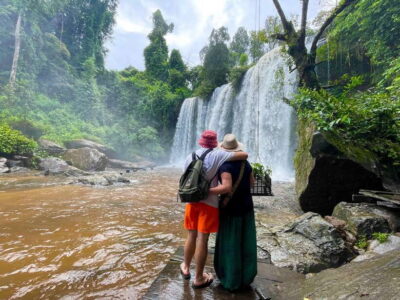
The day also includes a waterfall where you can swim. Bring suitable clothing and a towel if you intend to enter the water. The waterfall gives you a physical break from temple corridors, although the long drive means this is still a full day rather than a short side trip.
After Kulen, the route goes to Banteay Srei for about an hour. This temple is known for its pink sandstone and fine carving, and it dates from the latter part of the 10th century. The smaller scale and detailed stonework make it a good counterpoint to Angkor Wat. Your guide can explain its dedication to Hindu deities, particularly Shiva.
Banteay Samre takes about 45 minutes. It is a 12th-century Hindu temple whose design is often compared with Angkor Wat. The visit rounds out the day without adding another huge complex.
Pre Rup is the final listed stop, with about 30 minutes. This temple-mountain dates from the late 10th century and was dedicated to Hindu gods. Its name is associated with turning the body, and the site is connected with Khmer funeral beliefs. The higher structure and brick tones give you a visual change after the pink stone at Banteay Srei.
This is one of the most varied days, but also one of the most demanding. If swimming is a priority, make sure you protect that time. If the temple visits matter more, ask the guide how long the road schedule allows at each stop.
Day 3: Sunrise, quiet temples, and the Roluos group
The third day begins at 5:00am for sunrise at Angkor Wat. Early pickup is not optional if you want the full sunrise plan. You will have about an hour and 45 minutes at the temple, and then return for breakfast before heading out again.
A sunrise return has two advantages. You see Angkor Wat in a different light, and the early hour gives the building a completely different atmosphere from the previous day. The disadvantage is obvious: after a late sunset or a tiring Day 2, the early alarm can hurt.
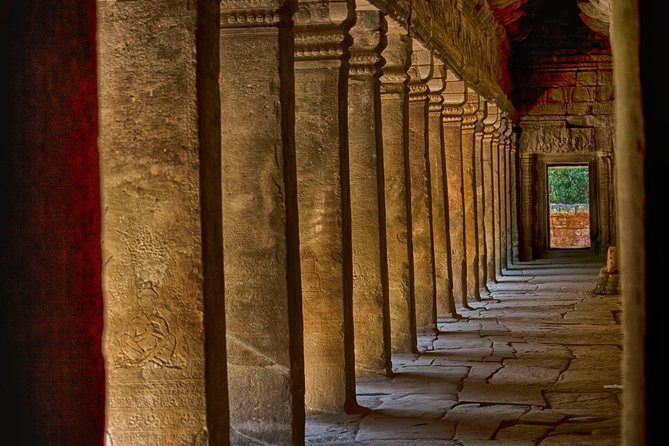
The route then turns to Preah Khan, a large Buddhist temple built by King Jayavarman VII and dedicated to his father. Allow about an hour. The site has long corridors and broad ruins, so a guide is especially helpful in showing you how its parts fit together.
Neak Pean is a small island temple in the middle of a former reservoir, with about 30 minutes allotted. Ta Som, another small Buddhist temple, follows for a similar half hour. These stops are shorter and more compact than Angkor Wat or Preah Khan, which helps keep the day moving.
Eastern Mebon takes about an hour. This three-level temple-mountain has five towers and large elephant statues at its corners. The elephants are the detail to watch for, and the elevated design helps you see how Khmer builders used temple platforms to create a strong vertical profile.
The afternoon moves to the Roluos group, one of the early Khmer temple clusters. Lolei is a small 9th-century Hindu temple, and the visit lasts about 15 minutes. Preah Ko, built in the former city of Hariharalaya, receives about 20 minutes.
Bakong is the main Roluos stop, with roughly 45 minutes. It is described as the first sandstone temple-mountain built by Khmer rulers and the largest temple in the group. After so many Angkor monuments, Bakong helps place the empire’s building tradition on an earlier footing.
Lunch is taken at a restaurant along the route, with food paid separately. The stated estimate is about $5 per person, depending on the menu. Since the tour covers the morning sunrise and a long afternoon, lunch is not a minor detail. Plan on a proper break rather than trying to rush through it.
More Koh Ker pyramid trips:
- From Siem Reap: Koh Ker and Beng Mealea Temples Tour
★ 4.9 · 293 reviews - Preah Vihear: Full-Day Preah Vihear and Koh Ker Temple Tour
★ 4.9 · 263 reviews - Full-Day Preah Vihear, Koh Ker and Beng Mealea Private Tour
★ 4.4 · 101 reviews - Preah Vihear temple – Koh Ker & Other temple with Small Group
★ 5.0 · 96 reviews
Day 4: Koh Ker and Beng Mealea far from the main circuit
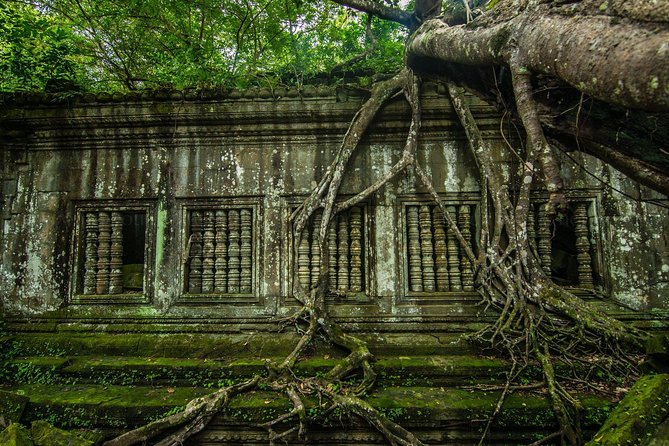
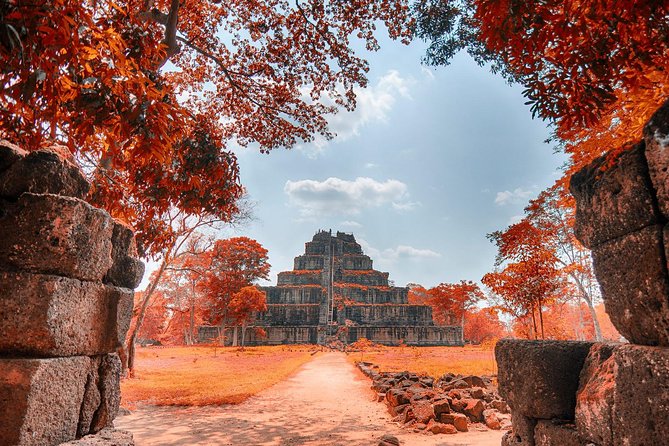
The fourth day is the most ambitious. Koh Ker lies more than 150 kilometers northeast of Siem Reap, in Preah Vihear province, and was briefly the Khmer capital from 928 to 944. The Koh Ker group visit takes about four hours, so the road time is a major part of the experience.
Koh Ker suits you if you want a less familiar chapter of Khmer history. It does not feel like simply adding another Angkor temple to a checklist. Its short period as a capital gives the site a distinct place in the story of the empire, and the distance helps explain why it sees fewer visitors than the central monuments.
The long drive is also the chief concern. You should choose this day because Koh Ker interests you, not because you expect a quick excursion. The private vehicle makes the distance easier to manage, and your guide can use the driving time to connect the site with the better-known temples.
Beng Mealea follows for about an hour and 30 minutes. Nature has spread across the ruins, and the temple is built on a floor plan similar to Angkor Wat. Expect fallen stone, trees, and a much less orderly setting than the restored sections of the main Angkor circuit.
This is the tour’s strongest choice for people who like ruins with a sense of discovery. It is also less suitable if you need smooth paths or prefer fully restored monuments. The schedule lists Lolei, Preah Ko, and Bakong again after Beng Mealea, for 20, 20, and 40 minutes respectively. Because those sites already appear on Day 3, confirm the exact Day 4 plan with Happy Angkor Tour before departure. It may be a repeated schedule entry or a change in the operating plan.
What the $389.25 price really covers
The tour price is $389.25 per person. It includes the private air-conditioned vehicle and driver, a licensed English-speaking guide, cool drinking water, wet towels, parking fees, road tolls, and hotel pickup and return.
The mandatory listed admissions add up to $107 per person:
- Angkor and all-temples pass: $72
- Phnom Kulen: $20
- Koh Ker: $15
Three stated lunch estimates add about $15 per person, assuming one $5 lunch on each of the first three days. That brings the practical minimum to about $511.25 per person before any other food or personal expenses.
That is not a budget temple tour, but the value improves if you are sharing the private service with a group and want the distant sites included. Separate transport to Kulen and Koh Ker would be inconvenient to arrange, and the private guide gives you one person to explain the different periods and religious traditions.
Group discounts are offered, but the amount is not specified. Ask for the current group rate before paying. Confirmation is provided at booking, mobile tickets are available, and cancellation is free when made at least 24 hours before the start time.
The guide and driver shape the experience
The vehicle and guide arrangement is one of the tour’s strongest practical features. You are not left to navigate between widely separated sites, and the driver handles parking and road tolls while the guide leads the sightseeing.
Sam is described as funny, kind, caring, and strong on Cambodian history as well as temple details. Vanna and driver Pat are also specifically praised for handling both short local transfers and long trips to remote temples. Those qualities matter here because the program includes early starts, long drives, heat, and repeated walking.
Ask your guide to adjust the balance between major sites and short photo stops. You can skip Phnom Bakheng sunset if the wait does not suit you, and you may want more time at Ta Nei or Beng Mealea. The private format gives you a better chance of making those requests than a fixed large-group tour.
Who should book this four-day route
I would choose this tour if you have four days in Siem Reap and want the broadest possible temple program. It suits people who care about historical context, want a private vehicle, and are happy to trade leisurely visits for variety.
It is especially good for a group of friends or family members who can share the private service and agree on the pace. The water, wet towels, hotel transfers, and air conditioning are small comforts that become important by the third and fourth day.
I would hesitate if you want a relaxed holiday, dislike pre-dawn starts, or find long road trips tiring. Day 2 and Day 4 are not filler excursions. They are substantial journeys with their own rewards, and they ask for stamina.
Should you book this Angkor and remote-temples tour?
Book it if your goal is to see both the essential Angkor monuments and the less visited sites beyond Siem Reap in one organized trip. The strongest features are the private vehicle, the guide-led historical explanation, the Kulen waterfall stop, and the rare chance to reach Koh Ker without arranging separate transport.
Before booking, budget for the extra $107 in admission fees, confirm the repeated Roluos stops on Day 4, and decide how you feel about a 5:00am sunrise and a 150-kilometer-plus road day. If those demands sound fair for a bigger view of Cambodia’s Khmer temples, this is a strong, well-filled four-day choice.
FAQ
How long is the tour?
The experience lasts approximately four days.
Is hotel pickup included?
Yes. Pickup from your hotel or guest house and return to your hotel are included.
Is this a private tour?
Yes. Only your own group participates in the activity.
Is transportation included?
A private air-conditioned vehicle with a driver is included, along with parking fees and road tolls.
Is an English-speaking guide included?
Yes. A licensed English-speaking guide is included.
Are temple admission fees included?
No. The listed extra admission costs are $72 for the Angkor and all-temples pass, $20 for Phnom Kulen, and $15 for Koh Ker.
How much do meals cost?
Lunch is not included. The stated estimate is about $5 per person, depending on the menu.
What time does the sunrise visit begin?
Pickup for the Day 3 sunrise visit is scheduled for 5:00am.
Can I skip the Phnom Bakheng sunset stop?
Yes. The sunset visit can be skipped if you do not want to wait. Entry is subject to a limited number of tourists allowed.
Is cancellation free?
Yes, if you cancel at least 24 hours before the experience start time. Cancellations made less than 24 hours in advance are not refunded.
More 4-Day Experiences in Siem Reap
- 4-Day Excursion of Angkor, Koh Ker, Beng Mealea, Tonle Sap and Waterfalls
★ 5.0 · 87 reviews - Private Siem Reap 4 Days: Full Exploration of the Angkor Complex
★ 5.0 · 17 reviews - 4-Day Tour from Siem Reap to Phnom Penh
★ 4.0 · 9 reviews
More Kulen Mountain Tours in Siem Reap
- Kulen Waterfall Join-in Tour (local Picnic lunch)
★ 5.0 · 2,434 reviews - Kulen Mountain: Small-Group Tour and Picnic lunch
★ 4.9 · 1,802 reviews - Phnom Kulen Waterfall & the Sacred 1000 Lingas (with Lunch)
★ 4.8 · 974 reviews - Guided Small-Group Tour in Kulen Mountain Park Waterfall
★ 5.0 · 480 reviews
New around Siem Reap
- Kulen Mountain With Ticket included Plus Banteay Srei Temple Tour★ 5.0 · 7 reviews
- 2 Days Angkor temples with Sunrise & Sunset★ 5.0 · 7 reviews
- Private Siem Reap Airport Transfer to hotel in town★ 5.0 · 7 reviews
- 1-Day private Angkor Temple Tour with Sun Rise by Tuk Tuk from Siem Reap★ 4.5 · 7 reviews
- Siem Reap: Morning Cooking Class & Market Tour★ 5.0 · 7 reviews
- Kulen Mountain, Killing Fields and War Museum Tour★ 5.0 · 7 reviews
- War Museum, Killing Field, and APOPO Hero RATs Tour★ 5.0 · 7 reviews
- Half-Day: Silk Farm, Senteur Angkor, and Satcha Workshop★ 4.6 · 7 reviews
Beng Mealea Tours, compared.
Kulen Mountain, Beng Mealea and Tonle Sap Tour
Read our review →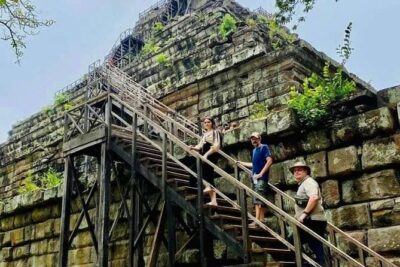
Koh Ker Temple Group & Beng Mealea Full-Day Join-in Tour
Read our review →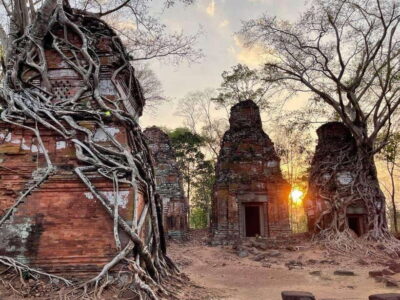
Banteay Srei, Kulen Waterfall & Beng Mealea Exploration
Read our review →Kulen Waterfall, Banteay Srei, and Beng Mealea Tour
Read our review →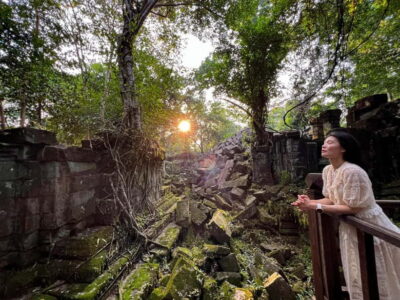
Banteay Srei, Beng Mealea and Kulen Mountain with Picnic
Read our review →Kulen Mountain, Beng Mealea, and Tonle Sap Tour
Read our review →
Private Beng Mealea and Floating Village Tour with Sunset
Read our review →Browse the lists this tour appears in