
Reviewed · KILLING FIELDS TOURS
Tuol Sleng Genocide Museum (S-21) and Choeung Ek Killing Fields Tour
The most important thing to understand about this Phnom Penh tour is that it takes you to two places that explain Cambodia’s Khmer Rouge years from different angles. At Choeung Ek, you see the former execution and burial site. At Tuol Sleng, you enter the school turned prison where people were held and tortured. The sites are confronting, but together they make the history easier to grasp.
I like the hotel pickup, air-conditioned vehicle, and cool water, especially in Phnom Penh’s heat. I also like the human touch supplied by guides such as Mr. Baboon, Sum Cheath, Visal, and Tea, several of whom are praised for clear English, careful storytelling, and personal family connections to the period.
The main drawback is simple: this is a sad and sometimes upsetting half-day. The tour price is low, but admission fees are extra, and the exact pickup arrangement should be confirmed because the meeting point is also listed as River Crown Restaurant on Street 178.
Key points to know before booking
- Two essential sites in four hours: Choeung Ek and Tuol Sleng are covered in roughly two hours each.
- The guide changes the experience: Mr. Baboon, Sum Cheath, Visal, or Tea may lead the tour, with strong praise for their English and respectful explanations.
- The total cost is higher than the headline price: The tour is $19.20, plus $5 for Tuol Sleng and $3 for Choeung Ek.
- Transport is part of the deal: Hotel pickup, an air-conditioned vehicle, a driver, and cool water are included.
- Expect serious subject matter: This is a memorial visit, not a casual sightseeing outing.
- The group can reach 20 people: That is manageable, though not as intimate as a private tour.
Why these two sites belong together
The Khmer Rouge ruled Cambodia from 1975 to 1979 under Pol Pot. During those years, the country suffered mass imprisonment, torture, forced labor, execution, and starvation. The tour gives you two connected views of that period.
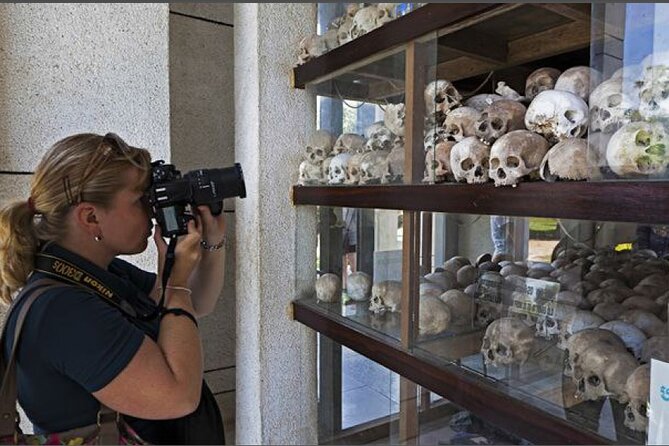
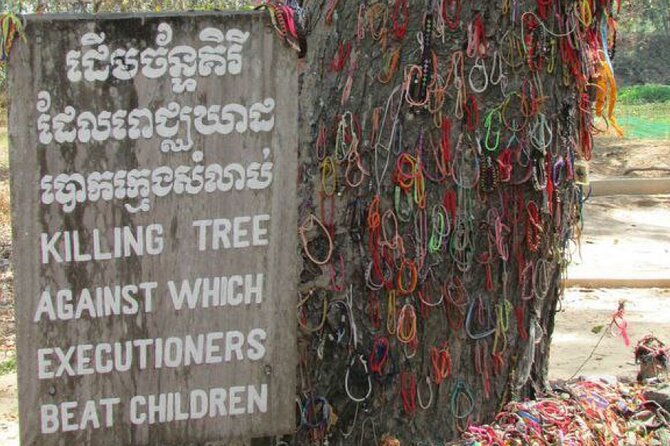
Choeung Ek was once an orchard and a Chinese cemetery outside Phnom Penh. Under the Khmer Rouge, it became one of the killing fields. The site is associated with the execution of around 2,000 prisoners, while the wider Khmer Rouge campaign killed and buried an estimated 2.5 million people over three years, according to the historical explanation supplied for the tour.
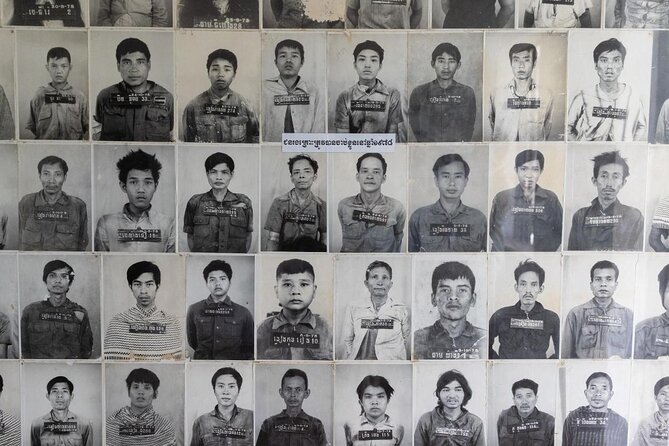
Tuol Sleng adds the story of what happened before many prisoners were taken away. The former high school became Security Prison 21, commonly called S-21. Around 20,000 people were imprisoned there, and many were tortured in attempts to force information or false confessions.
I find the pairing valuable because it prevents the history from feeling abstract. Choeung Ek shows the final stage of the prison system. Tuol Sleng shows the machinery of detention and interrogation. You leave with a clearer sense of how the two places were linked.
More Museums in Phnom Penh
- The Killing Field and Toul Sleng Genocide Museum (S21) Tour
★ 5.0 · 1,977 reviews - Killing field and Toul Sleng genocide museum Tour
★ 5.0 · 610 reviews - Private Half Day To Killing Field & S21 Genocidal Museum in Phnom Penh
★ 5.0 · 137 reviews
Choeung Ek: a quiet site with a grim purpose
The drive to Choeung Ek takes you about nine miles south of central Phnom Penh. The ride matters because it moves you away from the city and into a place that was once ordinary farmland and an orchard. That contrast is part of the experience. Nothing about the setting suggests what happened there until the guide explains its role.
You spend about two hours at the Choeung Ek Genocidal Center. The admission fee is not included, so budget $3 per person at the entrance.
This is a memorial site, and the visit can be emotionally difficult. You are there to remember people who were killed, not to inspect a battlefield or consume a spectacle. A respectful guide helps you understand the evidence and the meaning of the memorial without turning the visit into a string of shocking details.
The guide’s role is especially important here. Several guides connected with this experience are praised for being factual and compassionate. Mr. Baboon is noted for preparing people for the difficult subject matter, then adjusting his tone when the history calls for gravity. He has also shared a personal family connection, bringing the events closer to the present without making the tour about himself.
You may also encounter accounts from survivors during the visit. The supplied information describes a moving meeting with two survivors, but this should not be treated as a guaranteed part of every departure. If that encounter happens, it adds a direct human voice to a place already carrying enormous weight.
Give yourself permission to be quiet at Choeung Ek. You do not need to fill every pause with photographs or questions. You can ask questions, but the tone of the site calls for care.
Tuol Sleng, from school to prison
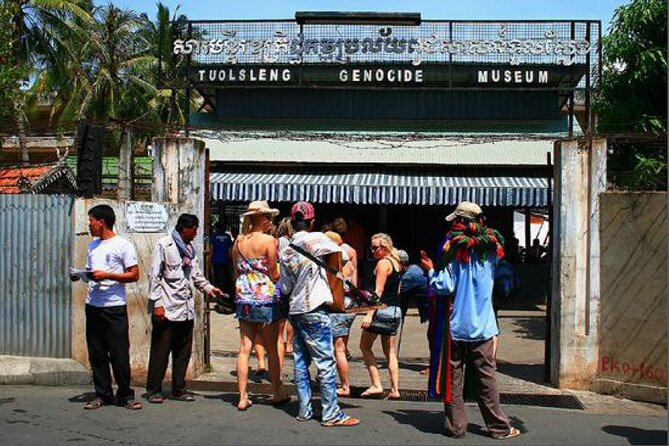
After Choeung Ek, the tour returns to Phnom Penh for Tuol Sleng Genocide Museum. The site occupies a former high school, a detail that makes the prison’s transformation particularly disturbing. A school is associated with children, learning, and everyday life. Under Pol Pot, it became a high-security prison known as S-21.
The name Tuol Sleng means hill of the poisonous trees. The museum preserves the memory of the people imprisoned there and the system that abused them. Around 20,000 people were held at S-21, with many tortured for information.
You spend roughly two hours at the museum, and admission costs $5 per person. The longer allocation here is useful. You need time to take in the buildings, the prison setting, and the explanations without being hurried from room to room.
The museum can feel more immediate than Choeung Ek because it is a former place of confinement. Its identity as a converted school also gives the visit an unsettling contrast between normal life and state violence. Your guide’s explanation helps place the rooms and displays within the wider Khmer Rouge system.
English clarity matters at Tuol Sleng. The guides praised for this experience are described as easy to understand, well informed, and willing to answer questions. Visal, in particular, is noted for thorough explanations and very good English. Mr. Baboon is described as engaging and occasionally humorous when appropriate, while still knowing when the subject requires a serious tone.
That balance is useful, but you should not expect comedy or light relief to soften the whole visit. The humor mentioned in connection with some guides is a personal quality, not the purpose of the tour. The subject remains painful from start to finish.
A guide-led visit is worth the extra structure
You can visit both sites without a guide, but this tour gives you a clear four-hour plan and transport between them. That matters if you have limited time in Phnom Penh or do not want to arrange separate rides.
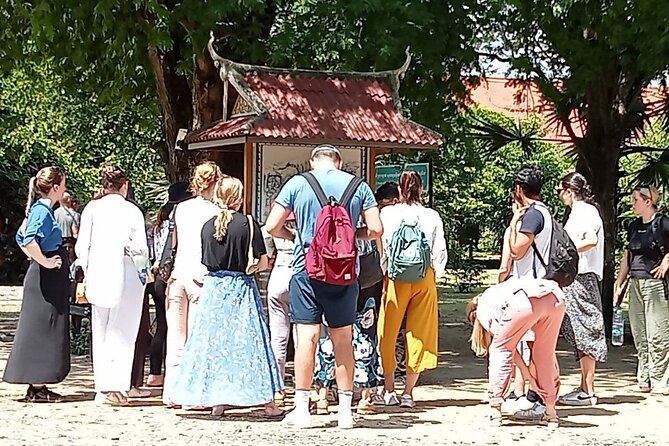
The guide does more than recite dates. The best moments come from connecting the locations, explaining how the prison and killing fields fit into the same system, and answering questions as they arise. The guides associated with this tour are also described as respectful when discussing family experiences.
That personal connection can make the history feel immediate. It should also remind you to listen carefully and avoid treating personal testimony as a simple attraction. A good guide can share enough to add meaning while keeping the focus on the people who suffered.
The tour accommodates up to 20 people. That is a reasonable ceiling for a shared outing, but it is not the same as traveling privately. If you want long conversations at every stop or need to set your own pace, a private arrangement may suit you better. If you want an organized visit with a guide and vehicle, the group format keeps things simple.
More Killing Fields Tours in Phnom Penh:
- Visit 11 Places in One Day including S21 & Killing Field
★ 5.0 · 361 reviews - Half Day Tuol Sleng S21 and Choeung Ek Killing Field Tour
★ 5.0 · 228 reviews - Killing Fields and Prison S21 Bus Tour
★ 4.0 · 206 reviews - Phnom Penh City Tour, Silver Pagoda, Genocide Museum, Killing Fields
★ 5.0 · 123 reviews
What the $19.20 price really covers
The advertised cost is $19.20 per person. That includes the professional English-speaking guide, driver, air-conditioned transport, cool water, and hotel pickup.
You must add $5 for Tuol Sleng and $3 for Choeung Ek. Your basic out-of-pocket total is therefore about $27.20 per person before any tip or personal spending.
That is a fair price for a four-hour guided outing. The transport alone has value, since the killing fields are outside central Phnom Penh and the two sites are not next to each other. You are also paying for someone to explain a difficult subject in clear English, rather than simply delivering you to the entrances.
The tour does not include tips. If your guide handles the history with care, keeps the timing smooth, and answers your questions well, a tip is a reasonable personal choice, but it is not part of the listed cost.
The headline price works best for a person who values convenience and context. If you only want transport, you may find the guide unnecessary. If you want to understand what you are seeing, the added structure is worthwhile.
Pickup, timing, and the small details that matter
Hotel pickup is offered, and the vehicle is air-conditioned. You also receive cool water, a welcome detail in Phnom Penh’s warm climate. The guide returns you to your hotel or guesthouse according to the tour description, although the formal meeting information lists River Crown Restaurant, 357 Street 178, Preah Sisovath Quay, as both the start and end point.
Because those details do not line up perfectly, confirm your pickup and return point when booking. You may choose to meet at the restaurant if it is more convenient, and one person specifically found the meeting point an easy walk from a hotel. Do not assume every property has the same pickup arrangement.
The experience lasts about four hours. The planned split is two hours at Choeung Ek and two hours at Tuol Sleng. That is enough time for a solid introduction to both sites, though not enough for a slow, independent study of every display.
The tour has mobile ticketing and confirmation is supplied at booking. It is near public transportation, and most people can participate. No special physical requirement is listed, but the emotional demand is more important than the physical one.
The tour requires good weather. If poor weather cancels the outing, you are offered another date or a full refund.
How to prepare for a difficult morning
Read a little about Cambodia from 1975 to 1979 before you go, even if it is only a basic timeline. You will understand the guide’s explanations more easily, and you can spend your time asking sharper questions.
Wear practical clothing and shoes. The tour includes transport and museum visits, but you should still expect time moving between outdoor and indoor areas. Carry water if you prefer more than the supplied bottle, and give yourself quiet time afterward if the subject affects you strongly.
Do not schedule a carefree lunch meeting immediately after the tour if you can avoid it. The four-hour visit may end on time, but you may want a pause before returning to ordinary sightseeing.
This is also not the right outing for anyone looking only for light cultural entertainment. The sites are essential to understanding modern Cambodia, but they are not easy places. I would choose this tour when I want historical context and a guide’s help, not when I want a relaxed morning.
Who will get the most from this tour
I would recommend it most strongly to first-time visitors to Phnom Penh, people with only a short stay, and anyone who wants both major Khmer Rouge memorial sites handled in one morning or afternoon.
It is also a good choice if you prefer explanations in English and do not want to negotiate transport between the city and Choeung Ek. The air-conditioned vehicle and hotel pickup make the outing easier in hot weather.
Families should decide based on the age and sensitivity of their children. The supplied information says most people can participate, but it does not make the tour suitable for every child. The subject includes imprisonment, torture, execution, and mass death.
Independent history readers may prefer visiting alone, especially if they want to spend unequal amounts of time at each site. The guided schedule is better for those who value a clear pace and the chance to ask questions as the story unfolds.
Should you book it?
Book this tour if you want the two most important Khmer Rouge sites outside and inside Phnom Penh covered in about four hours, with transport and an English-speaking guide. The $19.20 tour fee is good value once you understand that the $8 in admission charges comes separately.
Choose it for the guides’ reported strengths: clear English, direct explanations, compassion, and, in the case of Mr. Baboon and others, personal family links to Cambodia’s painful past. Confirm the pickup point, prepare yourself for upsetting material, and keep the rest of your day flexible.
Skip it only if you are not ready for a memorial visit or if you want complete control over timing. For most people seeking a serious introduction to Cambodia’s recent past, this is a practical and meaningful choice.
FAQ
How long does the tour last?
The tour lasts approximately four hours, with about two hours at Choeung Ek and two hours at Tuol Sleng.
Where does the tour take place?
It takes place in Phnom Penh and at Choeung Ek, about nine miles south of Phnom Penh.
Is hotel pickup included?
Yes. Hotel pickup is offered as part of the tour. The listed meeting point is River Crown Restaurant at 357 Street 178, Preah Sisovath Quay, Phnom Penh, so confirm the exact arrangement for your booking.
Does the tour return to the hotel?
The tour description says the guide returns you to your hotel or guesthouse. The formal meeting information also lists the meeting point as the end point, so confirm where your return will be arranged.
Are admission fees included?
No. Tuol Sleng Genocide Museum costs $5 per person, and Choeung Ek Genocidal Center costs $3 per person.
What is included in the tour price?
The price includes a professional English-speaking guide, driver, clean air-conditioned transportation, cool water, and hotel pickup.
Is the tour conducted in English?
Yes. The tour includes a professional English-speaking guide. Guides associated with the experience include Mr. Baboon, Sum Cheath, Visal, and Tea.
How many people can join the tour?
The maximum group size is 20 people.
Can I cancel for a full refund?
Yes, if you cancel at least 24 hours before the experience start time. Cancellations made less than 24 hours before the start time are not refunded, and weather cancellations offer another date or a full refund.
New around Phnom Penh
- One Day Private Guide Tours History in Phnom Penh Incl. admission★ 4.5 · 7 reviews
- ( Free eSim) Phnom Penh Historical Full Day Tour★ 5.0 · 7 reviews
- Ground Transfer/ Minivan/ Phnom Penh to Siem Reap★ 5.0 · 7 reviews
- Phnom Penh: Bike & Boat Tour / E-Bike Available★ 4.8 · 7 reviews
- Private Taxi Phnom Penh to Siem Reap or Siem Reap to Phnom Penh★ 5.0 · 8 reviews
- Cambodia 7 Days Private Tour from Angkor Temples to Coastline★ 5.0 · 8 reviews
- Head, Back and Shoulder Massage in Phnom Penh★ 4.5 · 8 reviews
- Private Half-Day Tour of Phnom Penh’s Traditional Markets★ 4.5 · 8 reviews