
Reviewed · PHNOM PENH TOURS
Remnants of a Khmer Rouge Era
Tuol Sleng and Choeung Ek tell the story of Cambodia’s Khmer Rouge years through prison rooms, victim photographs, mass graves, and a memorial filled with human remains. This is not a light sightseeing outing. It is a quiet, difficult half-day that helps you understand how Pol Pot’s regime destroyed so much of Cambodian society in the late 1970s.
I like the way this tour links two very different sites in one morning or afternoon. Tuol Sleng shows the machinery of detention and interrogation inside a former school, while Choeung Ek shows where many prisoners were taken and killed. I also like that the price includes hotel pickup, admission, transport, and a private English-speaking guide, so you are not left to piece together the story from signs alone.
The main consideration is emotional weight. The material is disturbing, and the tour is not recommended for children under 12. You should also dress with care: shoulders must be covered, clothing should fall below the knees, and bright or disrespectful clothing may be refused at Tuol Sleng.
Key points to know before you book
- Two essential sites in four hours: Spend about two hours at Tuol Sleng and two hours at Choeung Ek, with transport between them.
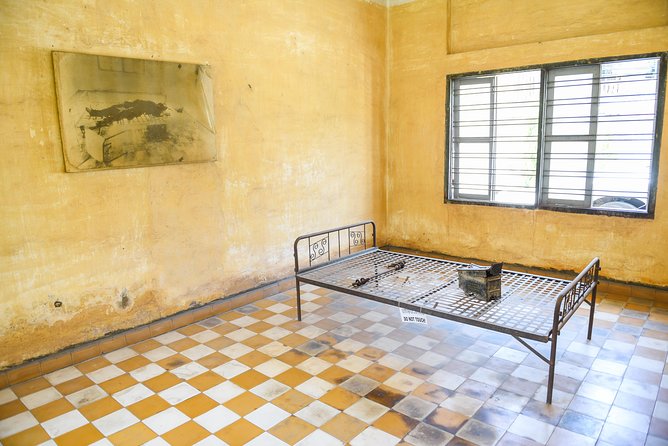
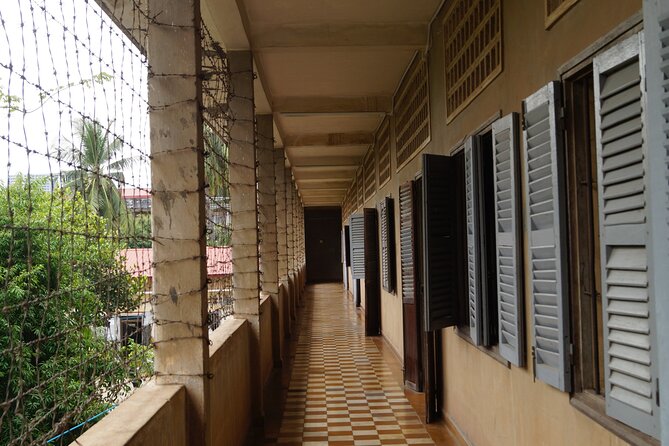
- A former high school became Prison S-21: Classroom buildings were turned into detention rooms, crude cells, and interrogation spaces.
- Choeung Ek puts the scale of the killings in view: Nearly 9,000 bodies were excavated from mass graves at this site.
- Private guiding adds human context: Guide Sony has been praised for being considerate and for sharing personal family context connected to Cambodia’s past.
- The $80.77 price covers the basics that matter: Entrance fees, donations, round-trip transport, driver, and an English-speaking guide are included.
- Dress and age rules are important: Cover your shoulders and knees, and think carefully before bringing children younger than 12.
Why this four-hour tour matters in Phnom Penh
Cambodia’s recent past is not tucked away in a distant museum. Tuol Sleng sits in Phnom Penh, in buildings that once served as a school. During the Khmer Rouge regime, the site became S-21, a detention center where prisoners were interrogated, tortured, and forced to confess to crimes they had not committed.
Many prisoners were then taken outside the city to Choeung Ek, one of the best-known killing fields. Seeing both places in one outing creates a clear sequence. At Tuol Sleng, you encounter the prison system. At Choeung Ek, you see the final stage of that system.
That connection is the reason I would choose a guided visit over simply moving from one site to the next with no explanation. The buildings and memorials are powerful on their own, but a guide can help place them in the wider story of Pol Pot and the Khmer Rouge. The goal is not to rush through a list of grim facts. It is to understand how ordinary places were turned into instruments of terror.
The experience is private, meaning only your group participates. That matters here. You can pause, ask questions, or take a quiet moment without trying to match the pace of a large group.
A few more Phnom Penh half-days to weigh up
- The Killing Field and Toul Sleng Genocide Museum (S21) Tour
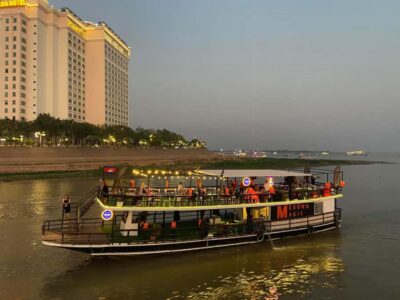
★ 5.0 · 1,977 reviews - Phnom Penh: Sunset Cruise with Unlimited Beers & BBQ Buffet
★ 4.5 · 727 reviews - Aroma Therapy Massage, Relaxation therapeutic aromatherapy oil massages.
★ 5.0 · 645 reviews
Tuol Sleng: classrooms turned into Prison S-21
Your guide and driver pick you up at your Phnom Penh hotel and take you to Tuol Sleng Genocide Museum, also known as Prison S-21. The visit is scheduled for about two hours, which gives you time to move through the buildings and absorb the exhibits without reducing the stop to a quick photo opportunity.
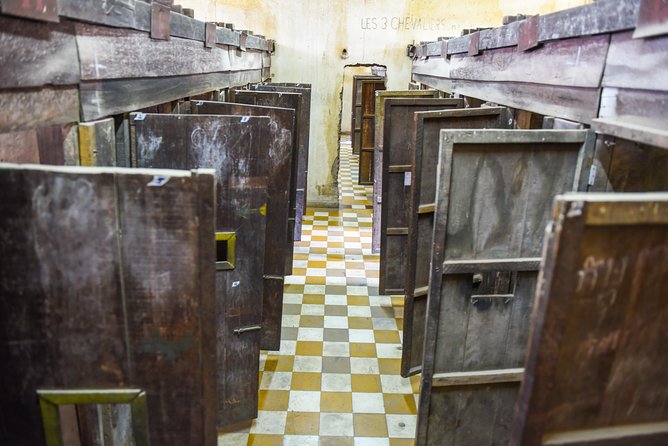
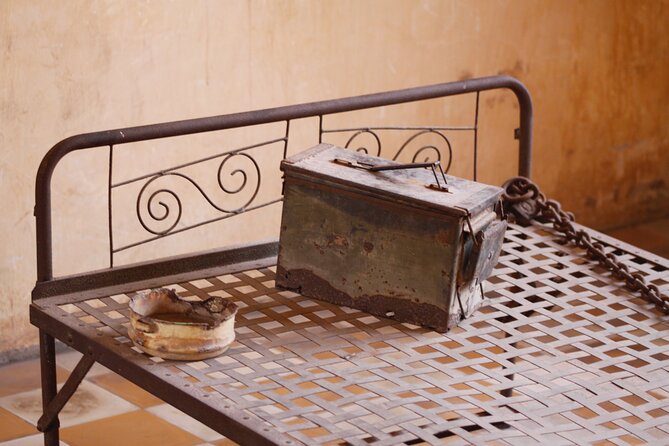
The site was formerly Tuol Svay Pre School, a high school complex. Under the Khmer Rouge, classrooms became prison rooms. You can see crude cells built inside those rooms, along with the stark spaces used for detention and interrogation.
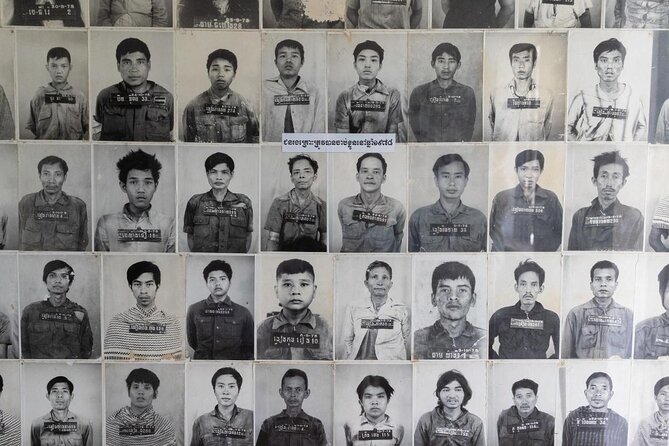
The museum displays photographs and paintings of victims. These records are especially hard to face because they show individuals rather than an anonymous crowd. The images make clear that the people held here were students, workers, parents, and neighbors caught in a violent system of suspicion and forced confessions.
You may also see torture devices and other objects connected with the prison’s operation. The presentation is direct and upsetting. There is little comfort in the rooms themselves, and that is part of what makes the visit so affecting. The former school setting creates a painful contrast with what happened there.
A guide can help you understand what you are seeing without turning the visit into a flood of dates and names. One guide named Sony has been praised for his considerate manner and for explaining the period through personal context, including the way Cambodia’s recent past affected his family. That kind of connection can make the history easier to understand, though it may also make the visit feel even more personal.
Give yourself permission to be quiet here. You do not need to photograph every room, and you do not need to force yourself to look at every display. The purpose is understanding and remembrance, not collecting proof that you were present.
The museum requires modest dress. Your shoulders should be covered, and your clothing should fall below the knees. Clothing with obscene or disrespectful images, as well as brightly colored clothing, may lead to refusal of entry. Treat the rule as part of the visit’s basic etiquette, not as a minor packing detail.
Choeung Ek: the killing fields outside the city
The second half of the tour takes you to Choeung Ek Genocidal Center, located outside Phnom Penh’s city center. The drive provides a change of setting, but not a break from the subject. This former Chinese cemetery became a killing field during the Khmer Rouge years.
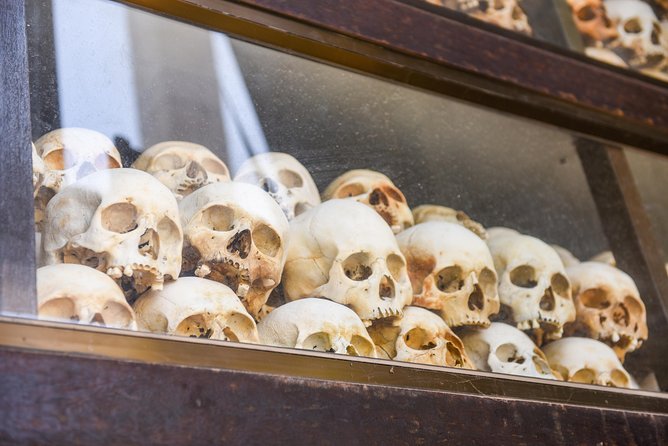
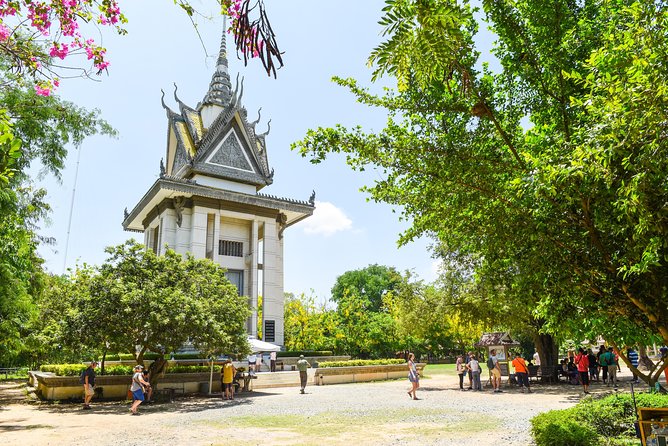
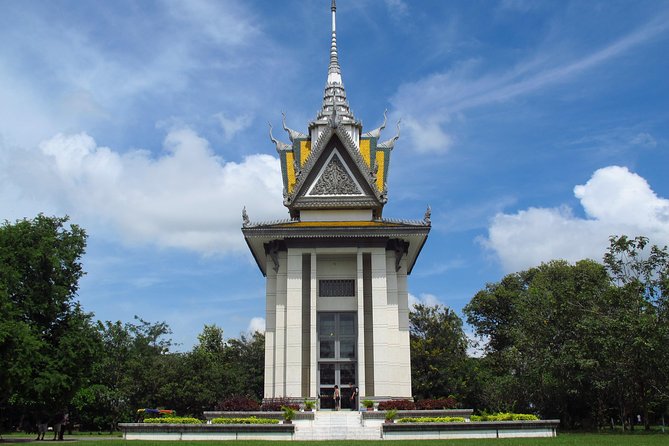
Nearly 9,000 bodies were excavated from mass graves at Choeung Ek. The site’s memorial stupa displays more than 5,000 human skulls, bones, and pieces of clothing belonging to victims. It is a stark way to show the scale of what happened.
The memorials and open ground here have a different effect from Tuol Sleng. At the prison, you stand inside rooms where people were held and interrogated. At Choeung Ek, you walk among the places where victims were brought, killed, and buried. The two sites are emotionally linked, but they do not feel the same.
Expect a sober visit. The material may be shocking and disturbing, especially when the guide explains how prisoners from detention centers around Cambodia were brought to places such as this. The purpose is not entertainment, and the site asks for restraint in your behavior and clothing.
You may find that the outdoor setting makes the experience easier to process in some ways, since you are not confined to the former prison rooms. At the same time, the memorial stupa and mass grave areas can make the reality feel very immediate. Stay attentive to the site’s tone, and allow time for reflection.
The tour description allows about two hours here. That is useful because Choeung Ek is not just a single monument to view and leave. You have time to walk around the memorial areas, listen to the historical explanation, and take in the documentation of the victims.
What a private guide adds to the experience
Both Tuol Sleng and Choeung Ek offer audio guides, so you might reasonably ask why a private guide is worth the extra cost. For this particular subject, I think the answer is context and pacing.
A guide can explain the relationship between the two sites as you move through them. You can ask about a photograph, a prison room, or a detail in the memorial rather than following a fixed recording. If the subject raises questions about Cambodia today, a guide may also help connect the past with the country you are seeing around you.
The private format gives your group control over the pace. You can spend longer at a room that needs explanation or move on when the material becomes too much. That flexibility is harder to find in a large group.
The quality of the experience depends heavily on the guide. Sony is one named guide associated with especially strong praise for his knowledge, warmth, and care. The driver is also part of the practical value, since you are not arranging transport between the city and Choeung Ek yourself.
A guide should not make the visit feel casual or overly conversational. The best approach is measured and respectful. You can expect an English-speaking guide as standard. Other languages may be requested, but availability is not guaranteed and extra charges may apply.
A completely different sort of day from the same base:
- Killing field and Toul Sleng genocide museum Tour
★ 5.0 · 610 reviews - Phnom Penh Full Day Private Tour Included All Admission Tickets
★ 5.0 · 585 reviews - Phnom Penh: Sunset Cruise with Unlimited Beer &Fruit platter
★ 4.7 · 515 reviews - Phnom Penh Silk Island Bike Tour/ E-Bike or Tuk Tuk
★ 5.0 · 495 reviews
Is $80.77 a fair price?
At $80.77 per person, this is not the cheapest way to visit the two sites. The price makes more sense when you look at what it removes from your planning.
The tour includes:
- Hotel pickup and return within Phnom Penh
- Round-trip transportation
- A professional driver
- A private English-speaking guide
- Entrance fees and donation fees for both locations
- Applicable taxes and service charges
You are paying for a half-day private arrangement rather than admission alone. That can be good value if you want door-to-door transport and a guide who can provide context at both sites. It is especially useful if you prefer not to negotiate separate transport or organize the timing yourself.
The value is less clear if you are comfortable using the audio guides and arranging your own transport. In that case, you may prefer a self-directed visit. Still, this is a subject where good explanation matters, and the personal context mentioned by visitors who had Sony as their guide suggests why some people find the private format worthwhile.
Group discounts may be available. Since only your group participates, the per-person cost can also make more sense for two or more people traveling together.
Food, drinks, shopping, optional tours, porter fees, and travel insurance are not included. Plan to eat before or after the tour, since the stated duration is about four hours and no meal is part of the package.
Timing, pickup, and practical planning
The tour operates in the morning or afternoon and lasts approximately four hours. Each major stop is planned for about two hours, though your exact pickup time should be confirmed before departure.
Pickup and return transfer apply to accommodations inside Phnom Penh. Hotels and registered tourist accommodations are the straightforward cases. If you stay in a private residence, apartment complex, or another non-registered accommodation, you may be asked to meet at a nearby hotel.
Several locations are outside the included transfer area. These include Koh Dach, Tonle Bati, Oudong, Phnom Penh International Airport, and river or cruise ferry terminals. Extra charges may apply if you need pickup or drop-off in one of those places.
Give accurate hotel information when booking. Accommodation changes made within 24 hours of departure may only be handled on request, and a no-show or unapproved last-minute change can lead to cancellation charges.
Bring a device only if you can protect it. The tour information warns that natural elements can damage electronic equipment and places responsibility for protecting cameras and phones on you. A small protective pouch or sealed bag is sensible, especially if you plan to use your phone outdoors at Choeung Ek.
The tour is described as suitable for most people, but the emotional subject is the real limitation. It is not recommended for children under 12. Older children and teenagers may still need a clear conversation beforehand about what they will see.
Dress, conduct, and emotional preparation
Dress modestly for Tuol Sleng. Cover your shoulders and wear clothing below the knees. Avoid bright clothing and shirts with obscene or disrespectful designs.
Your behavior matters just as much as your clothes. These are memorial sites connected with people who were imprisoned, tortured, and killed. Speak quietly, follow local instructions, and think before taking photographs. A phone camera can make any serious place feel like a stop on a checklist, so use it with restraint.
I would not schedule this outing immediately before a carefree pool afternoon if you know difficult history stays with you. The visit can affect the rest of your day. Leave some open time afterward rather than stacking another major activity directly on top of it.
The tour is also a useful way to place Phnom Penh in context. The city’s markets, restaurants, and riverfront may feel far removed from the prison and killing field. Learning about the Khmer Rouge era helps you understand that Cambodia’s present-day warmth and energy exist alongside a very recent national trauma.
Who should book this experience?
I would recommend this tour to anyone visiting Phnom Penh who wants a serious introduction to the Khmer Rouge period and prefers a guide-led experience. It suits first-time visitors who want both major sites handled in one half-day.
It is a particularly good fit if you value:
- Private transportation from your hotel
- A guide who can explain the connection between S-21 and Choeung Ek
- A flexible pace with only your group
- Included admission and transport
- A more personal explanation than an audio guide may provide
You may prefer to visit independently if you want to spend much longer at one site, need a different language that has not been confirmed, or are seeking a lower-cost outing. You should also think twice if you are not comfortable with graphic accounts of torture, executions, and mass graves.
This is not a tour to book because it sounds pleasant. It is one to book because you believe understanding Cambodia’s recent past is an important part of seeing the country.
Should you book the Tuol Sleng and Choeung Ek tour?
Book it if you want a well-organized, private half-day with the two key Phnom Penh sites connected to the Khmer Rouge era. The included transport and admission make the $80.77 price easier to justify, and the presence of a thoughtful guide can add meaning that an audio guide may not provide.
Do not book it casually, and do not bring children under 12. Dress respectfully, leave emotional room in your schedule, and expect a difficult visit rather than a conventional sightseeing stop.
For a first visit to Phnom Penh, I think the tour is worth considering. It gives you a clear, guided way to face an essential part of Cambodia’s story, with enough time at each site to listen, reflect, and understand.
FAQ
How long does the tour last?
The tour lasts approximately four hours. About two hours are scheduled at Tuol Sleng Genocide Museum and about two hours at Choeung Ek Genocidal Center.
What sites are included?
The tour includes Tuol Sleng Genocide Museum, the former S-21 Prison, and Choeung Ek Genocidal Center, commonly known as the Killing Fields.
Is hotel pickup included?
Yes, pickup and return transportation are included for customers staying within Phnom Penh and inside the included service area.
Is the tour private?
Yes. Only your group participates in the activity.
What kind of guide is provided?
A professional English-speaking guide is included. Other languages may be requested, subject to availability and possible supplementary charges.
Are entrance fees included?
Yes. Entrance fees and donation fees for the listed visits are included.
Is transportation included?
Yes. Transportation by car, minivan, or coach with a professional driver is included.
What should I wear to Tuol Sleng?
Wear clothing that covers your shoulders and falls below your knees. Clothing with obscene or disrespectful images and brightly colored clothing may be refused.
Is the tour suitable for young children?
The tour is not recommended for children under 12 because of the disturbing subject matter.
Can I cancel for a full refund?
You can cancel for a full refund if you cancel at least 24 hours before the experience start time. Cancellations or changes made less than 24 hours before departure are not accepted for a refund.
New around Phnom Penh
- One Day Private Guide Tours History in Phnom Penh Incl. admission★ 4.5 · 7 reviews
- ( Free eSim) Phnom Penh Historical Full Day Tour★ 5.0 · 7 reviews
- Ground Transfer/ Minivan/ Phnom Penh to Siem Reap★ 5.0 · 7 reviews
- Phnom Penh: Bike & Boat Tour / E-Bike Available★ 4.8 · 7 reviews
- Private Taxi Phnom Penh to Siem Reap or Siem Reap to Phnom Penh★ 5.0 · 8 reviews
- Cambodia 7 Days Private Tour from Angkor Temples to Coastline★ 5.0 · 8 reviews
- Head, Back and Shoulder Massage in Phnom Penh★ 4.5 · 8 reviews
- Private Half-Day Tour of Phnom Penh’s Traditional Markets★ 4.5 · 8 reviews
Phnom Penh Tours, compared.
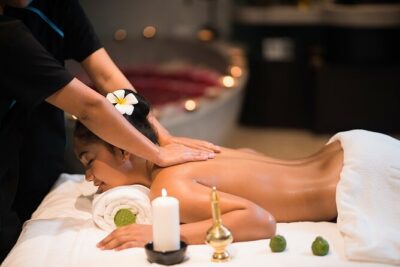
Aroma Therapy Massage, Relaxation therapeutic aromatherapy oil massages.
Read our review →
Sunset Cruise with Unlimited Beer &Fruit platter
Read our review →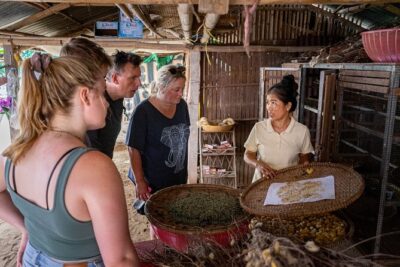
Phnom Penh Silk Island Bike Tour/ E-Bike or Tuk Tuk
Read our review →
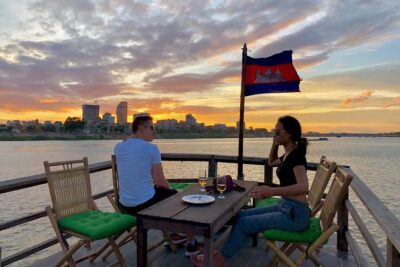
Sunset Cruise with unlimited beer & soft drinks -English speaking guide on board
Read our review →
Ultimate Phnom Penh Food Tour by Tuk Tuk: 20 Tastings and Drinks
Read our review →
Sunset & Evening Dinner Cruise With One Way Free Pick Up
Read our review →Browse the lists this tour appears in