
Reviewed · SIEM REAP TOURS
Private Sunrise & Angkor Complex by English Speaking Van Driver
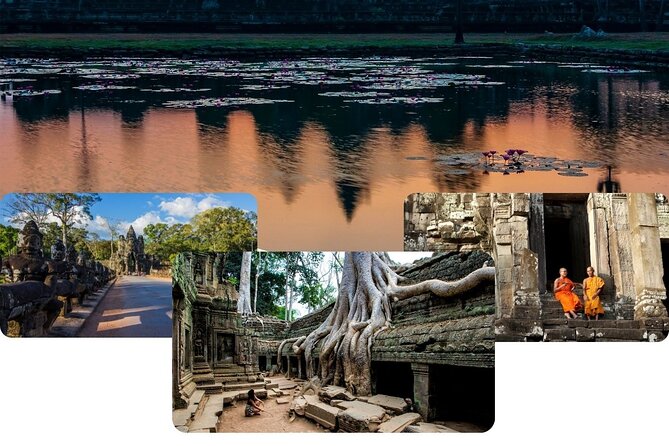
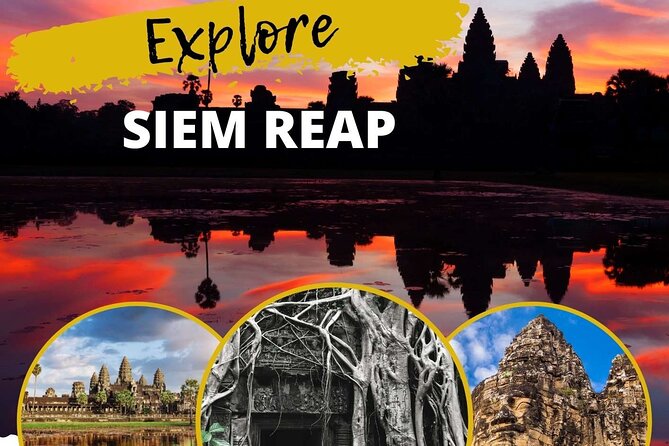
Angkor Wat at sunrise is the draw, but the day’s real strength is its wide sweep through the Angkor complex. You move from the famous towers to quieter ruins, old reservoirs, jungle-covered walls, and the carved faces of Bayon, all in a private air-conditioned van.
I like the flexible route and the practical touches: cold water, cool towels, parking, and a driver who can adjust the plan. I also like the chance to see Angkor Thom’s gates and palace area after the early start, when you still have energy for details.
The catch is ambition. This itinerary names a long list of temples for six to seven hours, and an English-speaking driver is not always the same as a temple guide. You may need to choose between seeing everything briefly and spending real time at the major sites.
Key points to know before booking
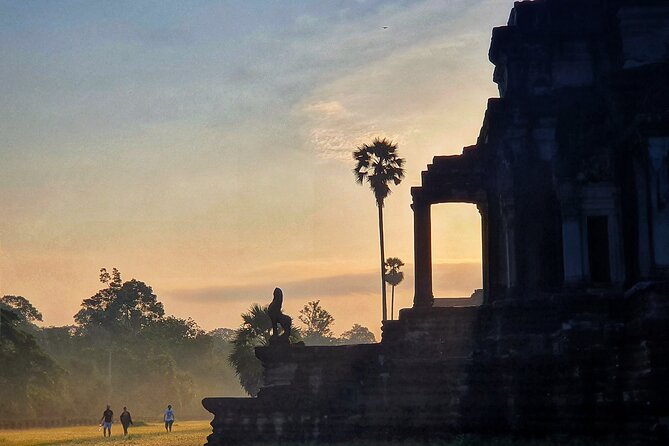
- Sunrise at Angkor Wat: Begin with the complex’s most famous morning view, weather permitting.
- A broad temple circuit: The route includes Angkor Wat, Ta Prohm, Bayon, Angkor Thom, Ta Keo, Banteay Kdei, and smaller ruins.
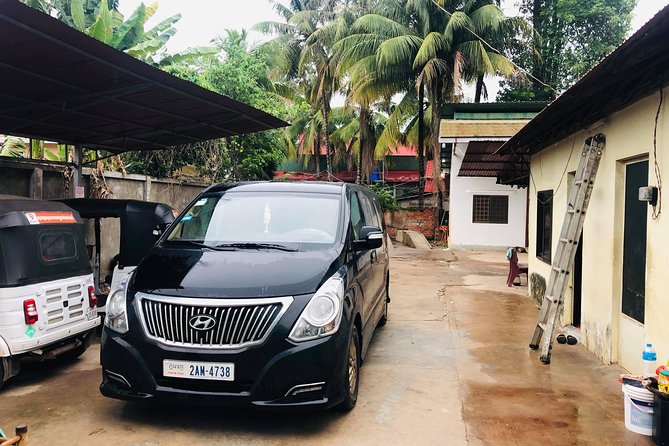
- Private nine-seat van: Only your group participates, with air conditioning and pickup in Siem Reap.
- Flexible driver: You can ask for nearby temples not listed in the standard route.
- Separate temple pass: The tour costs $35 per person, but the Angkor pass costs another $37 per person.
- Early start or later option: Sunrise is available, but you can also choose a 7 AM to 11 AM departure if you prefer more sleep.
Angkor Wat at sunrise sets the day’s mood
The tour begins before dawn, with pickup in Krong Siem Reap and a drive to Angkor Wat. The exact pickup time is not stated, so confirm it when you book, especially if your hotel is outside the central area.
Sunrise is worth choosing if you want the classic view across the reflecting pools toward Angkor Wat’s towers. The sky may be clear, cloudy, or wet. One useful detail for this start is a flashlight. The driver provides one in at least some cases, but bringing your own makes the walk easier and gives you a backup.
Do not expect sunrise to be a private moment at an entirely empty temple. Angkor Wat is the most famous stop on the route, and its sunrise view draws plenty of people. The private format helps with your own transport and timing, but it cannot remove the popularity of the site.
The advantage is that the morning light gives the temple a different feel from the heat of midday. The drawback is simple: you must get up very early, and poor weather can soften the view. If sunrise is not important to you, the later 7 AM to 11 AM option is a sensible alternative.
More drivers for the day in Siem Reap:
- Siem Reap: Dinner and Traditional Show with Hotel Transfer
★ 4.1 · 172 reviews - Angkor Wat Private Tour by Tuk-Tuk with English Speaking Driver
★ 5.0 · 142 reviews - Siem Reap: One-Way Transfer from Hotel to Airport (SAI)
★ 5.0 · 140 reviews
Krovan and Banteay Kdei add quieter temple time
After Angkor Wat, the route moves through smaller or less dominant sites, beginning with Krovan Temple and Banteay Kdei. These stops give you a break from the scale of Angkor Wat and let you see how varied the Angkor complex can be.
Krovan Temple is a useful short stop because it does not demand the same amount of time as the major monuments. You can look at its brick construction and carved details without spending an hour crossing a huge enclosure.
Banteay Kdei offers a larger setting and a more atmospheric feel. Its name is often translated as Citadel of Monks, and the temple has the kind of worn stone corridors and galleries that reward a slower walk. Still, the schedule may not allow a full architectural study. If you prefer texture, atmosphere, and photographs over a checklist, ask the driver to give Banteay Kdei enough time.
You also visit Sras Srong, an ancient reservoir across from Banteay Kdei. This is not a temple visit, so it works as a visual pause. Water, open space, and a lower-key setting can feel welcome after the enclosed stone of the morning.
Ta Prohm brings the famous jungle ruins
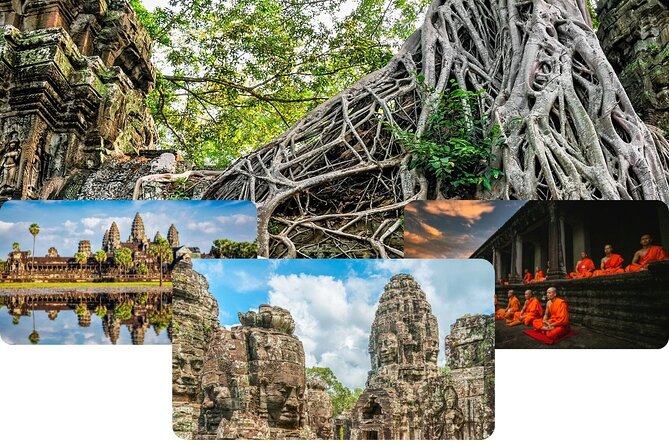
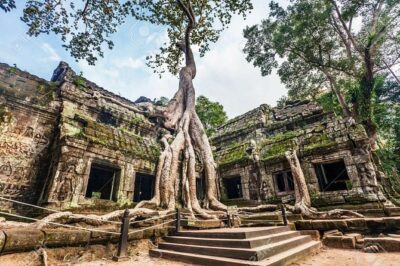
Ta Prohm is one of the essential stops and one of the places where this tour’s broad itinerary needs careful handling. The temple is known for trees growing over and around the ruins, creating the image many people associate with Angkor.
The appeal is immediate. You get stone galleries, courtyards, carved surfaces, and dramatic tree roots in one compact visit. Ta Prohm also feels different from Angkor Wat because the vegetation is part of the scene rather than simply a backdrop.
The practical issue is time and crowding. Ta Prohm is a major attraction, so the private van cannot guarantee solitude. Your driver may know useful photo locations and the best order for stops, but the quality of the historical explanation depends on who accompanies you. Names connected with the service include Lux, Nak, Ran, and Jack, all praised for clear English, temple knowledge, friendliness, and photography help. Confirm in advance if a named guide is included, or if your booking provides only the English-speaking driver.
That distinction matters. A driver can get you between the temples and help with timing. A licensed guide can explain religious symbols, construction, royal politics, and restoration in much greater depth. The supplied experience specifically promises an English-speaking driver, so do not assume a full guide service unless the operator confirms it.
East Gate and North Gate show Angkor Thom from the outside in
The route then enters Angkor Thom through its East Gate and North Gate. These gates are not filler stops. They help you understand the scale of the former royal city before you reach its central temples.
The stone faces and long approachways make the gates good places to pause for photographs. The East Gate is also known as the Gate of the Dead, while the North Gate remains one of the principal entrances. You may not spend long at each one, but seeing two gates helps you picture Angkor Thom as a planned city rather than a collection of separate ruins.
The route leaves through the South Gate later in the day. That gives you three different gate settings, though the itinerary may treat some as passing or brief photo stops. If gates and urban planning interest you, tell the driver early so the stops do not get reduced to a quick drive-by.
More early starts in Siem Reap:
- Angkor Wat Sunrise or Sunset Tour with Guide from Siem Reap
★ 5.0 · 12,109 reviews - Siem Reap: Angkor Wat: Small-Group Sunrise or Sunset Tour
★ 5.0 · 9,444 reviews - Siem Reap: Angkor Wat 2-Day Tour with Sunrise and Sunset
★ 4.9 · 4,429 reviews - Angkor Wat Sunrise tour with Small – Group and Guide tours
★ 5.0 · 3,655 reviews
Bayon’s carved faces are the dramatic centerpiece

Inside Angkor Thom, Bayon is the major appointment. Its towers carry large carved faces that look out from the temple in different directions. The monument is more enclosed and visually complex than Angkor Wat, with galleries, narrow passages, and reliefs.
I would save energy for Bayon. It rewards careful looking, but it can feel confusing without a guide who explains what you are seeing. The private format gives you a chance to ask for time here, and the drivers associated with this service have been praised for answering questions and tailoring the pace.
Bayon is also a good test of what you want from this tour. If you want a quick introduction to the major temples, the itinerary works. If you want to study the bas-reliefs or understand the symbolism, you may need to sacrifice one or two smaller stops.
The South Gate on the way out provides a final look at Angkor Thom’s monumental entrance. With Bayon, the gates, and the palace area, this section gives you the clearest picture of the old royal center.
The palace area brings smaller ruins and royal space

The itinerary continues to the Elephant Terrace, the wall carvings of the old Royal Palace area, Phimeanakas, Baphuon, and Preah Palilay. These sites are close enough to fit into one Angkor Thom visit, but they differ sharply in scale and character.
The Elephant Terrace is a long platform decorated with elephant carvings. It is best understood as part of the royal ceremonial space, not as a standalone temple. The carving gives the terrace its name and makes it an easy place to appreciate the public face of the old capital.
Phimeanakas sits inside the former Royal Palace area. It is less immediately spectacular than Angkor Wat or Bayon, but its setting helps explain how the central city functioned. Parts of the palace itself were built from perishable materials, so what remains can feel less complete. That is normal, not a sign that the stop is unimportant.
Baphuon is a large temple with a strong visual presence and a long raised approach. It can require more walking than a quick roadside stop, so comfortable shoes matter. Preah Palilay is a smaller, quieter ruin that may appeal to you if you like less polished corners of the complex.
The phrase less crowded should be treated as a goal, not a promise. The driver can arrange the order and make flexible choices, but all these temples remain within a major archaeological park.
Ta Keo and the smaller stops fill out the circuit
Ta Keo is a steep, tiered temple mountain built of sandstone. Its plain surfaces and strong geometric shape make it different from the more heavily decorated monuments. The stairs can be demanding, and the tour description does not give details about current access or how long you will climb, so ask the driver about the available route on the day.
Tammanon and Choa Say are paired temple stops near Ta Keo. Their smaller scale makes them useful additions when you want to see more than the three famous names. You can compare their layouts and details without the same long distances found at Angkor Wat or Angkor Thom.
The strength of these stops is variety. The weakness is that a long list can turn them into brief photo opportunities. I would tell the driver which two or three places matter most to you. Since the service allows requests for nearby temples not listed in the standard plan, you have some room to shape the morning.
Six to seven hours means you need to set priorities
The stated duration is about six to seven hours. That is enough for an energetic introduction to the Angkor complex, but the named itinerary is unusually full. It includes Angkor Wat, Krovan, Banteay Kdei, Sras Srong, Ta Keo, Tammanon, Choa Say, Ta Prohm, three Angkor Thom gates, Preah Palilay, the Elephant Terrace, Phimeanakas, Baphuon, Bayon, and the South Gate.
You cannot give all of those stops equal attention in one morning. You may see many places, but some will be short visits. If you want detailed commentary and time for photographs, choose your priorities before departure.
My suggested order of importance is Angkor Wat, Ta Prohm, Bayon, Angkor Thom, Banteay Kdei, and one or two smaller temples. If you have already seen the famous trio, ask for more time at the lesser-visited sites instead.
The private format is useful here. A shared group would usually require everyone to follow one pace. In this van, your group can ask to linger, skip a stop, or add a nearby temple, subject to time and the driver’s route.
A private van makes the early morning easier
The vehicle is an air-conditioned nine-seat minivan, though the tour is private and may be booked by a much smaller group. Air conditioning matters in Siem Reap, especially after walking among stone temples. It also gives you a proper place to rest between stops instead of treating every minute as sightseeing time.
Parking fees, an English-speaking driver, cool water, and cool towels are included. Those cold towels are a small but welcome feature after a temple walk, and the water helps you stay comfortable during the morning.
Pickup is offered, and the meeting point is listed as Krong Siem Reap. The tour confirms at booking, and service animals are allowed. Most people can participate, but the itinerary includes walking, uneven temple surfaces, and potentially steep stairs at places such as Ta Keo. The supplied information does not give a specific accessibility plan, so ask before booking if mobility is a concern.
The $35 price is reasonable, but the real total is $72
The listed tour price is $35 per person. The Angkor temple pass is not included and costs $37 per person, bringing the basic total to $72 each before any other personal expenses.
At $35, the transport portion is fair for a private, air-conditioned vehicle covering a large area. You are also paying for convenience, parking, bottled or chilled water, towels, and the ability to adjust the route. The value is strongest for two or more people sharing the private service, or for anyone who wants a simple vehicle plan without arranging several rides.
The tour does not include the entrance pass, and the description does not list meals or a separate licensed guide. Plan for those costs and clarify the guide arrangement. Group discounts may be available, but the exact terms are not supplied.
Named guides and the importance of confirming your booking
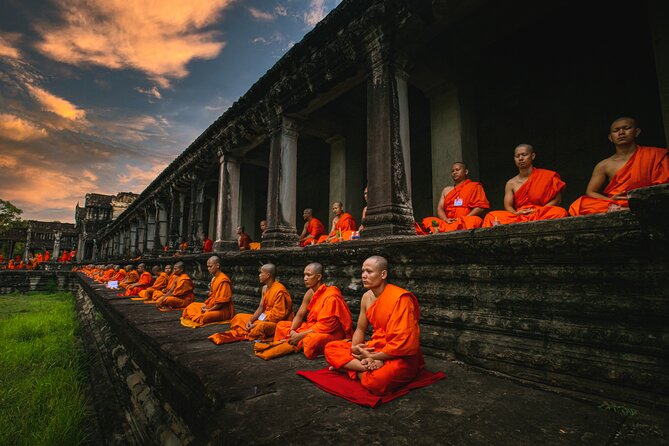
Several guides associated with this experience have been praised for different strengths. Lux is described as having excellent English, strong temple knowledge, and an entertaining style. Nak is associated with family-friendly pacing, sunrise photography, and useful explanations. Ran is noted for carrying a flashlight during the early start, while Jack is described as experienced with Angkor and Siem Reap.
These details suggest that the human side of the service can be a major strength. But the product is specifically described as a private tour with an English-speaking van driver. Before paying, ask three clear questions:
- Is the person with me a driver only, or a driver-guide?
- Can I request Lux, Nak, Ran, or Jack?
- How much time is planned at Angkor Wat, Ta Prohm, and Bayon?
That short exchange can prevent a mismatch between expecting a full cultural tour and receiving transport with basic assistance.
Who should book this Angkor sunrise tour?
I would choose this tour if you want a private vehicle, a broad first look at Angkor, and control over the pace. It suits couples, families, and small groups that value air conditioning and do not want to share a fixed group schedule.
Families may especially like the flexibility. One of the named guides is associated with taking children’s comfort into account, and the van gives you a place to recover between temples. Still, the sunrise start can be hard on young children, so the later 7 AM to 11 AM option may be more practical.
This is also a good choice for photographers who want help finding viewpoints and can communicate their priorities to the driver. A named guide connected with the service has been praised for taking photos at good locations, but confirm that photography help is part of your booking.
I would hesitate if your main goal is a slow archaeological study. The schedule is packed, and the driver may not provide the depth you want. In that case, ask for fewer temples or book a dedicated guide.
Free cancellation is available if you cancel at least 24 hours before the start time. Cancellations inside 24 hours are not refunded, and changes inside that window are not accepted.
Should you book it?
Book it if you want to cover the essential Angkor sites in one private morning and you value flexible transport more than long visits at every ruin. The $35 tour price is attractive, but remember the separate $37 temple pass and confirm whether your service includes a guide or only an English-speaking driver.
For the best day, pick your top three temples before you leave. I would choose Angkor Wat, Ta Prohm, and Bayon, then use the remaining time for Banteay Kdei, the Angkor Thom gates, or whichever smaller temple interests you most. Bring a flashlight for sunrise, wear shoes suited to uneven ground, and ask for the pace you want.
FAQ
How much does the tour cost?
The tour costs $35 per person. The Angkor temple pass costs an additional $37 per person, so the listed tour and pass total $72 per person.
How long does the experience last?
The tour lasts approximately six to seven hours. A separate later departure from 7 AM to 11 AM is also available for people who do not want the sunrise start.
Is hotel pickup included?
Pickup is offered, and the listed starting location is Krong Siem Reap, Cambodia. Confirm your exact pickup details when booking.
Is the temple entrance fee included?
No. The temple pass is not included and costs $37 per person.
Is this a private tour?
Yes. Only your group participates. Transport is provided in an air-conditioned nine-seat minivan.
What does the tour include?
The tour includes an air-conditioned vehicle, parking fees, an English-speaking driver, cool water, cool towels, and private transport. It does not include the temple pass.
New around Siem Reap
- Kulen Mountain With Ticket included Plus Banteay Srei Temple Tour★ 5.0 · 7 reviews
- 2 Days Angkor temples with Sunrise & Sunset★ 5.0 · 7 reviews
- Private Siem Reap Airport Transfer to hotel in town★ 5.0 · 7 reviews
- 1-Day private Angkor Temple Tour with Sun Rise by Tuk Tuk from Siem Reap★ 4.5 · 7 reviews
- Siem Reap: Morning Cooking Class & Market Tour★ 5.0 · 7 reviews
- Kulen Mountain, Killing Fields and War Museum Tour★ 5.0 · 7 reviews
- War Museum, Killing Field, and APOPO Hero RATs Tour★ 5.0 · 7 reviews
- Half-Day: Silk Farm, Senteur Angkor, and Satcha Workshop★ 4.6 · 7 reviews
Siem Reap Tours, compared.
Angkor Wat Sunrise or Sunset Tour with Guide from Siem Reap
Read our review →
Angkor Wat: Small-Group Sunrise or Sunset Tour
Read our review →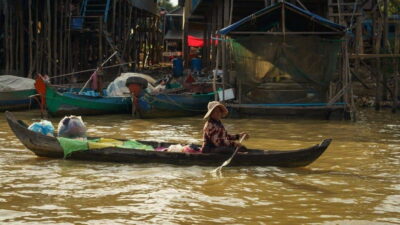
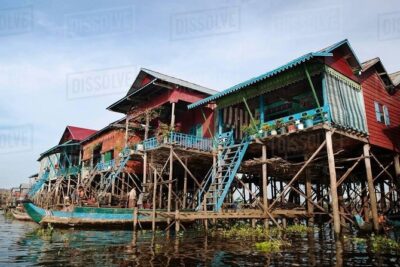
Sunset tour of Kampong Phluk stilts home village on the Tonle Sap
Read our review →
Kampong Phluk Floating Village Tour with Boat
Read our review →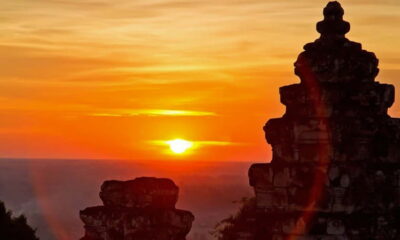
Angkor Wat Sunrise tour with Small – Group and Guide tours
Read our review →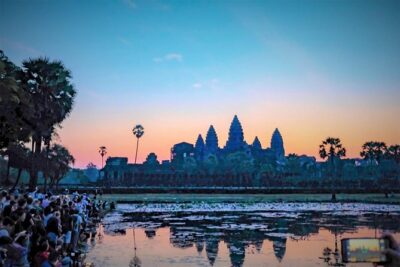
Angkor Wat Highlights and Sunrise Guided Tour from Siem Reap
Read our review →Browse the lists this tour appears in