
Reviewed · ANGKOR WAT TOURS
Private Angkor Wat Tour with English-Speaking Guide
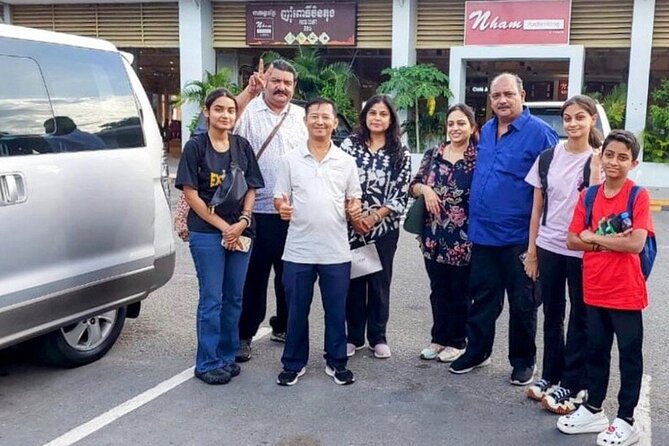
Angkor is too large and too important to treat as a quick photo stop. This private tour gives you a full morning to understand Angkor Wat, walk through the face towers of Bayon, and see tree roots gripping the stones at Ta Prohm. I like the private format and the chance to travel by car, van, or tuk-tuk, depending on your comfort and group size.
I also like the practical care built into the day: hotel pickup, drinking water, fresh towels, and a return transfer. Guides such as Ben explain why the temples were built instead of leaving you to guess. The main drawback is the pace. Nine stops in five to seven hours can feel brisk, and the $90 price does not include the $37-per-person temple pass.
Key points to know before booking
- Private service for up to three people: You have the vehicle, guide, and schedule to yourself rather than joining a large group.
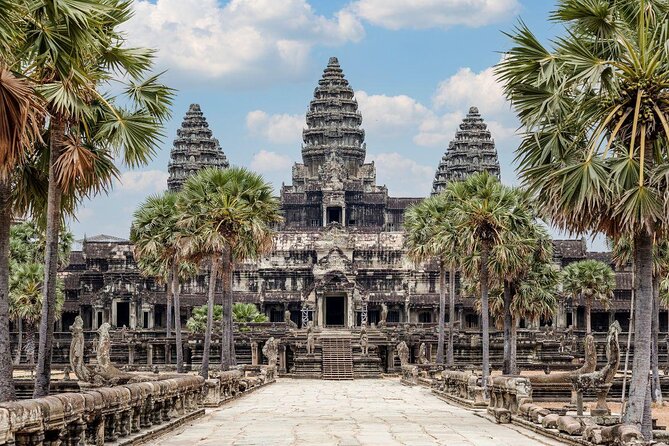
- Three major Angkor highlights: Angkor Wat, Angkor Thom with Bayon, and Ta Prohm form the core of the visit.
- Nine stops in one morning: The route also includes Banteay Kdei, Baphuon, Phimeanakas, and the Terraces of the Elephants and Leper King.
- Sunrise is optional: An early start can be requested for an additional $15 per booking.
- English-speaking guide included: A guide such as Ben can explain the symbolism and history that is easy to miss on your own.
- Temple admission costs extra: Allow $37 per person for the Angkor Wat area entrance fee.
Why a private Angkor tour makes sense
The Angkor Archaeological Park is not one temple. It is a huge group of monuments spread around the former Khmer capital, and the most rewarding stops each call for a different kind of attention.
Angkor Wat is grand and carefully balanced. Bayon is puzzling and crowded with stone faces. Ta Prohm is atmospheric, with trees and ruins locked together. A driver saves you from having to arrange transport between them, while a guide gives the stones a human and historical context.
That matters because many carvings are easy to pass without understanding. A face tower at Bayon is not simply a striking photograph. Baphuon was built before Angkor Wat and later gained a reclining Buddha. Phimeanakas sits within the old royal area of Angkor Thom. These details help the park feel like a former city, not just a row of monuments.
The private setup is especially useful for a small group of one to three people. You can spend more time at a favorite temple, move on when the heat becomes too much, or ask the guide to explain a carving in greater detail. The schedule is fairly full, but it is not locked to the rhythm of a large coach group.
More Angkor Wat Tours in Siem Reap:
- Angkor Wat Sunrise or Sunset Tour with Guide from Siem Reap
★ 5.0 · 12,109 reviews - Siem Reap: Angkor Wat: Small-Group Sunrise or Sunset Tour
★ 5.0 · 9,444 reviews - Siem Reap: Angkor Wat 2-Day Tour with Sunrise and Sunset
★ 4.9 · 4,429 reviews
Starting from Siem Reap at 7:30 or 8:00

Pickup is arranged from your accommodation, usually between 7:30 and 8:00 in the morning. You should be ready in the hotel lobby, since the day begins with the transfer into the archaeological park.
The standard start follows breakfast, making it a sensible choice if you do not want a middle-of-the-night departure. You can also request a sunrise version for an added $15 per booking. Sunrise changes the feel of Angkor Wat, but it also means an earlier start and a longer day, so choose it for the light and atmosphere rather than simply because it sounds obligatory.
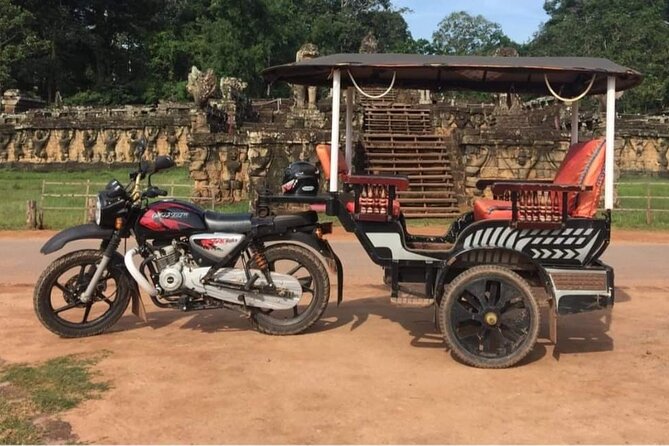
Transport may be by car, minivan, or tuk-tuk. A tuk-tuk gives you more open-air contact with the road, while a car or van offers more protection from heat and rain. The exact vehicle matters more as the day wears on, especially when you are walking across exposed courtyards and climbing temple steps.
The service includes drinking water and fresh towels. Those are small additions, but they are useful in Cambodia’s heat. Several drivers connected with the service are named in the available information, including John, Mr. Pheakdey, Kim Yong, and Elizabeth. Your assigned driver may differ, but the pattern is clear: the company handles both transport and guide coordination.
Angkor Wat, two hours of scale and detail
Angkor Wat receives two hours, which is appropriate for a first visit but not enough to inspect every gallery. It is the largest monument in the park and one of the best-preserved, with carefully ordered proportions, towers, corridors, sculptures, and reliefs.
You will likely have time to take in the overall plan, walk through the main areas, and study selected carvings with the guide. This is where an English-speaking guide proves especially useful. The building can overwhelm you with size, and it is easy to focus only on the central towers. A good explanation helps you notice the reliefs and the way the temple’s design expresses religious ideas.
The drawback is that Angkor Wat is the park’s essential stop, so it can consume the day if you want to look closely. Two hours works well for a guided introduction. If you are a serious architecture or sculpture enthusiast, you may want a second visit on another day rather than trying to force every detail into this route.
Temple admission is not included. The stated cost is $37 per person, so a group of three pays $111 for admission on top of the $90 tour price. That makes the tour most attractive when the cost is shared by two or three people.
Bayon and the South Gate of Angkor Thom
The next major section is Angkor Thom, the former Khmer imperial capital. At the South Gate, you get a sense of the city’s scale before entering the enclosure. The approach is designed to feel ceremonial, and the gate gives you a useful introduction to the city before the temples begin.
Bayon sits at the center of Angkor Thom and receives about an hour. Its towers carry large carved faces associated with the bodhisattva Avalokitesvara. The stated count is 49 towers and 196 faces, though what matters most on site is the repeated change in expression as you walk around the structure.
Bayon can be confusing without help. Levels overlap, passages turn sharply, and the faces appear from unexpected angles. Your guide can point out carvings and explain how the temple differs from Angkor Wat. This is also a good place to slow down for photographs, since the faces look different in changing light.
The itinerary allows 30 minutes at the South Gate and one hour at Bayon. That is enough for a clear first impression. It is not a leisurely archaeological study, so tell your guide if Bayon is your priority.
A few more Siem Reap half-days to weigh up
- From Siem Reap: Kampong Phluk Floating Village Tour by Boat
★ 4.9 · 6,979 reviews - Sunset tour of Kampong Phluk stilts home village on the Tonle Sap
★ 5.0 · 4,865 reviews - Siem Reap: Kampong Phluk Floating Village Tour with Boat
★ 4.9 · 3,843 reviews - Siem Reap: Full-Day Angkor Wat Guided Tour with Sunset
★ 4.9 · 3,803 reviews
Baphuon, Phimeanakas, and the old royal center
Baphuon is given 30 minutes. This Hindu temple predates Angkor Wat and has a different visual character from the later Bayon complex. Behind it is a reclining Buddha built in the 16th century, a reminder that the site changed religious use over time.
That short stop is valuable because it broadens your view of Angkor. You are not seeing one fixed civilization frozen in place. You are seeing monuments that were built, adapted, and understood differently across centuries.
Phimeanakas receives about 20 minutes. This pyramid-shaped Hindu temple dates from the 10th century and lies within the old royal enclosure of Angkor Thom. The nearby walls help you picture the palace area, even though the surviving stone temples are easier to interpret than the vanished royal buildings.
The schedule groups Phimeanakas with the ancient Royal Enclosure Wall. This is a practical choice, since the area is part of the same Angkor Thom visit. Still, these stops are brief. If you prefer long pauses, detailed photography, or quiet time among less famous ruins, this section may feel rushed.
The Elephants and Leper King terraces

The tour allows about 30 minutes to walk along the Terraces of the Elephants and the Leper King. These monuments belong to the ceremonial heart of Angkor Thom and are best understood as part of the old city rather than isolated temples.
The Elephant Terrace is especially useful for seeing how royal display and public space worked together. The name comes from its elephant carvings, while the neighboring Leper King Terrace adds another layer of sculpture and symbolism.
You will also pass Palilay within the Angkor Thom complex. This section involves walking, so wear shoes that can handle uneven stone and bring water. The guide can help connect these walls, platforms, and carvings to the wider city plan, which is harder to grasp if you visit each piece separately.
Ta Prohm, where the forest takes over
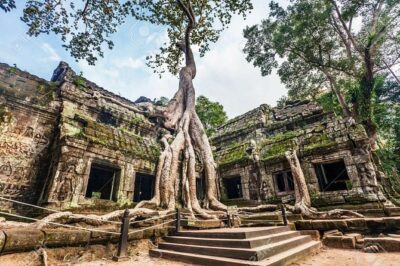
Ta Prohm receives one hour and is likely to be the most atmospheric stop after Angkor Wat. It was once home to 2,740 monks, but today the strongest impression comes from its weathered galleries, fallen stones, and trees growing through the ruins.
The temple looks much as it did when French explorer Henri Mouhot brought wider European attention to it in the 1850s. That does not mean the site was unknown locally, but the reference helps explain why Ta Prohm became such a powerful image of Angkor’s rediscovery.
I would use this hour for more than the familiar tree photographs. Look at the carved doorways, enclosed corridors, and places where roots press against the masonry. The guide can help you separate genuine architectural features from the parts that simply look dramatic in a photograph.
Ta Prohm is also one of the places where the private format helps. You can ask to pause at a carving or wait for a better photograph without holding up a bus group. Even so, one hour passes quickly, particularly if the paths are busy.
Banteay Kdei, a quieter final temple
The last listed temple is Banteay Kdei, with about 45 minutes. This Buddhist temple dates from the 12th century and shares visual qualities with Ta Prohm and Bayon.
It makes a sensible final stop because it keeps the focus on temple architecture while offering a different scale and mood. After the intensity of Angkor Wat and the face towers of Bayon, Banteay Kdei can feel like a calmer way to finish.
The tour description does not promise a meal stop, so plan to eat before departure or after returning to Siem Reap. Meals are not included. By this point, the combination of heat, walking, and stone surfaces can catch up with you, making the included water and towel more welcome than they sounded at breakfast.
What the $90 group price really covers
The advertised price is $90 per group of up to three people. That is not $90 per person, which makes a major difference. For three people, the tour portion works out to $30 each. For two people, it is $45 each. A solo visitor pays the full group rate unless the provider gives a different quote.
The price includes the vehicle, English-speaking driver, English-speaking guide, water, fresh towels, and hotel pickup and return. It does not include the $37-per-person entrance fee, meals, or the $15 sunrise supplement.
For three people, the combined tour and admission cost is $201 before meals and sunrise. For two, it is $164. For one, it is $127. The private price is strongest for a small group that values a guide and direct transport. If you are traveling alone and mainly want a ride between temples, a shared option could cost less, though it would not offer the same control over the day.
The tour is often booked about five days ahead. That is a useful planning signal, especially if you want sunrise or have only one day in Siem Reap. Confirmation is provided at booking, and the activity is private, so only your own group participates.
Guide quality and the role of the driver
The guide is not just an escort between monuments. At Angkor, interpretation changes what you see. Ben is specifically associated with the service and is described as an English-speaking guide who explains the history of the sites in detail. That kind of help is valuable at Bayon, Baphuon, and Phimeanakas, where the story is less immediately obvious than the architecture.
The drivers also receive strong praise for safety, kindness, punctuality, and communication. John is described as a careful driver who was early for pickups and used a clean, comfortable Toyota van. Mr. Pheakdey is noted for being thoughtful during a sudden downpour, even bringing an umbrella. These details matter because the driver is your link between widely spaced temples and your hotel.
Do keep the roles clear. The included driver speaks English, but the tour also includes a separate English-speaking guide. If you want detailed explanations, make sure the guide accompanies you into the temples rather than relying only on the driver’s general commentary.
Who should book this Angkor experience?
I would recommend it to a couple, family, or small group that wants the major Angkor sites in one organized day. It also suits you if this is your first visit and you want the meaning behind the carvings, not just transport and photographs.
The route works well for people who prefer a morning start after breakfast. Sunrise fans can request the earlier option, while those who dislike very early departures can keep the standard 7:30 to 8:00 pickup.
I would be more cautious if you want a slow photographic study of each temple. The schedule covers nine stops, and some receive only 20 or 30 minutes. You may be able to adjust the pace because the tour is private, but the listed route is full.
Most people can participate, and the experience is near public transportation, but the temples involve walking over uneven stone and open ground. Anyone with limited mobility should ask the provider for more detail before booking rather than assuming every area will be easy to reach.
Free cancellation is available until 24 hours before the start time. Changes or cancellations inside that window are not refunded, and poor weather may lead to a new date or a full refund.
Should you book it?
Book this tour if you want Angkor’s main monuments explained by an English-speaking guide and prefer a private vehicle over arranging several temple transfers yourself. The value is good for two or three people, especially with the reliable pickup, water, towels, and flexible private format.
Think twice if you are alone, watching every dollar, or hoping to spend most of the day at only one temple. In that case, the entrance fee and group tour cost may feel high for a route that moves quickly.
For a first look at Angkor, though, this is a sensible, well-planned day. Request sunrise if the early light matters to you, confirm the guide will join you inside the temples, and tell the team which stop deserves extra time. That small bit of planning can turn a packed morning into a much more personal visit.
FAQ
How long does the private Angkor Wat tour last?
The tour lasts approximately five to seven hours. The standard pickup is around 7:30 to 8:00 in the morning after breakfast.
Is hotel pickup included?
Yes. The driver and guide pick you up from your accommodation in Siem Reap. You should be ready in the hotel lobby.
How many people can join the private tour?
The price covers one private group of up to three people. Only your group participates in the activity.
Is the Angkor entrance fee included?
No. The stated entrance fee is $37 per person. Meals are also not included.
Can I request an Angkor Wat sunrise tour?
Yes. Sunrise can be requested for an additional $15 per booking. The standard tour begins later, around 7:30 to 8:00 in the morning.
What transportation is used?
Transport may be provided by car, minivan, or tuk-tuk. The service includes an English-speaking driver, drinking water, and fresh towels.
Which temples are visited?
The route includes Angkor Wat, Bayon Temple, Angkor Thom South Gate, Baphuon, Phimeanakas, the Terraces of the Elephants and Leper King, Ta Prohm, and Banteay Kdei.
What happens if bad weather cancels the tour?
If poor weather causes the experience to be canceled, you will be offered a different date or a full refund. For personal cancellations, you must cancel at least 24 hours before the start time for a full refund.
New around Siem Reap
- Kulen Mountain With Ticket included Plus Banteay Srei Temple Tour★ 5.0 · 7 reviews
- 2 Days Angkor temples with Sunrise & Sunset★ 5.0 · 7 reviews
- Private Siem Reap Airport Transfer to hotel in town★ 5.0 · 7 reviews
- 1-Day private Angkor Temple Tour with Sun Rise by Tuk Tuk from Siem Reap★ 4.5 · 7 reviews
- Siem Reap: Morning Cooking Class & Market Tour★ 5.0 · 7 reviews
- Kulen Mountain, Killing Fields and War Museum Tour★ 5.0 · 7 reviews
- War Museum, Killing Field, and APOPO Hero RATs Tour★ 5.0 · 7 reviews
- Half-Day: Silk Farm, Senteur Angkor, and Satcha Workshop★ 4.6 · 7 reviews
Angkor Wat Tours, compared.
Angkor Wat Sunrise or Sunset Tour with Guide from Siem Reap
Read our review →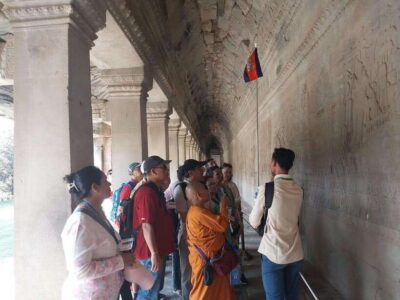
Angkor Wat: Small-Group Sunrise or Sunset Tour
Read our review →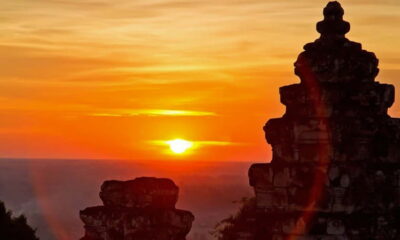
Angkor Wat Sunrise tour with Small – Group and Guide tours
Read our review →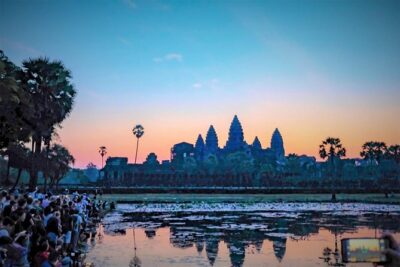
Angkor Wat Highlights and Sunrise Guided Tour from Siem Reap
Read our review →
Angkor Wat Sunset Small Group Tour with Lunch Included
Read our review →
Full-Day Angkor Wat Sunrise Private Tour with Guide from Siem Reap
Read our review →
Angkor Wat Sunrise & 3 Main Temples with Breakfast – Small Group
Read our review →Browse the lists this tour appears in