
Reviewed · SILK FARM TOURS
Phnom Penh to Silk Island By Tuk-Tuk with local Expert
Silk Island gives you a quick look at rural Cambodia without sending you far from Phnom Penh. You cross the Mekong by ferry, bump along village roads, pass farms and small markets, and visit a family workshop where silk is turned from thread into cloth. The focus is on ordinary work, not polished tourist sights.
I like the small-group feel, with a maximum of 12 people, and the way the guides turn a simple outing into a personal introduction to Cambodian life. I also like the practical touches: hotel pickup and drop-off, ferry rides, cold water, fruit, coffee, and local snacks. The main drawback is that the tour has only a few major stops, so anyone seeking a packed sightseeing schedule may find the pace too gentle.
Key points to know before you book
- Silk weaving is the main event: See how a family-run workshop handles traditional Cambodian silk production and weaving.
- The ferry ride adds real local texture: Crossing the Mekong is part of the journey, not just a transfer.
- You see more than silk: Stops can include a Buddhist temple, local market, tofu-skin production, farms, and village roads.
- Guides make a big difference: Tin Tin, Kim, Sok, Nuth, Lee, Tina, Samanag, and Lucky have led departures, with English explanations and plenty of local context.
- The price covers useful basics: At $29 per person, you get hotel transport, guide service, ferry trips, water, and snacks.
- Plan for an easygoing half-day: The tour lasts about four and a half hours and is better for cultural curiosity than for checking off many sights.
Leaving Phnom Penh by tuk-tuk
Your day begins with hotel pickup in Phnom Penh. The tuk-tuk ride takes about 30 minutes before you reach the ferry area, giving you a gradual change from city streets to quieter roads.
A tuk-tuk is the right vehicle for this trip. You feel the air, hear the traffic fade, and get a closer look at roadside life than you would through a bus window. The tradeoff is comfort. Roads can be dusty or uneven, and rain can make the ride less pleasant. One departure continued through about an hour of near-monsoon rain, so bring a light rain layer if the forecast looks uncertain.
The tour is capped at 12 people, though smaller groups or even private departures can happen. That matters here. A guide can explain what you are seeing, answer questions, and make sure the group stays together at workshops and ferry crossings.
The guide is central to the experience. English-speaking guides who have led this route include Tin Tin, Kim, Sok, Lee, Tina, Samanag, Nuth, and Lucky. You should not assume a particular person will lead your departure, but the strongest part of the tour is the guide’s ability to explain daily life in clear English and connect each stop to Cambodia’s people and traditions.
More Silk Farm Tours in Phnom Penh
- Phnom Penh Silk Island Bike Tour/ E-Bike or Tuk Tuk
★ 5.0 · 495 reviews - Silk Island Cycling Adventure & lunch with locals
★ 5.0 · 246 reviews - Phnom Penh Silk Island Vespa Tour / Tuk Tuk Available
★ 5.0 · 102 reviews
Crossing the Mekong to Silk Island
At the ferry point, you board for Silk Island. The crossing is brief, but it changes the feel of the outing. Phnom Penh is close, yet the island offers a quieter setting of narrow roads, farms, village homes, and small businesses.
The ferry is also one reason this tour feels like a real trip rather than a standard city excursion. You are not simply driven to a workshop and returned. You move across the river, then continue by tuk-tuk through countryside that most short Phnom Penh sightseeing programs skip.
The route can include several ferry crossings, depending on the day’s plan. One account described three ferry rides while visiting different parts of the island. That makes the transport itself part of the experience, though exact routing can vary.
You will see a mix of rural scenes rather than a single formal attraction. The guide may point out farming activity, local markets, Buddhist temples, and village homes. There is no promise of a major monument or grand view, and that is the point. The value lies in seeing how people work, shop, worship, and move around beyond the capital’s central districts.
A Buddhist temple and the slower side of island life
A temple stop is often part of the route. One of the visits described a Golden Temple, while other departures included a Buddhist temple without a specific name.
This is a short cultural stop, not a full temple tour. Your guide gives context, and you have time to look around before continuing. If you have already visited Phnom Penh’s best-known temples, you may find this one less visually important. Still, it helps place the surrounding villages in their religious and social setting.
The drive between stops is just as useful as the stops themselves. You pass through countryside at a speed that lets you notice small details: roadside food production, people working near their homes, market activity, and the changing road surface beneath the tuk-tuk.
Some visitors found there was a fair amount of walking between artisan and food-production stops. Most people can participate, but this is not a fully seated activity. If you use a cane or have trouble walking, tell the guide early. One guide made special efforts to help a guest with a cane take part in every stop, but the route still involves moving around workshops and village sites.
Seeing tofu skin made by hand
One of the more unusual stops is a tofu-skin workshop. This is not a familiar sightseeing stop, and it gives you a direct look at food production that depends on patient, repetitive labor.
The process involves making thin tofu skins, and you can watch the work rather than simply seeing a finished product. The stop has been especially memorable for people who had never seen tofu skin made before. It is a useful reminder that Cambodian food culture is tied to small family businesses and physical work.
The setting is practical rather than staged. Expect a working production site, not a museum exhibit. That can mean heat, smells, basic surroundings, and a process that is more interesting than pretty. Your guide helps explain what is happening, and you may get a chance to taste or receive a small local snack during the day.
The tour also includes snack breaks beyond the workshop. Depending on the route and timing, these have included fresh market fruit, rice snacks, coffee, drinks, and tofu-related food. Cold water is included. Other personal purchases, including drinks beyond what is provided, are your responsibility.
More Tuk Tuk Tours in Phnom Penh
- Ultimate Phnom Penh Food Tour by Tuk Tuk: 20 Tastings and Drinks
★ 5.0 · 409 reviews - Phnom Penh’s Culinary Underground: Local Food Tour by Tuk-tuk
★ 5.0 · 234 reviews - Phnom Penh’s Morning Market and Street Art Tour by Tuk tuk
★ 5.0 · 128 reviews - Phnom Penh Evening Foodie Vespa Tour / Tuk Tuk Available
★ 5.0 · 99 reviews
Entering a family silk-weaving workshop
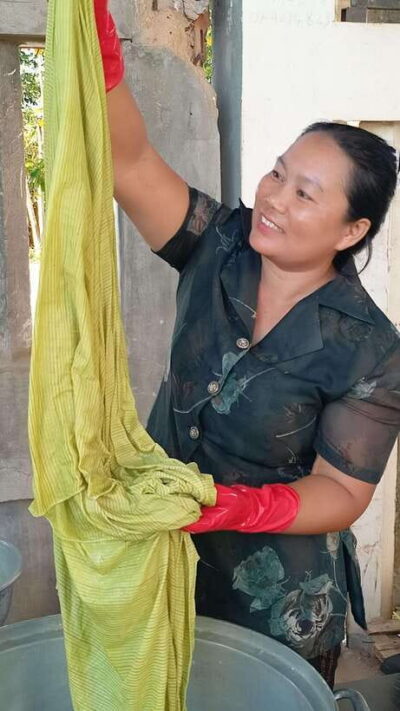
The silk house is the heart of the outing. At Heng Naysim Traditional Cambodian Weaving House, you learn how silk production and weaving have been practiced within a local family.
The visit focuses on the work itself. You can see the stages of silk production and watch weaving in progress. The family tradition has been passed down for seven generations, which gives the visit a human scale that a large commercial showroom cannot match.
Your guide translates the process into plain language and explains why silk weaving matters in Cambodia. You are not just looking at finished scarves or cloth. You are seeing how a traditional craft depends on time, skill, and careful handwork.
The workshop is also a chance to buy silk goods, though buying is optional. Prices were described as fair, and there are no required extra charges for the workshop visits. If you do purchase something, it directly connects your spending to the family business you have just visited.
Keep your expectations realistic. This is not a long technical class, and you may not operate the looms yourself. The visit is designed as an introduction to silk production and weaving. If you want a full-day craft course, this will feel brief. If you want to understand how Cambodian silk is made while meeting the people who preserve the practice, the two-hour island and workshop portion gives you enough time to look closely and ask questions.
What the guide adds to the day
This route depends heavily on good guiding. A weak guide would turn it into a series of quick photo stops. A strong guide explains why the work matters, answers questions, and helps you notice things you might otherwise miss.
Tin Tin has been praised for his English, humor, warmth, and passion for Cambodia. Kim is described as attentive and professional. Sok has been especially good at sharing personal views about Cambodian life and family while keeping the route moving smoothly. Other guides named on departures include Lee, Tina, Samanag, Nuth, and Lucky.
These details matter because the tour has only a few main stops. The guide fills the spaces between them. You spend time riding, crossing by ferry, walking through workshops, and looking at village life. The explanations give those ordinary moments meaning.
The best guides also adjust to the group. They can answer questions about silk, food, temples, and daily life, while helping guests who need a slower pace. English quality can vary from one guide to another, but the named guides have been consistently described as clear and friendly.
Is $29 a fair price?
At $29 per person, this is a good value if you want an easy way to get outside Phnom Penh. The price includes hotel pickup and drop-off, an English-speaking guide, ferry trips, cold water, and local snacks. Those inclusions remove several small costs and make the day simpler.
You are mainly paying for access and interpretation. You could probably arrange a tuk-tuk and ferry crossing independently for less, but you would need to plan the route, find the workshops, handle communication, and decide how much to pay at each stop. The guide is what makes this more than a countryside ride.
The price is slightly higher than some similar half-day outings, according to one assessment of the experience. In that case, the extra cost felt worthwhile because of the hotel transport and lack of surprise charges. You may still spend money on silk products, drinks, tips, or personal items, but those are optional.
The value is strongest for a solo visitor or couple who wants a structured half-day without arranging several separate rides. A larger group might compare the price with a private tuk-tuk hire, but the included guide and workshop visits still make this a practical choice.
Timing, pace, and comfort
The total duration is about four hours and 30 minutes. That is long enough to reach the island, see several parts of rural life, visit the temple and food workshop, spend meaningful time at the silk house, and return to Phnom Penh without giving up an entire day.
The pace is generally relaxed. One person felt the tour could have included more sights because it had only three main stops. That is a fair criticism if you prefer constant movement and a long list of attractions.
I see the limited number of stops differently, with one qualification. Three major stops allow you to stay long enough to understand the work, rather than rushing in, taking a picture, and leaving. But the tour does include riding time and some walking, so you should choose it for quality of contact, not quantity of sights.
Wear practical clothes and shoes suitable for village roads and workshop floors. Bring sun protection and a rain layer. Water is supplied, and bathrooms are available during the route, but this is still a rural outing rather than a city-based museum visit.
Who will enjoy this Silk Island trip?
You should consider booking if you want:
- A break from Phnom Penh’s central streets
- A small-group outing with hotel pickup
- A local guide who can explain Cambodian life in English
- A look at traditional silk weaving
- Food production, markets, temples, and ferry crossings in one half-day
- A gentle cultural experience rather than a demanding adventure
This trip is especially useful early in a Phnom Penh visit. It gives you context for Cambodian family life, religious practice, food production, and rural work. It also offers a change of pace after time spent around the city’s museums, markets, and traffic.
You may want something else if you want major historical sights, a full day of sightseeing, or an intensive silk-making lesson. The route is not built around famous monuments. It is built around people, work, and the countryside close to the capital.
Should you book it?
I would book this tour if your main goal is to see a quieter, more ordinary side of the Phnom Penh area with transport and explanation handled for you. The silk workshop and tofu-skin stop are unusual, concrete experiences, and the ferry ride makes the outing feel distinct from a standard city tour.
I would skip it only if you have limited time and want Phnom Penh’s major landmarks, or if you dislike tuk-tuk rides, walking, and working workshops. At $29, the combination of hotel transport, ferry trips, guide service, water, snacks, and several local stops is a sensible deal.
Free cancellation is available up to 24 hours before the start time. Changes or cancellations within 24 hours are not refunded, and the trip requires a minimum number of participants. Most people can take part, but tell the operator about mobility concerns before setting out.
FAQ
How long does the Phnom Penh to Silk Island tour last?
The experience lasts approximately four hours and 30 minutes, including hotel pickup, the tuk-tuk ride, ferry crossings, island visits, and return transport.
Is hotel pickup and drop-off included?
Yes. Pickup and drop-off at your hotel in Phnom Penh are included.
What transportation is used?
You travel from Phnom Penh by tuk-tuk and take ferry trips to reach and explore Silk Island.
What is included in the price?
The $29 price includes hotel pickup and drop-off, a professional English-speaking guide, ferry trips, cold water, and local snacks. Personal expenses are not included.
How many people can join the tour?
The tour has a maximum group size of 12 people. Smaller groups and occasional private departures may be available.
Can I cancel for a full refund?
Yes, if you cancel at least 24 hours before the experience start time. Cancellations or changes made less than 24 hours in advance are not refunded.
New around Phnom Penh
- One Day Private Guide Tours History in Phnom Penh Incl. admission★ 4.5 · 7 reviews
- ( Free eSim) Phnom Penh Historical Full Day Tour★ 5.0 · 7 reviews
- Ground Transfer/ Minivan/ Phnom Penh to Siem Reap★ 5.0 · 7 reviews
- Phnom Penh: Bike & Boat Tour / E-Bike Available★ 4.8 · 7 reviews
- Private Taxi Phnom Penh to Siem Reap or Siem Reap to Phnom Penh★ 5.0 · 8 reviews
- Cambodia 7 Days Private Tour from Angkor Temples to Coastline★ 5.0 · 8 reviews
- Head, Back and Shoulder Massage in Phnom Penh★ 4.5 · 8 reviews
- Private One Day Trip in Phnom Penh Capital City★ 5.0 · 8 reviews
Silk Farm Tours, compared.
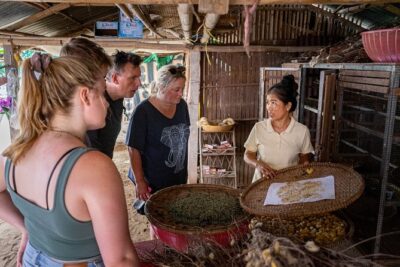
Phnom Penh Silk Island Bike Tour/ E-Bike or Tuk Tuk
Read our review →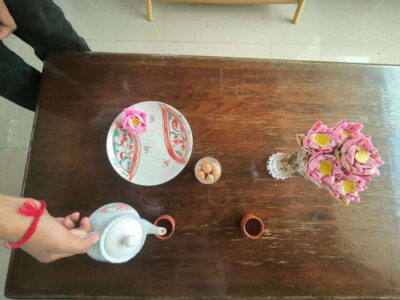
Siem Reap Lotus Silk Farm Discovery tour & Lake experience
Read our review →
Silk Island Cycling Adventure & lunch with locals
Read our review →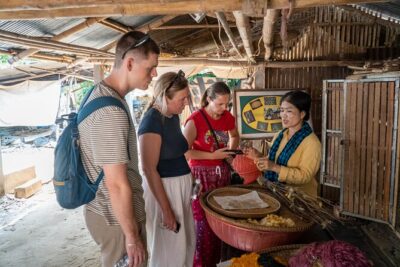
Phnom Penh Silk Island Vespa Tour / Tuk Tuk Available
Read our review →Mekong Silk Island Cruise – Unlimited Beer, Soft Drinks & Fresh Fruit Platter
Read our review →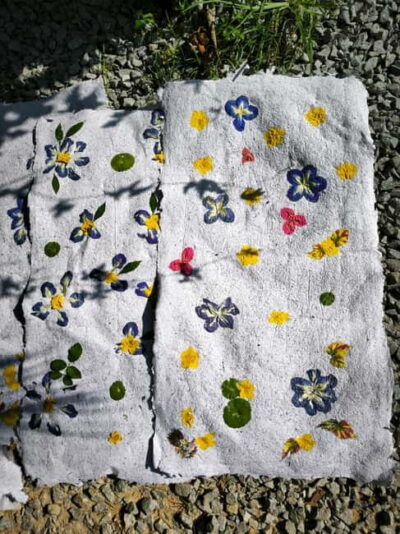
Angkor Silk Farm & Lotus Silk Farm: Siem Reap Discovery Tour
Read our review →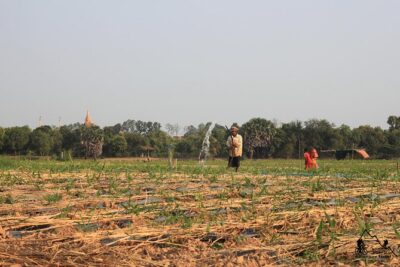
Silk Island & countryside of Phnom Penh by Tuk Tuk
Read our review →Browse the lists this tour appears in