
Reviewed · BAMBOO TRAIN TOURS
Afternoon Tour: Bamboo Train, Killing Cave &Bat Cave
The best part of this afternoon tour comes at the end, when you watch a seemingly endless ribbon of bats pour from Phnom Sampov at dusk. Before that natural spectacle, you get a sharp mix of local life and difficult history, from fruit-growing villages and rice paddies to the Killing Cave memorials.
I like the tour for two clear reasons: the tuk-tuk ride links several sights without making you arrange separate transport, and guides such as Vatthana, J, David, Sam, and J are praised for clear English, humor, and personal insight. The main drawback is that entrance fees and tickets are not included, and the bamboo train can feel touristy at its end point.
Key points to know
- The bat flight is the grand finale: You descend from Phnom Sampov around 5:30 PM and wait for the bats, with the finish time depending on when they emerge.
- The bamboo train is a simple, lively ride: You travel through rice-growing country on a bamboo platform rather than a conventional train.
- The tour gives context to Battambang’s name: The Lok Ta Dambong Kra Nhoung Shrine introduces the province’s local identity and origin story.
- The afternoon is more than a checklist: Village plantations, a suspension bridge, fruit tasting, and local snacks add human detail between the major sights.
- The history section is serious: The Killing Cave includes accounts of the Khmer Rouge prison and the deaths of men, women, and children.
- The $9 price is a transport-and-guide bargain: You still need to budget separately for all entrance fees, tickets, and personal spending.
Why the bat flight makes this seven-hour outing memorable
At the Bat Cave, you wait near the foot of Phnom Sampov as daylight fades. Then the bats begin leaving the cave in a long, flowing stream. The sight is simple but powerful: no staged show, no special effects, just thousands upon thousands of animals heading out to feed.
The timing is the key. The tour plans to come down from the hilltop at about 5:30 PM, but the exact finish depends on the bats. You should not book this outing if you need to be back at a precise minute. The payoff is worth allowing some flexibility, especially because the bat flight is the experience’s clearest highlight.
The tour lasts about seven hours and usually starts with pickup around 12:50 PM. That makes it a useful choice if your morning is already occupied or you want to avoid a very early start. Pickup and drop-off are included within Battambang town, using a tuk-tuk rather than an air-conditioned van.
That transport choice matters. A tuk-tuk leaves you open to the countryside air and gives you a closer view of roadside life, though it also offers less shelter from heat, dust, and rain than a closed vehicle. Your guide is the person who turns the ride into more than a transfer.
More Bamboo Train Tours in Battambang
- Battambang: Tuk-Tuk, Bamboo Train, Killing/Bat Caves, Sunset
★ 4.9 · 1,436 reviews - Afternoon tour by tuk tuk to bamboo train,bat cave,killing cave,countryside.
★ 5.0 · 344 reviews - Battambang: Bamboo Train, Bat Cave, Killing Cave by Tuk Tuk
★ 5.0 · 182 reviews
Starting at Lok Ta Dambong Kra Nhoung Shrine
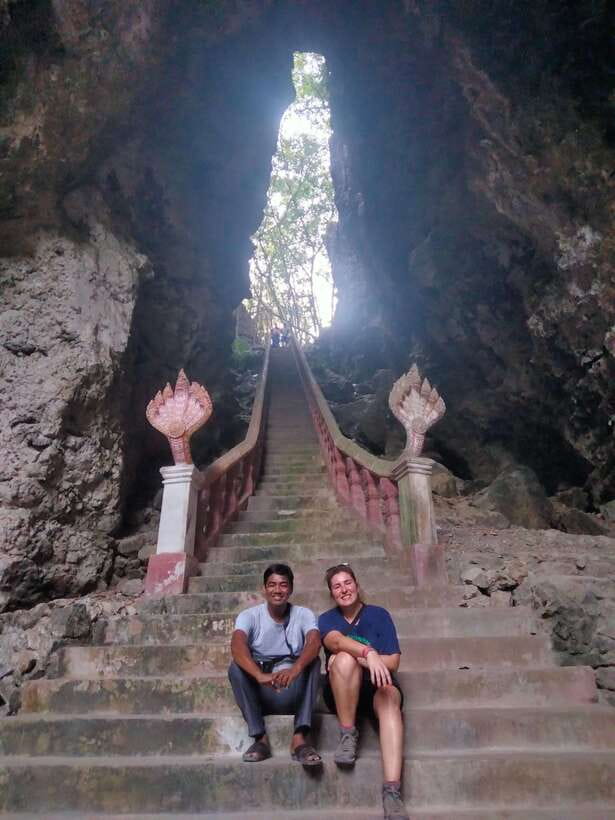
The first stop is Lok Ta Dambong Kra Nhoung Shrine, known here as Battambang’s symbolic statue. You spend about 15 minutes learning how Battambang got its name and why this figure matters to the province.
It is a short stop, but a useful one. Instead of beginning with a ride and a string of unexplained sights, you get a piece of local orientation. The name Battambang is tied to a traditional story about a broken or lost staff, and the shrine gives the guide a natural place to explain the connection.
This is where the quality of the guide matters most. Vatthana is repeatedly praised for making local history clear and personal, while J is described as adding humor and personal experiences to his explanations. David and Sam are also noted for strong English and clear storytelling. Guide assignments can vary, so you should treat those names as examples rather than a guarantee.
Fruit plantations and the suspension bridge
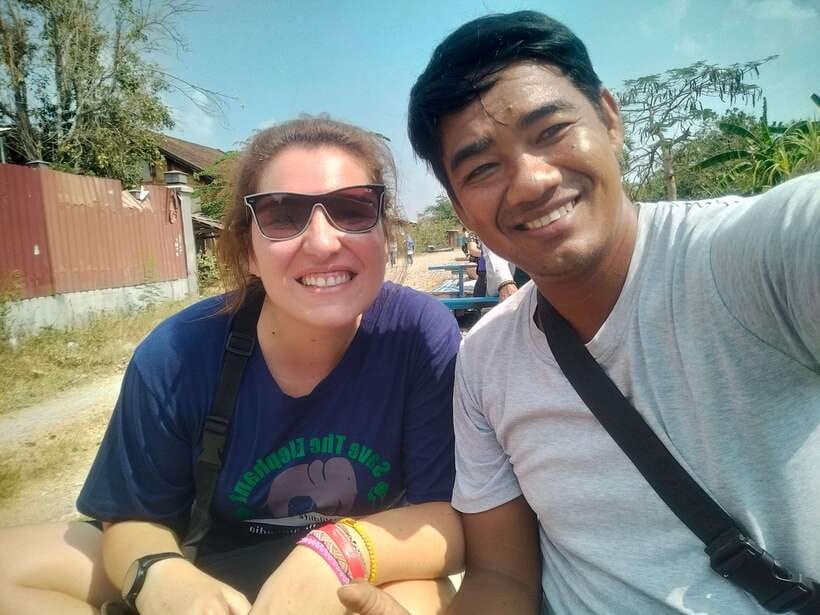
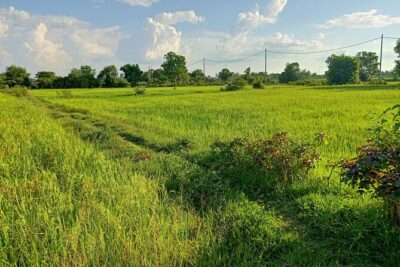
After the shrine, the tuk-tuk heads through villages along the river. You may see pomelo, lime, guava, and sugar cane plantations, with the chance to taste some local fruit. This section gives you a look at how people use the land around Battambang, a welcome change from rushing straight between famous stops.
Fruit tasting is not the main event, and the exact selection will depend on what is available that day. Still, it is one of the tour’s most appealing details. You get to connect the scenery with ordinary work and food instead of viewing the countryside as a passing backdrop.
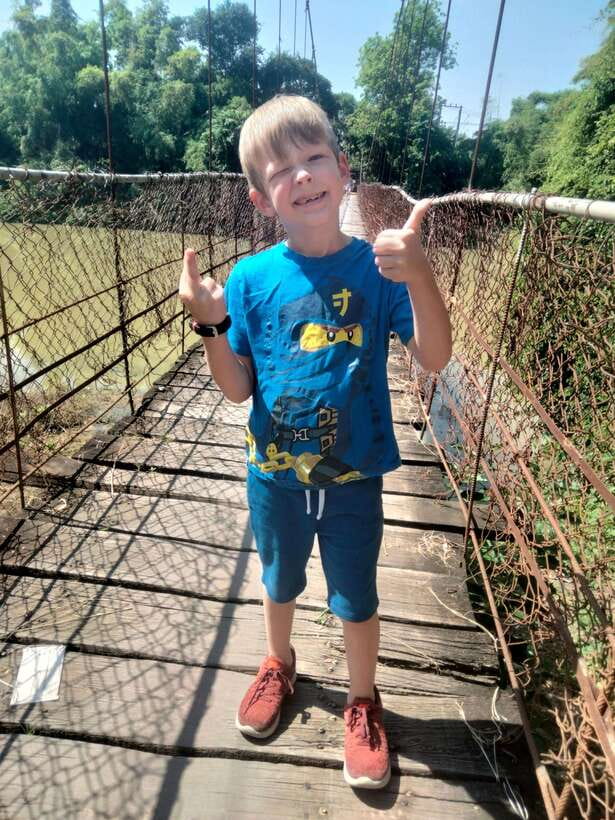
The route also includes a suspension bridge, with about 20 minutes for walking and sightseeing. It is a modest stop, but it breaks up the tuk-tuk ride and gives you a chance to look at the village setting from another angle. If you enjoy tours that include small, unscripted details, this part may be more rewarding than another monument.
The pace is reported to be relaxed, with enough time at stops and some flexibility around the group. One guide even adjusted the schedule so a group could eat lunch before setting out. That suggests the outing is not run as a rigid race, though you should still allow the full seven hours.
Riding the Battambang Bamboo Train
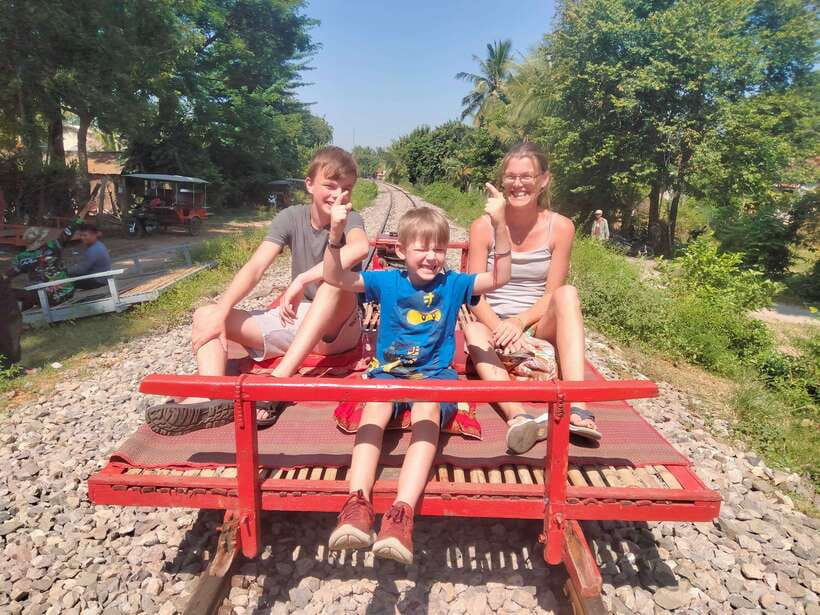
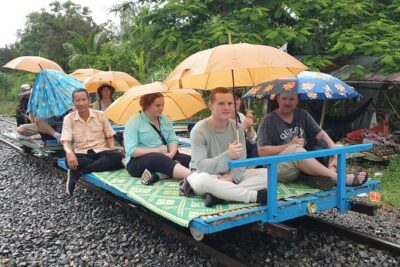
The bamboo train is the tour’s most famous hands-on activity. You sit on a narrow bamboo platform fitted with wheels and travel along the track through the rice-growing countryside. The trip lasts about an hour and a half, including sightseeing and time around the train area.
Battambang is often called Cambodia’s rice barn because it is the country’s leading rice-producing province. The train ride lets you see that agricultural setting directly, with green paddies, small roadside activity, and open country along the route.
The train is memorable partly because of its simplicity. When another platform approaches on the single track, one train is taken apart and moved aside so the other can pass. It is an odd, practical bit of railway theater, and it gives the ride its character.
Keep your expectations measured. The ride is not a luxury rail journey, and the end of the line can feel commercial. Andrew enjoyed the experience but found souvenir sellers there a little pushy. Rico was less impressed by the bamboo train itself, while still enjoying the rest of the day. That is a fair warning: some people love the novelty, while others see it as a brief tourist attraction with a pleasant countryside ride attached.
I would book it for the setting and the local transport story, not for comfort or polished presentation. If you dislike bumpy rides or sales pressure, this may be the least appealing part of the afternoon. If you enjoy unusual ways to see rural areas, it earns its place.
More Cave Tours in Battambang
- Battambang Tuk Tuk tour: Bambootrain, Killing & Bat Caves,Sunset
★ 5.0 · 799 reviews - Full Day tour .City tour.Countryside.Bamboo Train.Secret Bat Cave
★ 5.0 · 178 reviews - Battambang: Bamboo Train, Bat Cave and Killing Cave Tour
★ 4.9 · 58 reviews - Afternoon Tour BambooTrain & Bat Cave
★ 5.0 · 57 reviews
Crossing the countryside to Phnom Sampov
After the train, you travel for roughly 40 minutes through the countryside toward Phnom Sampov, also written Phnom Sampeau or Phnom Sampow. This longer transfer is part of the experience. It connects the rice-growing plain with the hilltop sites and gives the guide more time to explain Cambodian life and the area’s past.
The afternoon schedule allows about three hours at Phnom Sampov, including walking, hiking, sightseeing, and sunset views. That is a substantial portion of the tour, so bring the right attitude and footwear. The visit is not limited to stepping out of the tuk-tuk for a photo.
The hill has religious and historical sites, and one booking even included a short visit to the Phnom Sampow pagoda. That extra stop is not clearly promised every time, so consider it a possible addition rather than a fixed part of the plan.
Your guide may offer a choice between walking and riding for some sections. Maggie appreciated having options near the caves, while Natalia described a guide who walked with her all the way to the Killing Cave. That kind of support is useful because the hilltop portion can be the most physically demanding part of the day.
Facing the Killing Cave and Khmer Rouge history
The Killing Cave is not a light sightseeing stop. The visit includes the former Khmer Rouge prison and accounts connected with the deaths of men, women, and children. The tour specifically refers to a baby killing cave and a women’s killing cave, making clear that the site deals with several forms of violence from Cambodia’s Khmer Rouge period.
You should expect a serious explanation rather than a quick photo stop. The guide describes how the caves relate to the regime and to the people who were imprisoned and killed there. The site asks for respect, quiet attention, and enough time to process what you are seeing.
This is one of the strongest reasons to choose a guided visit. The physical cave alone cannot explain what happened there. A good guide can place the memorials and cave spaces within Cambodia’s recent past, while allowing you to take in the setting at your own pace.
The tour description uses a 30-minute estimate for the Killing Cave visit, but the larger Phnom Sampov section lasts much longer. That means the cave is one part of a broader hill visit rather than the entire stop. You may walk, hike, see other viewpoints, and wait for sunset before heading down.
If you prefer an entirely cheerful afternoon, this tour is not the right fit. The history is painful, but it is also essential to understanding Cambodia. The mix of enjoyment and remembrance is handled through the day’s structure: rural life and the train first, the caves and their history later, then the bats as a quiet natural ending.
Waiting at Bat Cave Phnom Sampov
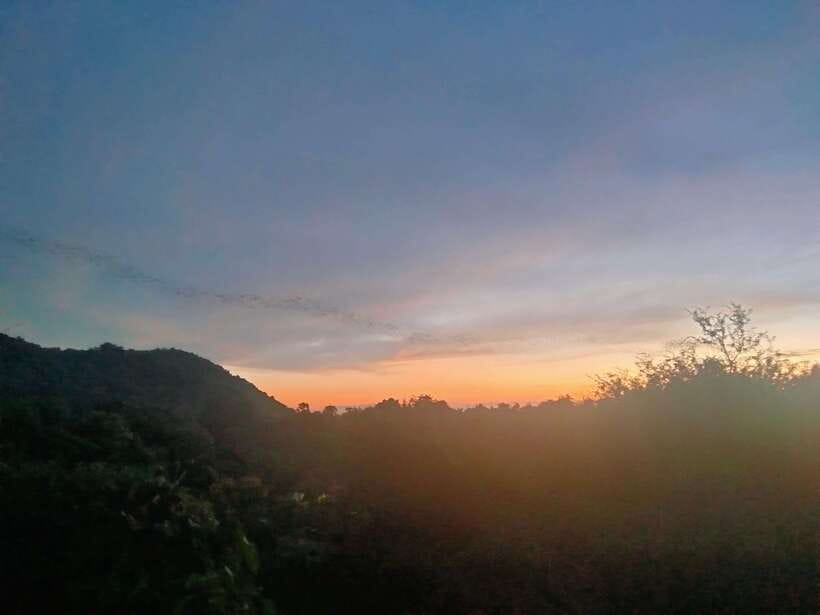
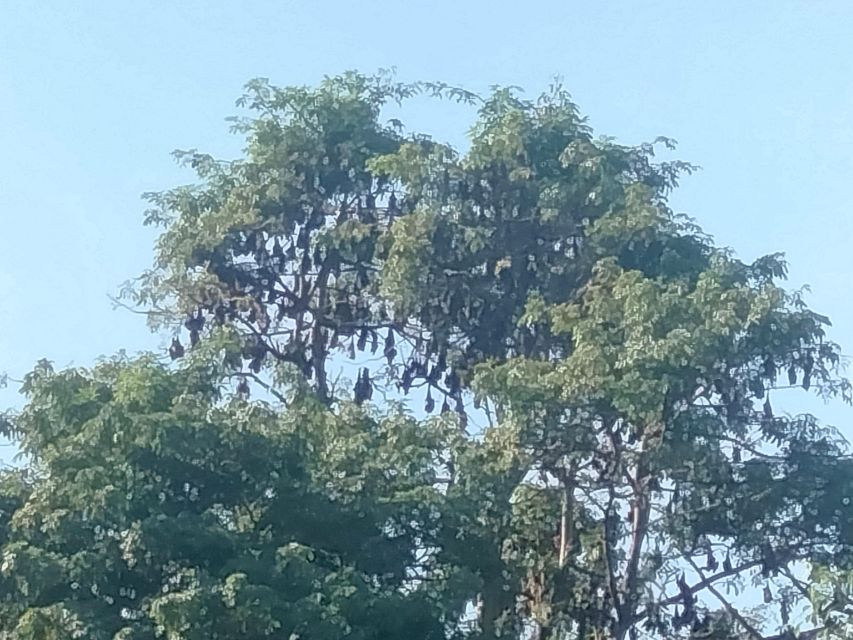
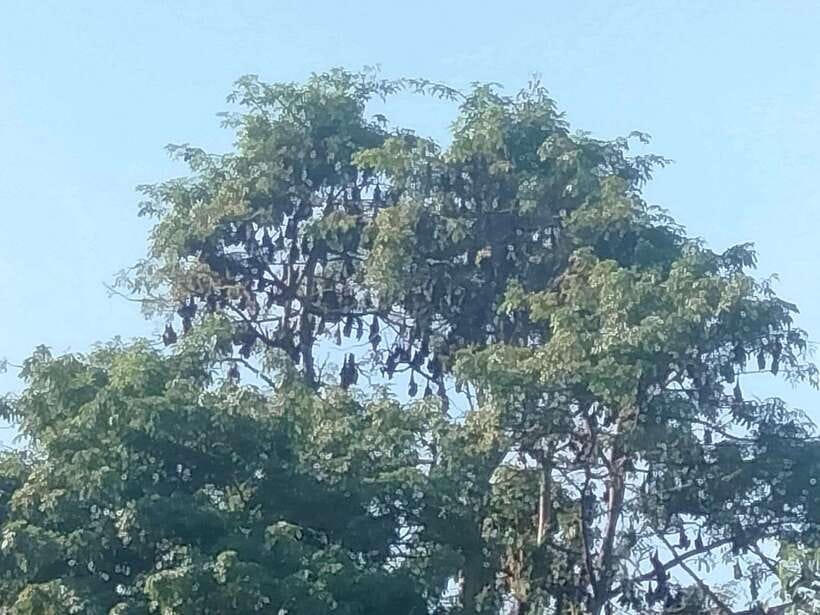
The final stop is Bat Cave Phnom Sampov. After the hilltop visit, you come down and wait for the bats to leave at dusk. The planned viewing time is about 45 minutes, but the tour can finish later if the flight begins late.
The scale of the sight is the main draw. The activity information describes as many as five million bats flying out of the cave, while the practical point is simpler: you see a huge number of bats leaving together in a steady stream. It is an especially good ending because it requires patience. You are not rushing from one attraction to the next.
Bring water and protect yourself from the afternoon heat. Several guides provide bottled water, which is a thoughtful touch, but personal expenses are not included, so it is sensible to carry some cash for anything else you want to buy.
This is also the stop that makes the tour timing less predictable. If you have a bus, dinner reservation, or onward connection, leave room after the advertised seven hours. The tour’s own timing depends on the animals, not just the driver.
What the $9 price really covers
At $9 per person, this is an unusually low-cost way to combine several Battambang sights. You receive hotel pickup and drop-off around town plus a tuk-tuk driver guide who speaks English. For a visitor without local transport, that removes a great deal of planning.
The value is strongest if you want variety. Booking each element separately would mean arranging transport to the shrine, villages, bamboo train, Phnom Sampov, the Killing Cave, and the Bat Cave. Here, one afternoon connects them in a sensible order.
The price does not cover entrance fees, train tickets, or personal spending. You need to ask about the current total before setting out because the advertised $9 is not the complete cost of every activity. Still, even with those extras, the included transport and guiding make the base price attractive.
The service sounds particularly personal when the booking is for a small party. Several people describe what felt like a private tour, and guides are praised for adjusting the pace, answering questions, and adding small stops. The exact group size is not stated, so do not assume every departure will be private.
Who should book this Battambang afternoon tour
I would recommend this outing if you want to see Battambang beyond the city center in one organized afternoon. It suits first-time visitors who want the main sights, as well as returning visitors who prefer local villages, food, and countryside over a purely historical tour.
It is also a good match for you if you value a guide’s explanation as much as the attractions themselves. Vatthana receives especially strong praise for his driving, humor, care, and understanding of local history and daily life. J, David, and Sam are also named as capable guides. The individual guide can shape the day, so clear communication about your interests is worthwhile.
You should think twice if you want a polished, air-conditioned experience, a completely private schedule, or a guaranteed return time. The tuk-tuk is open, the bamboo train is basic, entrance costs are extra, and the bat viewing may run beyond the planned finish.
Cancellation is free up to 24 hours before the activity, and you can reserve while paying later. The stated pickup service covers Battambang town, so confirm your address if you are staying outside that area.
Should you book it?
Book this tour if you want a lot of Battambang in one afternoon, with rural scenery, an unusual train ride, difficult Cambodian history, and a memorable wildlife sight at the end. The $9 base price offers strong value for transport and an English-speaking guide, especially if you are not hiring a tuk-tuk separately.
Go in with realistic expectations. The bamboo train can feel commercial, the hill section includes walking, and the Killing Cave is emotionally heavy. But the combination is unusually varied, and the bat flight gives the day a finish you cannot reproduce with a city-only itinerary.
FAQ
What time does the tour start?
Pickup is planned for around 12:50 PM. Starting times should be confirmed when booking, as availability can vary.
How long does the tour last?
The stated duration is seven hours. The final timing can change because the tour waits for the bats to fly out of the cave.
Is hotel pickup included?
Yes. Pickup and drop-off are included for locations around Battambang town.
What language does the guide speak?
The live guide language is English.
Are entrance fees and bamboo train tickets included?
No. Entrance fees, tickets, and personal expenses are not included in the $9 price.
What places does the tour visit?
The route includes Lok Ta Dambong Kra Nhoung Shrine, a suspension bridge, the Battambang Bamboo Train, Phnom Sampov, the Killing Cave, and the Bat Cave.
Can I cancel the booking?
Yes. You can cancel up to 24 hours in advance for a full refund. You can also reserve now and pay later.
More train rides around Battambang
- AfternoonTour.Bamboo train.killing cave with Secret bat cave
★ 5.0 · 41 reviews - Full Day-Tour: Handicraft, Bamboo train, Killing cave. Bat cave
★ 5.0 · 29 reviews - Full day tour by bicycle & tuk tuk,bamboo train,bat cave,villages
★ 5.0 · 27 reviews - Afternoon tour to Original Bamboo train. Bat cave. Killing cave
★ 5.0 · 25 reviews
New around Battambang
- Half day morning bicycle tour to Explore local livelihood and test local snacks★ 5.0 · 9 reviews
- Handicraft tour/rice paper,/rice wine/bat cave Sun Set★ 4.6 · 10 reviews
- Private Full Day Tuk Tuk Tour in Battambang★ 5.0 · 12 reviews
- Bamboo train. Phnom Sampove cave. Bat cave and Banan Temple★ 4.9 · 12 reviews
- Morning Tuk tuk: City, Handicrafts, Killing field, Temples★ 4.9 · 13 reviews
- Explore the Village &Countryside By Bicycle-Half Day Morning★ 4.8 · 13 reviews
- Full-day: Wat Banan. Old bamboo train. Bat Cave. Killing cave★ 5.0 · 13 reviews
- Full/Half Day Tuk TuK: Handicrafts Bambootrain Killing&Bat Caves★ 5.0 · 14 reviews
Bamboo Train Tours, compared.
Tuk-Tuk, Bamboo Train, Killing/Bat Caves, Sunset
Read our review →
Afternoon tour by tuk tuk to bamboo train,bat cave,killing cave,countryside.
Read our review →
Full Day tour .City tour.Countryside.Bamboo Train.Secret Bat Cave
Read our review →
Battambang Full Day Tour from Siem Reap – Bamboo Train, Killing Cave & Sunset
Read our review →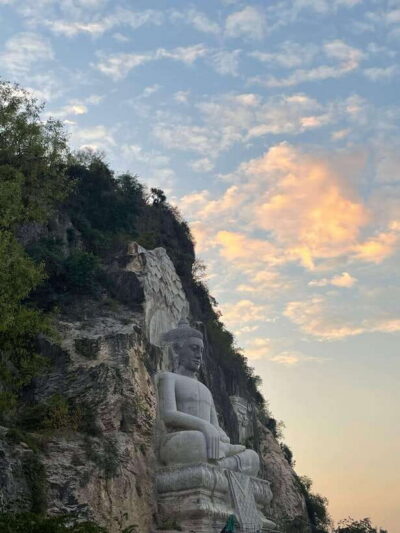
Full Day From Siem Reap – Bamboo Train, Killing Cave & Sunset
Read our review →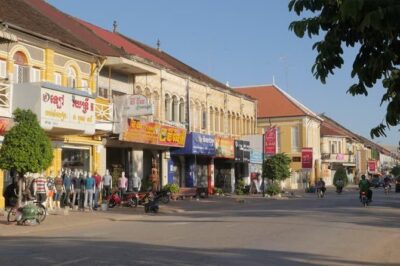
Battambang Day Trip from Siem Reap-Bamboo Train, Bats Cave
Read our review →Browse the lists this tour appears in