Reviewed · SIEM REAP TOURS
Highlights & Hidden Gems With Locals: Best of Siem Reap Private Tour
Siem Reap is more than a gateway to Angkor Wat. This three-hour private walk takes you through markets, Buddhist temples, a monastery, the Royal Residence, and the evening energy of Pub Street. You get a quick look at how the city works between the famous temple visits.
I like the way the route mixes major landmarks with ordinary places, including a local drink shop, coffee house, school, and craft stop. I also like having one guide for your own group, since guides such as Long, Ly Chenda, Nak, Jaimie, and Aaron have been praised for clear explanations, patience, and personal stories. The main drawback is pace: nine stops in three hours means short visits, and the advertised tasting should be confirmed with your guide.
Key points to know
- Nine stops in three hours: This is a fast city orientation, not a slow study of each temple.
- Private guiding: Only your group and your local guide participate, giving you room for questions.
- Local life beyond Angkor: Markets, a school, a traditional coffee house, and temples show everyday Siem Reap.
- One tasting included: A local drink or snack is part of the experience, but other food and beverages cost extra.
- Useful first-day tour: The route helps you understand the city before spending longer days at Angkor.
- Simple meeting plan: You meet on Pokambor Avenue, and hotel pickup and drop-off are not included.
A quick way to meet Siem Reap beyond Angkor
I see this tour as a city introduction rather than a rival to an Angkor temple day. It gives you a set of landmarks and stories, but its real value is the connection between them: the market beside the river, the shrines where residents pray, the monasteries where monks live, and the streets that fill with food and drink after sunset.
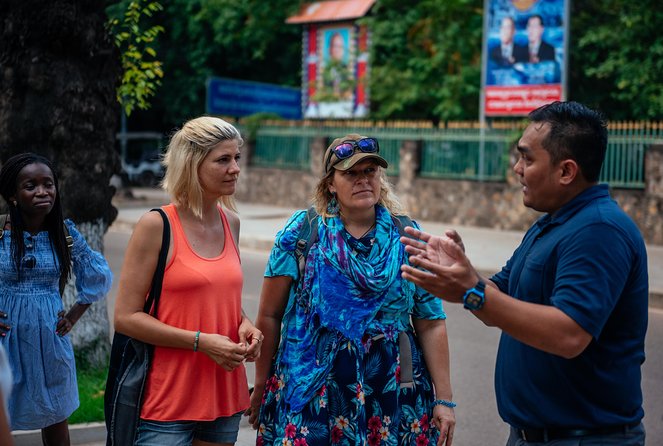
The experience is private, so you are not tied to a large group’s questions or walking speed. That matters in a city where a small shrine or local custom can prompt the best question of the day. The guides have been praised for speaking good English, explaining clearly, answering patiently, and adjusting when rain arrives.
There is a practical trade-off. The route covers nine places in about 180 minutes, with listed visits ranging from 15 to 30 minutes. You will see and hear a lot, but you should not expect a long meditation at every temple, an extended museum visit, or a full meal.
A few more Siem Reap half-days to weigh up
- Angkor Wat Sunrise or Sunset Tour with Guide from Siem Reap
★ 5.0 · 12,109 reviews - Siem Reap: Angkor Wat: Small-Group Sunrise or Sunset Tour
★ 5.0 · 9,444 reviews - From Siem Reap: Kampong Phluk Floating Village Tour by Boat
★ 4.9 · 6,979 reviews
Starting at the Old Market and Pokambor Avenue
The meeting point is on Pokambor Avenue, near the river and the Old Market area. The experience begins around Bodia Spa Pub Street, followed by a walk around the market for about 30 minutes.
This is a sensible opening. The Old Market gives you an immediate sense of Siem Reap’s commercial life, with food, goods, smells, and street activity close together. Your guide can help explain what you are seeing rather than leaving you to guess the difference between a tourist-facing shop and a place used by local residents.
The route is primarily a walking experience. The information calls for a moderate level of physical fitness, so wear comfortable shoes and expect heat, uneven walking conditions, and time on your feet. No hotel pickup or drop-off is included, even though one past arrangement involved a tuk-tuk meeting a visitor at a hotel. Plan on making your own way to Pokambor Avenue unless your guide separately confirms another arrangement.
Wat Preah Prom Rath and the life of a monk
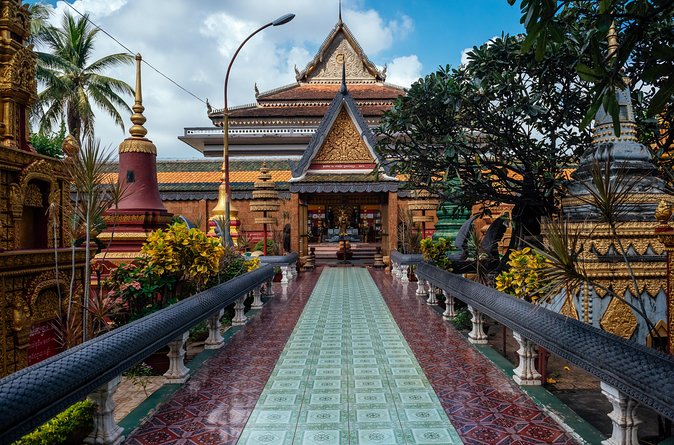
Wat Preah Prom Rath is the first major temple visit, with about 20 minutes set aside for the complex. The appeal here is not simply architecture. The guide explains Buddhist practice and gives you a window into monastic life, including what life as a monk can involve.
This stop works best if you arrive with questions. You might ask about prayer, the role of monks, or how the temple fits into daily life in Siem Reap. The guide’s presence is important because a short visit on your own could become little more than a few photographs.
If you have already spent several days visiting Buddhist temples elsewhere in Southeast Asia, this part may feel familiar. One person found the Buddha stories less exciting because they came from a Buddhist country. That is a fair warning: the stop offers context more than spectacle.
Praying for luck at Preah Ang Chek Preah Ang Chom
The 15-minute visit to Preah Ang Chek Preah Ang Chom Temple introduces one of the city’s most sacred local shrines. People come here to pray for happiness and luck, which gives the stop a more personal feel than a monument viewed only for its design.
I like this inclusion because it shifts attention from grand royal and religious buildings to a place with an active purpose. You are not just hearing what the shrine represents in the past. You are learning how local belief continues in the present.
The short timing keeps the visit focused. You should listen for the explanation of the shrine, observe respectfully, and avoid treating worship as a performance. If your interest is mainly in large buildings and long historical narratives, this may be a brief stop rather than a highlight.
A completely different sort of day from the same base:
- Sunset tour of Kampong Phluk stilts home village on the Tonle Sap
★ 5.0 · 4,865 reviews - Siem Reap: Angkor Wat 2-Day Tour with Sunrise and Sunset
★ 4.9 · 4,429 reviews - Siem Reap: Kampong Phluk Floating Village Tour with Boat
★ 4.9 · 3,843 reviews - Siem Reap: Full-Day Angkor Wat Guided Tour with Sunset
★ 4.9 · 3,803 reviews
Passing the Angkor National Museum
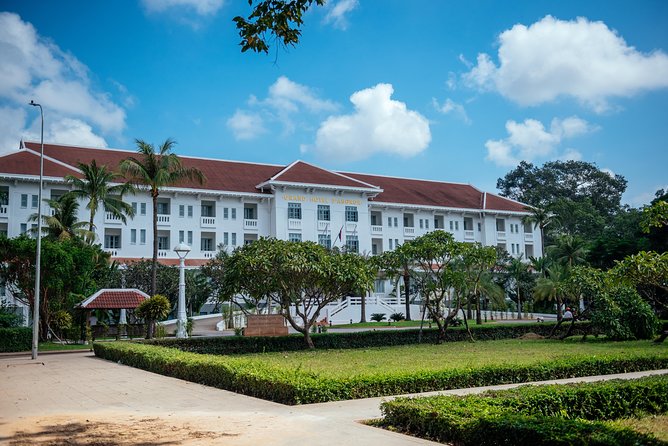
The tour then passes the Angkor National Museum and spends about 15 minutes discussing what is inside. You do not appear to receive a full museum admission visit as part of this route, so think of this as an introduction, not a substitute for buying a museum ticket.
That distinction matters. The museum can help you prepare for Angkor, but this tour only gives you a sense of its contents from outside and along the route. If the guide’s explanation catches your interest, you can return later for a longer visit on your own.
For first-time visitors, this is useful orientation. You get a little context before seeing more temples, while the route keeps moving through the city instead of spending most of its limited time indoors.
Tasting local flavors at Sok Heng Drink Shop
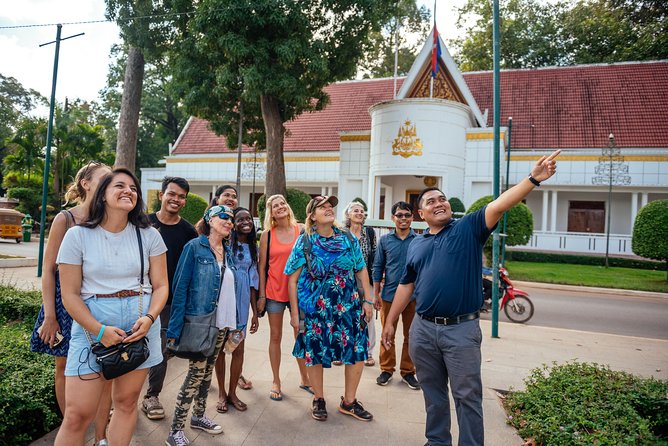
Sok Heng Drink Shop is the food-focused part of the walk. You spend roughly 20 minutes taking in the smells and flavors of a local market and receive a snack or drink tasting.
This is one of the most appealing parts for me because food can explain a city faster than a list of dates. A market stop lets you notice what is sold, how people shop, and how the city’s daily rhythm differs from the restaurant strip around Pub Street.
The included benefit is limited: one local drink or tasting is included, while other food and beverages are not. One account also reported that the promised sample and drink were not provided. I would politely confirm the tasting at the start, especially if this feature is a major reason for booking.
Do not treat this as lunch. The timing is short, and the tour does not include a full meal. If you want to eat properly, save room for Pub Street or arrange food separately.
Quiet corners at Wat Preah An Kau Saa
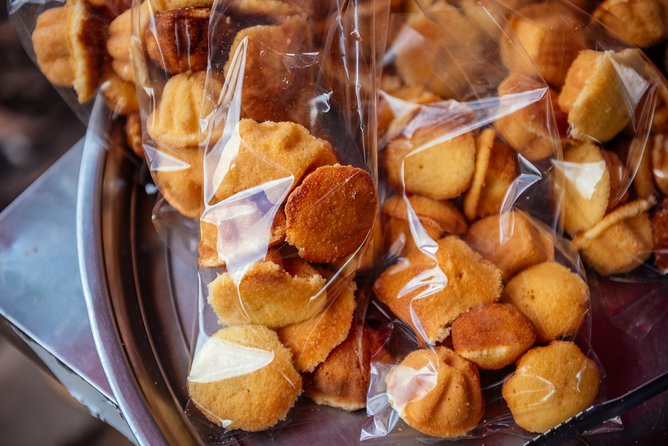
Wat Preah An Kau Saa receives about 20 minutes. The stop focuses on a serene temple setting and local traditions, giving the walk another change of pace after the market.
This kind of stop is valuable because it shows how temples are woven into the city rather than isolated as grand attractions. You can pause, listen, and compare the atmosphere with the more active market and river streets.
As with the other temples, respectful dress and behavior are sensible. The information does not specify a formal dress code, but you should be prepared for religious sites to expect covered shoulders and knees. The guide can explain local customs as you go.
Wat Preah Enkosey, a school, and a traditional coffee house
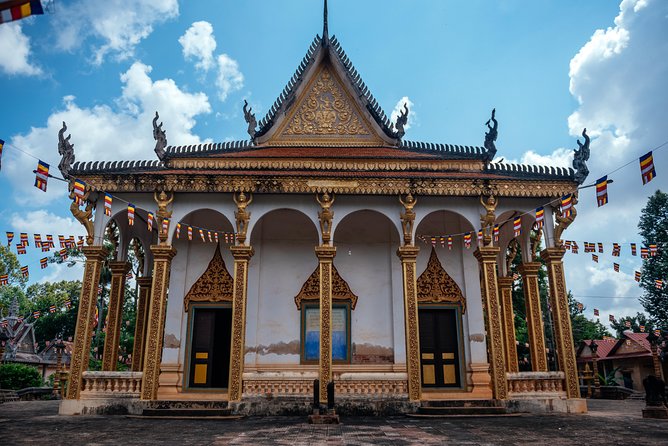
The longest stop is Wat Preah Enkosey Monastery, with about 30 minutes. It is described as one of the oldest monasteries in the city, and the route also passes a local school.
This is where the experience reaches beyond the standard sightseeing checklist. A monastery tells you about faith and tradition, while a school brings the route into ordinary community life. You are seeing places that help make Siem Reap a lived-in city rather than a backdrop for temple trips.
The stop also includes a traditional coffee house intended to teach local people about traditions and culture from their history. The route may include a Khmer ceramics visit as well, though the available description cuts off before giving full details. I would treat any craft element as an added possibility, not the main reason to book.
The guide makes the difference here. Long, Ly Chenda, Nak, and Jaimie have each been praised for strong explanations, kindness, enthusiasm, or personal knowledge of the city. Guide assignments can change, so you should not assume a particular person will lead your tour unless confirmed. If you do get Ly Chenda, the available feedback describes him as flexible, funny, and able to explain everything from food to Cambodian-made goods.
Seeing the Royal Residence, not a palace
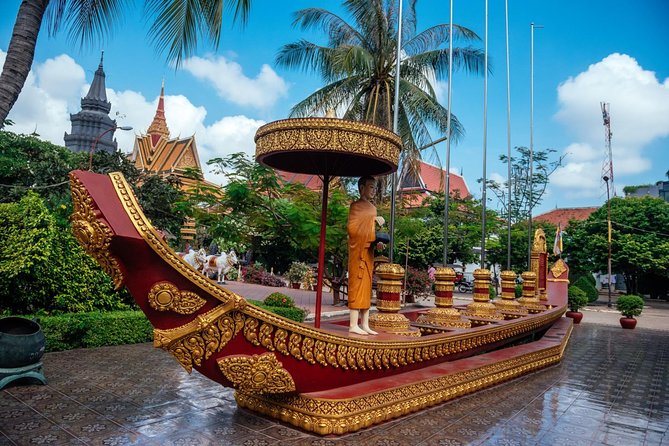
The route passes the Royal Residence for about 15 minutes. This is a useful correction to a common misunderstanding: people may call it the Royal Palace, but it is the king’s official residence when he is in town, not a palace open for a standard sightseeing visit.
That small distinction is exactly the sort of local detail a guide can provide. You see the site from outside and learn about its role, but you should not expect an interior tour.
One person found the palace area and its shrine the main highlight, while the river walk became more enjoyable after about 5:30 p.m., when the sun began to drop. That makes timing worth thinking about. If you can choose among available start times, a later outing may be more comfortable in Siem Reap’s heat and may lead naturally into the evening portion of the route.
Finishing on Pub Street
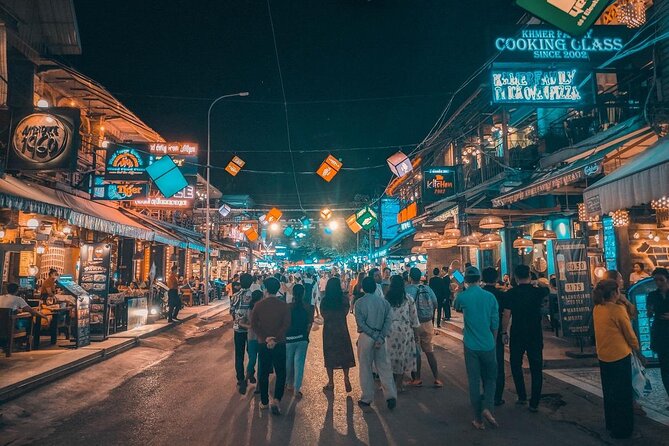
The final stop is Pub Street, officially Street 8, for about 15 minutes. This short stretch runs between the Red Piano Restaurant and Banana Leaf Restaurant and becomes Siem Reap’s main evening food and drink zone.
Ending here is practical. You receive a quick introduction to the area, then you can decide whether to stay for dinner, drinks, or a walk through the surrounding streets. The tour itself does not include your evening meal or extra beverages, so budget separately.
Pub Street is also the least quiet and least local-feeling part of the route. That is not necessarily a flaw. After temples and markets, it gives you a clear choice: continue into the night or return to your hotel. If you prefer small neighborhood restaurants and calm streets, use the guide’s advice to look beyond the central strip.
What the private format is worth at $49.58
At $49.58 per person, the price makes the most sense for two or more people sharing a private guide. You are paying for personal attention, a local explanation at nine locations, and the flexibility to ask questions without waiting for a large group.
For one person, the cost is harder to justify if you only want a quick orientation. For a couple or small group, the value improves because the private format can replace several hours of wandering without context. Group discounts may also be available, so check the final rate for your party.
The included drink or tasting adds a small benefit, but it should not drive the value calculation. The main purchase is the guide’s time and city knowledge. The strongest feedback focuses on guides who made the route feel personal, explained Cambodian life, and shared experiences, including Aaron’s discussion of the country’s difficult past and the Killing Fields.
The carbon emissions are offset through the provider’s CO2 Neutral policy. That is a useful feature for travelers who care about the footprint of organized tours, though it does not change the walking pace or what is included.
Timing, weather, and who will enjoy it most
Three hours is enough to get your bearings, but not enough to linger. You will have roughly 15 to 30 minutes at each place, and walking in heat or rain can make the schedule feel full. One guide continued through rainy conditions and still reached the planned stops, but you should bring suitable clothing and shoes.
This tour fits you best if you:
- Want a private introduction before visiting Angkor Wat
- Like mixing temples with markets, food, and ordinary city life
- Prefer asking a local guide plenty of questions
- Have only a short time in Siem Reap
- Want to finish near restaurants and bars
- Are comfortable walking for three hours
It may suit you less if you want a slow temple visit, museum admission, a substantial food tour, or hotel transportation. It is also not the best match if you already know Siem Reap well and want unusual sites far outside the center.
The private format does offer one important advantage for mixed interests. If one person cares about Buddhism, another about food, and another about Cambodian history, the guide can respond to all three instead of following a fixed lecture.
My verdict on this Siem Reap city walk
I would book this as an early Siem Reap activity, especially before a full day at Angkor. The route gives you a working map of the center, introduces local religious customs, and ends where you can make your own evening plans.
The strongest reason to choose it is the guide. Long, Ly Chenda, Nak, Jaimie, and Aaron have each been singled out for qualities such as patience, humor, clear English, personal stories, and enthusiasm. Guide assignments are not guaranteed, but the repeated praise for the human side of the experience is a good sign.
Book it if you value explanation and local perspective more than long visits inside individual monuments. Skip it if you want a relaxed food tour or a full temple program. Also confirm the meeting point, the start time, and the included tasting before setting out. With those expectations clear, $49.58 buys a useful, compact introduction to Siem Reap.
FAQ
How long does the Siem Reap private tour last?
The tour lasts approximately three hours.
Is this a private tour?
Yes. Only your group and the local guide participate.
Where does the tour start?
The meeting point is on Pokambor Avenue, Krong Siem Reap, Cambodia.
Does the tour include hotel pickup and drop-off?
No. Hotel pickup and drop-off are not included, and the activity ends back at the meeting point.
Is food or a drink included?
One local drink or tasting is included. Other food and beverages are not included.
Can I cancel for a full refund?
Yes. You can cancel at least 24 hours before the local start time for a full refund. Cancellations or changes made less than 24 hours before the start time are not accepted for a refund.
New around Siem Reap
- Kulen Mountain With Ticket included Plus Banteay Srei Temple Tour★ 5.0 · 7 reviews
- 2 Days Angkor temples with Sunrise & Sunset★ 5.0 · 7 reviews
- Private Siem Reap Airport Transfer to hotel in town★ 5.0 · 7 reviews
- 1-Day private Angkor Temple Tour with Sun Rise by Tuk Tuk from Siem Reap★ 4.5 · 7 reviews
- Siem Reap: Morning Cooking Class & Market Tour★ 5.0 · 7 reviews
- Kulen Mountain, Killing Fields and War Museum Tour★ 5.0 · 7 reviews
- War Museum, Killing Field, and APOPO Hero RATs Tour★ 5.0 · 7 reviews
- Half-Day: Silk Farm, Senteur Angkor, and Satcha Workshop★ 4.6 · 7 reviews
Siem Reap Tours, compared.
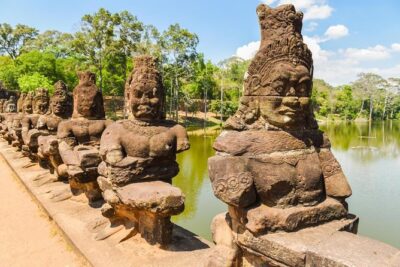
Angkor Wat Sunrise or Sunset Tour with Guide from Siem Reap
Read our review →
Angkor Wat: Small-Group Sunrise or Sunset Tour
Read our review →
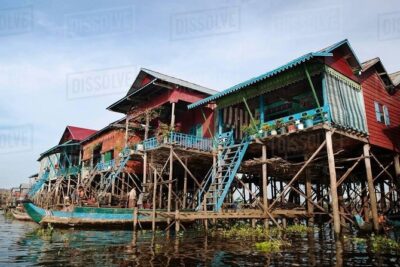
Sunset tour of Kampong Phluk stilts home village on the Tonle Sap
Read our review →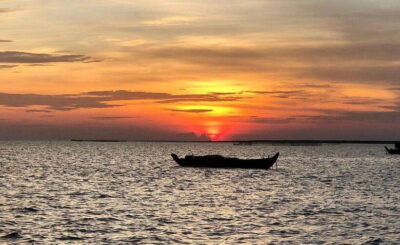
Kampong Phluk Floating Village Tour with Boat
Read our review →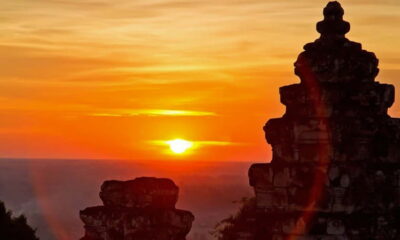
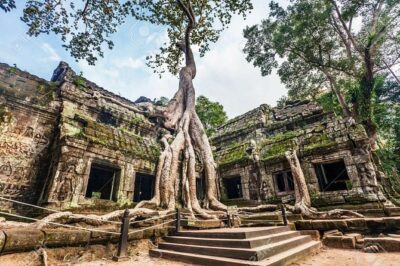
Angkor Wat Sunrise tour with Small – Group and Guide tours
Read our review →