Reviewed · BAMBOO TRAIN TOURS
Battambang: Tuk-Tuk, Bamboo Train, Killing/Bat Caves, Sunset
Battambang’s best day out ends with a sky full of bats. After a day of tuk-tuk rides, village roads, rice fields, temples, and the rattling original bamboo train, you climb Phnom Sampov for Cambodia’s painful past and one of its most striking natural sights. At sunset, millions of wrinkle-lipped bats stream from the Bat Cave in a dark ribbon across the sky.
I like the tour’s wide range of stops and the way a strong guide, especially Samol, ties them together with stories about Cambodia, agriculture, religion, and family life. I also like the value: $9 covers transport, guiding, water, fruit, mountain transport, cave admissions, and donations. The bamboo train costs another $5, while lunch is separate.
The main catch is the pace. This is a long, active day that can run from five to 12 hours, with bumpy tuk-tuk roads, mountain steps, heat, and a serious visit to the Killing Cave. You need comfortable shoes and enough mobility to manage the climb.
Key points at a glance
- The Bat Cave is the grand finale: Time your visit for sunset, when a seemingly endless stream of bats pours from Phnom Sampov.
- Samol earns repeated praise: He is known for clear English, humor, Cambodian history, personal stories, and careful time management.
- The bamboo train is fun but basic: Expect a noisy, open-air ride over rural tracks, with a separate $5 ticket and possible pressure to buy things nearby.
- The Killing Cave adds weight: This is not just a sightseeing stop. Your guide explains the Khmer Rouge period and the thousands killed at Phnom Sampov.
- You see daily life beyond town: Villages, fruit plantations, rice fields, farmers, a suspension bridge, and local food give the outing a real countryside focus.
- The low price has a few exclusions: Lunch, personal spending, and the bamboo train ticket are not included.
Why this Battambang tour works so well
Many Battambang outings focus on one headline attraction. This one gives you a full picture of the area in a single day. You move from city landmarks to working farmland, from a playful railway ride to a solemn memorial site, and finally to a natural spectacle that requires no staging at all.
That mix is the reason I see this as a strong first-day choice in Battambang. You get a useful introduction to the city, but you also leave the center and see how much of local life is tied to rice, fruit, village roads, and small-scale farming.
The guide makes a big difference. Samol, also written as Somol in some bookings, receives especially warm praise for his English, humor, patience, and command of Cambodian history. He has also been praised for taking photos, sharing personal and family stories, handling questions, and helping visitors with onward plans. David is another guide associated with the experience and is also described as personable and well informed.
Do not expect a polished coach tour. You ride in a tuk-tuk, walk across a wooden suspension bridge, sit on a bamboo platform, and use a motorbike or pickup truck on the mountain. That is part of the appeal, but it also means dust, noise, heat, and a few jolts.
More Bamboo Train Tours in Battambang
- Afternoon tour by tuk tuk to bamboo train,bat cave,killing cave,countryside.
★ 5.0 · 344 reviews - Battambang: Bamboo Train, Bat Cave, Killing Cave by Tuk Tuk
★ 5.0 · 182 reviews - Full Day tour .City tour.Countryside.Bamboo Train.Secret Bat Cave
★ 5.0 · 178 reviews
Battambang by tuk-tuk: city history with a local voice
The day begins with hotel pickup in the Battambang area. Your guide can collect you from a hotel or restaurant, though pickup and drop-off are limited to locations within five kilometers of town. Wait in the lobby at least 10 minutes before departure.
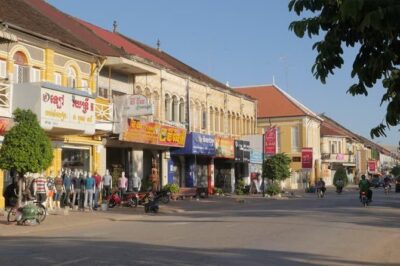
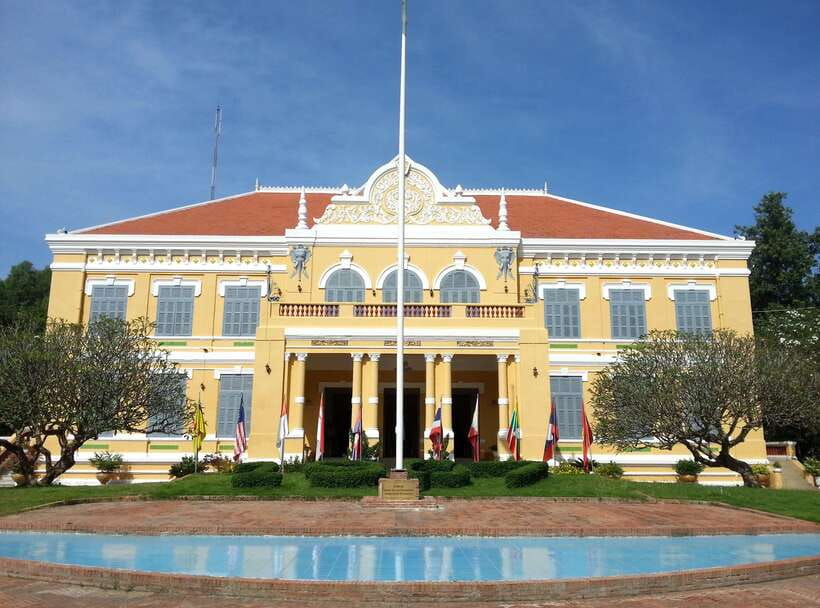
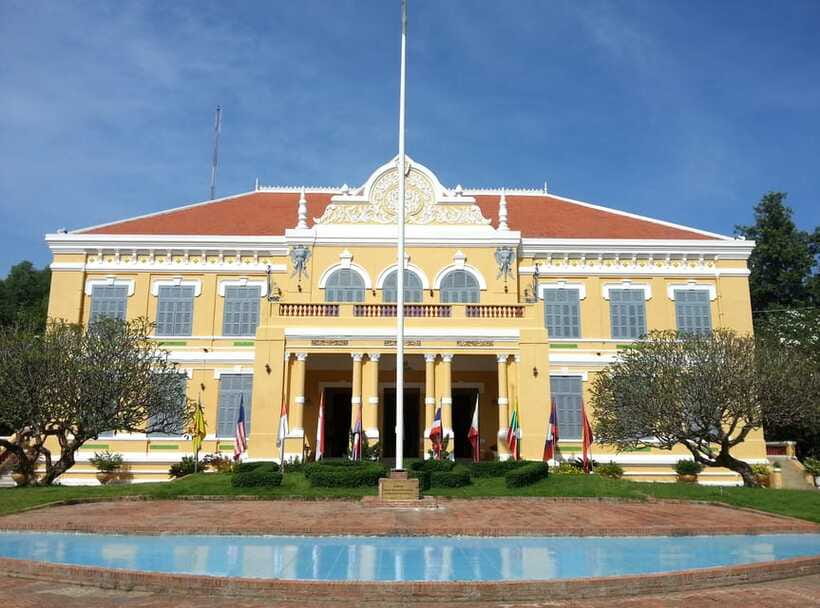
The tuk-tuk is the right vehicle for this introduction. You can see the streets, hear the city, and stop for photos without the sealed-in feeling of a bus. The route includes historical buildings, the central market, the provincial hall, the statue that symbolizes Battambang, and several temples.
This part is less about ticking off grand monuments and more about learning how the city fits together. Your guide explains the meaning of Battambang’s name, local religious life, folk tales, agriculture, and the wider story of Cambodia. If you have questions about the Khmer Rouge years, daily life, or Cambodian customs, this is a good time to ask before the more serious mountain visit later in the day.
The city portion also helps you get your bearings. Battambang can feel spread out, and the tour shows you places you might otherwise pass without understanding. It is a practical way to see the center before heading into the countryside.
Villages, plantations, rice fields, and the wooden bridge
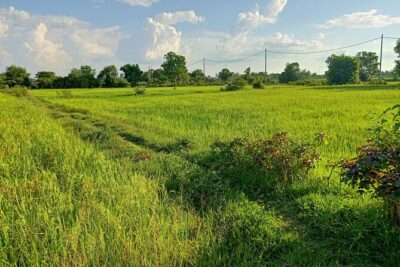
The tour then moves into the countryside, where the rhythm slows down. You pass villages, fruit plantations, rice fields, and rural homes, with the tuk-tuk making the journey part of the experience rather than simply a transfer between sights.
You may stop to speak with local farmers and learn how agriculture shapes life around Battambang. The information provided does not promise a formal farm demonstration, so think of these moments as informal encounters and explanations rather than a staged activity.
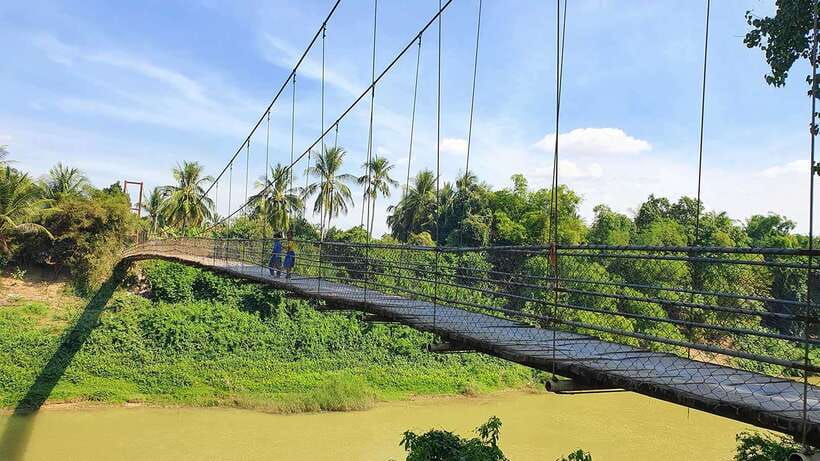
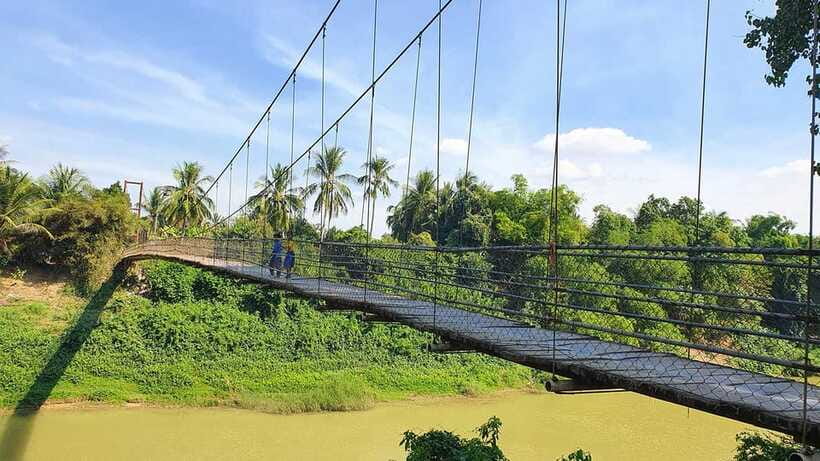
One memorable stop is a suspension bridge. It is wooden, wobbly, and likely to make you pay attention to every footstep. That is precisely why it is fun, though it may not suit anyone uneasy with heights or unstable surfaces.
Bring a camera, but do not spend the whole time looking through it. The countryside is one of the tour’s strongest parts because you see ordinary activity: fields, fruit growing, village movement, and people going about their work. The roads can be bumpy, so keep your camera and phone secure.
A plate of shared fruit salad and cold bottled water are included. The fruit is a small detail, but useful in Cambodia’s heat, particularly on a full day when you are moving between open-air stops.
The original bamboo train: a noisy ride through the countryside
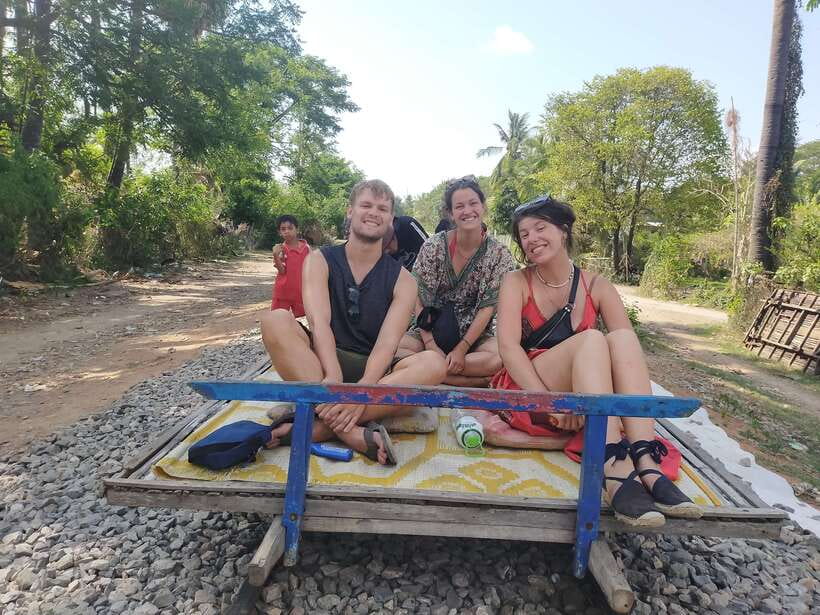
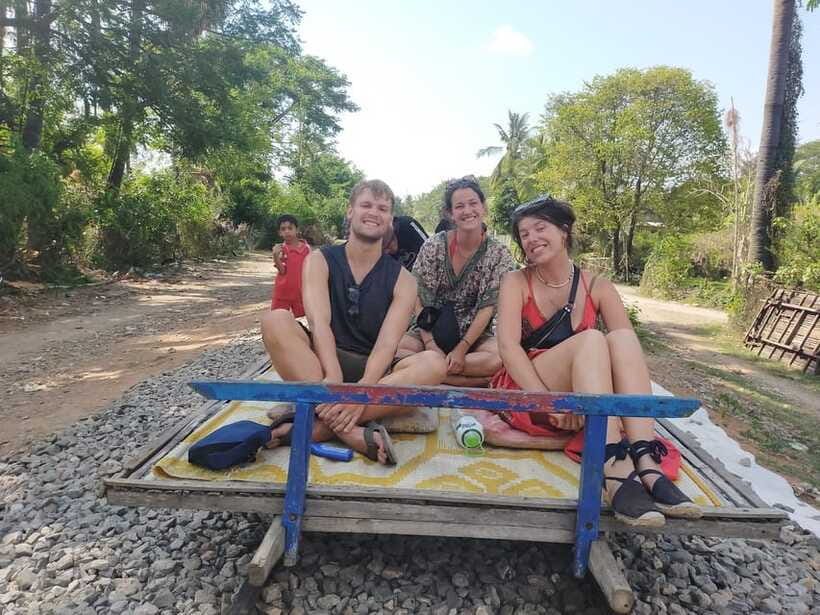
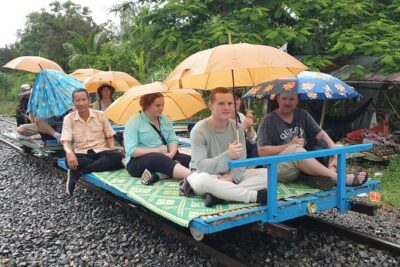
The bamboo train is one of Battambang’s signature experiences. You sit on a low bamboo platform powered along a simple railway track, with paddy fields and rural views passing by. It is not luxurious, and that is the point. The ride feels improvised, exposed, and wonderfully different from normal train travel.
The train ticket costs $5 per person and is not included in the $9 tour price. Include this in your budget before booking. The ride is also loud, so earplugs are a sensible addition, especially if you are sensitive to engine noise.
The setting is the attraction. You are close to the fields, with no windows or air-conditioning separating you from the countryside. It is a good photo stop and a lighthearted change of mood before the heavier history at Phnom Sampov.
There is one practical warning. The bamboo train area can feel more commercial than the village stops, and you might be persistently approached to buy things. You can enjoy the ride without treating every sales pitch as part of the experience. Keep some patience in reserve and remember that the ticket itself is already an extra cost.
The train portion is usually short compared with the entire day, but its value is not just measured in minutes. It gives you a distinctive Battambang memory and a close look at a form of transport that feels tied to the region’s past.
More Cave Tours in Battambang
- Battambang Tuk Tuk tour: Bambootrain, Killing & Bat Caves,Sunset
★ 5.0 · 799 reviews - Afternoon Tour: Bamboo Train, Killing Cave &Bat Cave
★ 5.0 · 73 reviews - Battambang: Bamboo Train, Bat Cave and Killing Cave Tour
★ 4.9 · 58 reviews - Afternoon Tour BambooTrain & Bat Cave
★ 5.0 · 57 reviews
Lunch in a village, with rat barbecue as an optional extra
After the bamboo train, you stop at a local restaurant in a village for a late lunch. Lunch is not included, so bring cash. The food is described as good value, and the stop gives you time to sit down after the tuk-tuk and train rides.
The timing matters. Because the tour continues to the mountain and sunset, lunch may come later than you expect. Eat breakfast, carry water, and do not assume the first meal of the day will be early.
There is also an optional taste of rat barbecue at Phnom Sampov. Rat is a popular local dish in this area, and the guide can explain the food rather than simply placing it in front of you as a dare. Some people find it surprisingly good; others will quite reasonably pass.
I like that the tasting is optional. It lets you try something outside your normal menu without making the whole group follow one choice. The experience may also include local rice wine or sake, though personal spending is not covered, so carry small amounts of cash if you want to sample or buy anything.
Phnom Sampov and the Killing Cave
The mood changes sharply at Phnom Sampov. You use a mountain shuttle or motorbike for the return journey, and the route includes the Killing Cave, temples, monkeys, and viewpoints. The exact walking balance can vary, but you should expect steps and uneven ground.
The Killing Cave is the most sobering stop of the day. Your guide explains what happened during the Khmer Rouge period from 1975 to 1979, when more than 10,000 victims were killed in the area. The place is a reminder that Cambodia’s past is not an abstract chapter in a book. It is present in the country’s families, communities, and memories.
This is where a careful guide matters most. Samol and David are praised for explaining the period with personal and family context, while still answering questions clearly. You may spend around 15 minutes listening to the history before moving on, and some people feel the mountain portion is a little rushed afterward.
That is a fair concern. Phnom Sampov offers several things in one area, and the itinerary must also protect the sunset timing. If you want a long, quiet memorial visit, this tour may feel too brisk. If you want a clear introduction that combines the cave with the wider mountain site, the structure works well.
Wear clothing that covers your shoulders. Sleeveless shirts are not allowed, and respectful dress is particularly important at religious and memorial sites.
Temples, monkeys, and the sunset viewpoint
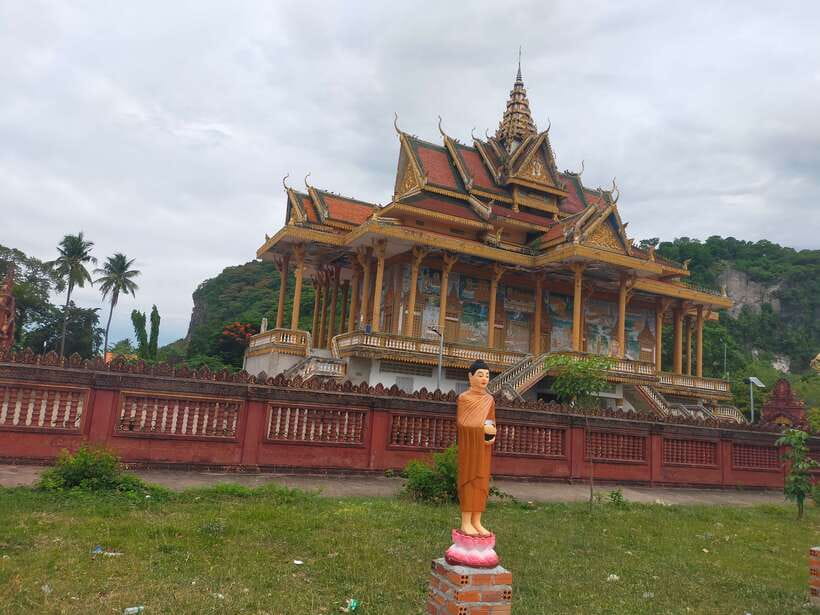
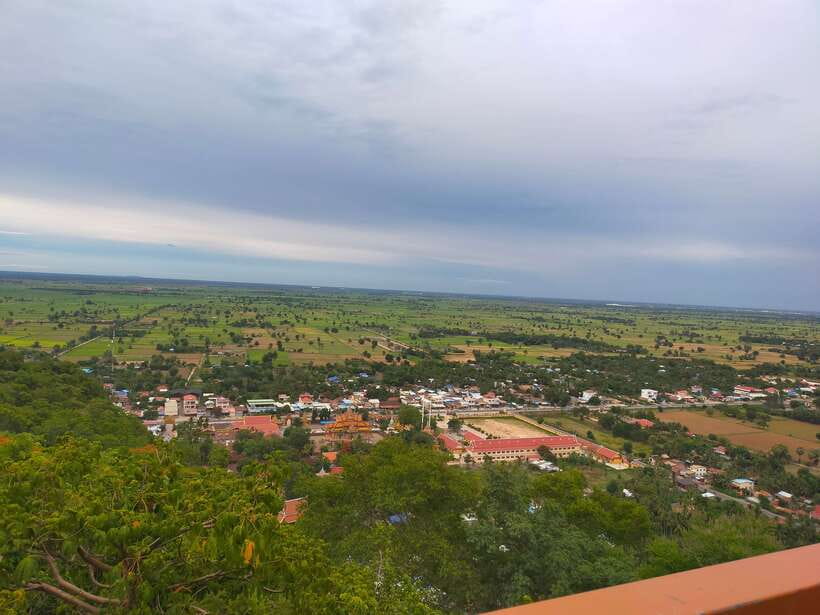
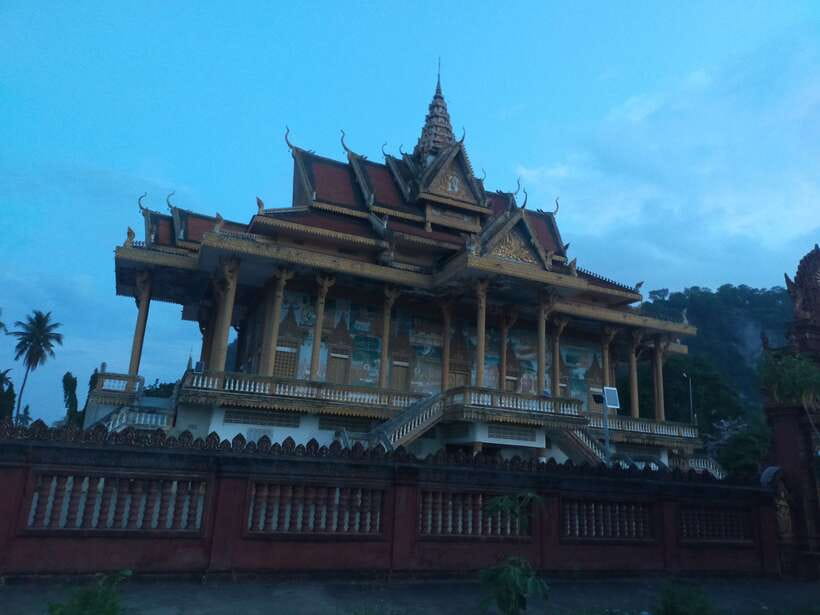
After the Killing Cave, you continue around the mountain to see temples, monkeys, and viewpoints. This section provides a visual counterpoint to the cave. The mountain is not only a memorial site; it is also a religious and natural setting with broad views over the countryside.
The summit is especially good late in the day, when the light softens over the fields. Your guide keeps an eye on the clock so you reach the right area before sunset. Several people have praised the timing, and it is easy to understand why. Arrive too late and you miss the best part of the Bat Cave show.
The climb and descent require care. This experience is not suitable for wheelchair users, people with mobility impairments, or anyone over 80 according to the activity guidance. The mountain shuttle or motorbike helps with transport, but it does not remove the need for walking and steps.
Keep sunscreen, rain gear, and comfortable shoes in your day bag. Weather can change, and the tour continues outdoors for hours. A camera is useful here, but watch your footing first.
The Bat Cave at sunset
The Bat Cave is the tour’s payoff. As daylight fades, bats begin streaming from the cave entrance, forming a long moving column above the trees and fields. The scale is hard to grasp until you see it. The flight continues for a considerable period, turning a simple cave opening into a remarkable evening show.
This is a natural event, not a performance with a fixed start time. Your guide’s planning helps you arrive at the right part of the evening, but patience still matters. Stay in position, watch the sky, and allow the bats time to emerge.
I would book this experience largely for this final stop, but I would not treat it as a stand-alone attraction. The caves carry more meaning because you have spent the day learning about Battambang, seeing its countryside, and hearing the history of the mountain.
Sunset over the rural fields adds to the effect. You finish with a striking view after a day that has covered both joy and grief. That contrast is not always easy, but it gives the tour more substance than a simple sightseeing loop.
Is $9 really good value?
At $9 per person, the tour is unusually inexpensive for a full day of transport and guiding. The price includes hotel pickup and drop-off within the stated area, tuk-tuk transport, an English-speaking guide, cold water, fruit salad, admissions to Phnom Sampov, the Killing Cave and Bat Cave, mountain transport, photo opportunities, and donations.
You must add $5 for the bamboo train, plus lunch and any personal purchases. Even with those extras, the total remains modest for an outing that commonly lasts about seven hours and can take up to 12 hours depending on the schedule and conditions.
The value depends on what you want. If you prefer to explore slowly and linger at each temple, arranging a private tuk-tuk may suit you better. If you want one guide to organize transport, explain the history, manage the sunset timing, and cover the city and countryside in one go, this package gives you a lot for the money.
The low price should not make you expect luxury. This is practical local transport, not a premium vehicle. The reward is the number of places covered and the guide’s personal input.
Who should book this Battambang experience?
I recommend it for first-time visitors who want a broad introduction to Battambang without arranging several separate trips. It suits curious people who want both history and daily life, not just temples and photo stops.
It is also a good fit for solo visitors and couples who enjoy meeting others. Group sizes can be small, with one recent group described as seven people, though the exact size is not guaranteed. A friendly group makes the tuk-tuk, meal, and shared fruit more sociable.
You should think twice if you have limited mobility, dislike heat, or want a slow schedule. The day includes long periods outdoors, rougher roads, a mountain visit, walking, and a late lunch. It is also not ideal for anyone who wants to avoid difficult historical subjects.
Free cancellation is available up to 24 hours before departure, and you can reserve now and pay later. Those terms make it easier to hold a place while your Cambodia route is still changing.
My verdict: book it for the bats, stay for the story
Book this tour if you want to see Battambang as a living place rather than a list of attractions. The bamboo train supplies the laughs, the villages and rice fields show the area beyond town, the Killing Cave provides necessary historical context, and the Bat Cave delivers an unforgettable finish.
The experience is not perfect. Lunch and the train ticket cost extra, the roads can be bumpy, the bamboo train stop may feel commercial, and the mountain visit can feel tight on time. Still, the combination is hard to match at $9, especially with a guide such as Samol, whose humor, care, and passion have become a major part of the experience.
If your schedule allows only one organized outing in Battambang, this is the sensible choice. Bring water, cash, covered shoulders, sturdy shoes, and an open mind.
FAQ
How much does the Battambang tour cost?
The tour costs $9 per person. The bamboo train ticket costs an additional $5 per person. Lunch and personal expenses are also separate.
How long does the experience last?
The stated duration is five to 12 hours. Many departures take about seven hours, though the exact timing depends on availability and the day’s schedule.
What language does the guide speak?
The live guide speaks English.
Can I be picked up from my hotel?
Yes. Pickup and drop-off are available from hotels or restaurants in the Battambang area, within five kilometers of Battambang town. Wait in the lobby at least 10 minutes before the start.
Is lunch included?
No. Lunch is not included in the tour price. You stop at a local restaurant in a village, and you should bring cash to pay for your meal.
Is the bamboo train ticket included?
No. The bamboo train ticket costs $5 per person and must be paid separately.
Is the rat barbecue compulsory?
No. Rat barbecue tasting is optional. It is listed as an included tasting, but you do not have to try it.
What should I bring?
Bring comfortable shoes, a camera, rain gear, cash, and sunscreen. Covered clothing is required because sleeveless shirts are not allowed.
Is the tour suitable for wheelchair users?
No. The experience is not suitable for wheelchair users or people with mobility impairments.
Can I cancel for a refund?
Yes. You can cancel up to 24 hours in advance for a full refund. You can also reserve now and pay later.
More Sunset Tours in Battambang
- Angkor Wat Sunrise or Sunset Tour with Guide from Siem Reap
★ 5.0 · 12,109 reviews - Siem Reap: Angkor Wat: Small-Group Sunrise or Sunset Tour
★ 5.0 · 9,444 reviews - Sunset tour of Kampong Phluk stilts home village on the Tonle Sap
★ 5.0 · 4,865 reviews - Siem Reap: Angkor Wat 2-Day Tour with Sunrise and Sunset
★ 4.9 · 4,429 reviews
More Tuk Tuk Tours in Battambang
- Explore Battambang full day tour by Tuk Tuk (start from 9am-6:30pm)
★ 5.0 · 240 reviews - A Day TukTuk Handicrafts Bambootrain Killing&BatCaves,Sunset
★ 4.9 · 78 reviews - A Day TukTuk Bambootrain, Banan, Killing & Bat Caves, Sunset
★ 4.9 · 48 reviews - Full day tour by bicycle & tuk tuk,bamboo train,bat cave,villages
★ 5.0 · 27 reviews
New around Battambang
- Half day morning bicycle tour to Explore local livelihood and test local snacks★ 5.0 · 9 reviews
- Handicraft tour/rice paper,/rice wine/bat cave Sun Set★ 4.6 · 10 reviews
- Private Full Day Tuk Tuk Tour in Battambang★ 5.0 · 12 reviews
- Bamboo train. Phnom Sampove cave. Bat cave and Banan Temple★ 4.9 · 12 reviews
- Morning Tuk tuk: City, Handicrafts, Killing field, Temples★ 4.9 · 13 reviews
- Explore the Village &Countryside By Bicycle-Half Day Morning★ 4.8 · 13 reviews
- Full-day: Wat Banan. Old bamboo train. Bat Cave. Killing cave★ 5.0 · 13 reviews
- Full/Half Day Tuk TuK: Handicrafts Bambootrain Killing&Bat Caves★ 5.0 · 14 reviews
Bamboo Train Tours, compared.
Afternoon tour by tuk tuk to bamboo train,bat cave,killing cave,countryside.
Read our review →
Full Day tour .City tour.Countryside.Bamboo Train.Secret Bat Cave
Read our review →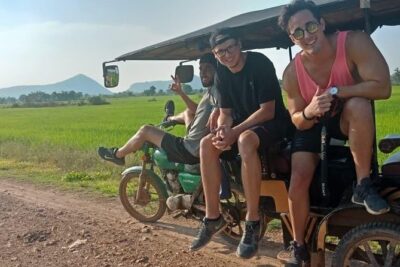
Battambang Full Day Tour from Siem Reap – Bamboo Train, Killing Cave & Sunset
Read our review →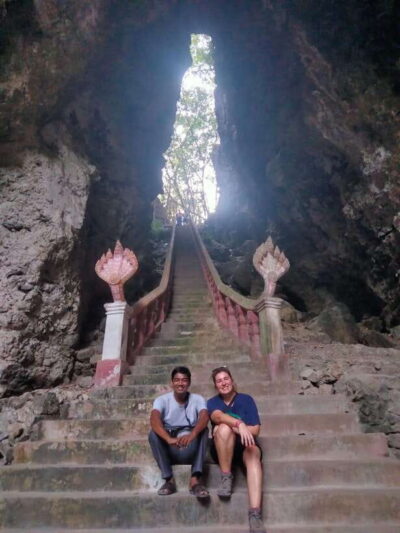
Afternoon Tour: Bamboo Train, Killing Cave &Bat Cave
Read our review →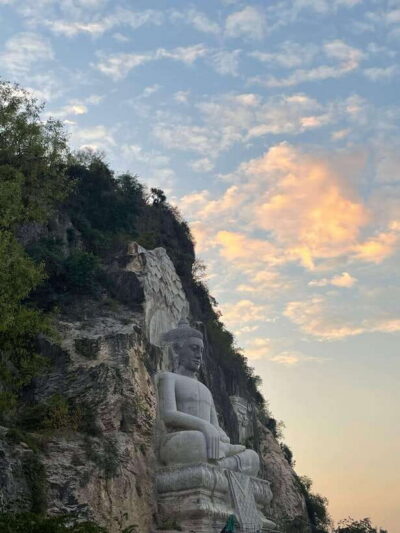
Full Day From Siem Reap – Bamboo Train, Killing Cave & Sunset
Read our review →